Develop critical thinking Addition Worksheets for 7-Year-Olds
11 filtered results
-
From - To
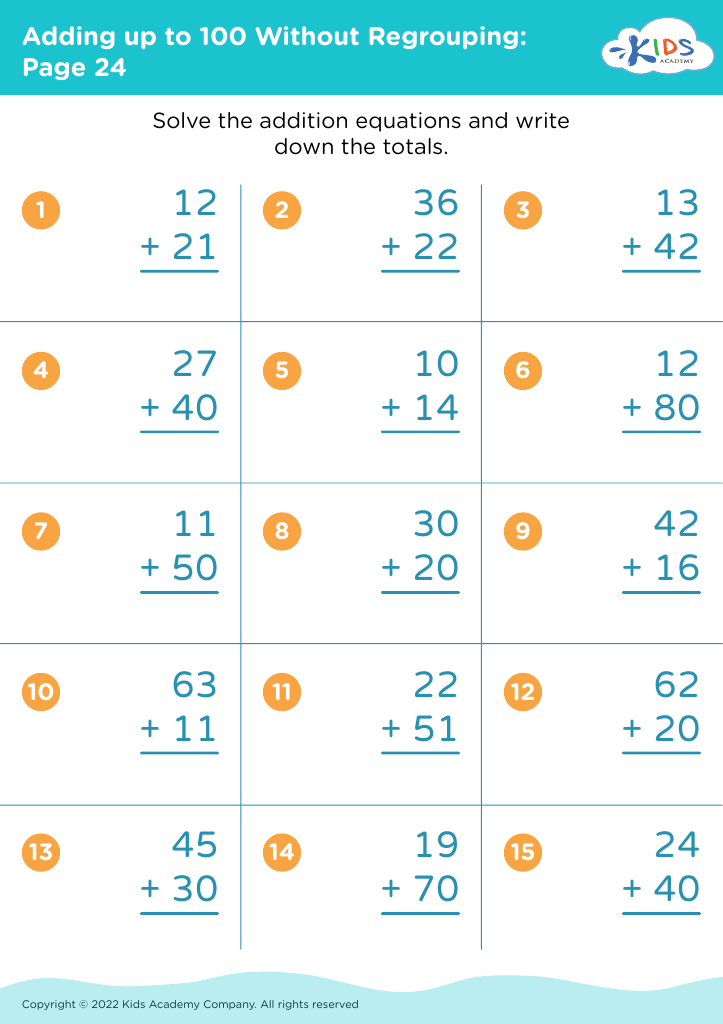
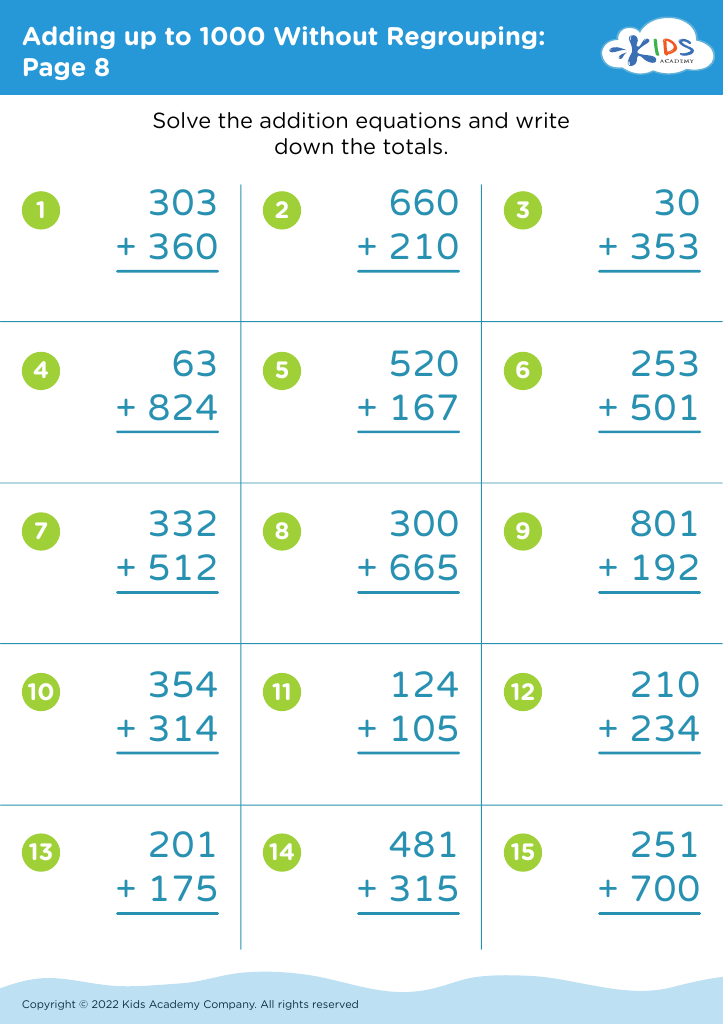
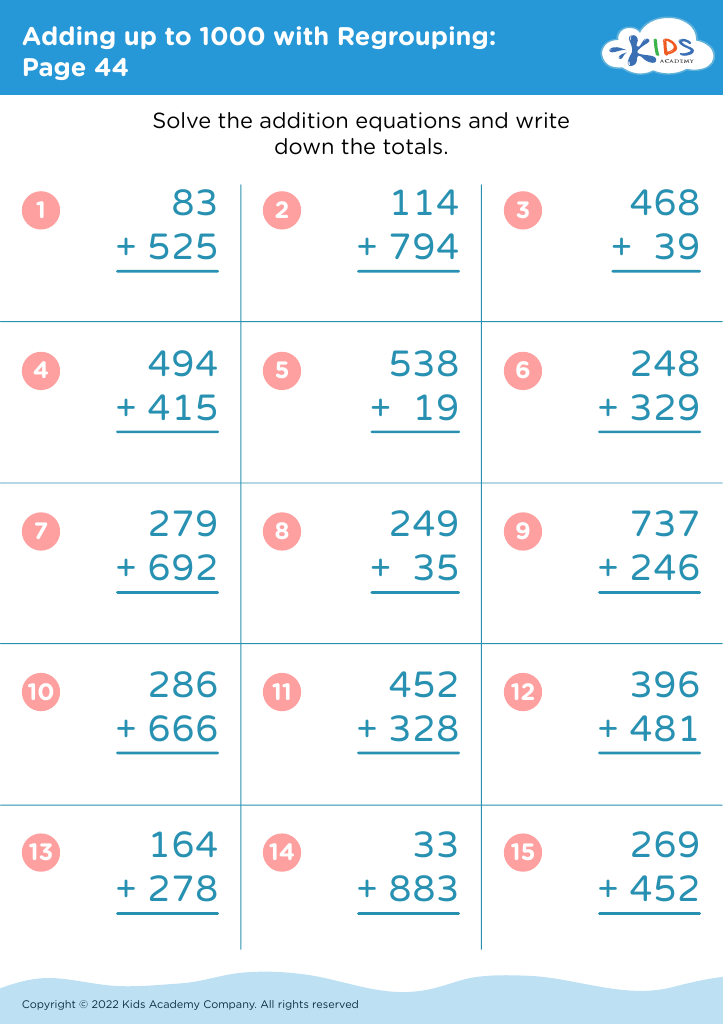
Enhancing young minds while making math fun, our critical thinking addition worksheets for 7-year-olds are designed to foster analytical skills and boost problem-solving abilities. These engaging activities go beyond simple arithmetic, challenging children to apply logic and reasoning to addition problems. By incorporating puzzles, word problems, and interactive exercises, we ensure that young learners not only practice math fluency but also develop a deeper understanding of mathematical concepts. Perfect for reinforcing classroom learning or providing extra homework practice, our worksheets transform addition from routine tasks into exciting mental exercises, paving the way for academic success and a lifelong love of math.
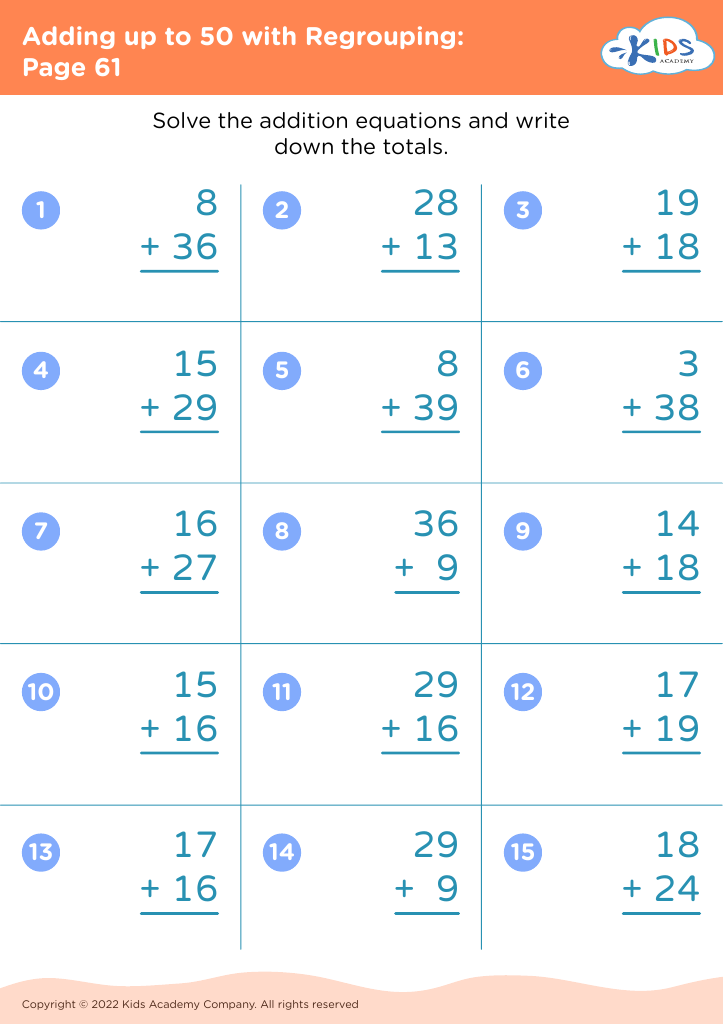
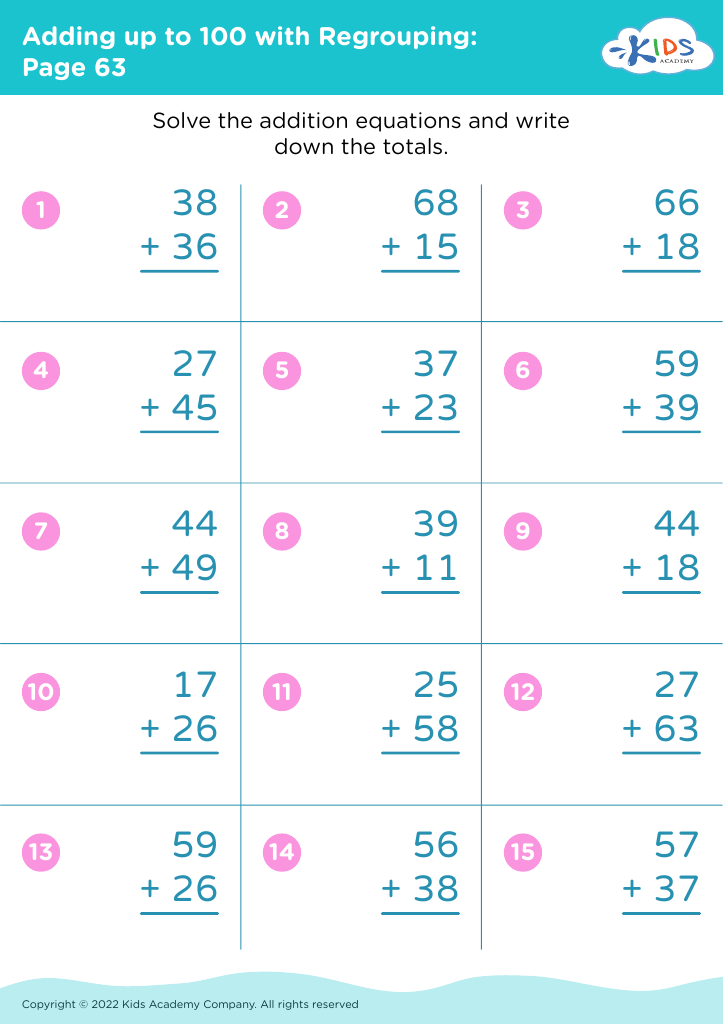
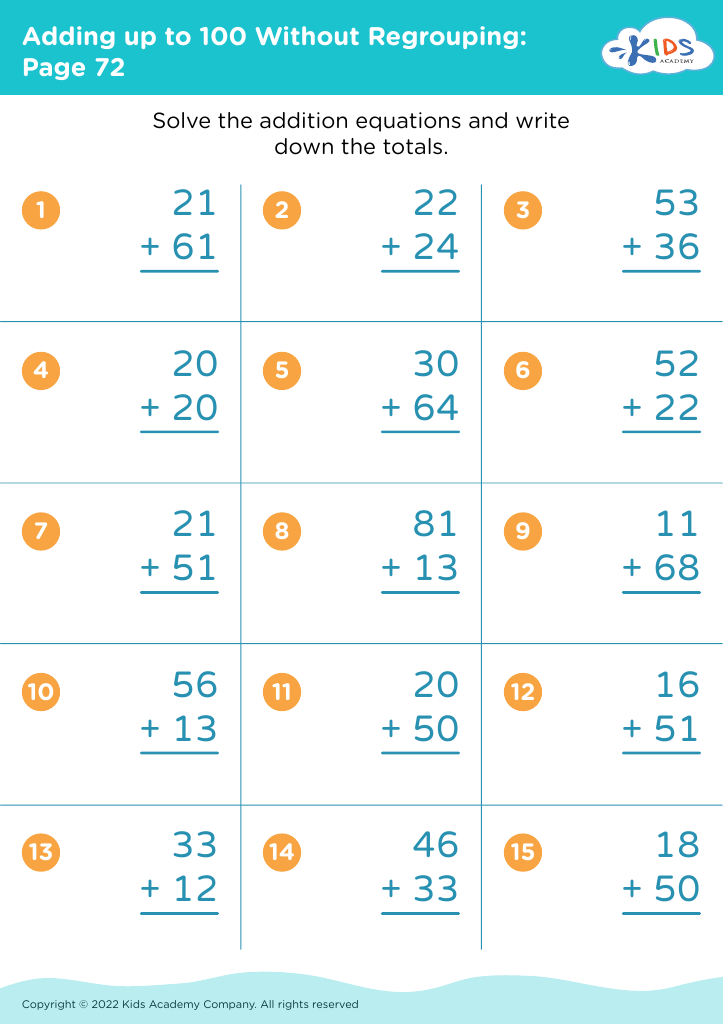
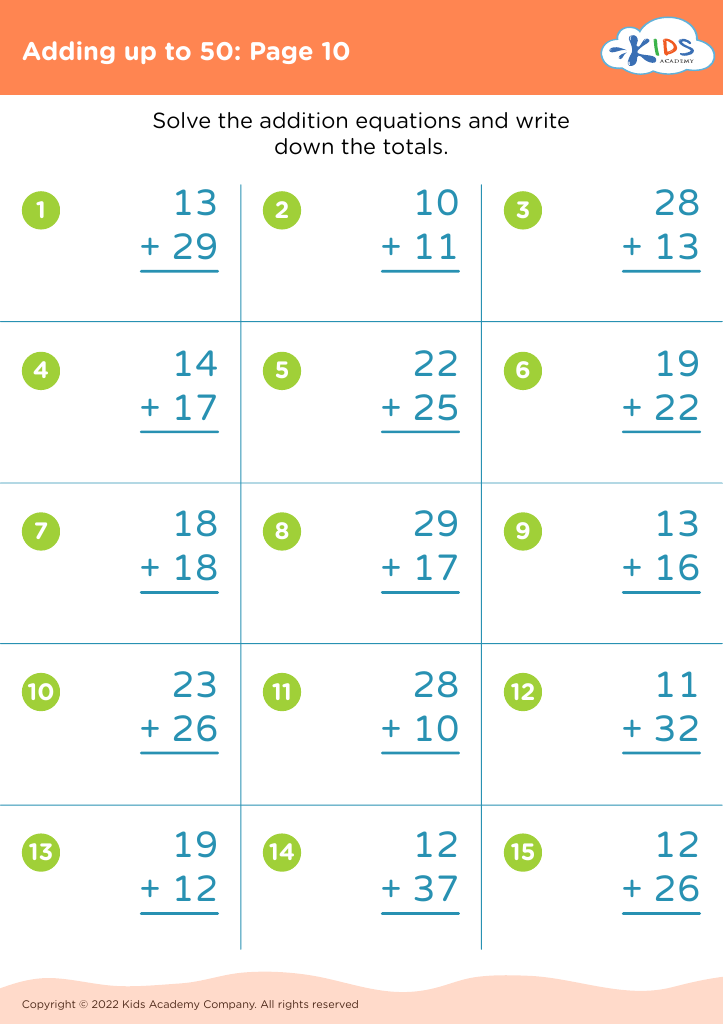
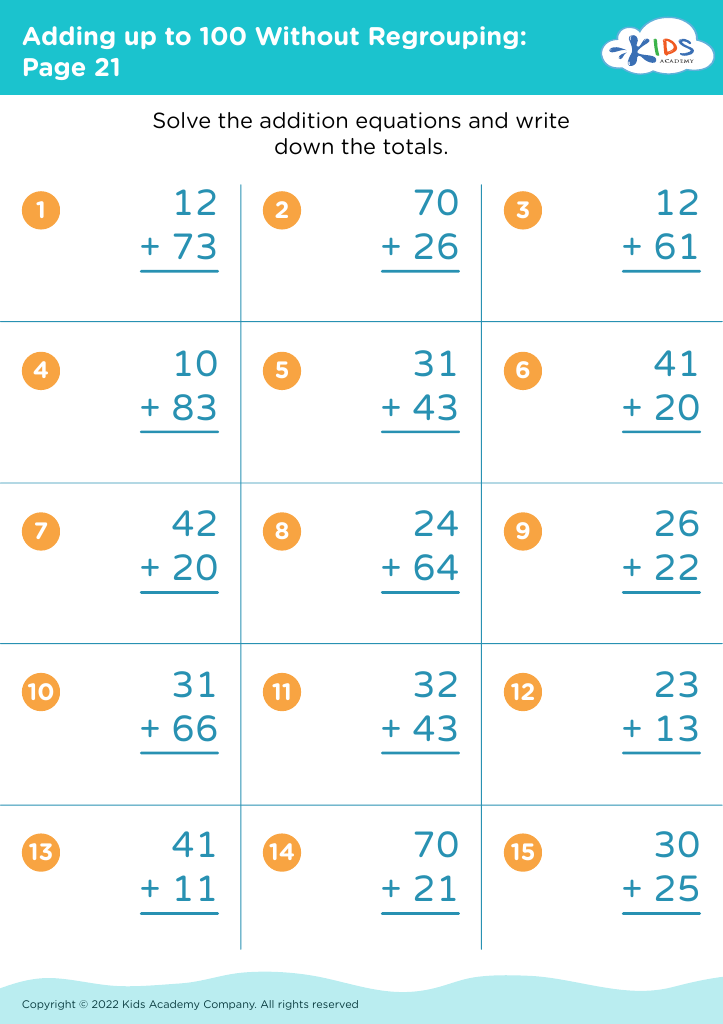
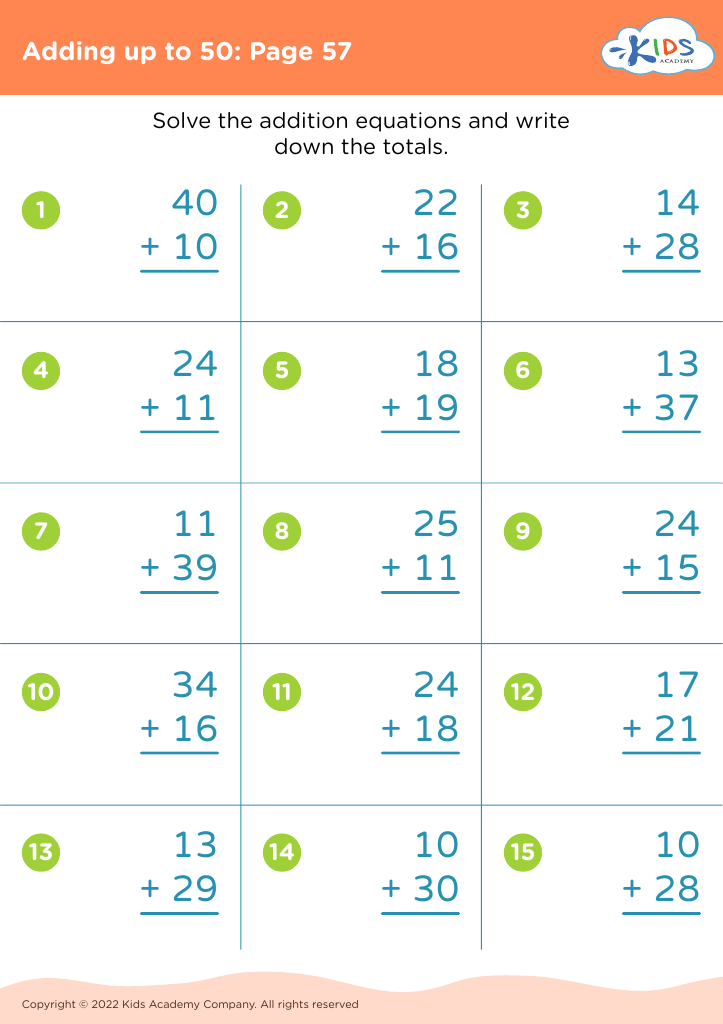
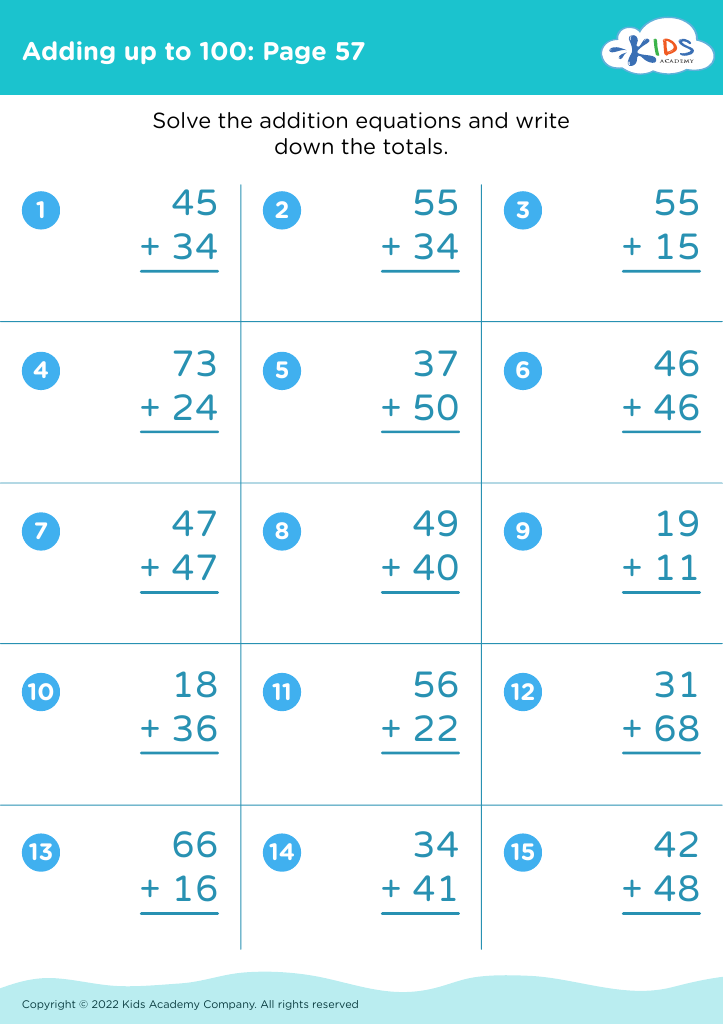
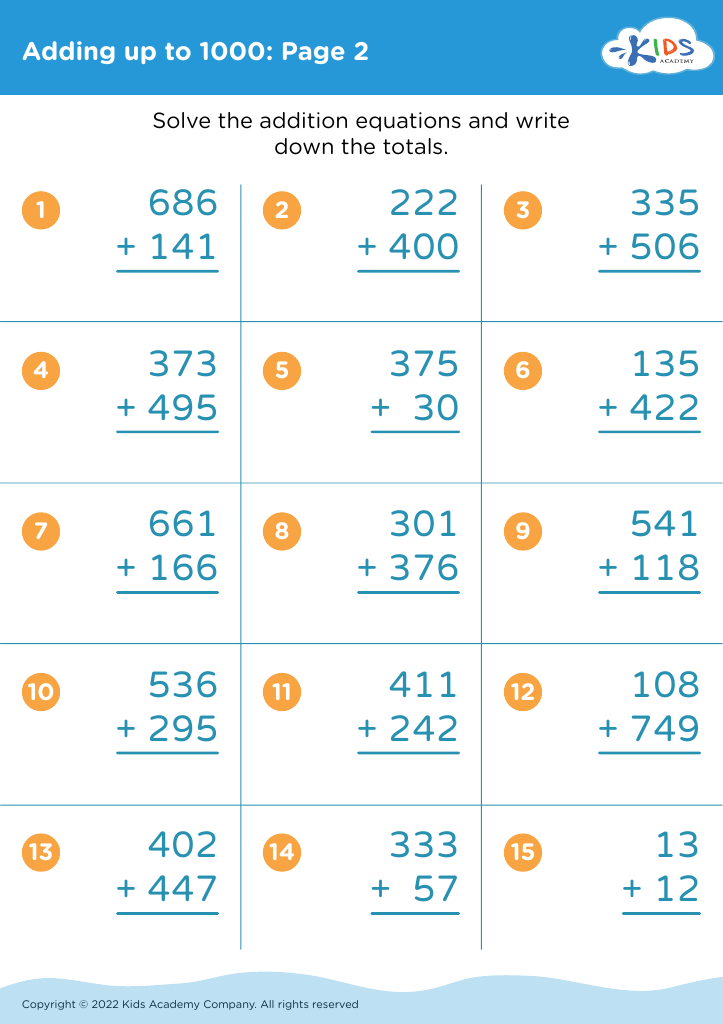








Critical thinking skills are essential for fostering a child's overall intellectual development, and parents or teachers should prioritize these skills, especially when it comes to teaching addition to 7-year-olds. While addition may seem like a straightforward mathematical operation, it offers ample opportunities for engaging students in problem-solving and analytical thinking. By implementing critical thinking into math lessons, children learn to approach problems methodically, considering different strategies and solutions.
Firstly, critical thinking enhances a child's ability to understand the 'why' and 'how' behind mathematical operations, rather than just memorizing facts. This deeper understanding fosters a genuine interest in learning and equips children with the tools to tackle more complex mathematical concepts in the future.
Moreover, developing critical thinking through addition encourages children to make connections between math and real-life situations, fostering practical and analytical skills they can use daily. It also improves their ability to identify patterns and relationships, which is crucial not just in mathematics, but in subjects across the curriculum.
Lastly, nurturing critical thinking in math lessons promotes resilience and perseverance. When children view problems as challenges rather than obstacles, they are more likely to persist and build confidence in their abilities. For these reasons, integrating critical thinking with addition is a valuable investment in a child's educational journey.








