Developing logical thinking Addition Worksheets for 7-Year-Olds
4 filtered results
-
From - To
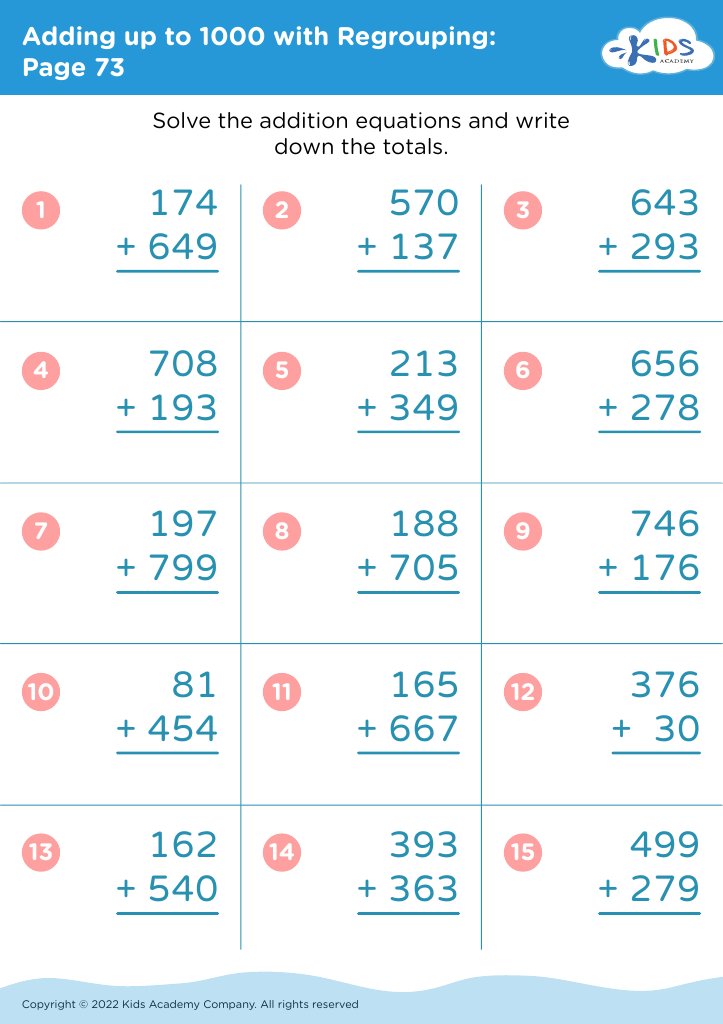
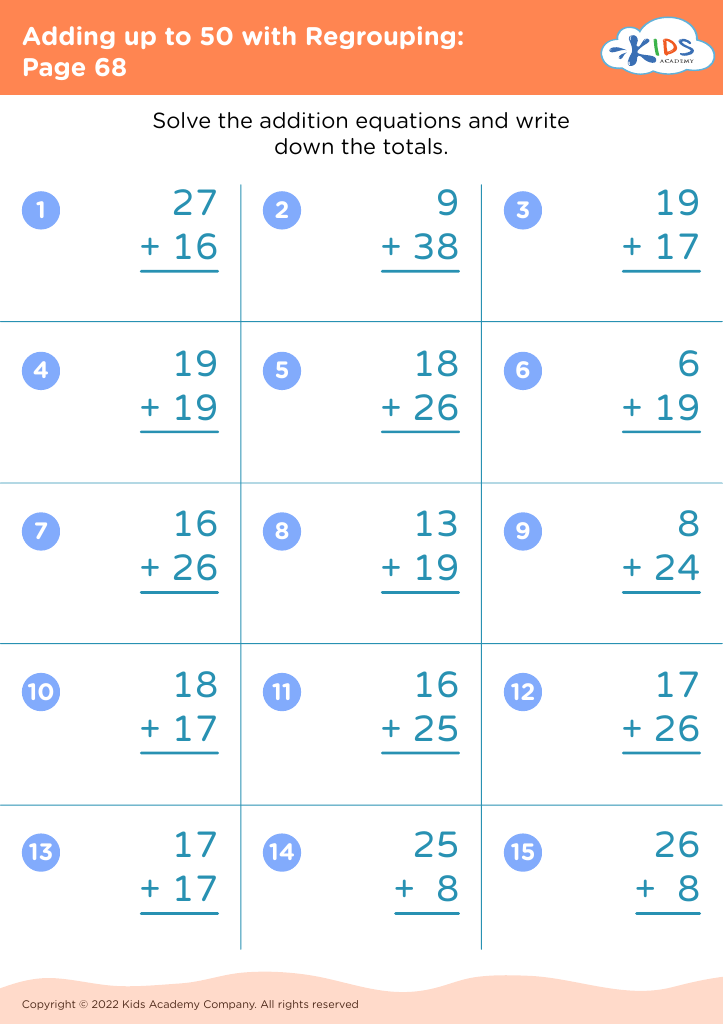
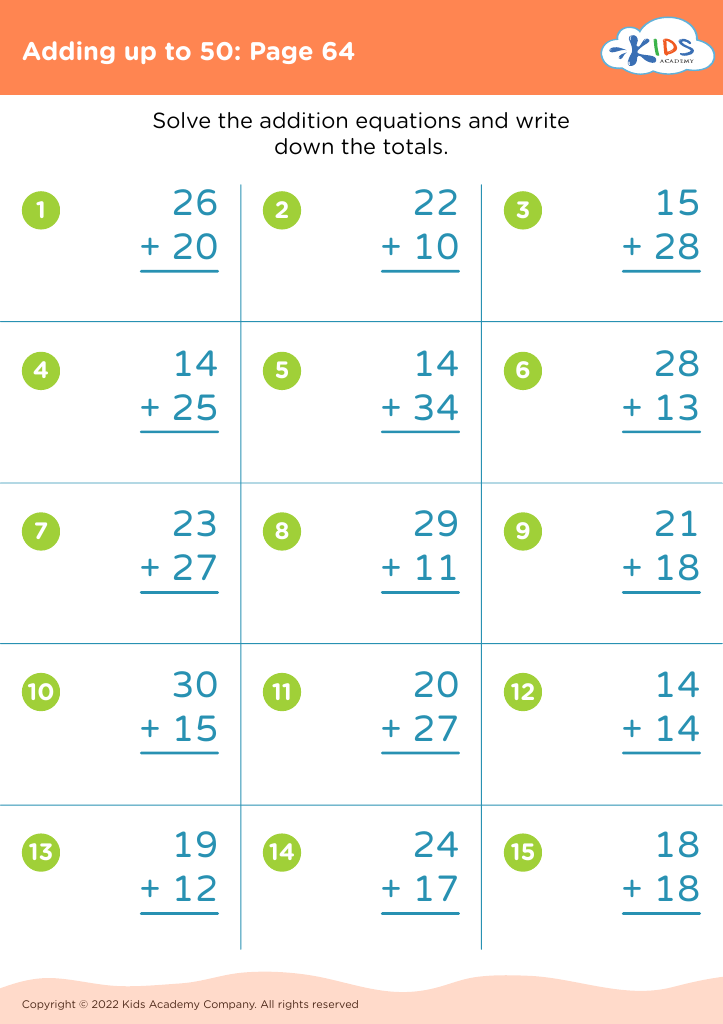
Welcome to our collection of Developing Logical Thinking Addition Worksheets for 7-Year-Olds! Designed specifically to enhance critical thinking and problem-solving skills, these worksheets challenge young learners to analyze, reason, and apply logical strategies while mastering addition. Each engaging worksheet is filled with fun activities that encourage children to explore various methods of solving problems, promoting a deeper understanding of math concepts. Perfect for at-home practice or classroom use, these resources will help your child develop essential skills for academic success. Unlock their potential today and watch them thrive in their mathematical journey! Explore our worksheets for endless learning opportunities!
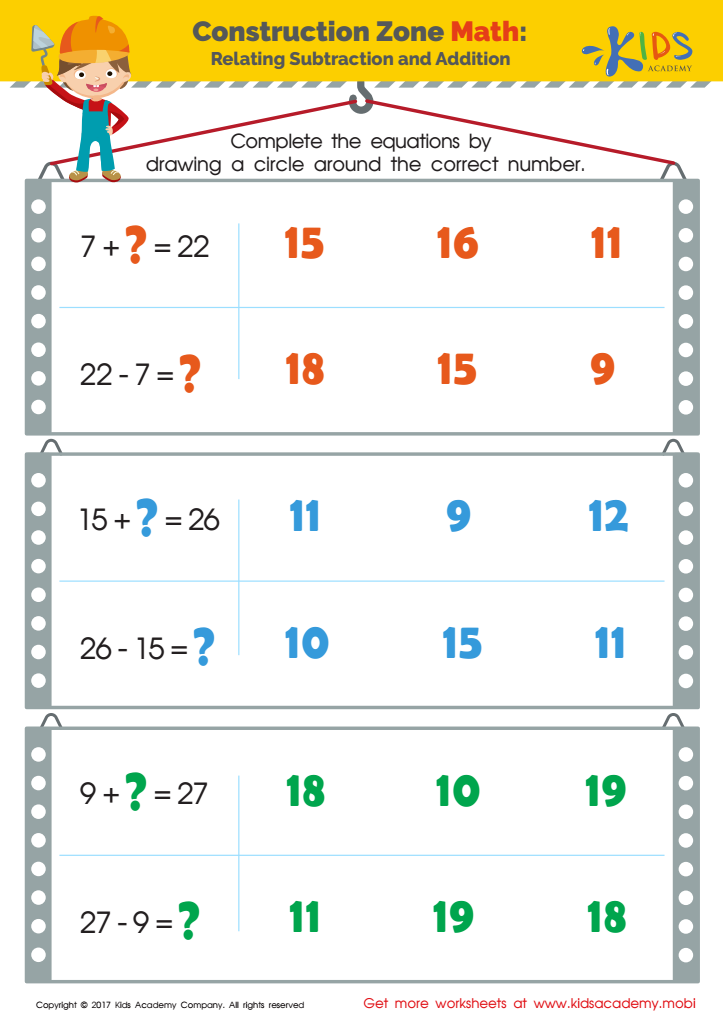
Related Addition and Subtraction Facts Worksheet
 Assign to My Students








Developing logical thinking through addition for 7-year-olds is crucial for their cognitive growth and problem-solving abilities. At this age, children are at a pivotal stage in their learning where foundational math skills are established. Understanding addition provides a basis for more complex mathematical concepts and fosters reasoning skills that are essential not only in mathematics but across all subjects.
Furthermore, logical thinking enhances a child's ability to analyze situations, recognize patterns, and make informed decisions. As they learn to approach addition methodically—whether through counting on, regrouping, or other strategies—they develop a systematic approach to solving problems. This cultivates a mindset that is curious, analytical, and persistent.
Moreover, these skills are beneficial beyond academics. Logical thinking encourages patience and resilience as children engage in trial and error, understand consequences, and learn from their mistakes. Additionally, parents and teachers who prioritize this development contribute to a child's confidence in their abilities, fostering a love for learning.
By investing in logical thinking skills through addition, parents and teachers not only enhance children’s academic performance but also equip them with essential life skills that will serve them far beyond the classroom.








