Enhance counting skills Addition Worksheets for 7-Year-Olds
12 filtered results
-
From - To
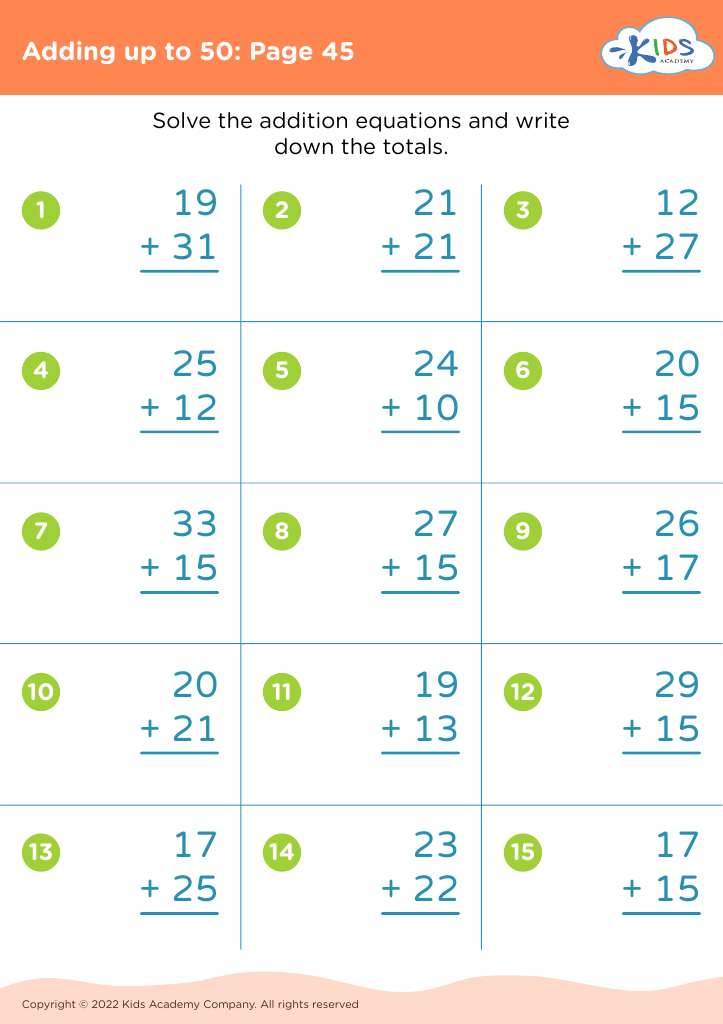
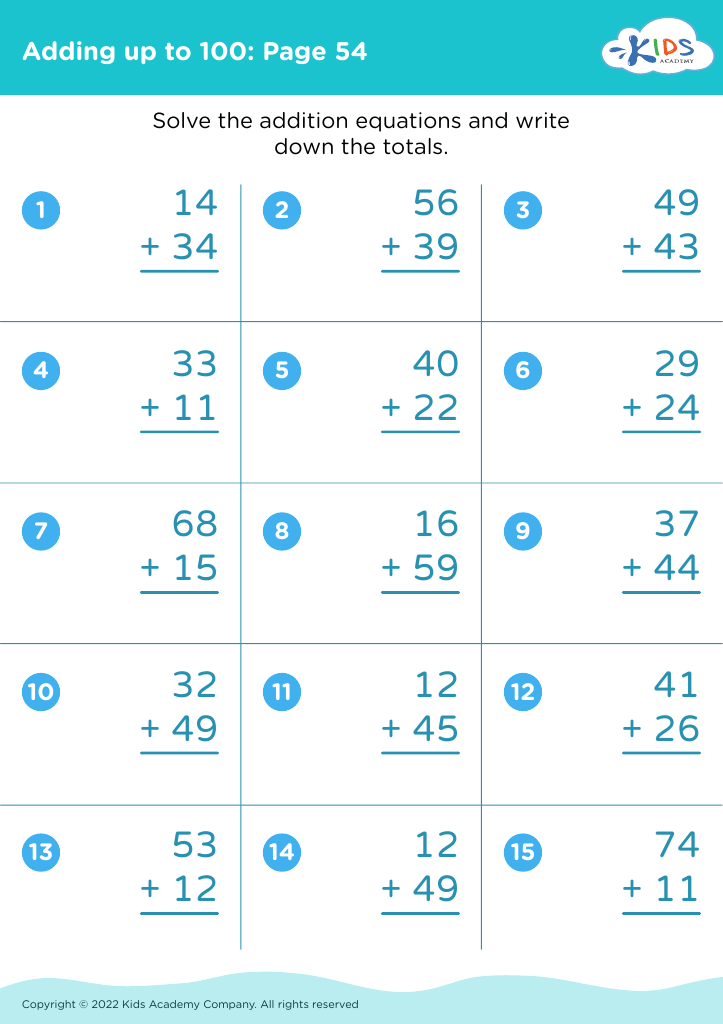
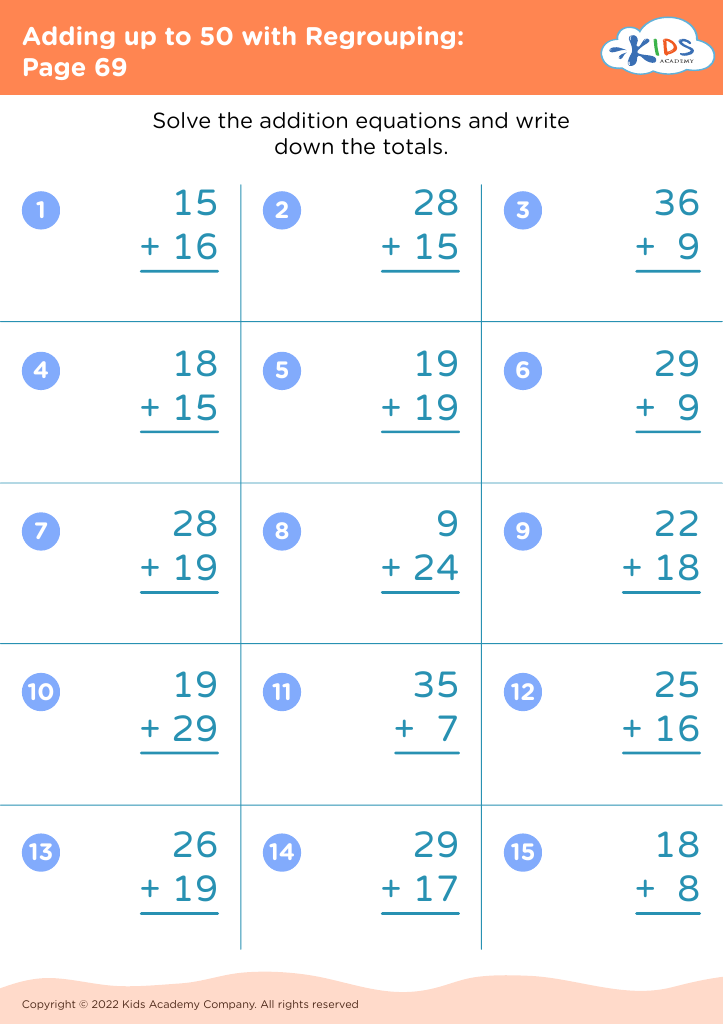
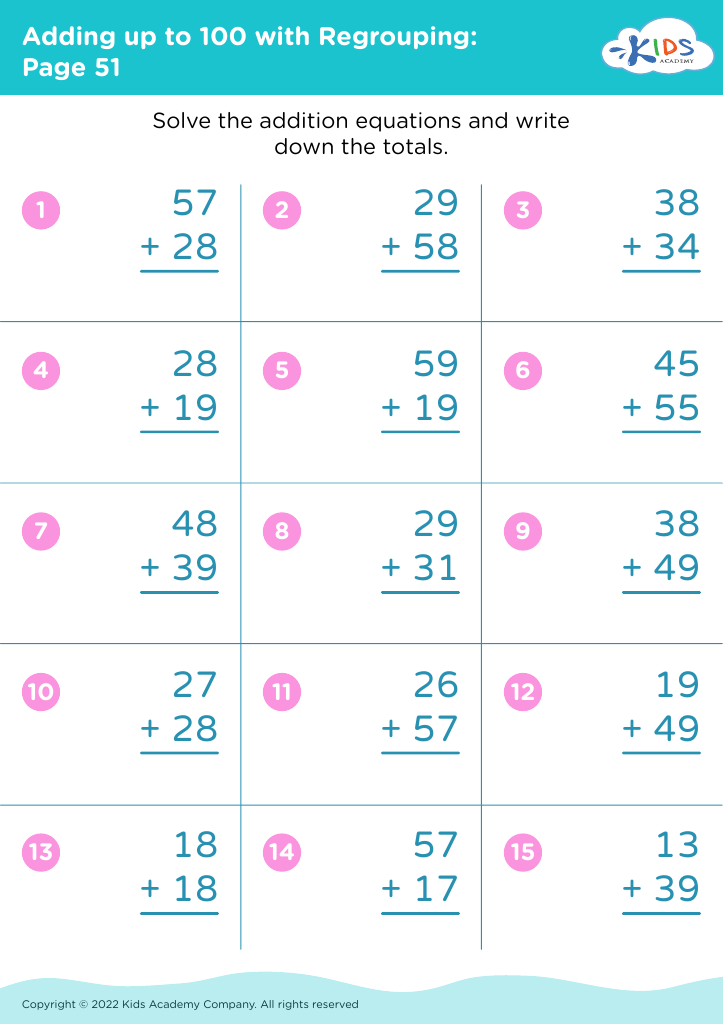
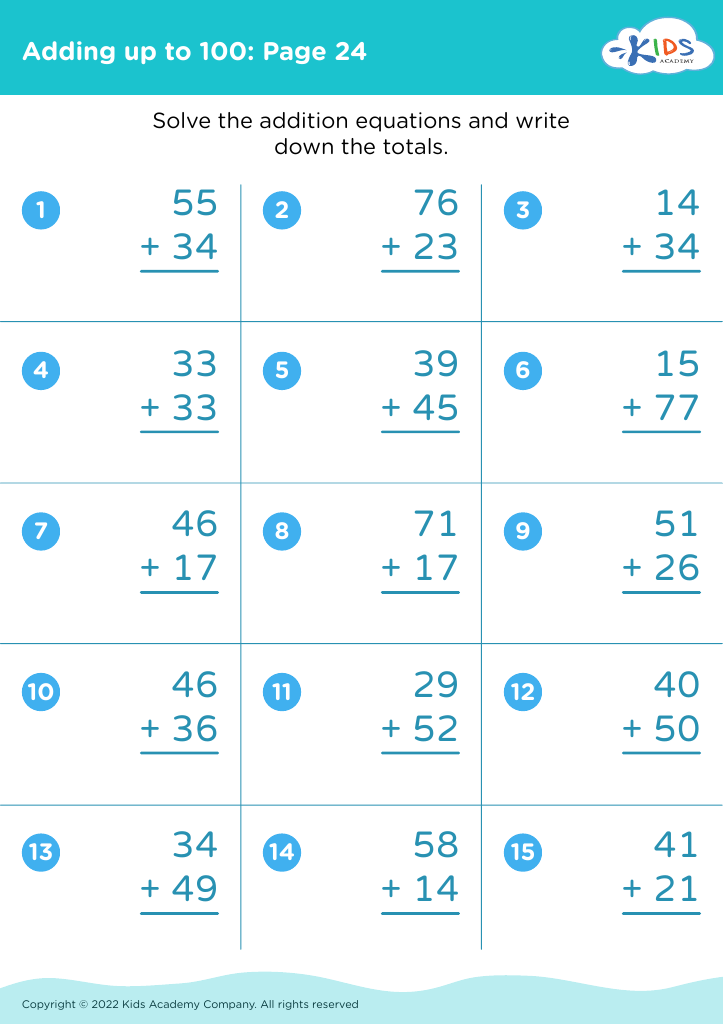
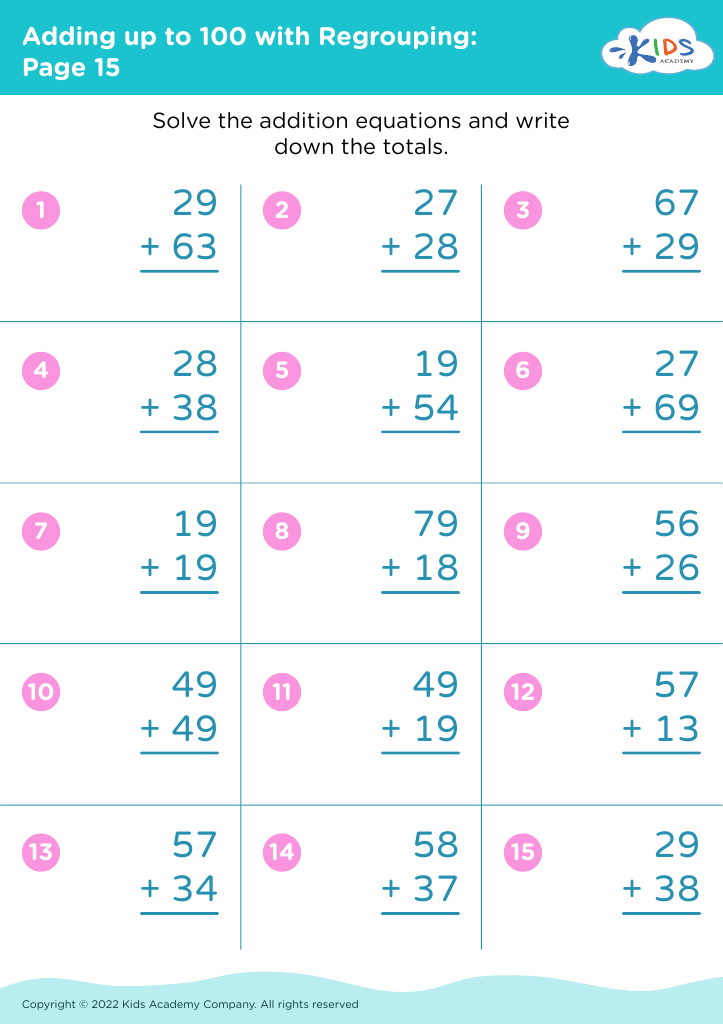
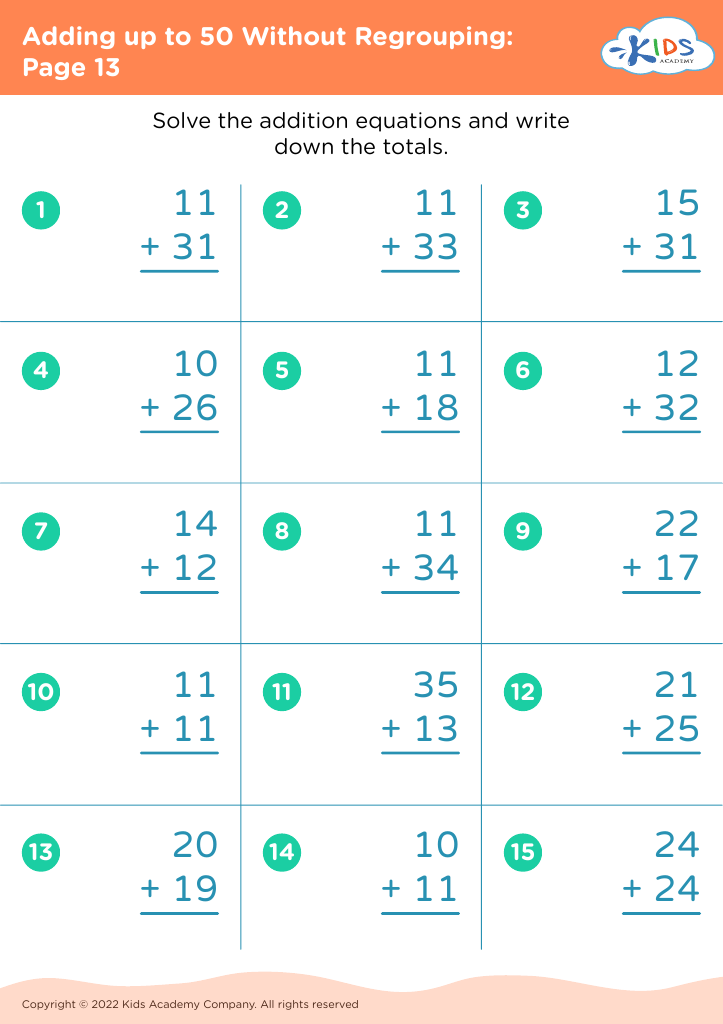
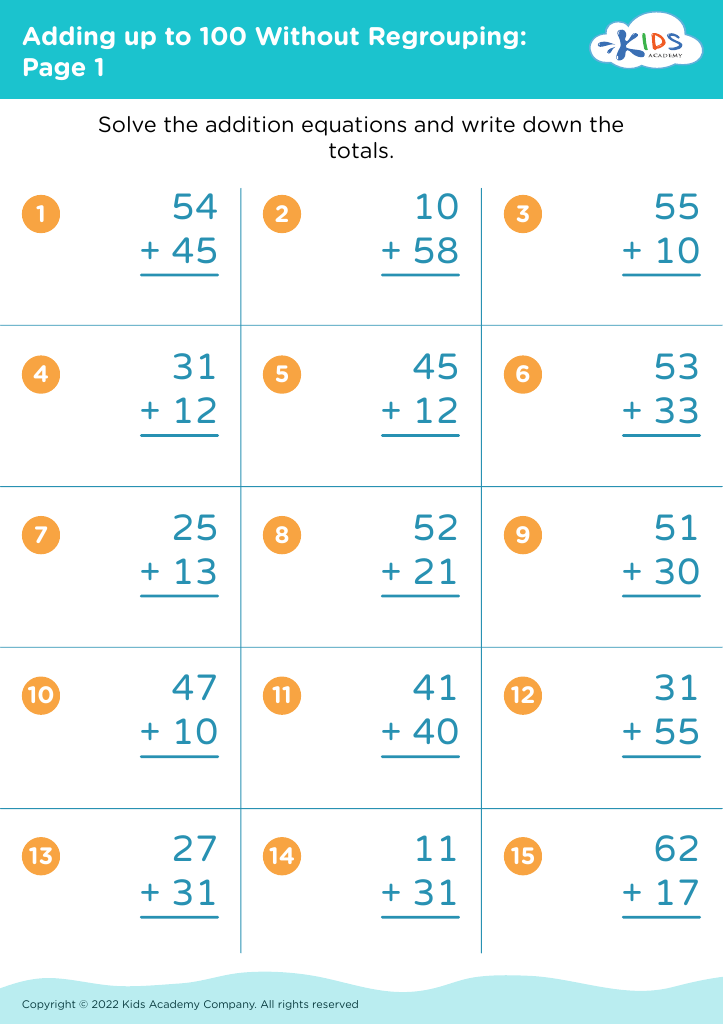
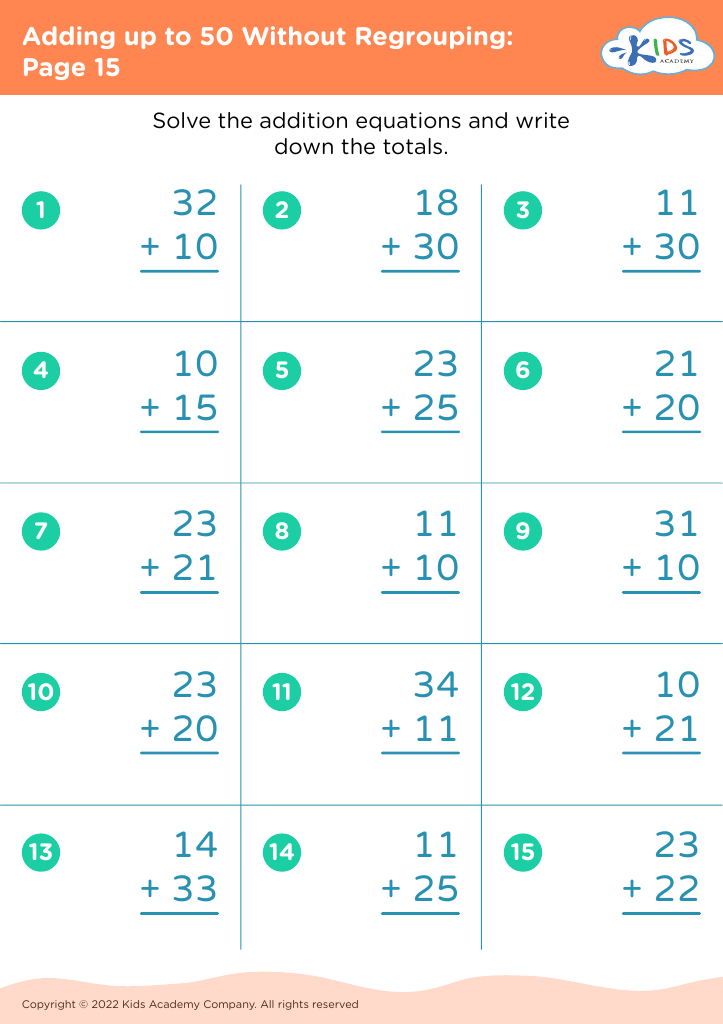
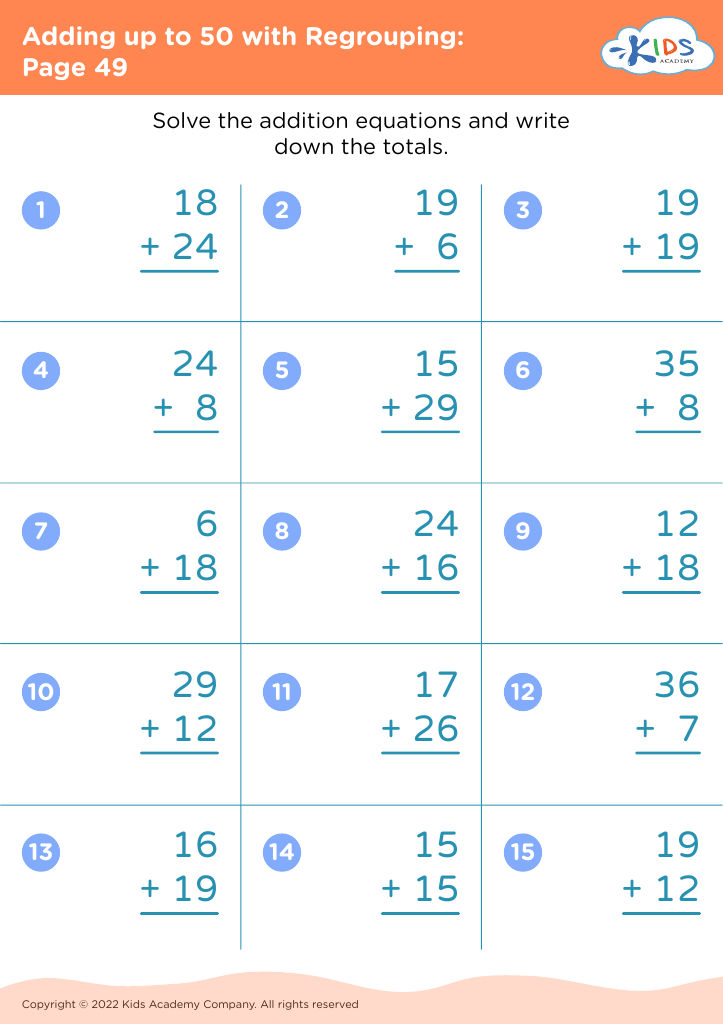
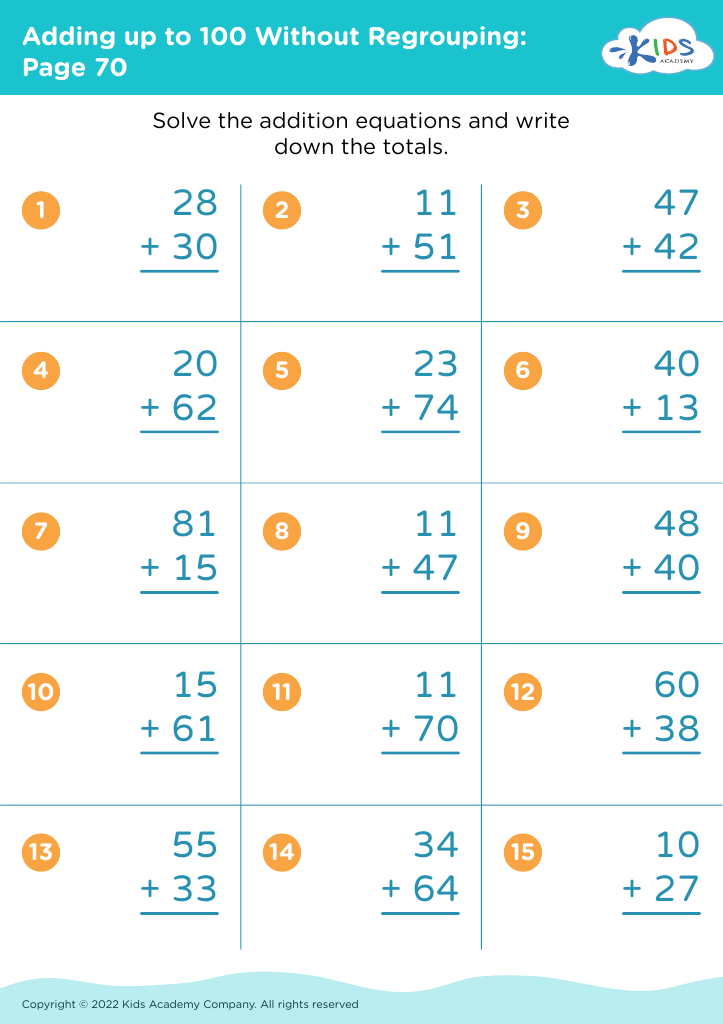
Discover our "Enhance Counting Skills Addition Worksheets" specifically designed for 7-year-olds! These engaging worksheets provide a fun and effective way for young learners to practice their counting and addition skills. With a variety of activities that include visual aids, number lines, and interactive exercises, children will develop a strong foundation in math. Our resources cater to different learning styles, making math enjoyable and accessible. Whether used in the classroom or at home, these worksheets promote critical thinking and problem-solving abilities. Start boosting your child’s confidence and competence in math today with our thoughtfully crafted addition worksheets!
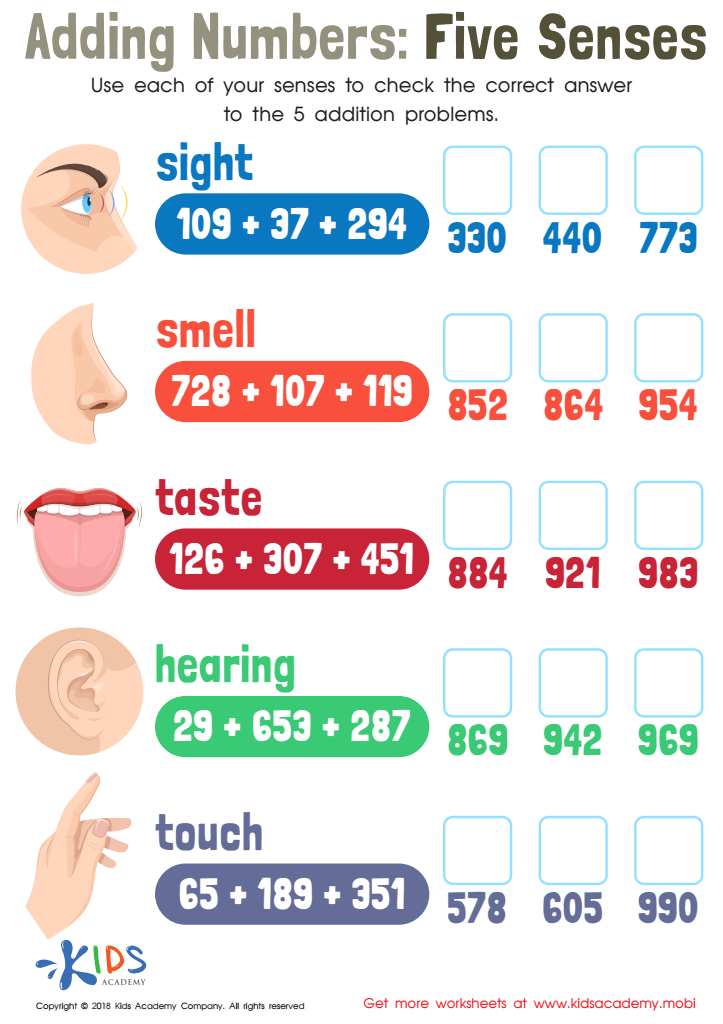
Adding Numbers: Five Senses Worksheet
 Assign to My Students


.jpg)





Enhancing counting and addition skills in 7-year-olds is crucial for their overall cognitive development and academic success. At this age, children begin to build a foundational understanding of mathematics that will support their learning in later grades. Strong counting skills are essential, as they not only serve as the basis for addition and subtraction but are also critical for problem-solving, measuring, and even daily activities like budgeting or cooking.
Parents and teachers play a significant role in nurturing these skills by engaging children in playful and interactive counting and addition exercises. When children practice counting and adding in fun and relatable contexts—such as through games, teaching moments, and engaging activities—they become more motivated and confident in their abilities. This early mastery can lead to improved performance in mathematics and foster a positive attitude toward the subject.
Moreover, these skills are interconnected with broader learning, such as developing logical thinking and perseverance. By caring for and prioritizing the enhancement of counting and addition, parents and teachers help lay a solid foundation that encourages lifelong learning and curiosity. Ultimately, addressing these essential skills ensures children are better equipped to face more complex mathematical concepts in the future.








