Enhances number recognition Addition Worksheets for 7-Year-Olds
4 filtered results
-
From - To
Boost your child’s math skills with our engaging "Enhances Number Recognition Addition Worksheets" designed specifically for 7-year-olds! These worksheets combine number recognition with addition practice, ensuring a well-rounded approach to developing essential math abilities. Each activity focuses on reinforcing number familiarity while challenging kids to solve addition problems, making learning both fun and effective. Perfect for independent study or as supplementary practice, our worksheets are aligned with educational standards and crafted to cater to young learners' diverse needs. Equip your child with the confidence in their math skills they need to excel, while enjoying the process of learning through interactive, colorful activities!
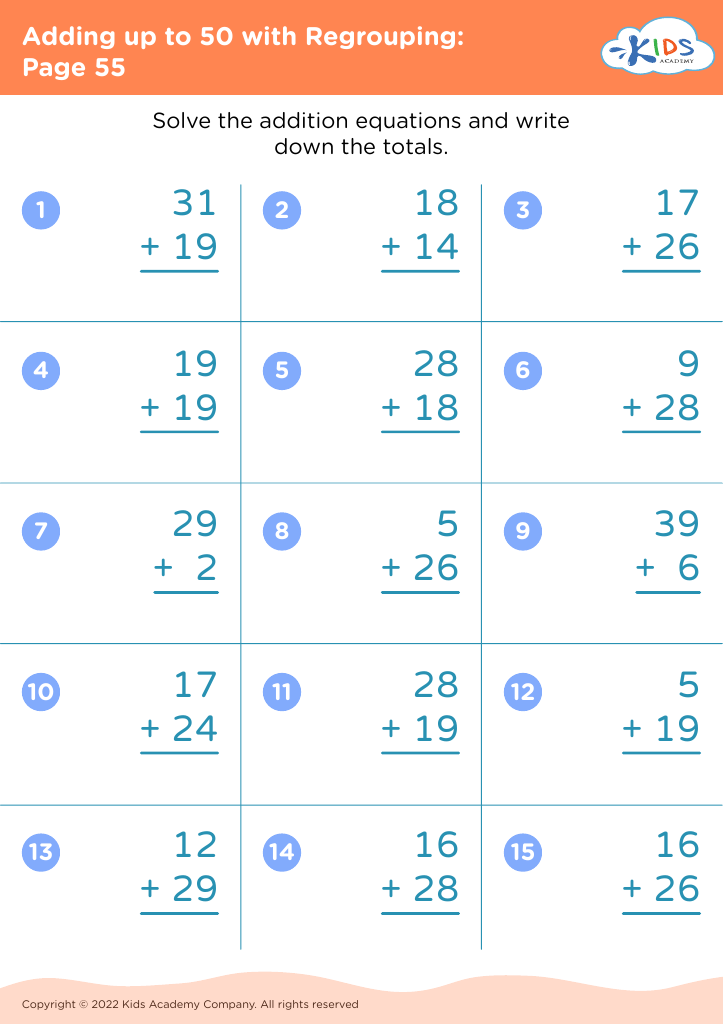
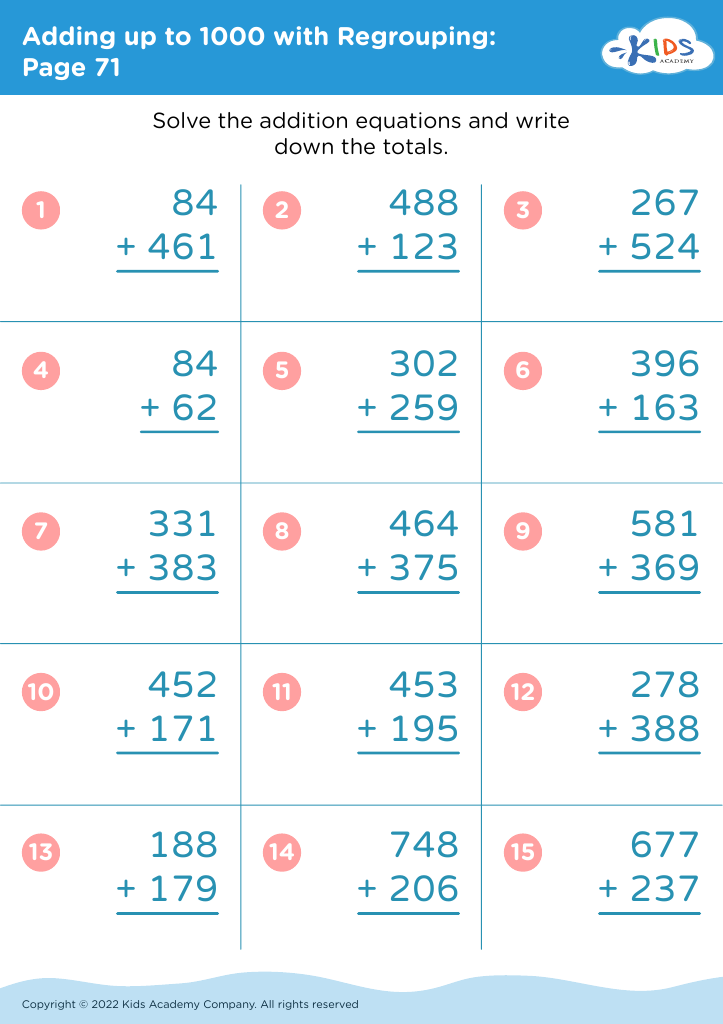
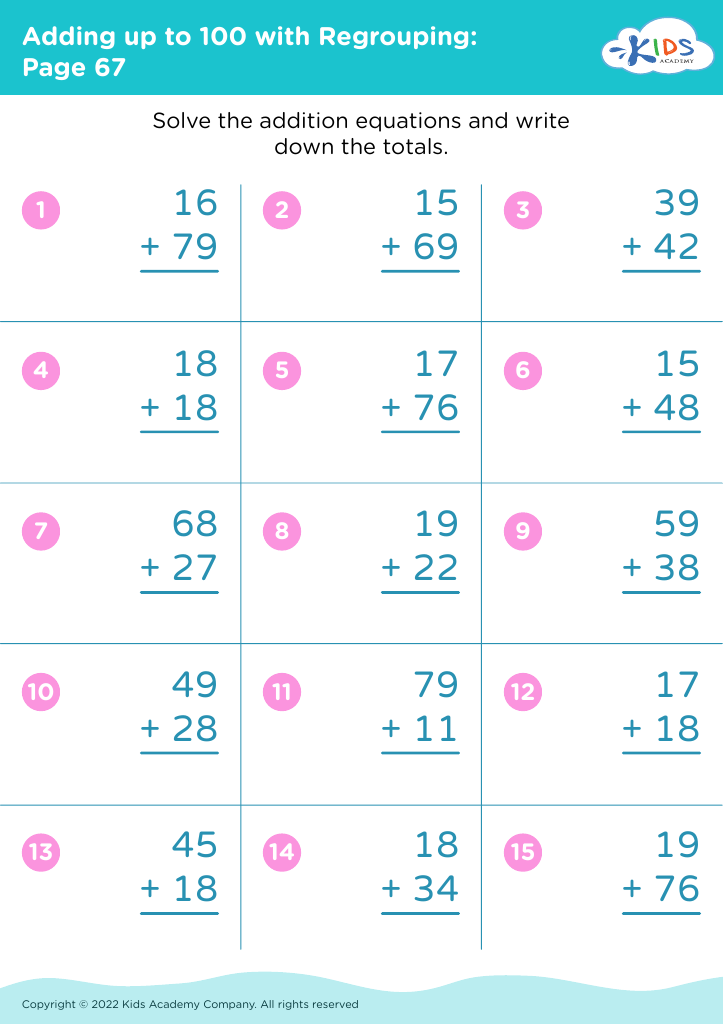
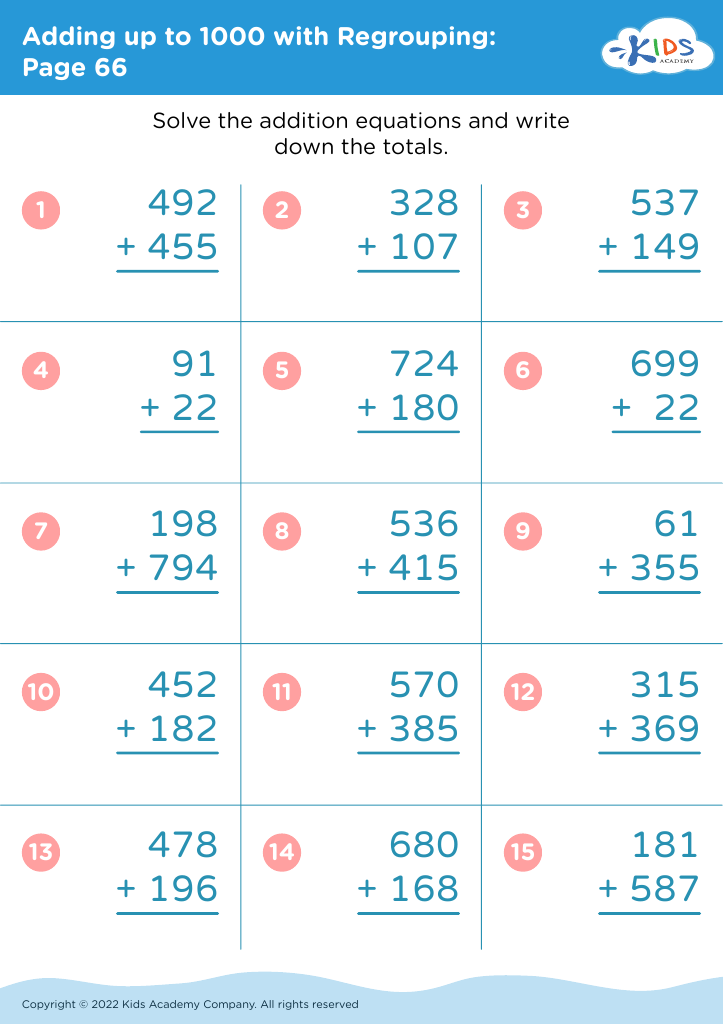








Enhancing number recognition and addition skills for 7-year-olds is crucial for several reasons. At this age, children are transitioning from basic arithmetic to more complex math concepts, and a strong foundational understanding of numbers is essential for their future academic success. Number recognition goes beyond simply knowing numbers; it fosters a child's ability to identify relationships and patterns, which are integral to higher-level math.
For teachers and parents, supporting the development of these skills builds children's confidence in using math in everyday situations. This confidence leads to a positive attitude towards learning and math, which can mitigate math anxiety, a common issue that starts at an early age. Moreover, mastering addition helps children develop critical problem-solving skills and logical thinking, necessary competencies for the 21st-century skillset.
Additionally, enhancing these skills at home or in school fosters collaboration between parents, educators, and children, creating a supportive learning environment. Engaging parents in their child's development gives them the tools to assist in practical applications, reinforcing what is taught in the classroom. All these factors contribute to a child's overall academic achievement and lifelong learning capabilities, making it imperative for parents and teachers to prioritize number recognition and addition enhancement.








