Fine motor skills (writing) Addition Worksheets for 7-Year-Olds
6 filtered results
-
From - To
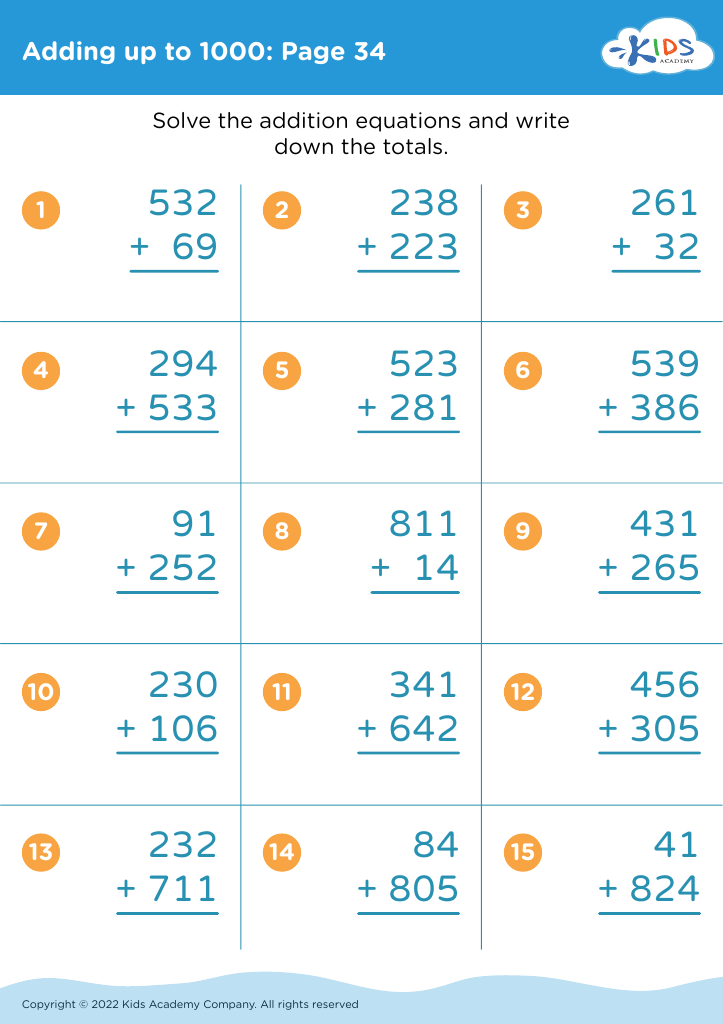
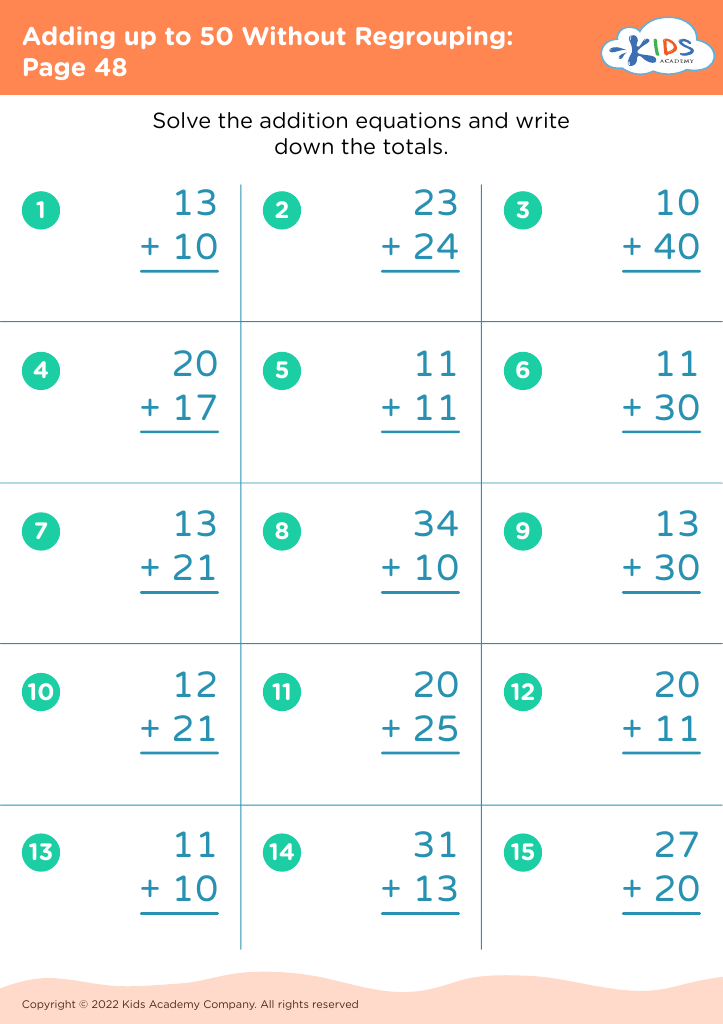
Boost your 7-year-old's math and handwriting abilities with our Fine Motor Skills (Writing) Addition Worksheets. Specially designed for young learners, these engaging worksheets combine fun math problems with exercises that enhance fine motor skills. Kids will practice addition while improving their pencil control, hand-eye coordination, and writing precision. Each worksheet offers a delightful mix of colorful illustrations and interactive tasks, making learning both enjoyable and educational. Perfect for classroom use or extra practice at home, our worksheets provide a wonderful way to support your child's academic growth and fine motor skill development. Ready to help your child excel? Download now!
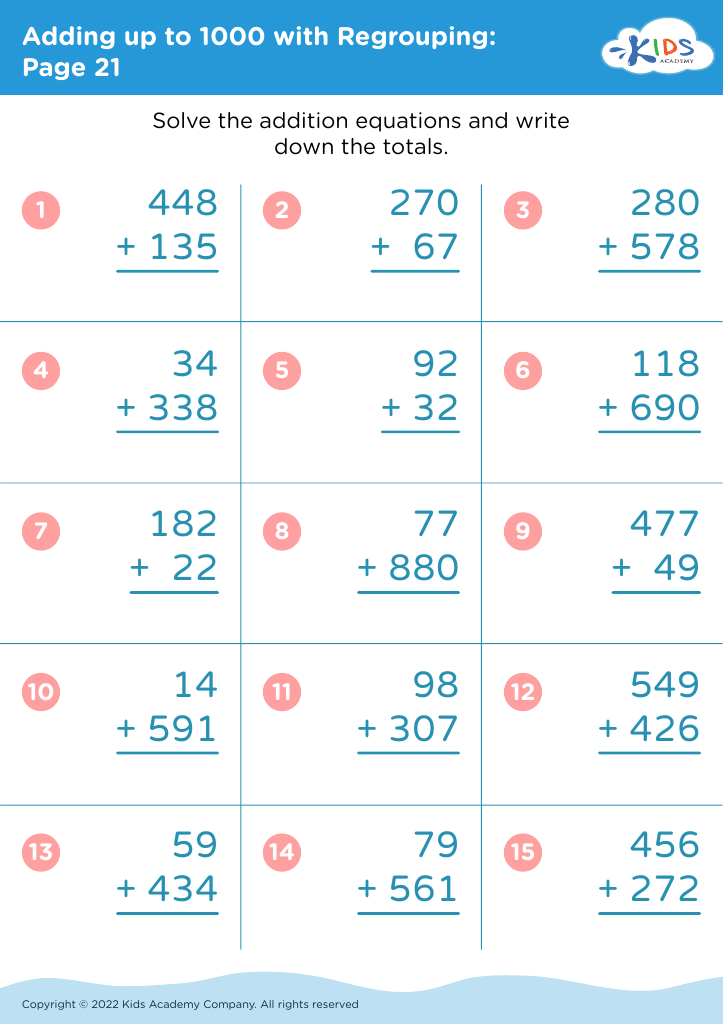
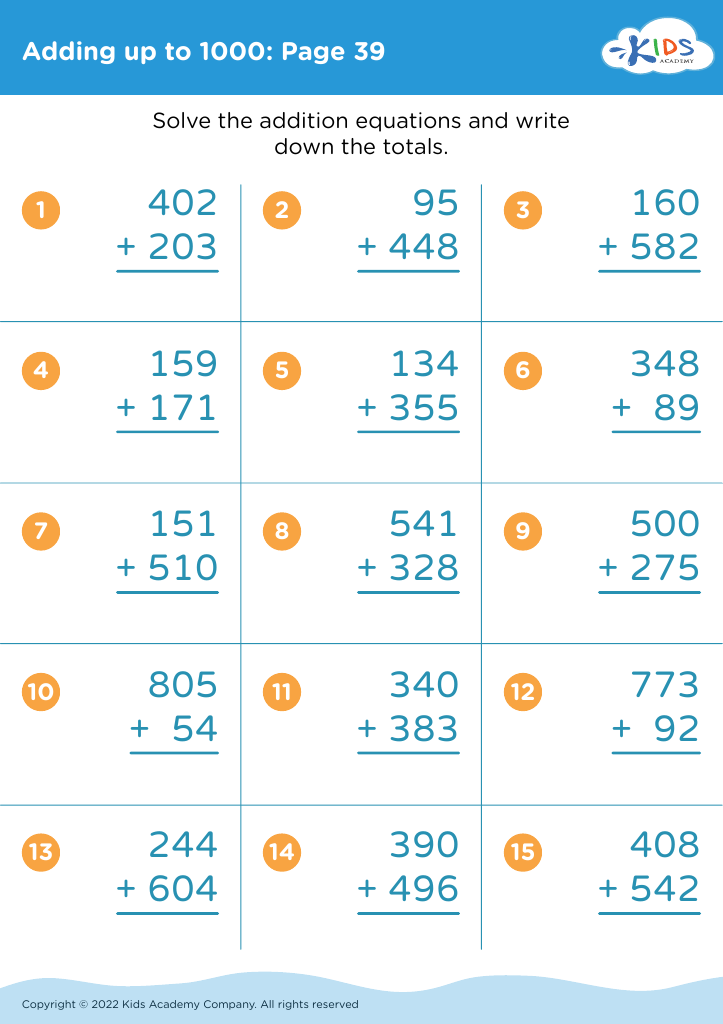
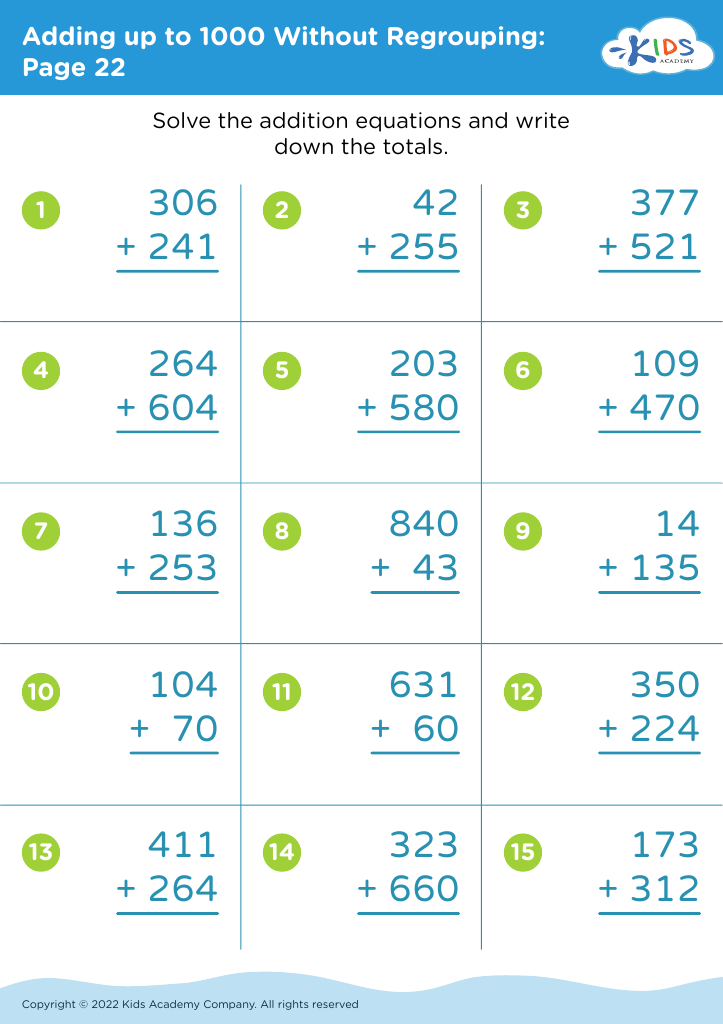
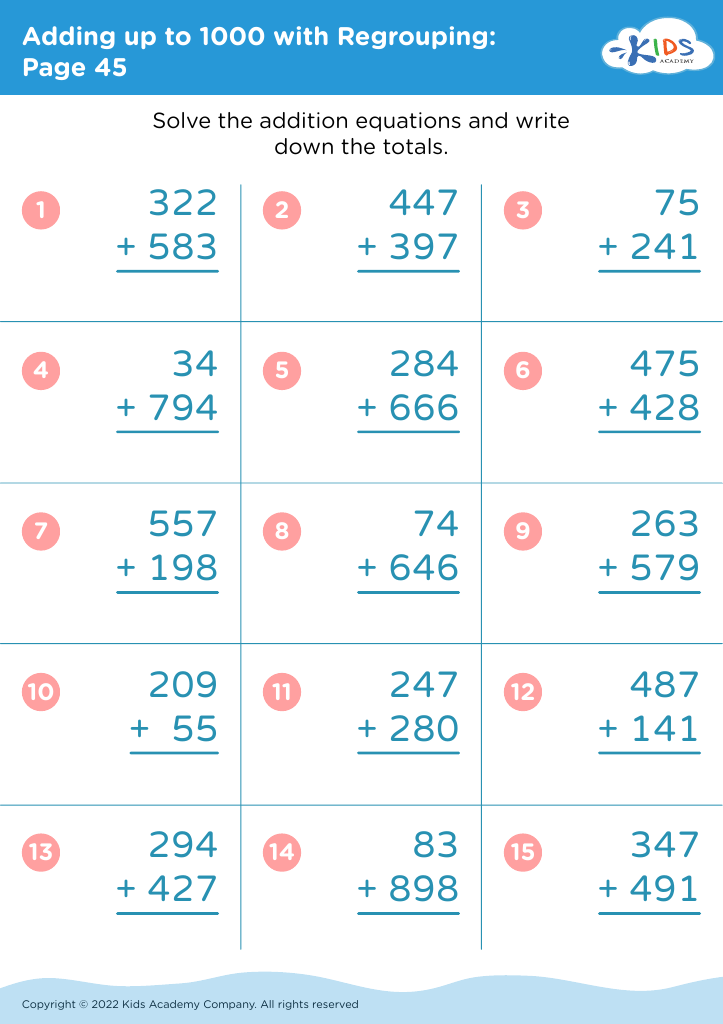








Fine motor skills are the intricate movements that involve the small muscles of the hands and fingers, and their development is critical for children around the age of 7. Parents and teachers should prioritize the cultivation of these skills because they directly influence a child's ability to perform essential tasks like writing. At this age, children are solidifying their handwriting abilities—a cornerstone for effective communication in their educational journey.
The precision and control derived from fine motor skills enable children to write legibly and comfortably. This impacts their academic performance, given that much of early education revolves around writing activities. Strong fine motor skills contribute to a greater ease in forming letters, spacing words appropriately, and legibly presenting their work.
Moreover, developing these skills fosters independence and confidence. When children can manage tasks such as buttoning clothes, tying shoelaces, or eating without assistance, they experience a boost in self-esteem. Fine motor skill development is also linked to other cognitive aspects, such as problem-solving and planning abilities. Encouraging activities that enhance these skills, such as drawing, cutting with scissors, and playing with construction toys, essentially provides a dual benefit: laying a strong educational foundation and contributing to overall cognitive and personal growth.








