Improving reading skills Addition Worksheets for 7-Year-Olds
4 filtered results
-
From - To
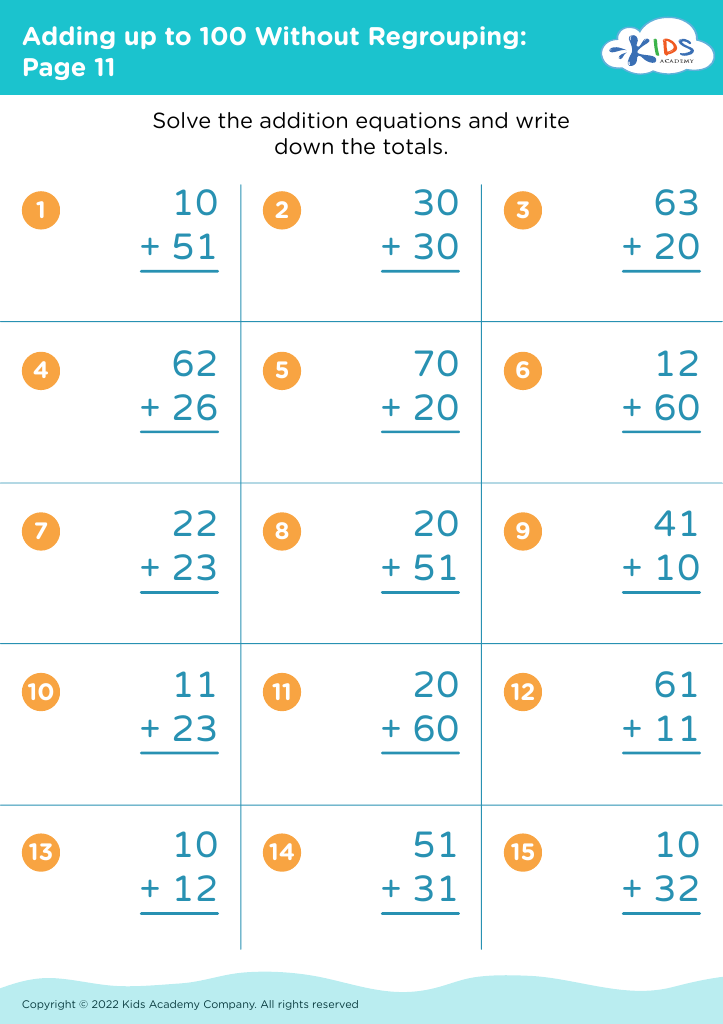
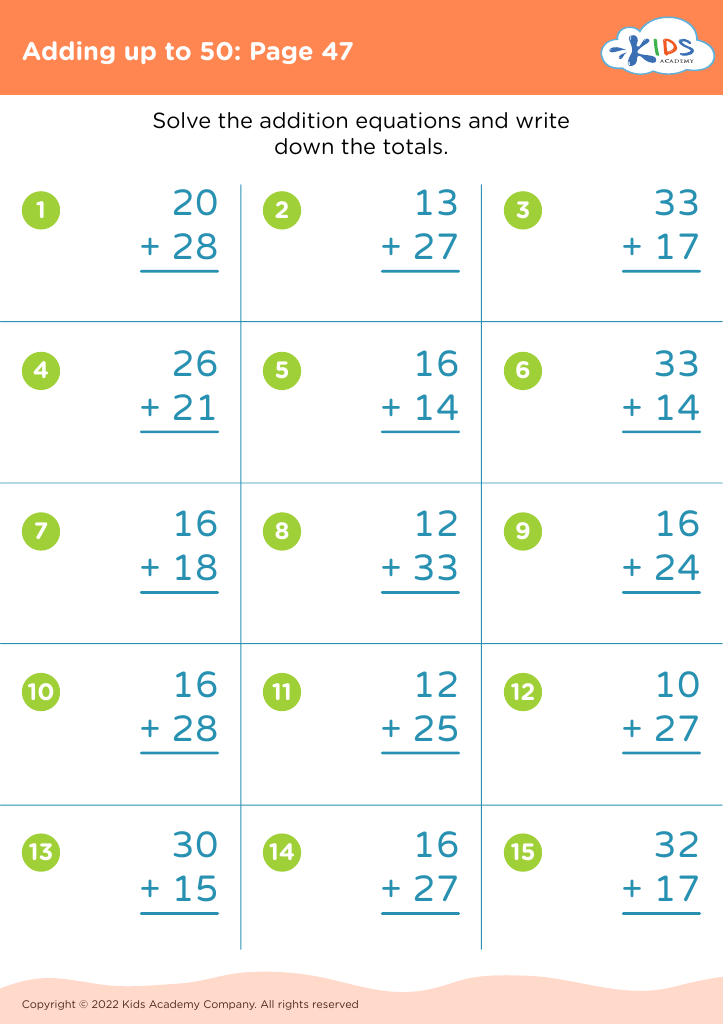
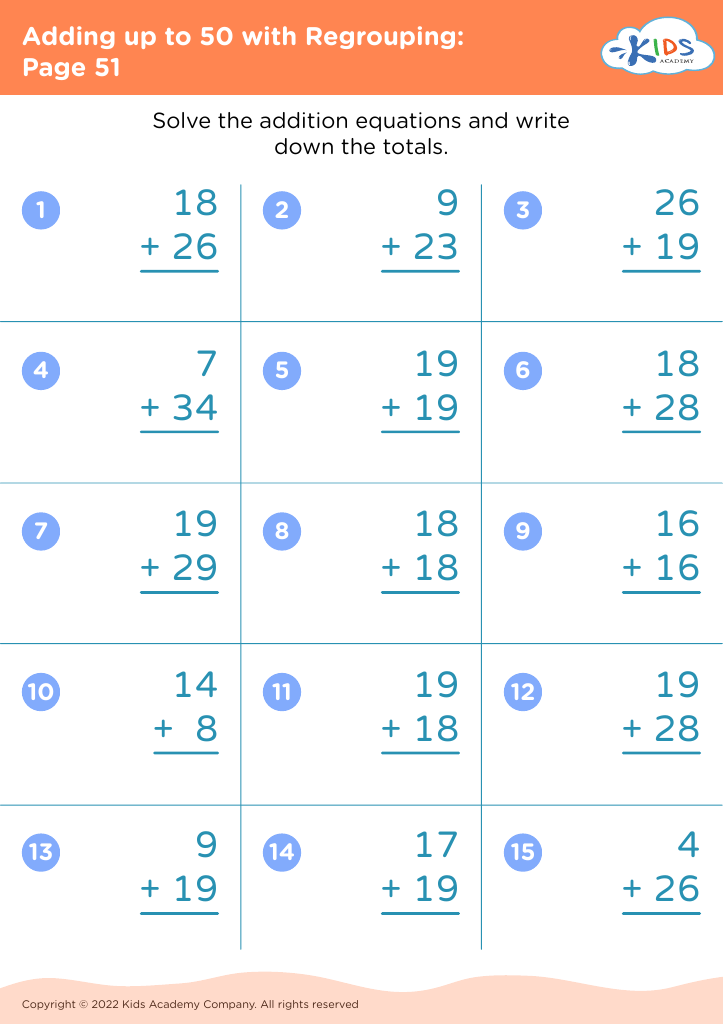
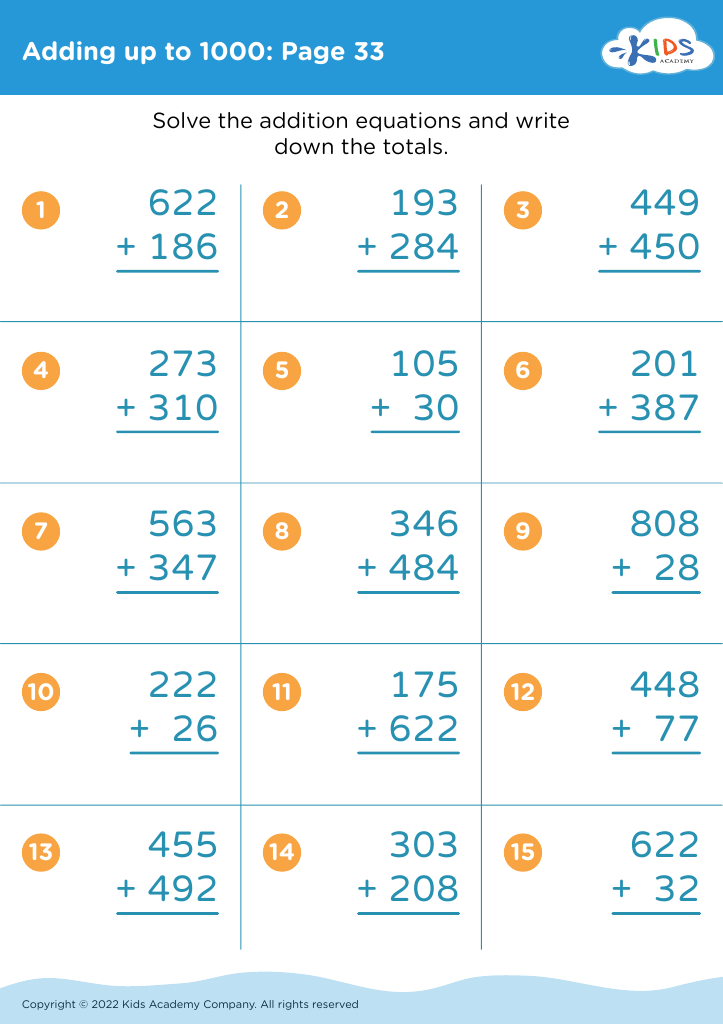
Boost your child's reading proficiency with our engaging Addition Worksheets designed specifically for 7-year-olds! At Kids Academy, we believe that enhancing mathematical skills and reading comprehension go hand in hand. Our interactive worksheets blend vibrant visuals and friendly characters that capture your child's interest while reinforcing their addition skills. With designed activities, kids will practice crucial reading strategies alongside math problems, all tailored to their developmental level. Equip your child with the confidence and knowledge they need to excel in both subjects. Explore our collection today and watch them thrive as they strengthen their reading capabilities while mastering addition!








Improving reading skills in 7-year-olds is crucial for several reasons. At this age, children are typically transitioning from “learn to read” to “read to learn,” making it essential for them to develop strong reading capabilities. Mastery of reading skills lays the foundation for deeper understanding across all subjects, enabling students to comprehend not just stories and texts, but also instructions, math problems, and scientific concepts.
Moreover, reading fosters critical thinking and imagination, enhancing cognitive development. As children expand their vocabulary through reading, they become more articulate and confident in both speaking and writing. This skills set not only enriches their communication but also enhances their engagement with peers and educators.
Parents and teachers play a pivotal role in nurturing a child’s love for reading, making it an enjoyable and interactive experience. Supporting reading at this age can prevent future academic struggles, reduce frustration, and cultivate a lifelong appreciation for literature and learning.
Lastly, proficient reading skills are linked to improved academic performance, better self-esteem, and greater social interactions. By prioritizing reading skill enhancement, adults instill essential tools that empower children, ultimately paving the way for their future success in school and beyond.








