Learning number patterns Addition Worksheets for 7-Year-Olds
3 filtered results
-
From - To
Discover our engaging "Learning Number Patterns Addition Worksheets for 7-Year-Olds"! Designed to reinforce foundational math skills, these worksheets help young learners recognize and practice number patterns through fun addition exercises. As children explore various patterns, they enhance their problem-solving abilities and boost their confidence in math. Each worksheet is crafted to challenge and motivate 7-year-olds while providing clear instructions and colorful visuals. Perfect for home or classroom use, our resources encourage a love for learning and make math enjoyable. Start your child’s journey to math mastery today with our thoughtfully designed worksheets that combine education and fun!
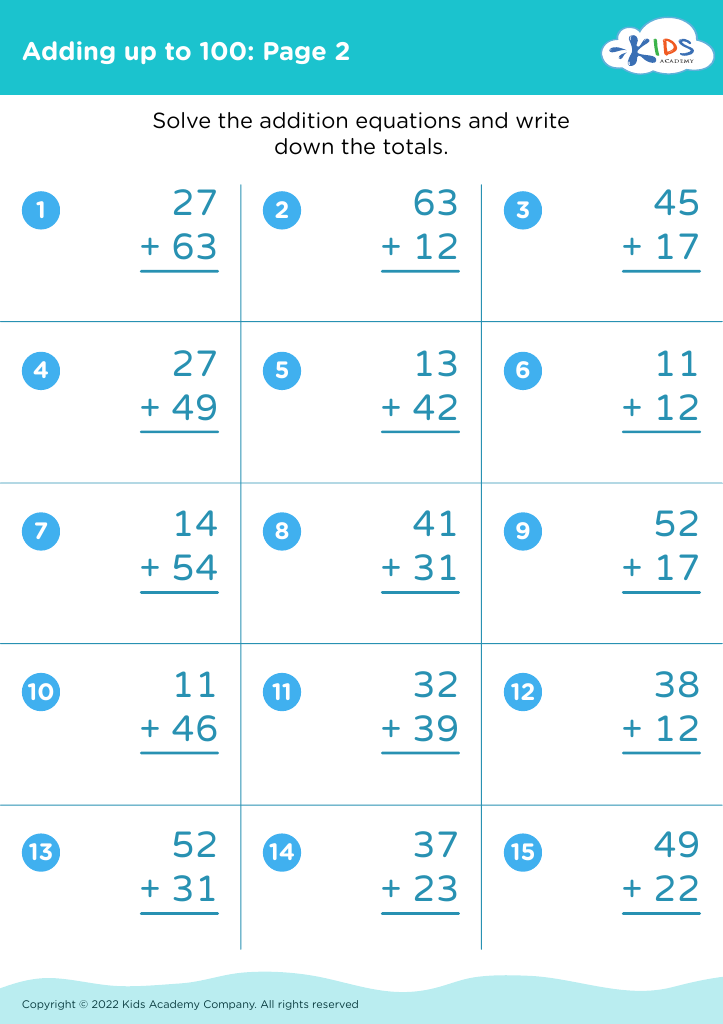
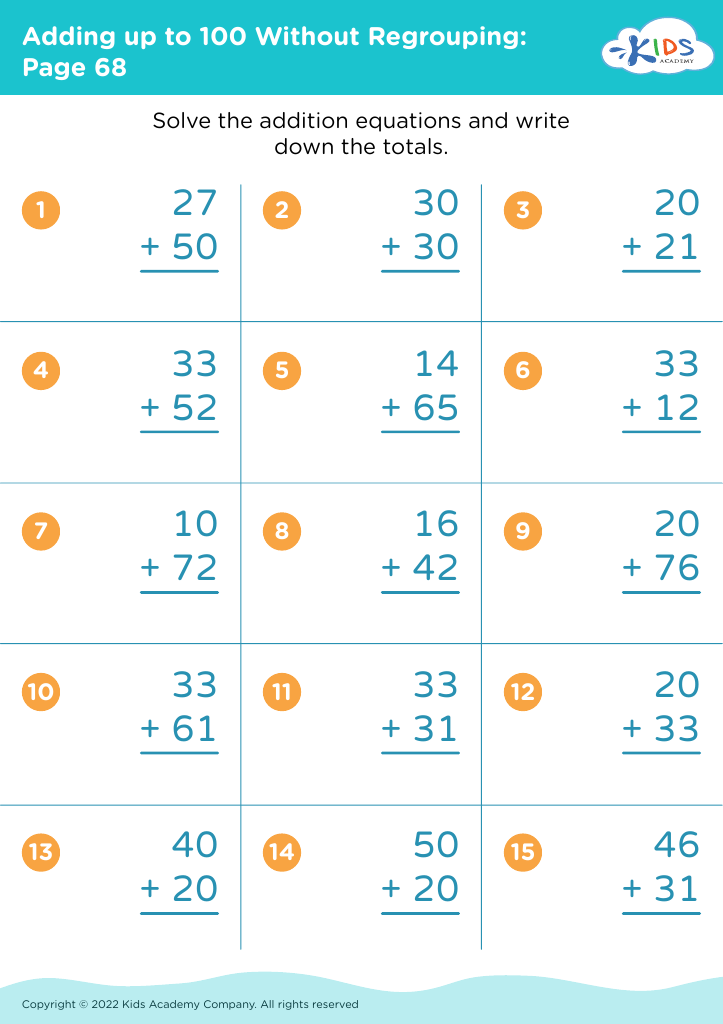
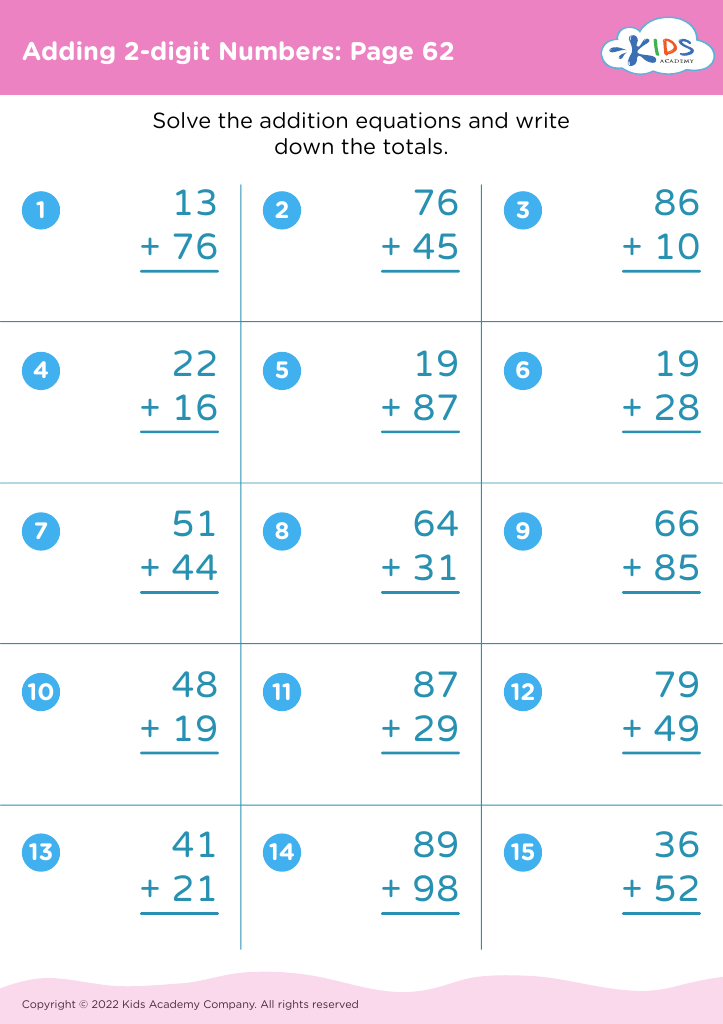








Learning number patterns in addition is crucial for 7-year-olds as it lays a strong foundation for their mathematical understanding. At this age, children are transitioning from concrete to abstract thinking, and recognizing patterns enhances their problem-solving skills. When students grasp addition patterns, they not only become proficient in basic arithmetic but also develop critical thinking capabilities that will benefit them in more complex mathematical concepts, like multiplication and algebra later on.
Moreover, understanding number patterns fosters confidence in young learners. When children can recognize sequences and relationships in numbers, they are likely to approach math with a positive mindset, reducing anxiety about the subject. Engaging with patterns encourages enthusiasm for learning, making math enjoyable rather than daunting.
For parents and teachers, emphasizing number patterns aids in identifying students’ learning styles and gaps in understanding. This knowledge enables tailored instruction and better support at home or in the classroom. Ultimately, fostering a solid grasp of addition patterns equips children with essential skills they will utilize throughout their lives, not just in math but in real-world problem-solving situations. Therefore, supporting children in mastering these concepts is vital for their academic success and overall cognitive development.








