Practice subtraction Addition Worksheets for 7-Year-Olds
5 filtered results
-
From - To
Welcome to our Practice Subtraction Addition Worksheets for 7-Year-Olds! Tailored for young learners, these engaging worksheets help reinforce essential math skills by blending addition and subtraction exercises. Designed with bright colors and fun illustrations, children will enjoy tackling a variety of problems that strengthen their number sense and computational abilities. These printable resources aim to build confidence while fostering a positive attitude towards math. Whether at home or in the classroom, our worksheets are a fantastic tool for enhancing understanding and retention. Dive into our collection and make learning subtraction and addition an enjoyable adventure for your child!
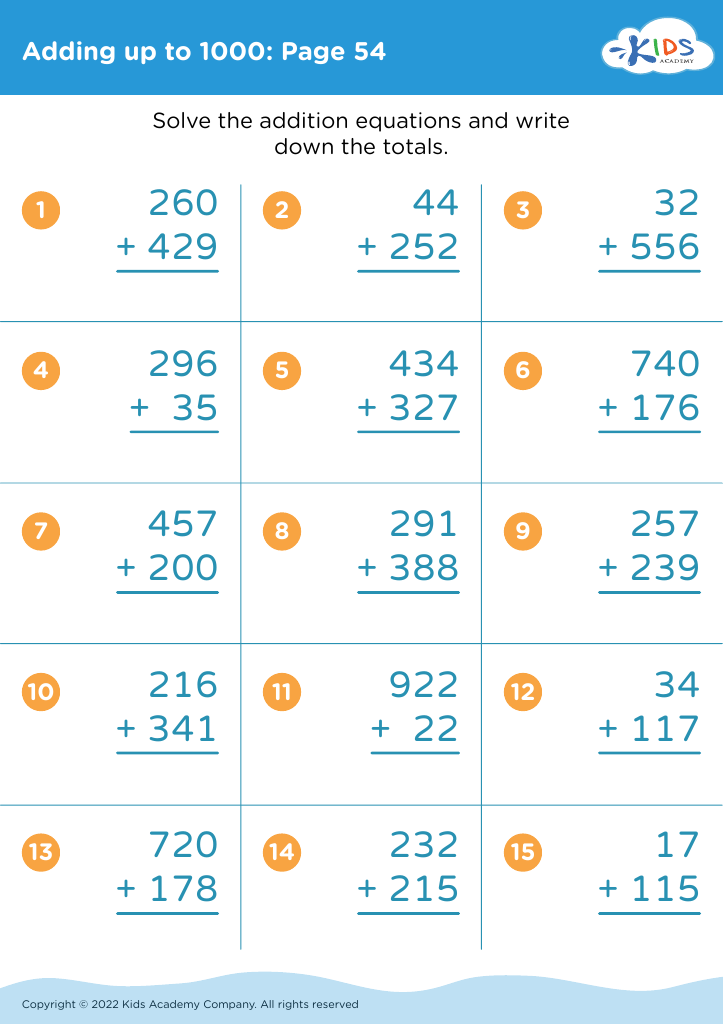
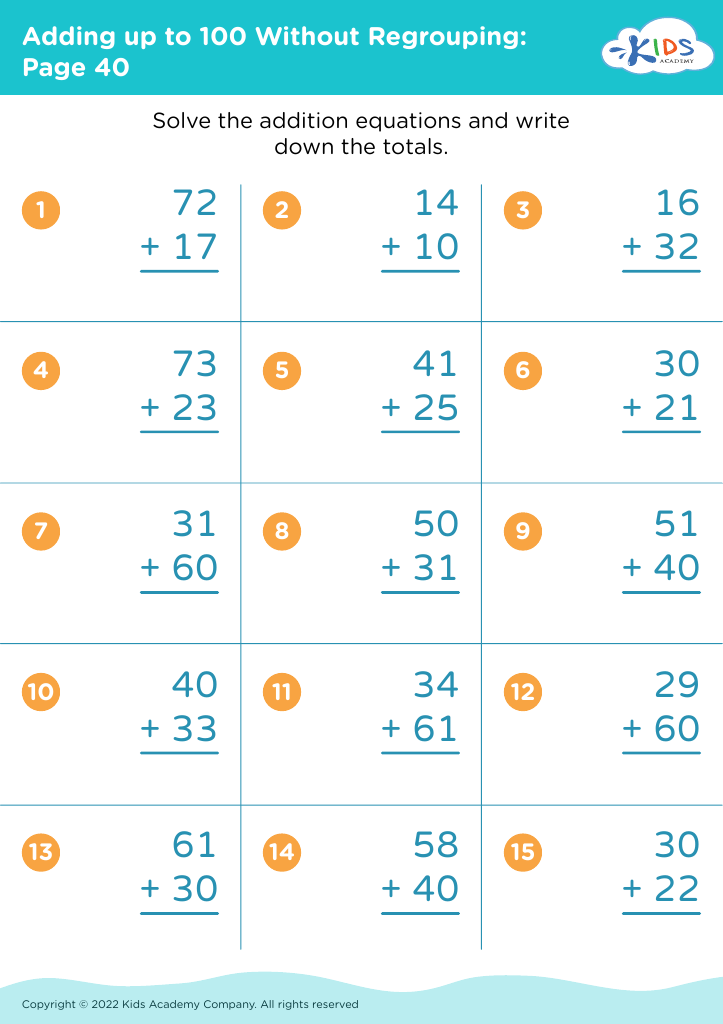
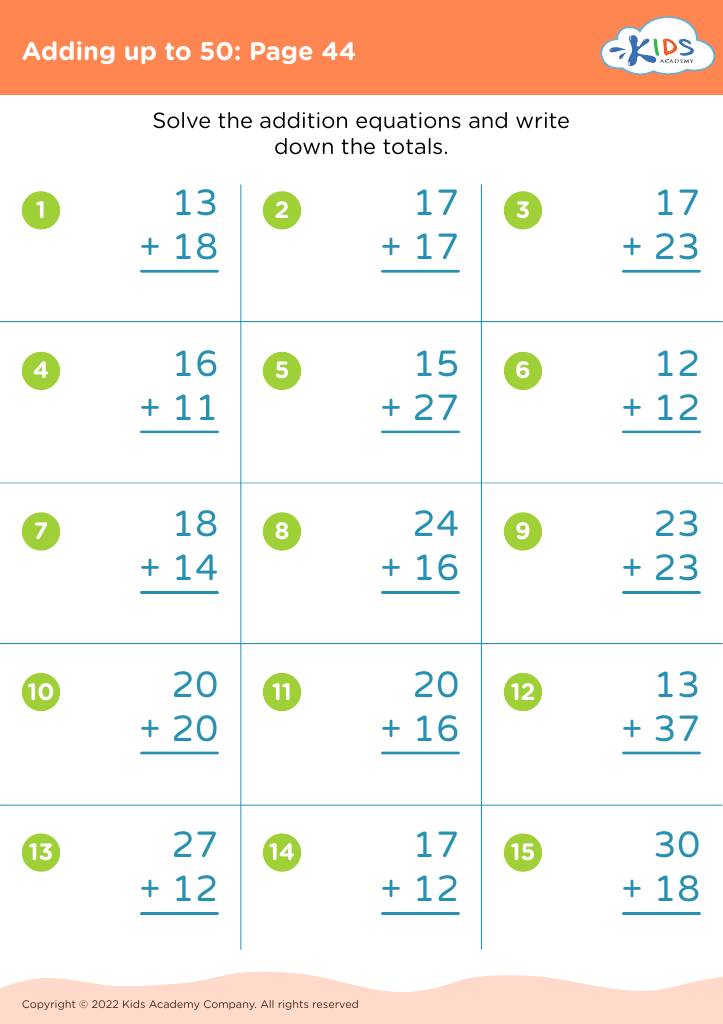
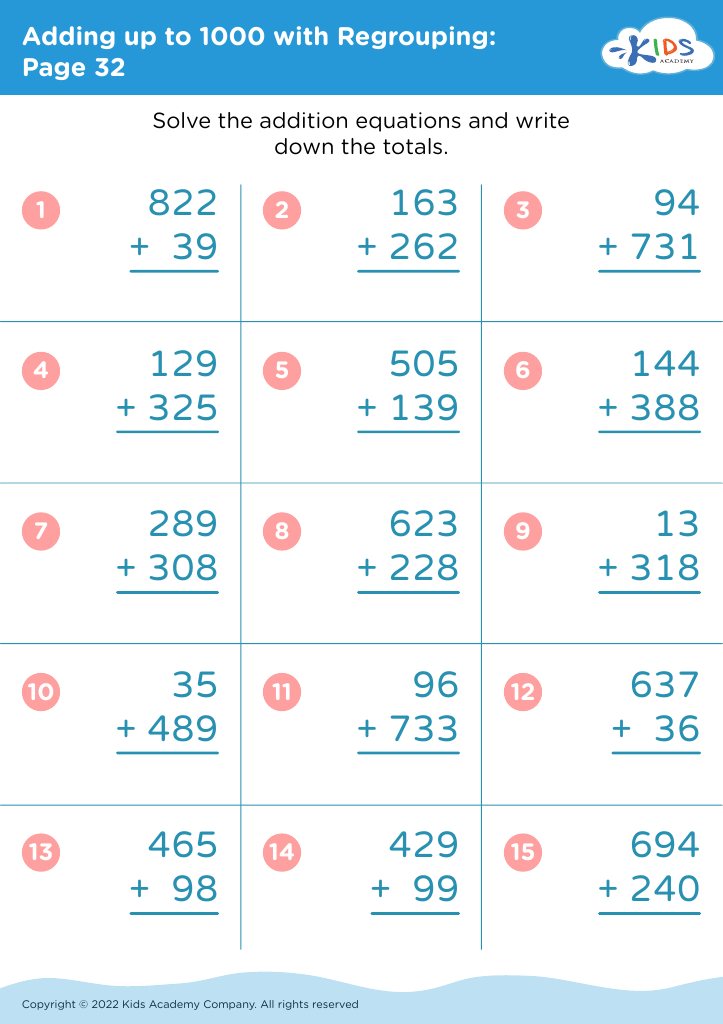
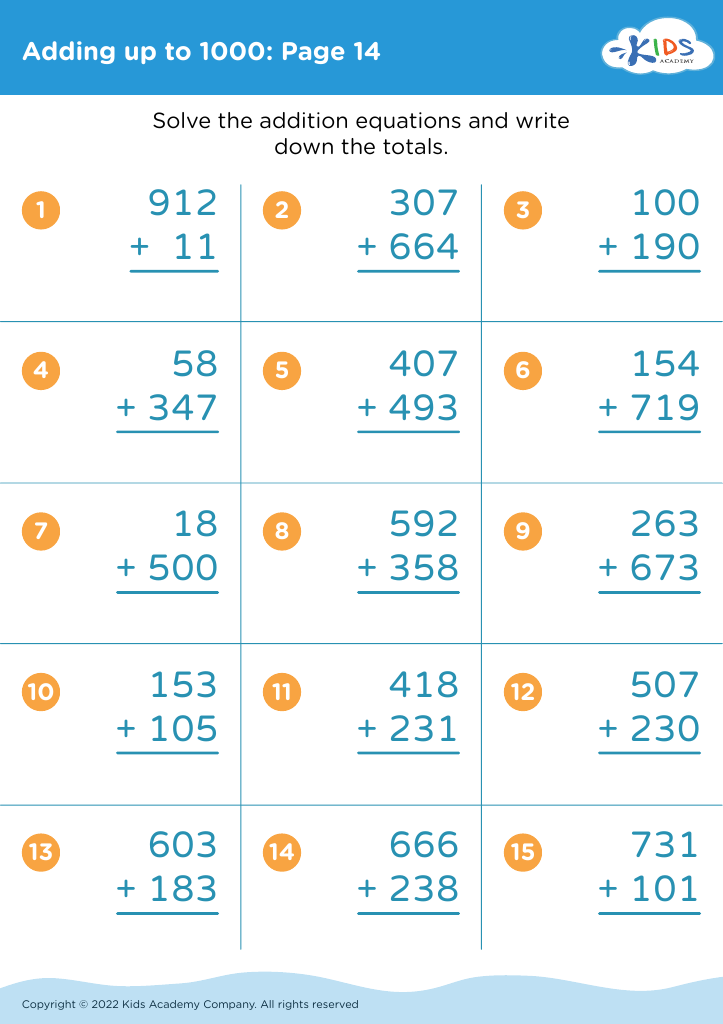








Parents and teachers should prioritize practicing addition and subtraction with 7-year-olds as it lays the foundation for critical math skills they will use throughout their lives. At this age, children are in a crucial developmental stage where they are transitioning from concrete understanding of numbers to more abstract thinking. Mastering these basic operations enhances their problem-solving abilities and boosts their confidence in math.
Regular practice helps reinforce the concepts, enabling children to perform calculations more fluently. This proficiency not only aids in their current studies but also prepares them for more complex mathematical concepts such as multiplication, division, and fractions. Engaging in consistent practice promotes cognitive development, as children learn to recognize patterns, make strategic decisions, and understand number relationships.
Moreover, positive early experiences with math foster a lifelong appreciation for the subject. By emphasizing these skills, parents and teachers can inspire children to cultivate curiosity and a growth mindset. This can ultimately lead to higher academic performance across all subjects, as math is interconnected with various disciplines. Therefore, investing time in adding and subtracting is crucial for nurturing well-rounded, mathematically literate individuals.








