Problem-solving practice Addition Worksheets for 7-Year-Olds
13 filtered results
-
From - To
Help your 7-year-old master essential math skills with our engaging Problem-Solving Practice Addition Worksheets! Specially designed for young learners, these worksheets offer fun and interactive exercises that build a solid foundation in addition through real-life scenarios. Each worksheet is crafted to enhance critical thinking and problem-solving abilities, ensuring your child improves their math confidence and competence. Perfect for in-class or at-home practice, these educational resources provide a balanced mix of challenges and enjoyment, making learning addition a delightful experience. Download now and watch your child's math skills flourish!
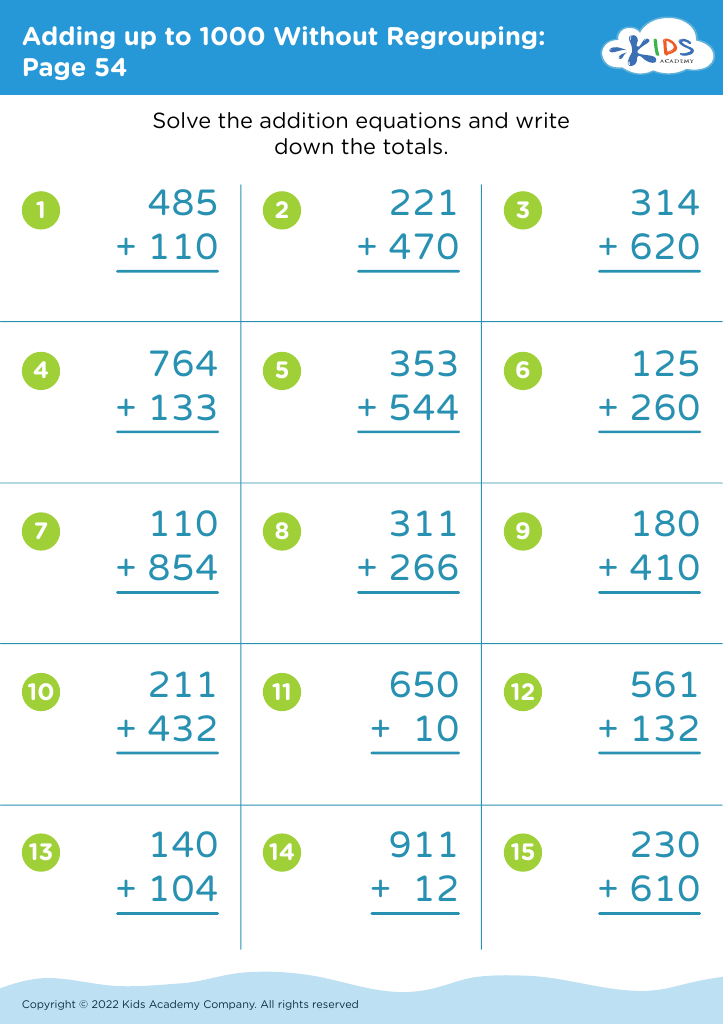
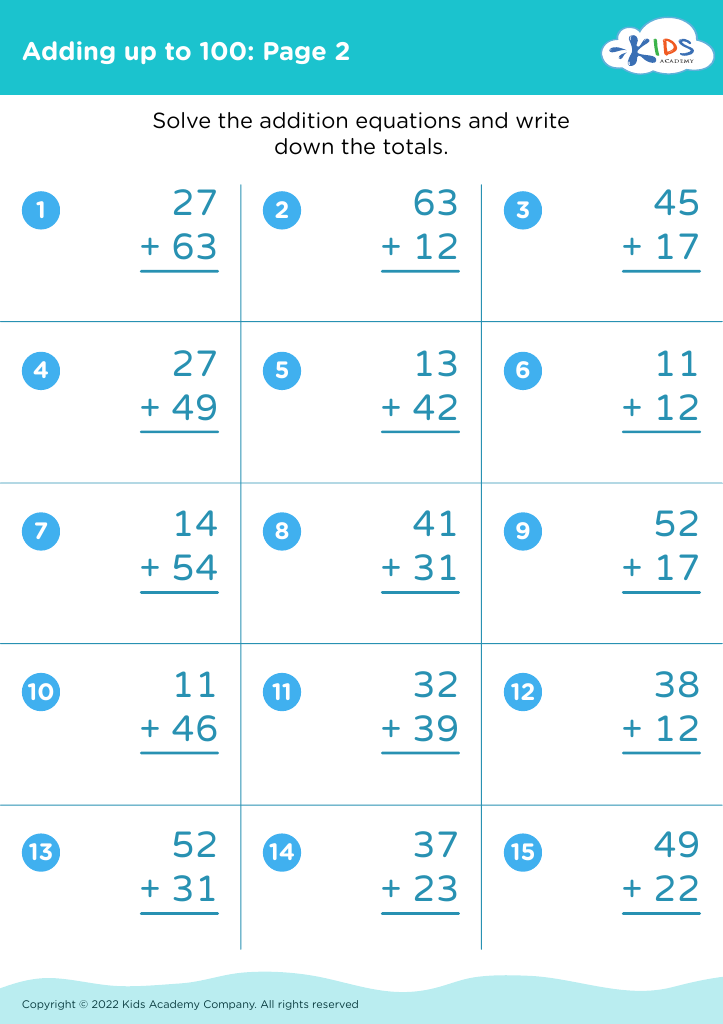
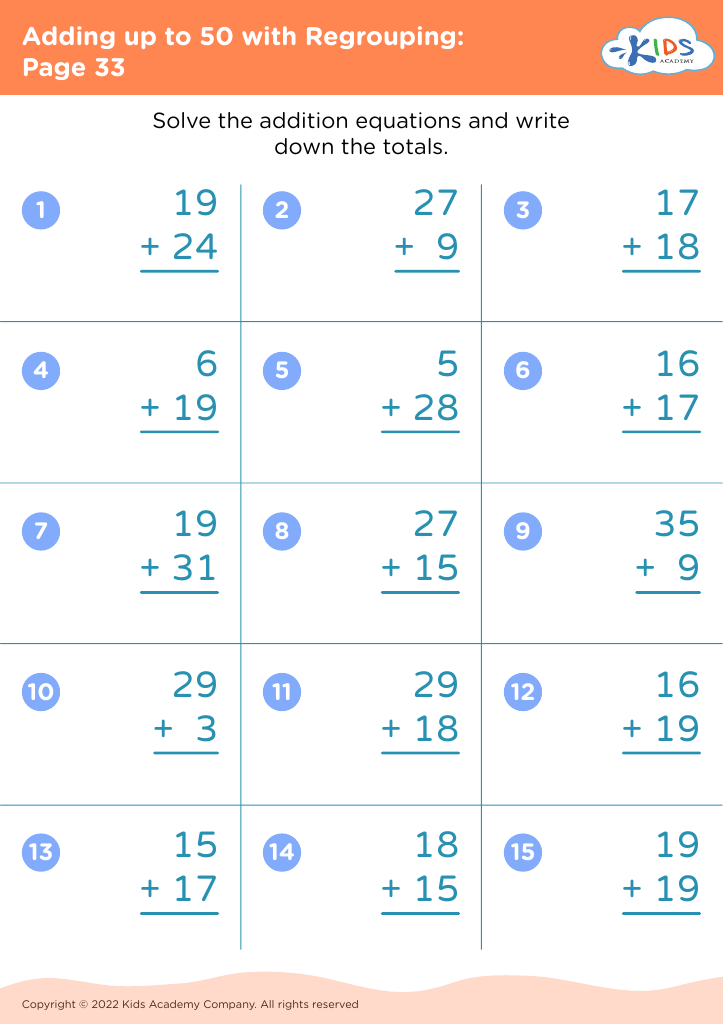
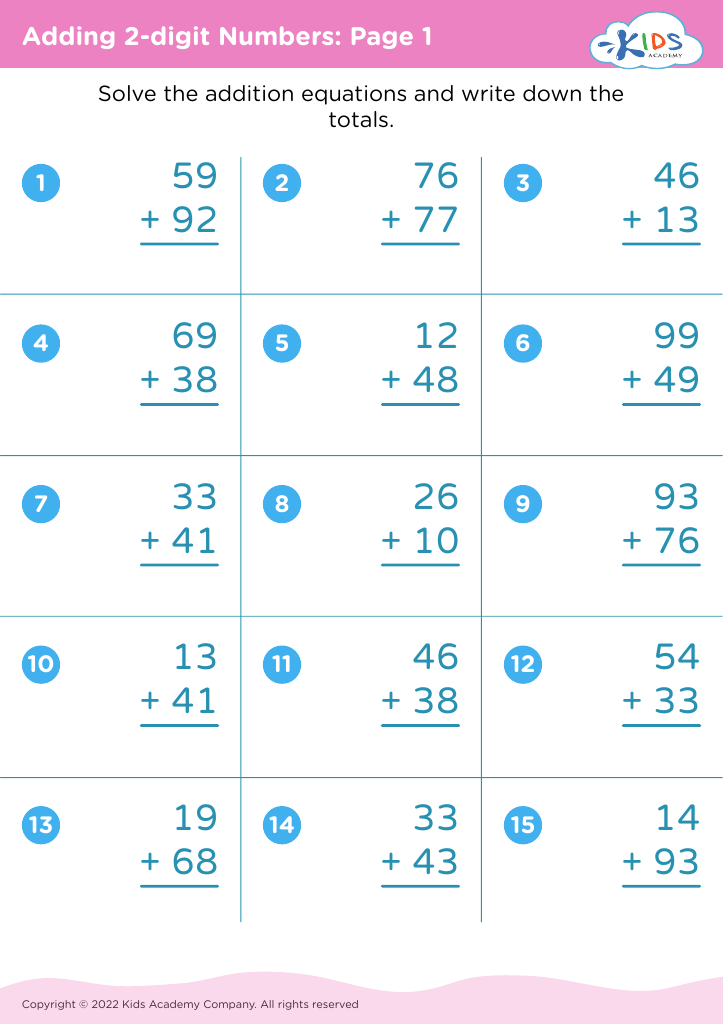
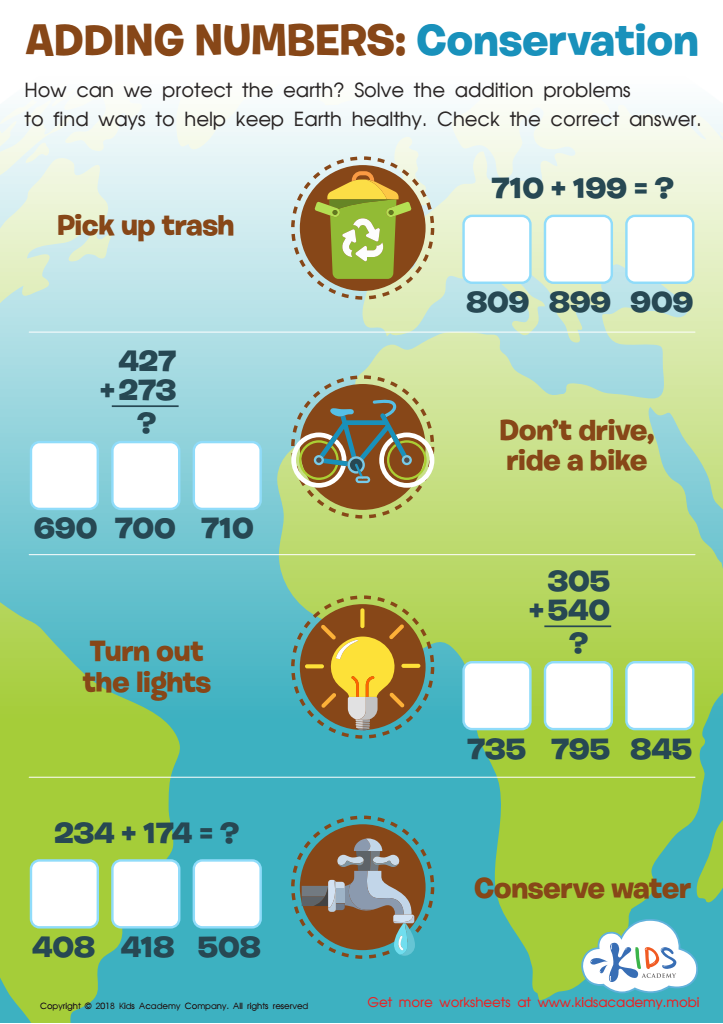
Adding Numbers: Conservation Worksheet
 Assign to My Students
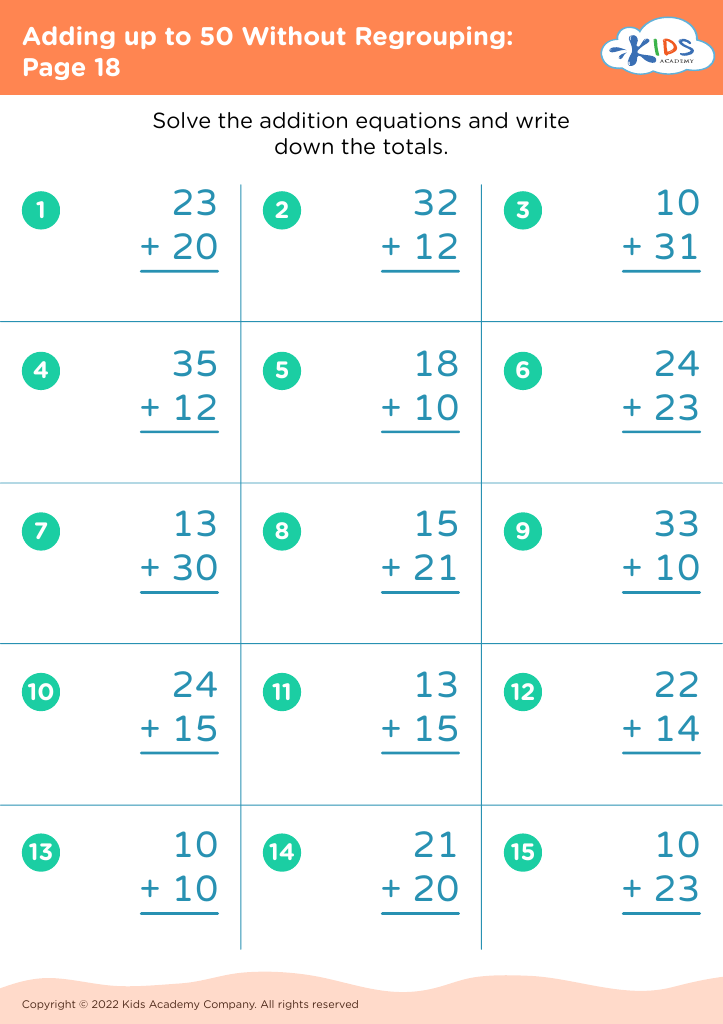
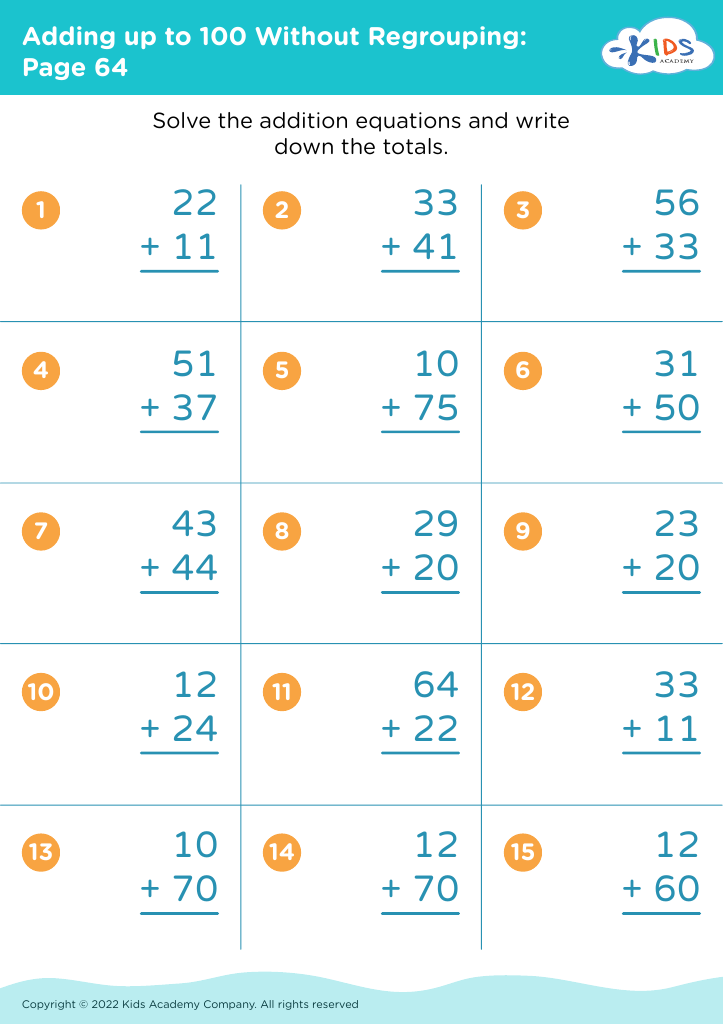
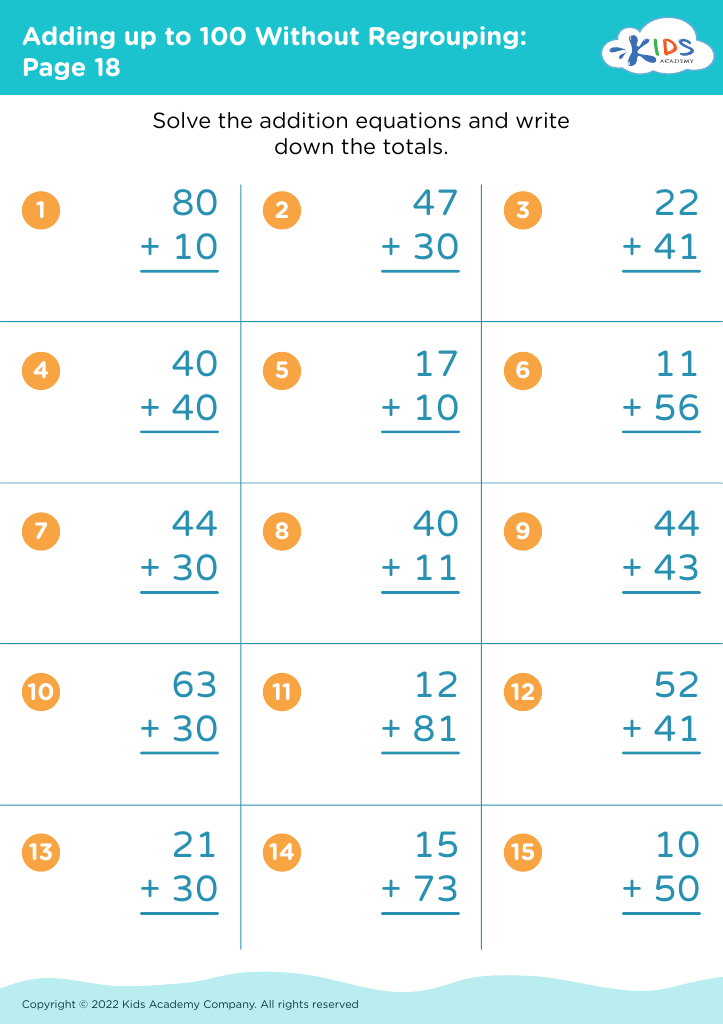
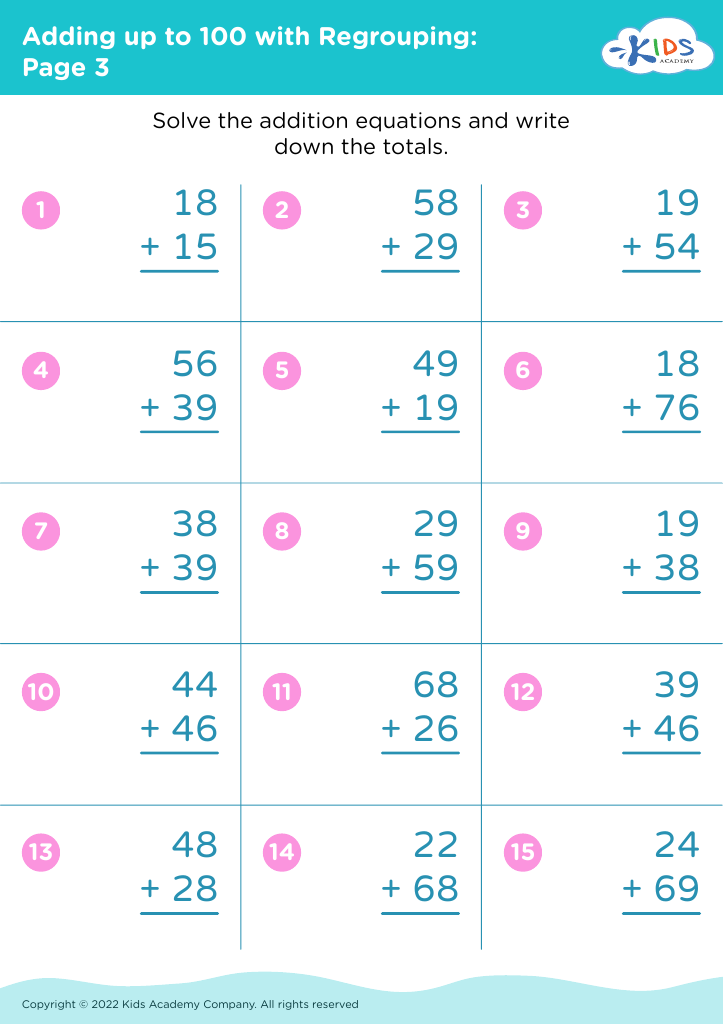
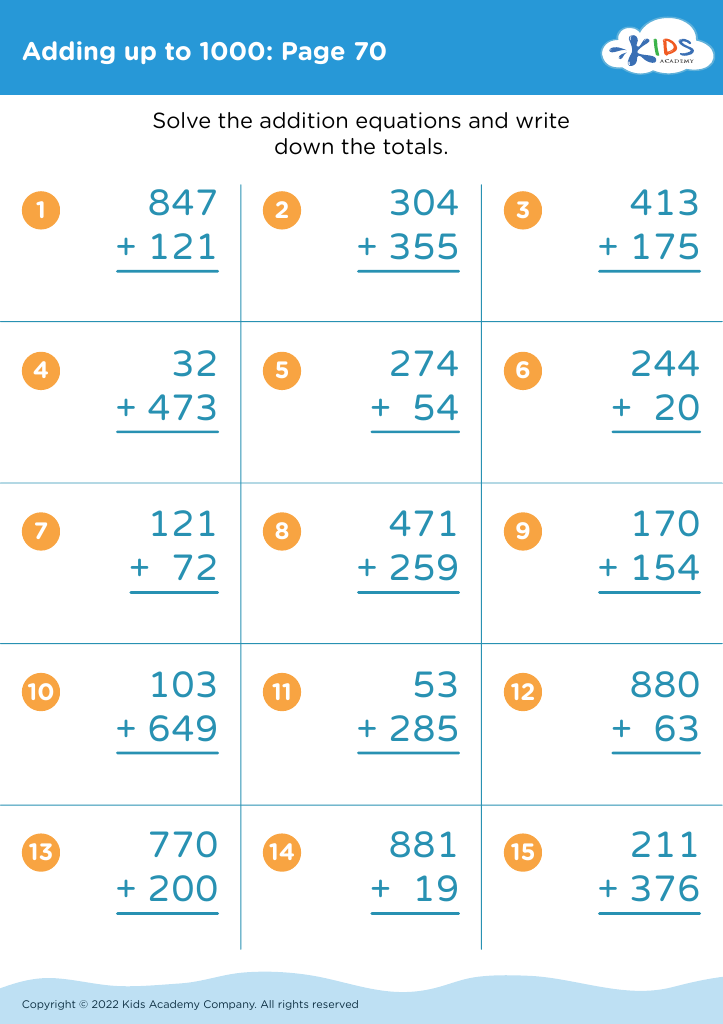
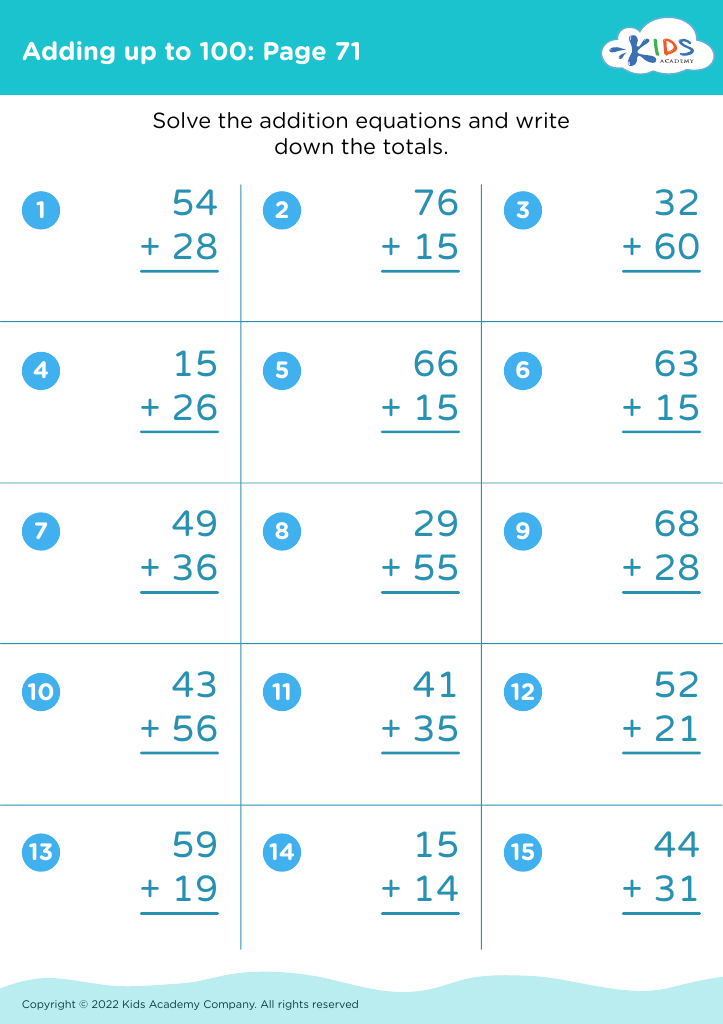
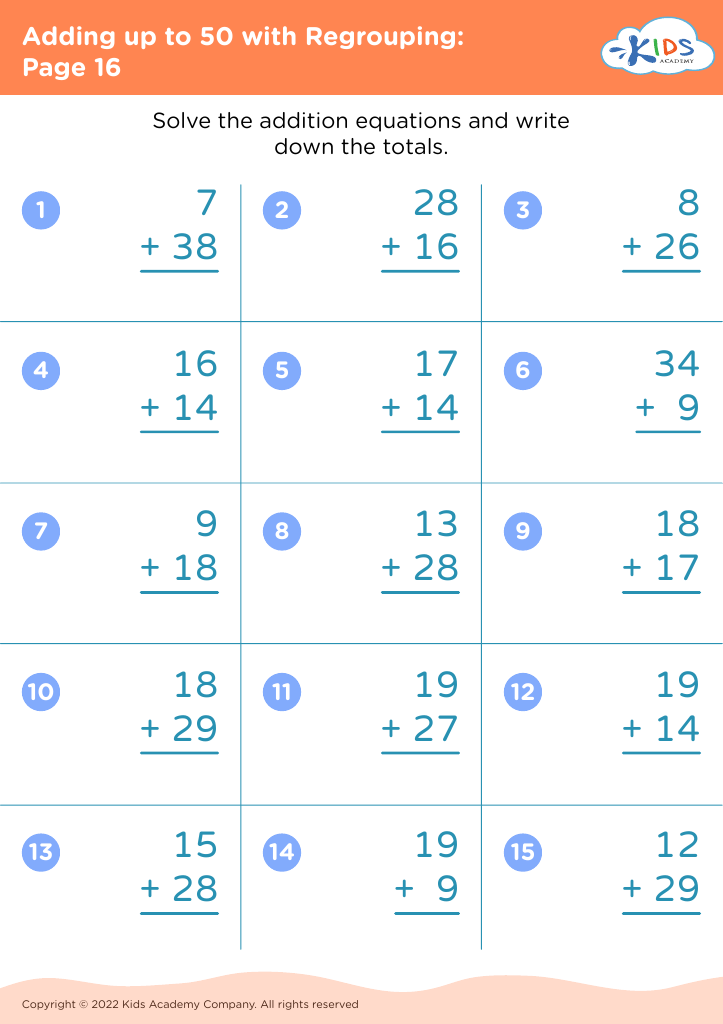
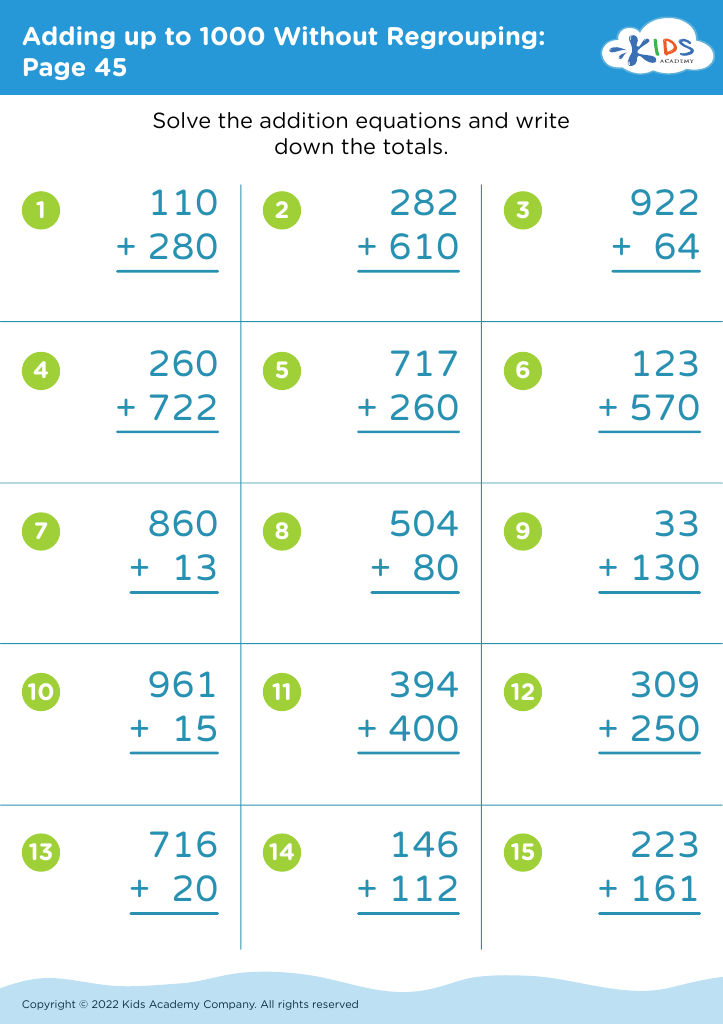








Problem-solving practice with addition for 7-year-olds is crucial for several reasons. First, it helps build a strong mathematical foundation essential for future learning. By solving addition problems, children develop essential cognitive skills such as logical thinking, memory, and concentration. These skills are foundational not only for advanced math topics but also for problem-solving in everyday life.
Additionally, early proficiency in addition fosters confidence and a positive attitude toward math. When children successfully solve problems, they are more likely to view math as enjoyable and feel competent in their abilities. This positive association can drive a lifelong interest and proficiency in math and related subjects, such as science and engineering.
Furthermore, practicing addition helps children understand the relationships between numbers, an important aspect of numeracy. It integrates practical life skills, like handling money, telling time, and even cooking, where measurements and calculations are necessary.
Lastly, collaborative problem-solving activities in the classroom or at home promote social and communication skills. Discussing different ways to approach a problem with peers or parents can enhance a child’s ability to articulate their thought process and listen to others' ideas.
Through consistent problem-solving practice in addition, parents and teachers equip children with the necessary skills to navigate academic challenges and everyday tasks effectively.








