Understanding number sequence Addition Worksheets for 7-Year-Olds
3 filtered results
-
From - To
Explore our "Understanding Number Sequence Addition Worksheets" designed specifically for 7-year-olds! These engaging, printable worksheets help young learners grasp the concept of number sequences while practicing their addition skills. By utilizing colorful visuals and interactive exercises, children will enhance their mathematical understanding and confidence. Our worksheets feature a variety of activities that encourage critical thinking and problem-solving, making learning an enjoyable experience. Parents and teachers can easily integrate these resources into their lesson plans, promoting academic growth and reinforcing foundational math concepts. Get started today and watch your child's addition abilities flourish with our thoughtfully crafted materials!
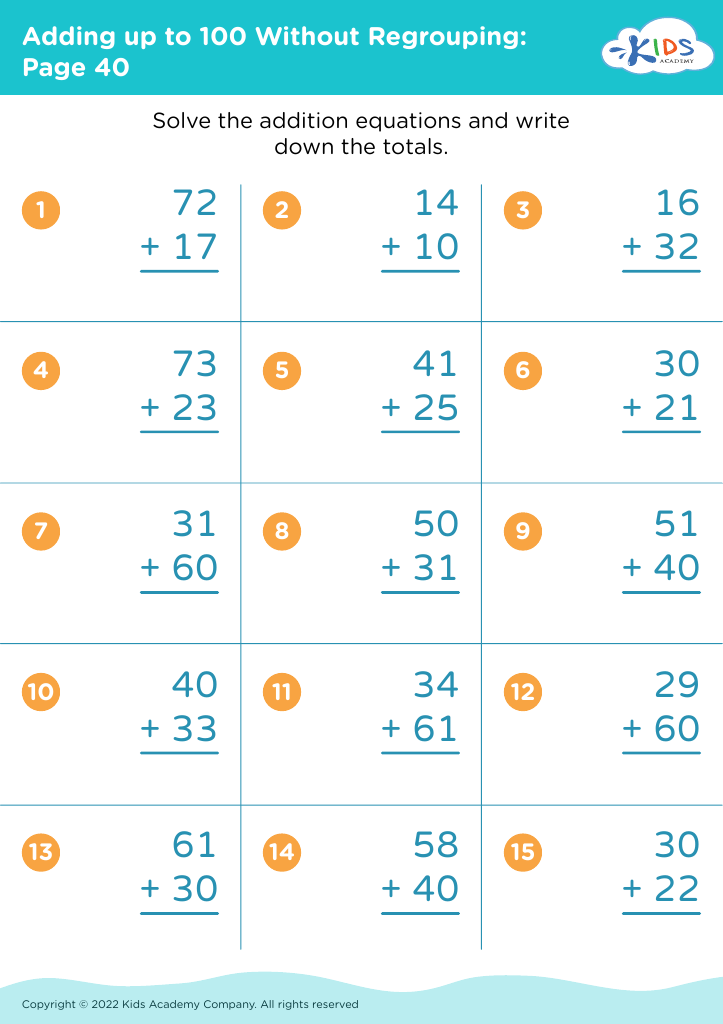
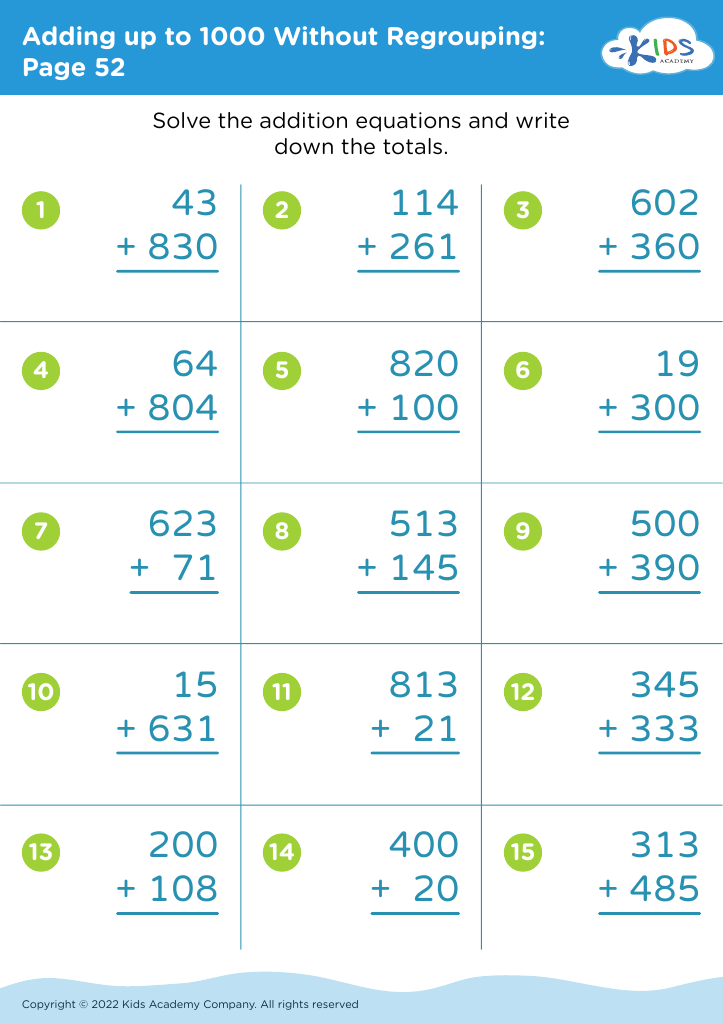
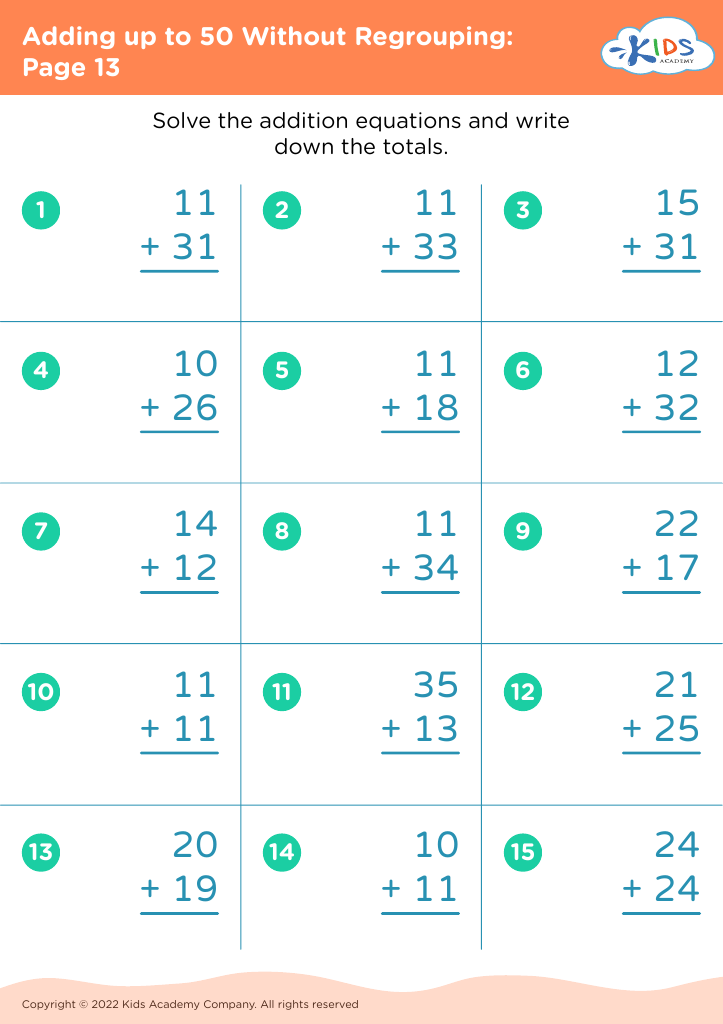








Understanding number sequences and addition is crucial for 7-year-olds as it lays the foundation for their mathematical development. At this age, children are transitioning from basic arithmetic to more complex problem-solving skills. A solid grasp of number sequences helps them recognize patterns and relationships between numbers, fostering critical thinking.
Parents and teachers should care because proficiency in these foundational concepts boosts a child's confidence and encourages a positive attitude toward math. Mastering addition allows children to tackle real-life situations, like budgeting or sharing evenly, reinforcing practical life skills. Moreover, understanding these concepts sets the stage for future learning in geometry, fractions, and algebra.
Engaging children with number sequences can also foster important cognitive skills, enhancing their memory and attention spans. Parents can encourage this understanding through fun, interactive activities, while teachers can incorporate games and collaborative exercises in the classroom.
Ultimately, a strong foundation in addition and number sequencing not only influences academic success but also nurtures essential life skills, preparing children for any challenges they may face in the future. Investing time and effort in teaching these concepts cultivates a lifelong appreciation for mathematics.








