Visual Learning Addition Worksheets for 7-Year-Olds
3 filtered results
-
From - To
Discover our engaging Visual Learning Addition Worksheets designed specifically for 7-year-olds! These worksheets transform math concepts into colorful and interactive activities, making addition fun and accessible for young learners. With vibrant visuals and relatable scenarios, children can easily grasp essential skills like number recognition and basic addition. Our worksheets nurture a love for learning while building confidence in math abilities. Perfect for at-home practice or classroom use, these resources encourage critical thinking and problem-solving skills. Help your child thrive in their math journey with our thoughtfully designed visual learning tools that cater to diverse learning styles!
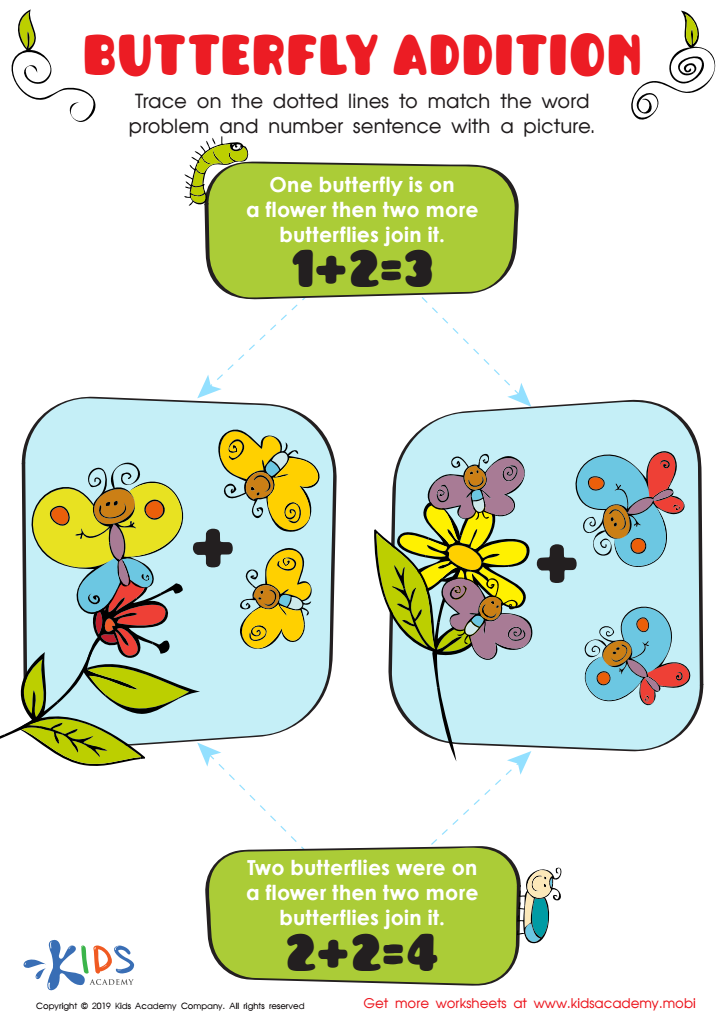
Butterfly Addition Worksheet
 Assign to My Students
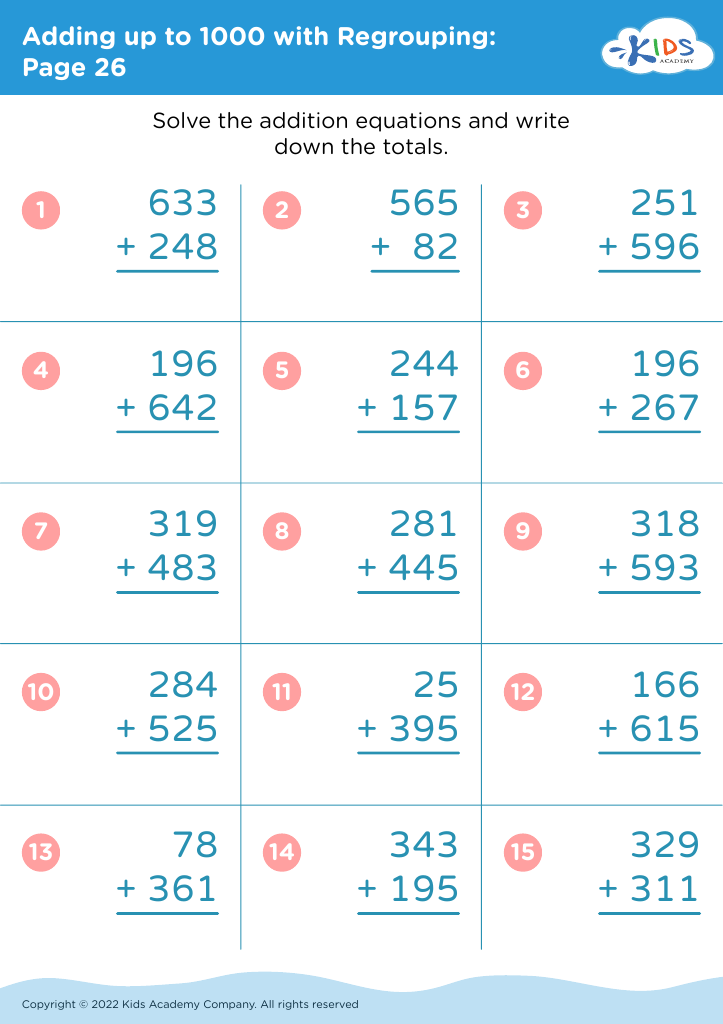
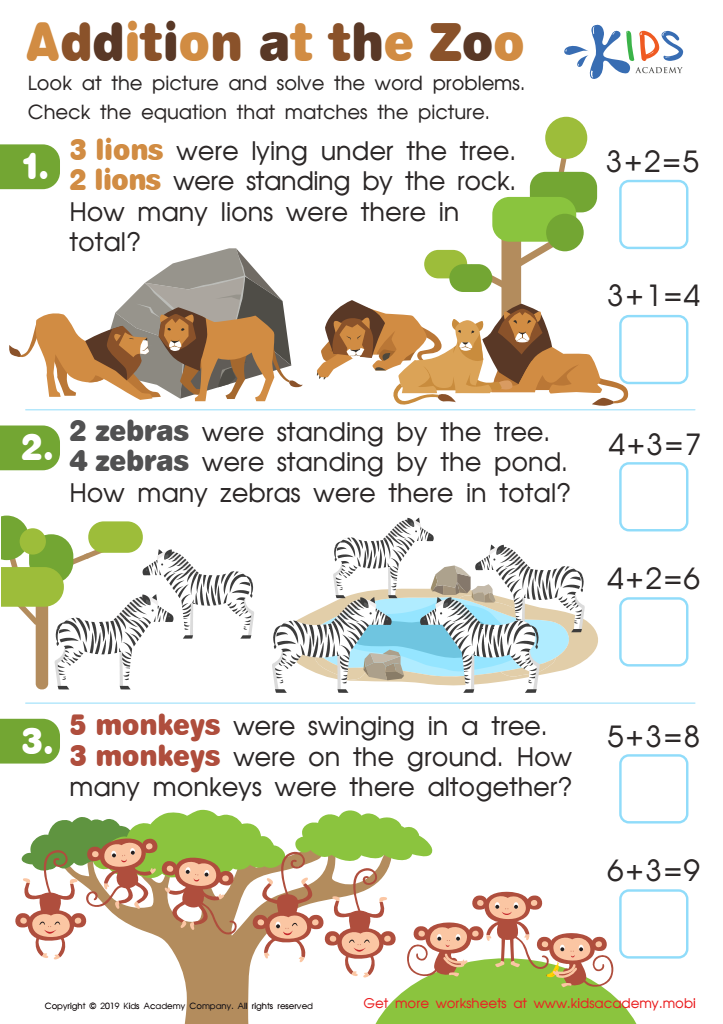
Addition at the Zoo Worksheet








Visual learning is a powerful tool for 7-year-olds, especially when mastering addition. At this age, children are curious and eager to understand the world around them, and incorporating visual elements into their learning can significantly enhance their comprehension and retention of mathematical concepts.
Visual aids such as number lines, color-coded blocks, or drawings help children grasp the abstract idea of addition in a tangible way. By seeing numbers represented visually, they can better understand relationships between numbers, grasp the concept of combining quantities, and develop problem-solving strategies. This form of learning caters to various learning styles, particularly for visual learners who may struggle with traditional lecture-based methods.
Moreover, visual learning makes math more engaging and enjoyable. Incorporating games and interactive activities fosters a positive attitude towards mathematics, reducing anxiety and building confidence. Engaged learners are more likely to excel and develop a lasting interest in the subject.
Ultimately, when parents and teachers prioritize visual learning strategies for addition, they set the foundation for learners to thrive in future mathematical endeavors. Building these essential skills early on creates a pathway for ongoing academic success and fosters a love for learning that extends beyond the classroom.








