Color recognition Arrays Worksheets for 7-Year-Olds
3 filtered results
-
From - To
Help your 7-year-old master color recognition with our engaging Color Recognition Arrays Worksheets! These easy-to-use worksheets are designed to enhance visual learning by allowing children to identify and match various colors within fun array patterns. Each activity encourages creativity while developing critical thinking skills. By working with colorful arrays, children will improve their ability to distinguish and categorize different colors, laying a strong foundation for future learning. Perfect for both classroom and home use, our worksheets provide hours of educational entertainment. Dive into a colorful learning journey today and boost your child’s confidence in color recognition!
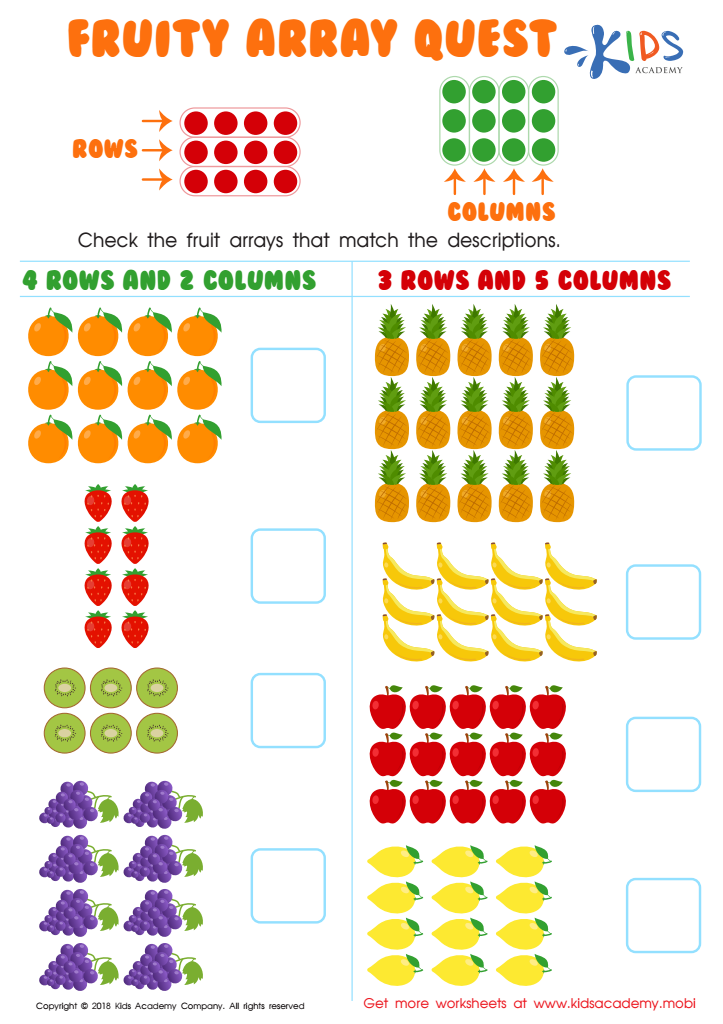
Fruity Array Quest Worksheet
 Assign to My Students
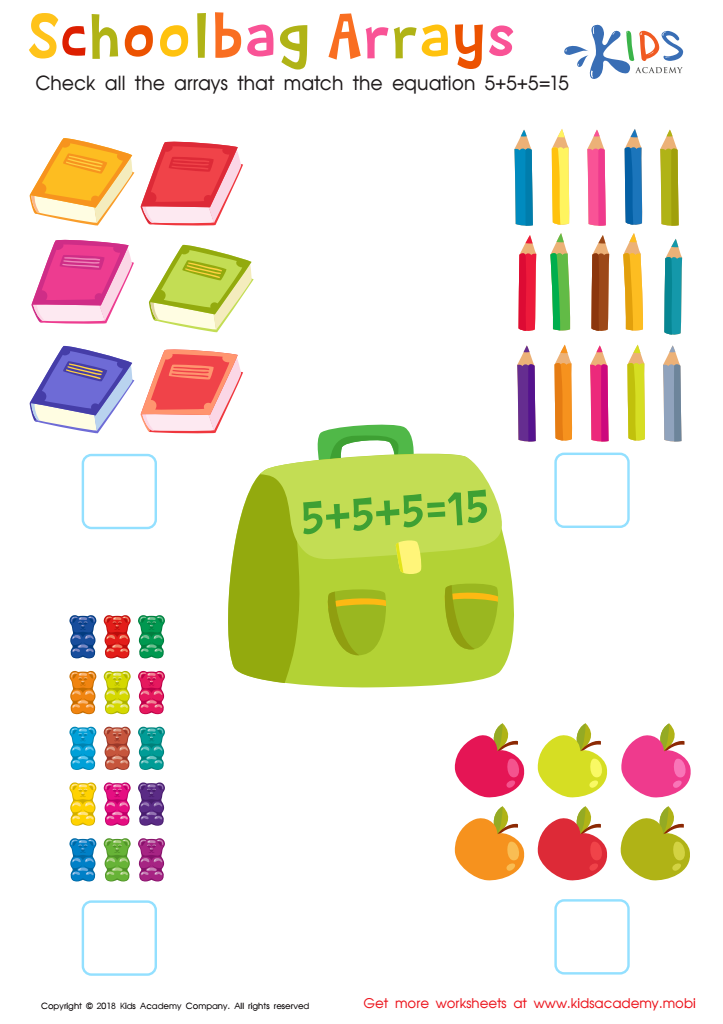
Schoolbag Arrays Worksheet
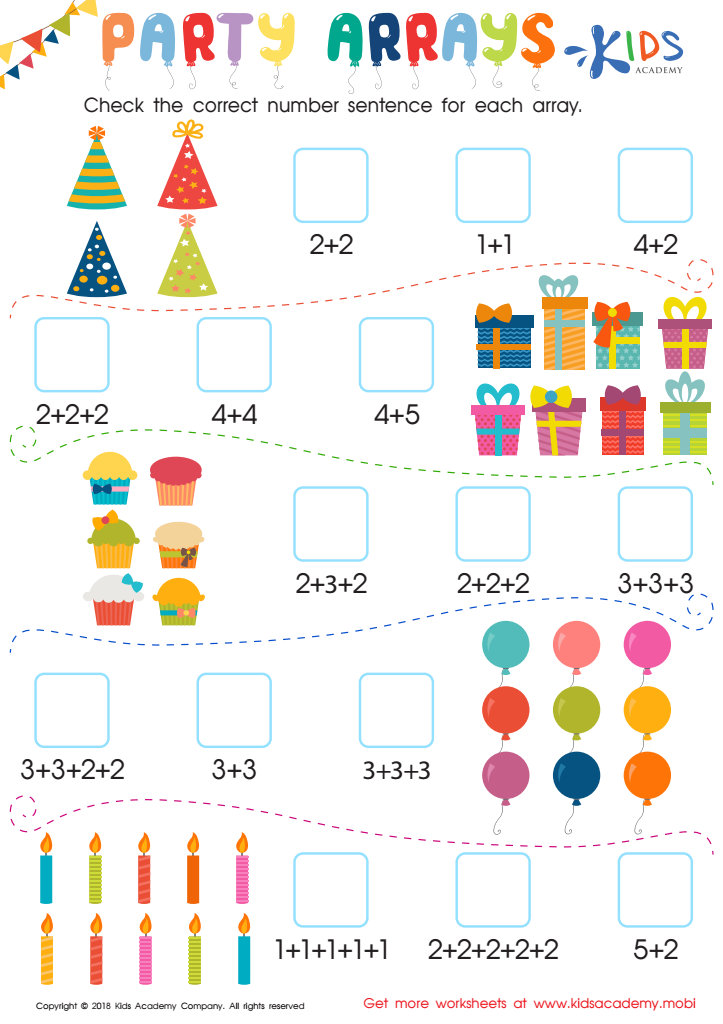
Party Arrays Worksheet








Color recognition arrays are vital educational tools for 7-year-olds that significantly enhance their cognitive, language, and social development. For parents and teachers, understanding the importance of these arrays is crucial because they help children learn to identify, differentiate, and appreciate various colors, fostering their overall sensory awareness.
Color recognition promotes fine motor skills as children engage in activities like sorting, matching, and creating patterns with colored objects. This not only makes learning engaging but also facilitates the development of critical thinking and problem-solving abilities. When children categorize objects based on color, they sharpen their analytical skills and enhance their understanding of classification, which is foundational in mathematics and science.
Furthermore, recognizing colors aids in language development as children learn to articulate color names and apply them in conversations. This vocabulary expansion contributes to better communication skills. Socially, color-themed activities can promote teamwork and collaboration as children work together in group settings, improving their interpersonal interactions.
In essence, attention to color recognition arrays supports holistic growth, preparing children for future academic challenges while nurturing their creativity and social skills. Therefore, parents and teachers should embrace and incorporate these resources into their educational practices.








