Filters

9 filtered results

Clear all filters
Favorites
With answer key
Interactive

9 filtered results

Difficulty Level

Grade


Enhance your 7-year-old's understanding of fractions with our engaging Shape Recognition Fractions of Shapes Worksheets! Designed for early learners, these interactive worksheets help kids identify different shapes while introducing them to essential fraction concepts. Your child will practice partitioning shapes, visualizing fractions like halves and quarters, and developing critical thinking skills through fun activities. With appealing visuals and age-appropriate exercises, our resources support a comprehensive learning experience. Perfect for classroom settings or home learning, these worksheets are an excellent way to strengthen math knowledge in a creative and enjoyable manner. Download now and watch your child's confidence in math grow!

Check out this FREE Trial Lesson on Fractions of Shapes for age 7!

Cut Rectangles: Halves and Wholes

Favorites
With answer key
Interactive
  • 7
  • Shape Recognition
  • Fractions of Shapes
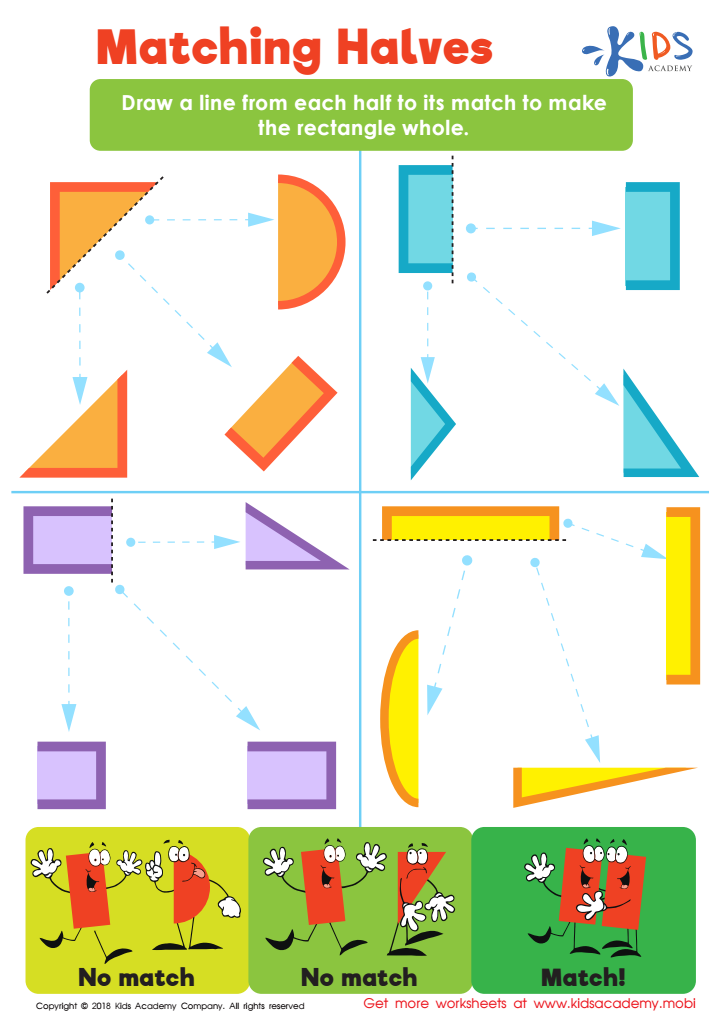
Matching Halves Worksheet

Matching Halves Worksheet

See how your child fares in matching two halves to form a complete rectangle. Provide them with four options, and ask them to draw a line connecting the two correct halves. Put their shape knowledge to the test with this simple worksheet!
Matching Halves Worksheet
Worksheet
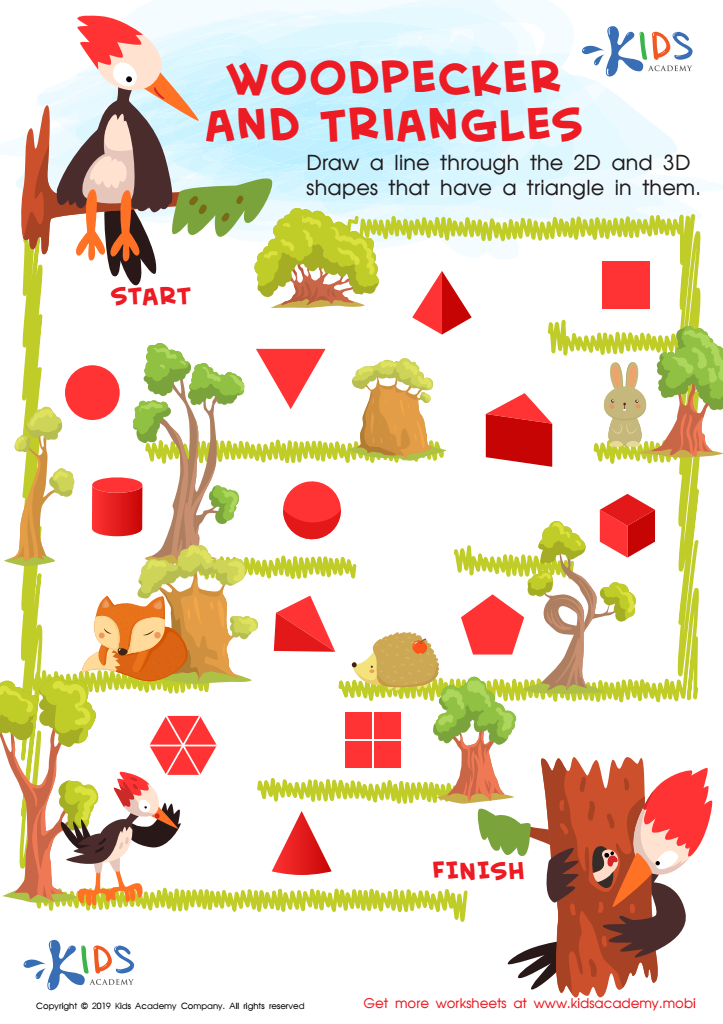
Woodpecker and Triangles Worksheet

Woodpecker and Triangles Worksheet

Woodpeckers peck wood, and this printout helps kids learn about triangles. Ask your kindergartners to draw a triangle, then draw a line through the shapes that have a triangle in them to help the woodpecker get out of the maze.
Woodpecker and Triangles Worksheet
Worksheet
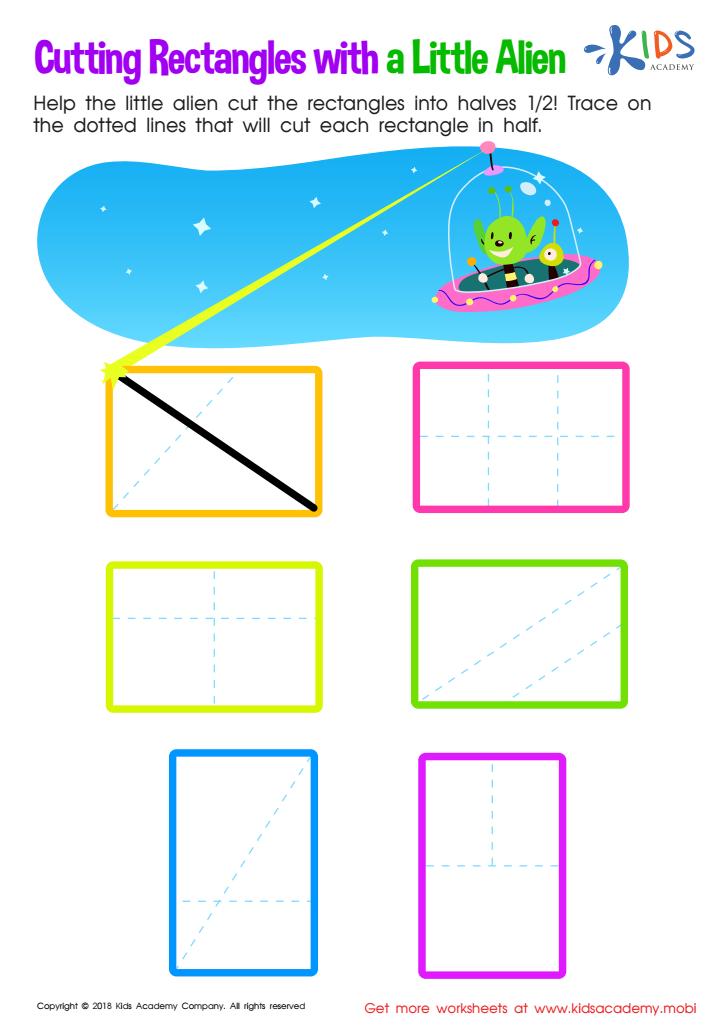
Cutting Rectangles with Alien Worksheet

Cutting Rectangles with Alien Worksheet

If your students are interested in aliens and otherworldly events, they'll love this exercise! It requires them to help a small alien cut rectangles into halves (½). They must trace the dotted lines to accurately cut each rectangle.
Cutting Rectangles with Alien Worksheet
Worksheet
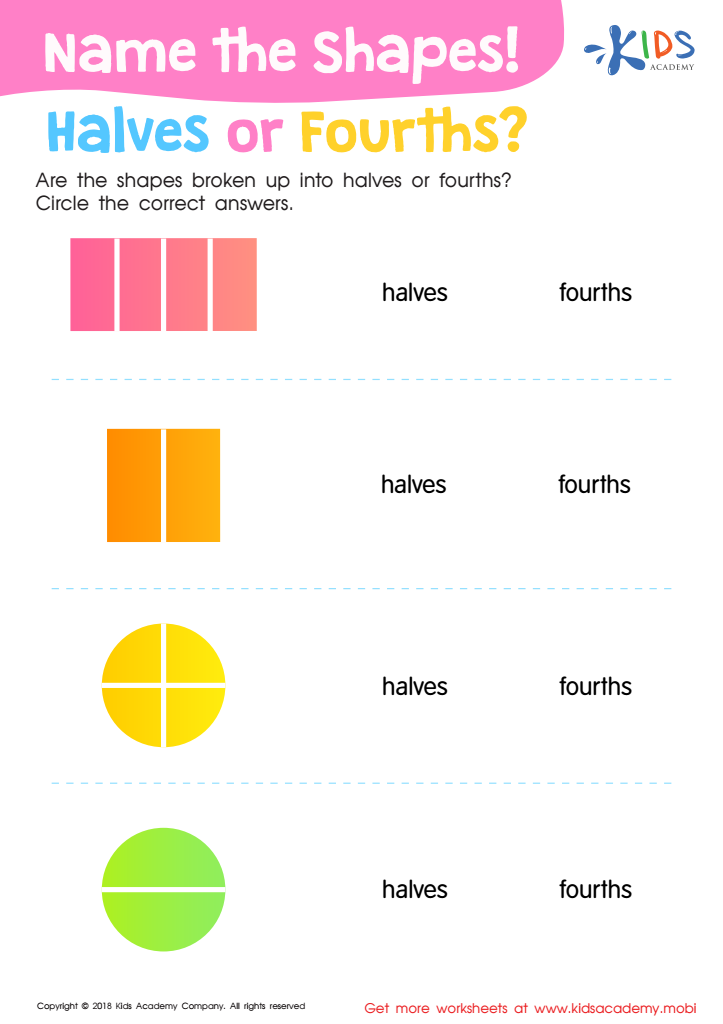
Name the Shapes Halves or Fourths? Worksheet

Name the Shapes Halves or Fourths? Worksheet

Before starting, ask your child if they understand what halves and fourths are. If they can answer correctly, move on with the worksheet. Help them circle the right option beside each shape, showing if it's split into halves or fourths.
Name the Shapes Halves or Fourths? Worksheet
Worksheet
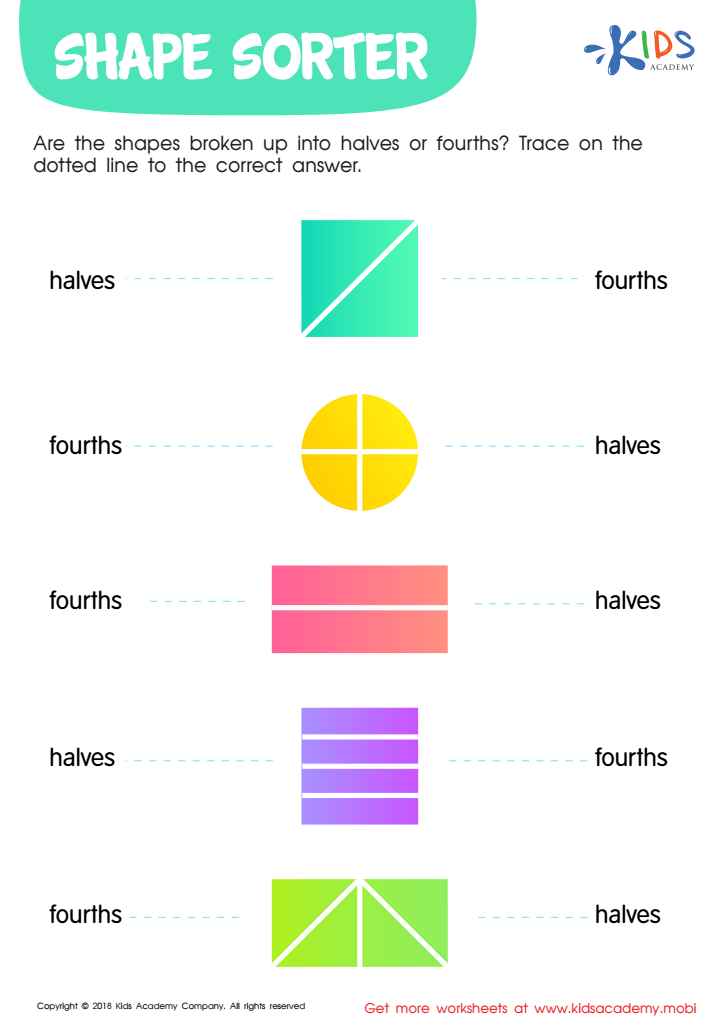
Shape Sorter Worksheet

Shape Sorter Worksheet

Ask your child if they know halves and fourths. If not, explain that halves are when a shape is divided into two equal parts and fourths is when a shape is divided into four equal parts. Look through this worksheet with your child and let them trace the dotted lines to the correct answer to show whether the shapes are cut into halves or fourths.
Shape Sorter Worksheet
Worksheet
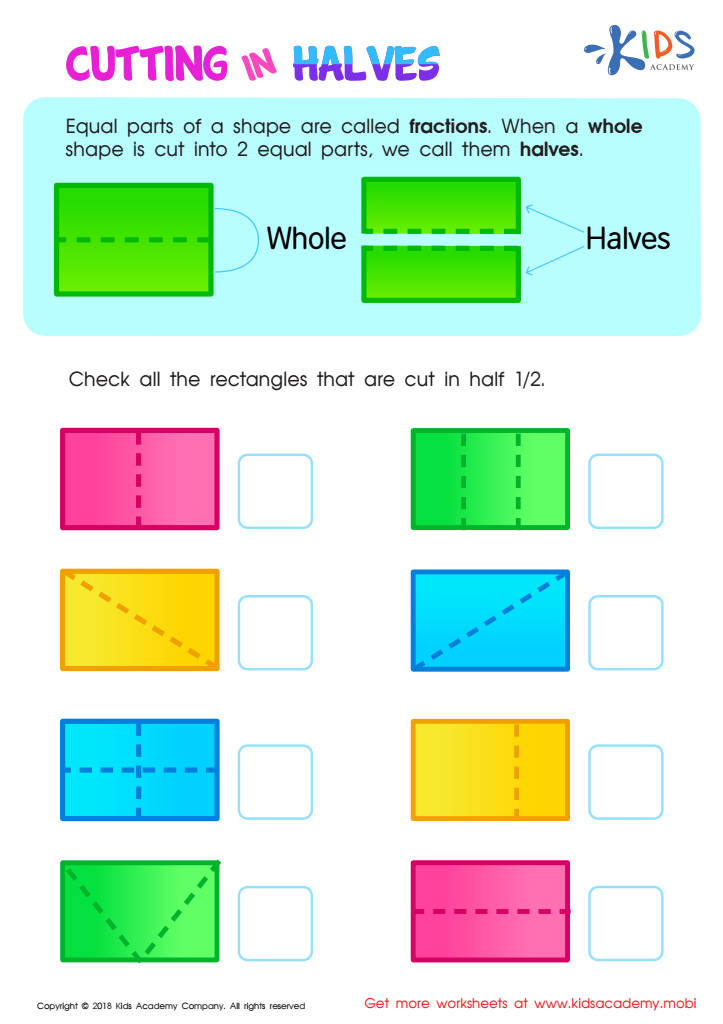
Cutting in Halves Worksheet

Cutting in Halves Worksheet

Show your child how to divide a whole shape, like a square, into smaller pieces to become fractions. Point out when a shape is divided into two equal parts, it's called a half. Look at the worksheet together, and identify all rectangles that are cut in half (½).
Cutting in Halves Worksheet
Worksheet
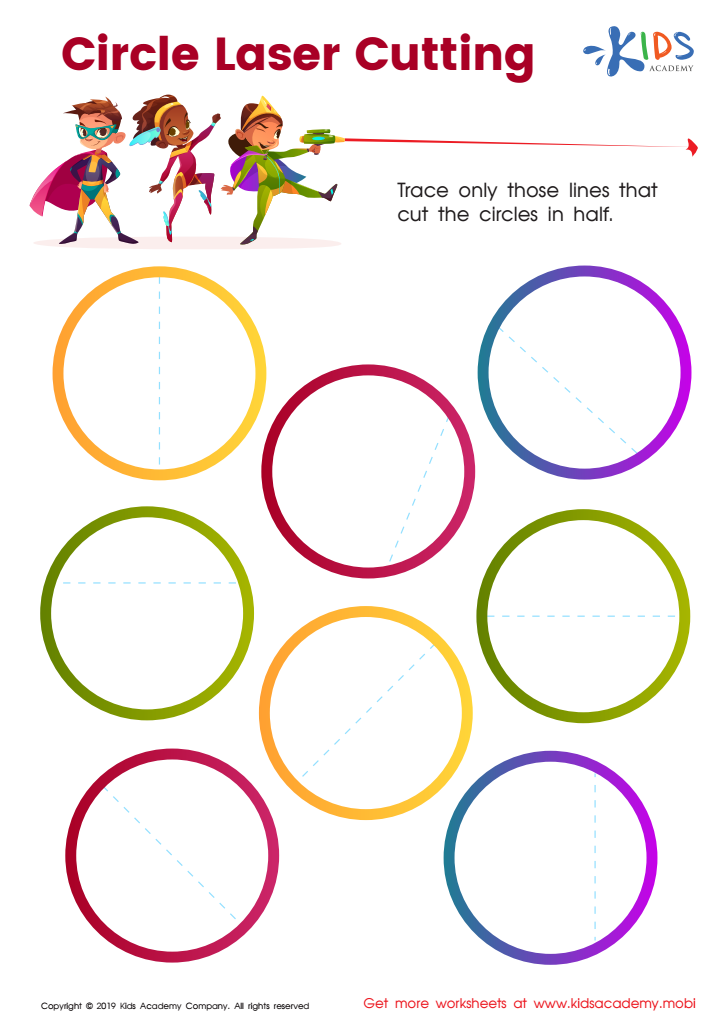
Circle Laser Cutting Worksheet

Circle Laser Cutting Worksheet

Encourage your kids to learn geometry! Remind them that when shapes are cut into two equal parts, they are called halves. Have them look at the circles in the worksheet, and trace the lines that cut the circles in half. Geometry is an essential part of education, and although it may not be exciting, it's a valuable skill to have.
Circle Laser Cutting Worksheet
Worksheet
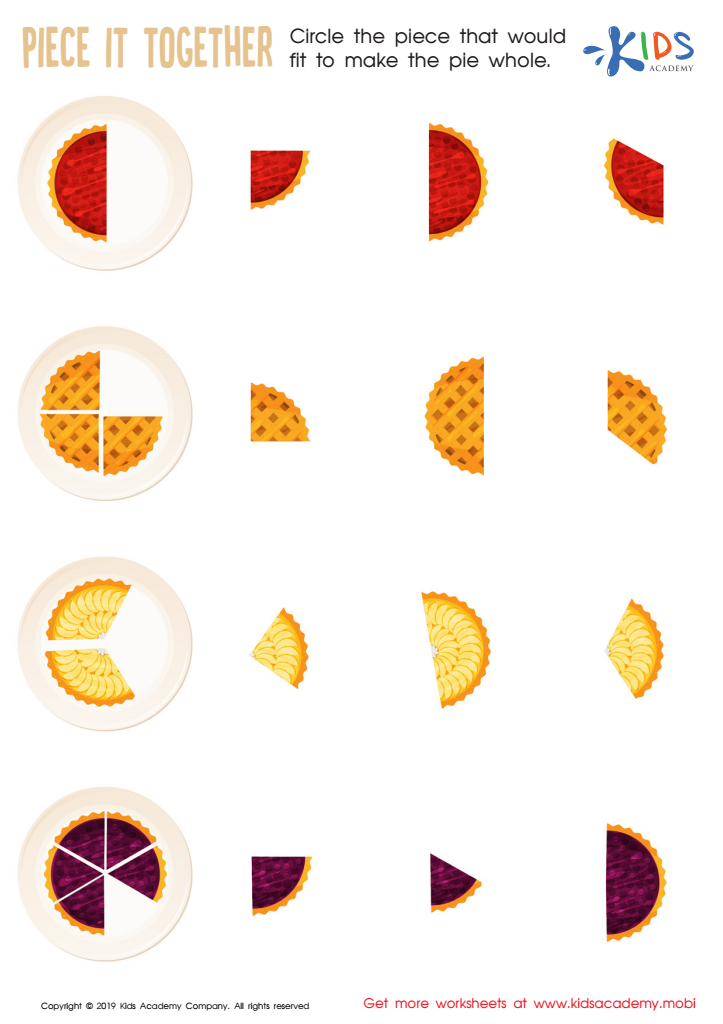
Piece it together Worksheet

Piece it together Worksheet

Help your kids learn fractions! Even if they're not eager, teach them as they get older. Teachers will provide enough lessons and homework, but you can go a step further. Look at a worksheet with your kids and help them circle the piece that would make the pie whole.
Piece it together Worksheet
Worksheet
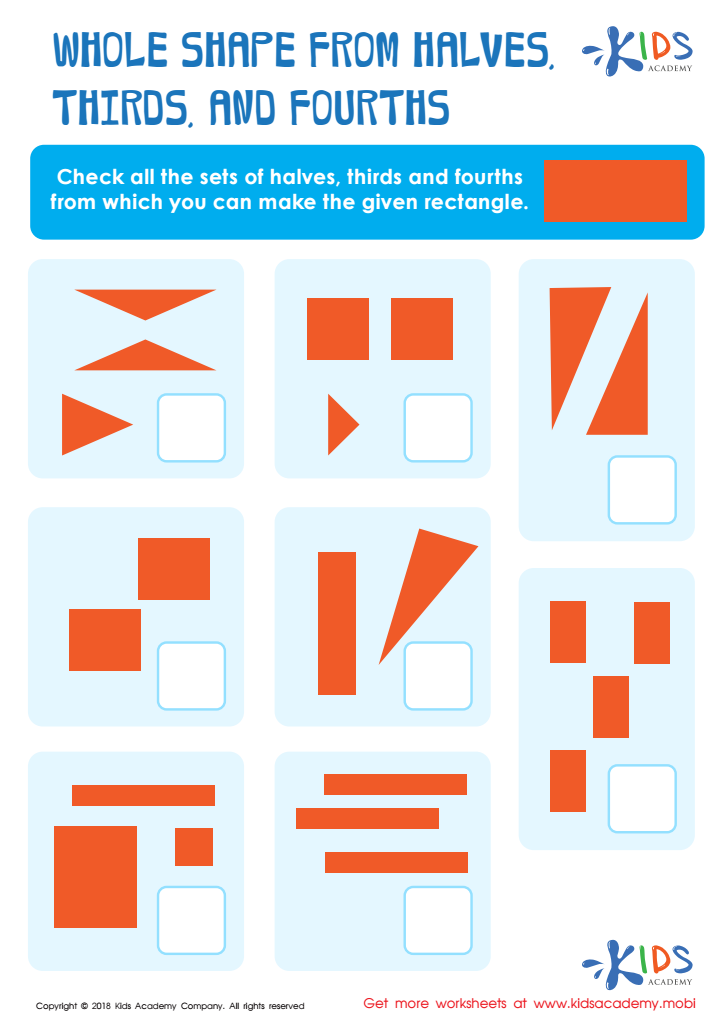
Whole Shape from Halves, Thirds and Fourths Worksheet


Whole Shape from Halves, Thirds and Fourths Worksheet

Explain to your students that they can make a new shape by combining halves, thirds, and fourths of a shape. Show them the worksheet with the rectangle at the top and ask them to find which sets of halves, thirds, and fourths make it. Have them check all the correct sets.
Whole Shape from Halves, Thirds and Fourths Worksheet

Worksheet


Shape recognition and understanding fractions of shapes are vital skills for 7-year-olds, as they form the foundation for more complex mathematical concepts later on. Parents and teachers should care about this subject because it enhances children's spatial awareness and critical thinking abilities. Recognizing and categorizing shapes helps children develop visual discrimination skills, enabling them to identify and manipulate objects in their environment.

Moreover, learning fractions of shapes, such as halves, thirds, and quarters, introduces children to the concept of division and encourages them to think about numbers in relation to real-world situations. For instance, understanding how to divide a pizza into equal parts builds a practical comprehension of sharing and fairness, enhancing social skills alongside mathematical understanding.

Additionally, engaging in activities that combine shape recognition and fractions, such as crafting or cooking, makes learning interactive and fun. These experiences promote a positive attitude towards math, countering any potential anxiety about the subject. Ultimately, fostering these skills will not only aid children in their academic endeavors but also equip them with essential life skills that are crucial for their development in our increasingly complex world. Hence, investing time in teaching these concepts is imperative for their overall growth and confidence in mathematics.