Vocabulary enhancement Geometry Worksheets for 7-Year-Olds
5 filtered results
-
From - To
Boost your 7-year-old's geometry understanding with our engaging Vocabulary Enhancement Geometry Worksheets! These thoughtfully designed worksheets introduce important geometric terms and concepts, making learning exciting and interactive. Each sheet encourages young learners to recognize and correctly use vocabulary like angles, shapes, and patterns, while strengthening their critical thinking skills. Our expertly crafted materials align with educational standards, ensuring kids build a solid foundation in geometry. Perfect for both classroom and home use, these activities make mastering geometry vocabulary fun and accessible, supporting your child’s academic success and nurturing a love for math. Explore and download now!
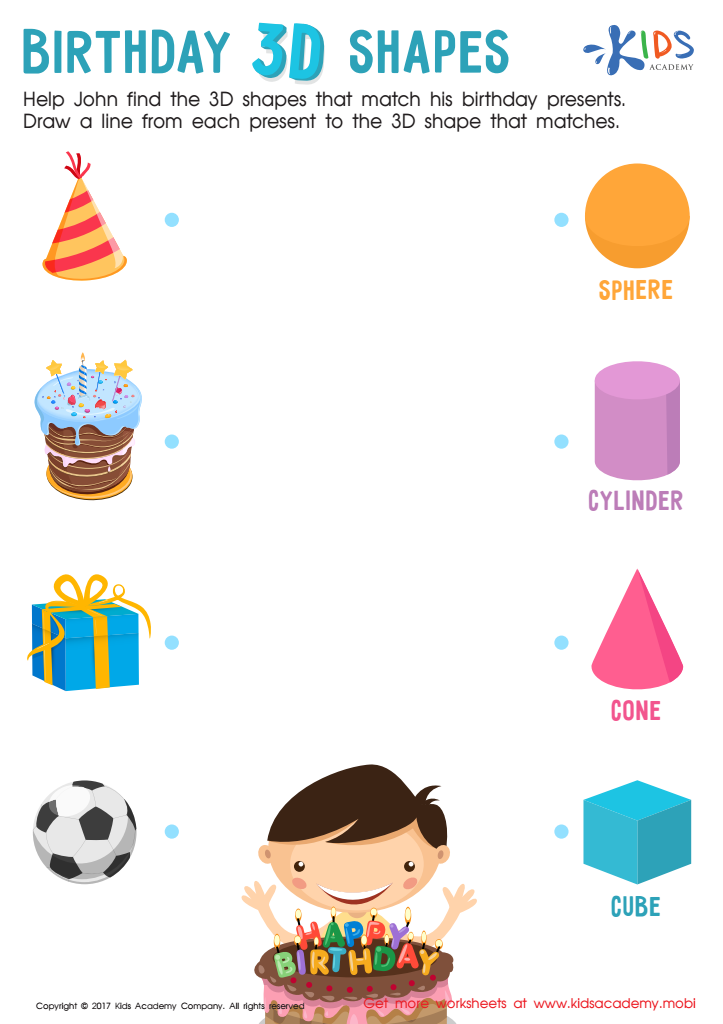
Birthday 3D Shapes Worksheet
 Assign to My Students











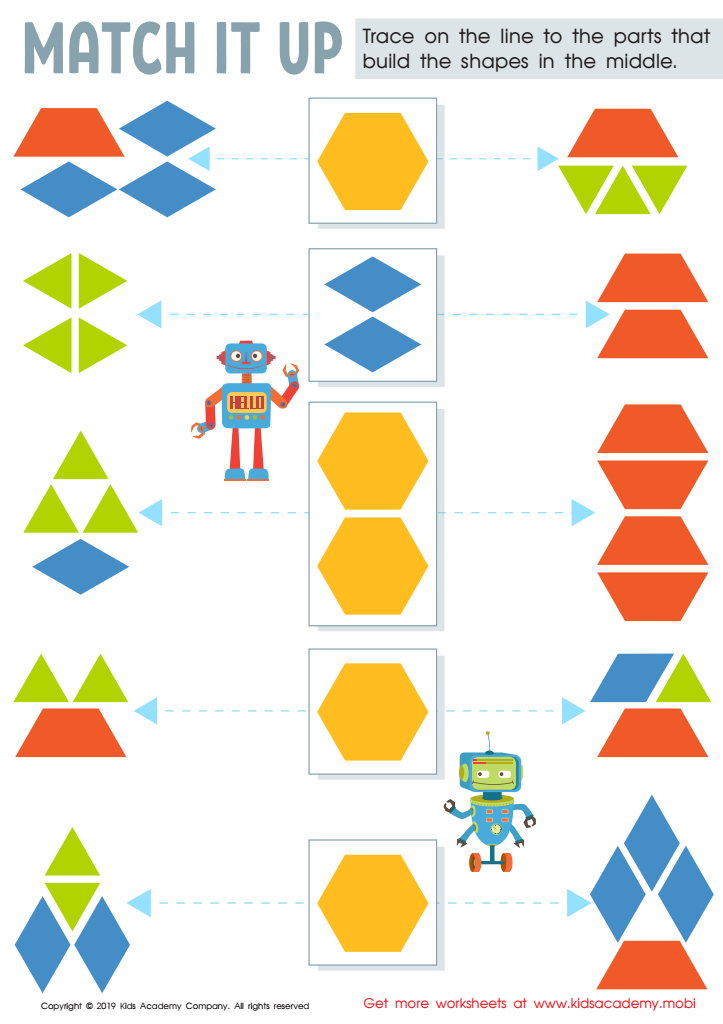
Match It up Worksheet
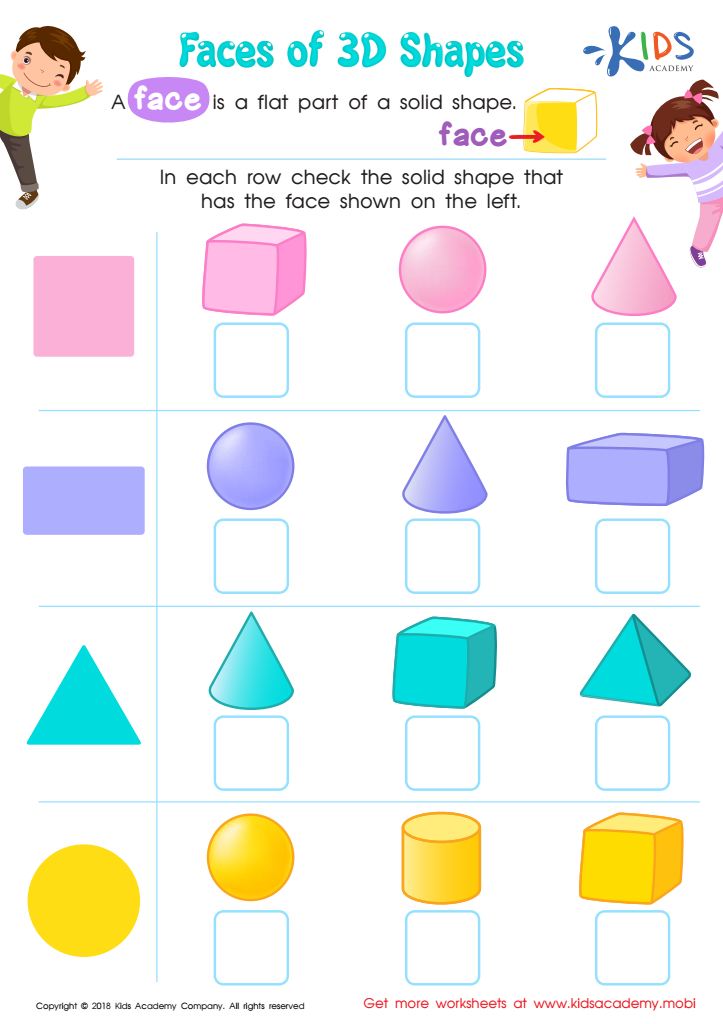
Faces of 3D Shapes Worksheet
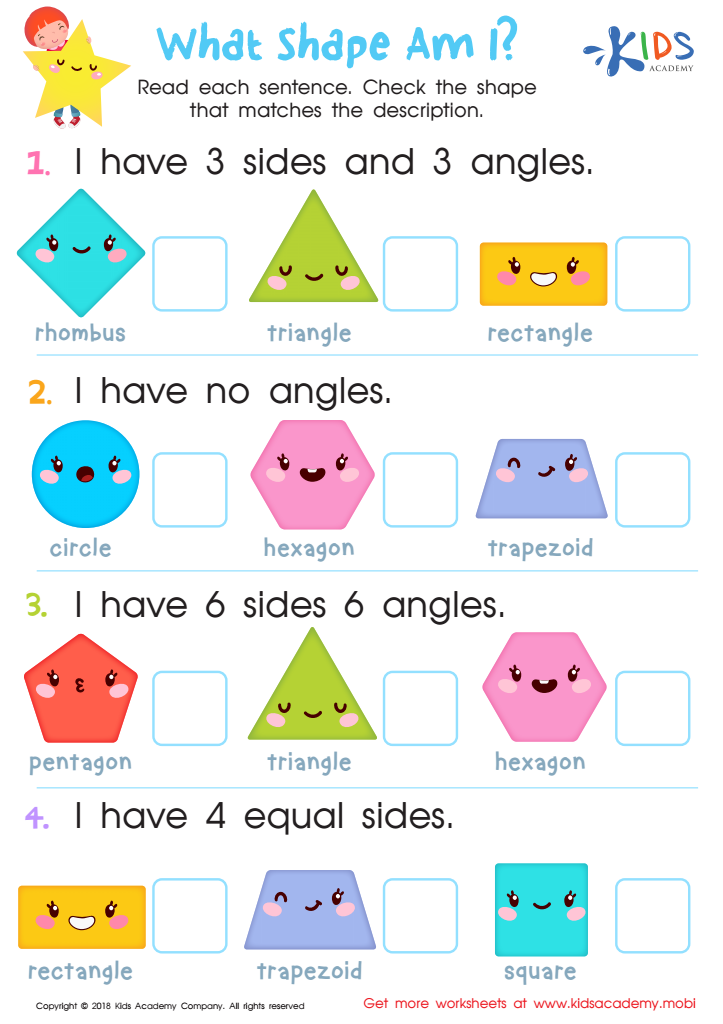
What Shape Am I? Worksheet
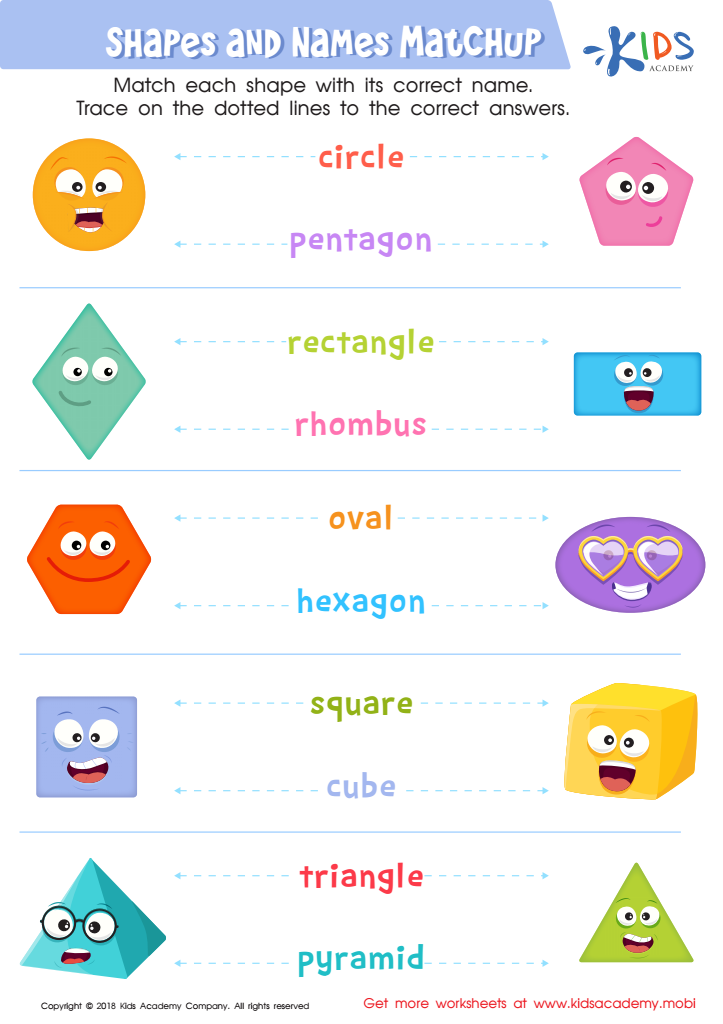
Shapes and Names Matchup Worksheet








Parents and teachers should prioritize vocabulary enhancement in geometry for 7-year-olds because it builds a strong foundation for future learning, enhances critical thinking, and fosters academic confidence. Introducing geometric terms and concepts at an early age aids cognitive development, as geometry involves spatial reasoning and problem-solving skills. Children who are familiar with geometry vocabulary, such as “circle,” “square,” “angle,” and “symmetry,” can better understand and relate to the world around them.
Moreover, possessing a robust vocabulary in geometry allows children to articulate their thoughts clearly and ask insightful questions, making classroom interactions more productive. It lays the groundwork for more complex mathematical concepts that they will encounter in later grades, such as measurement, fractions, and algebraic thinking.
Additionally, early exposure to geometry vocabulary integrates seamlessly with literacy development. Reading and writing about shapes, and describing objects and locations boost communicative competency and enrich language arts.
Lastly, learning geometry in a fun, engaging way, through activities like drawing, playing with blocks, or using digital learning tools, ensures children develop a positive attitude towards mathematics and science. This enthusiasm can lead to a lifelong interest in these subjects, ultimately opening doors to careers in STEM (Science, Technology, Engineering, and Mathematics).








