Problem-Solving Skills Graphs Worksheets for 7-Year-Olds
3 filtered results
-
From - To
Enhance your child's problem-solving skills with our engaging Graphs Worksheets for 7-Year-Olds. Our carefully designed activities help young learners interpret and create various types of graphs, including bar charts and pictographs. These worksheets not only improve mathematical proficiency but also promote critical thinking and reasoning abilities. Perfect for a fun homework activity or classroom supplement, our printable resources make learning enjoyable and effective. By mastering these skills, children build a strong foundation for future math success and develop confidence in their ability to tackle complex problems. Explore our collection today and watch your child's skills soar!
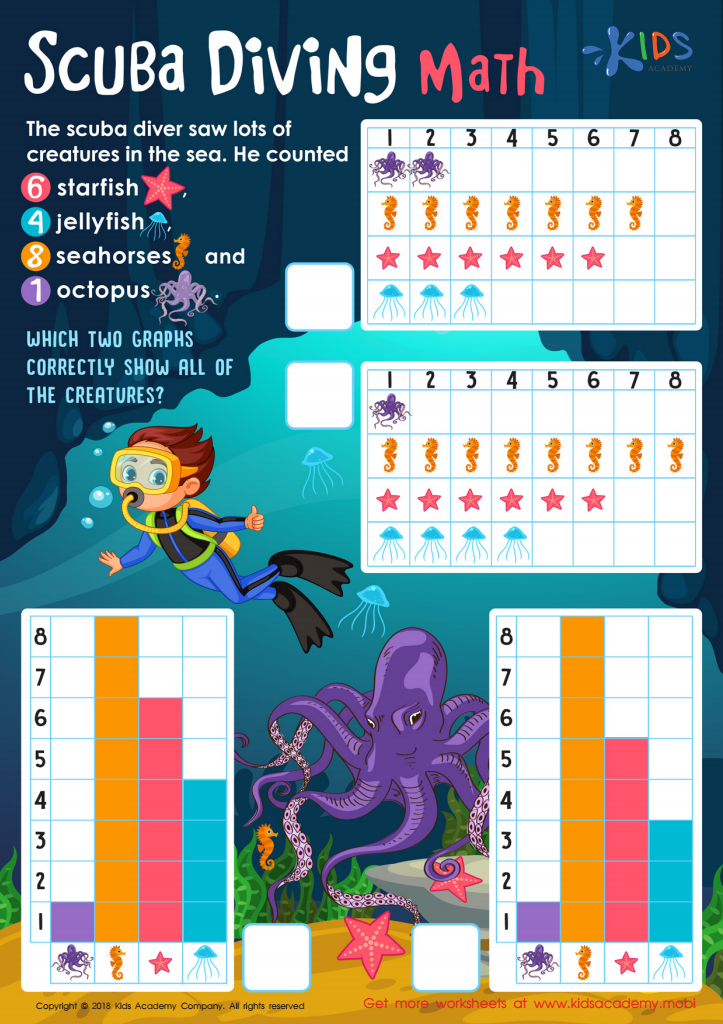
Scuba Diving Math Worksheet
 Assign to My Students
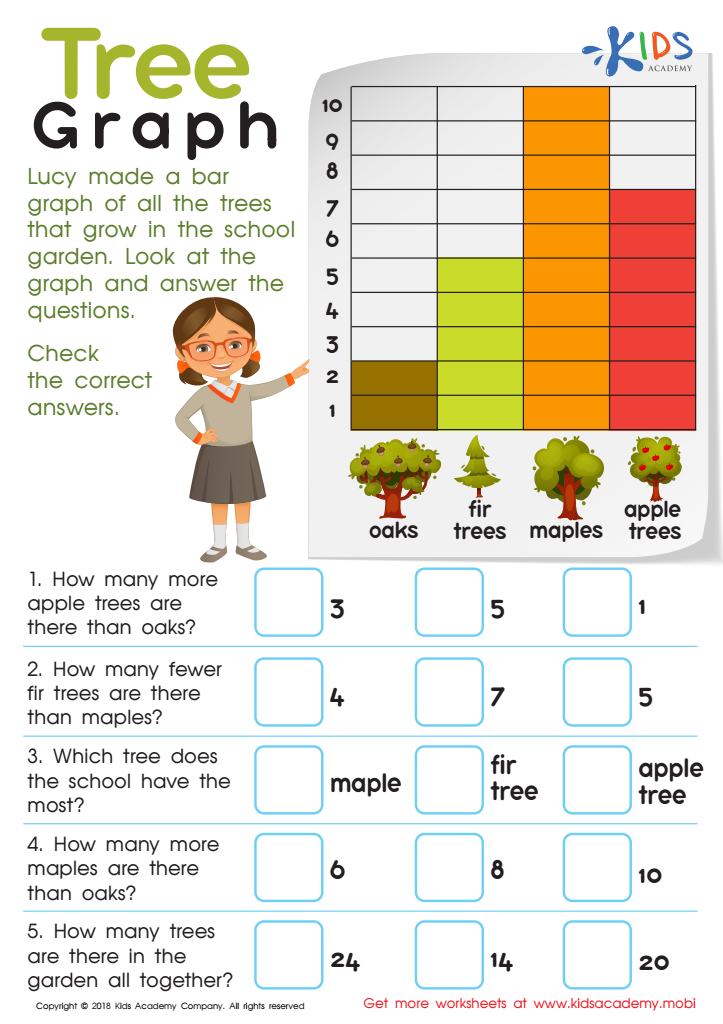
Tree Graph Worksheet
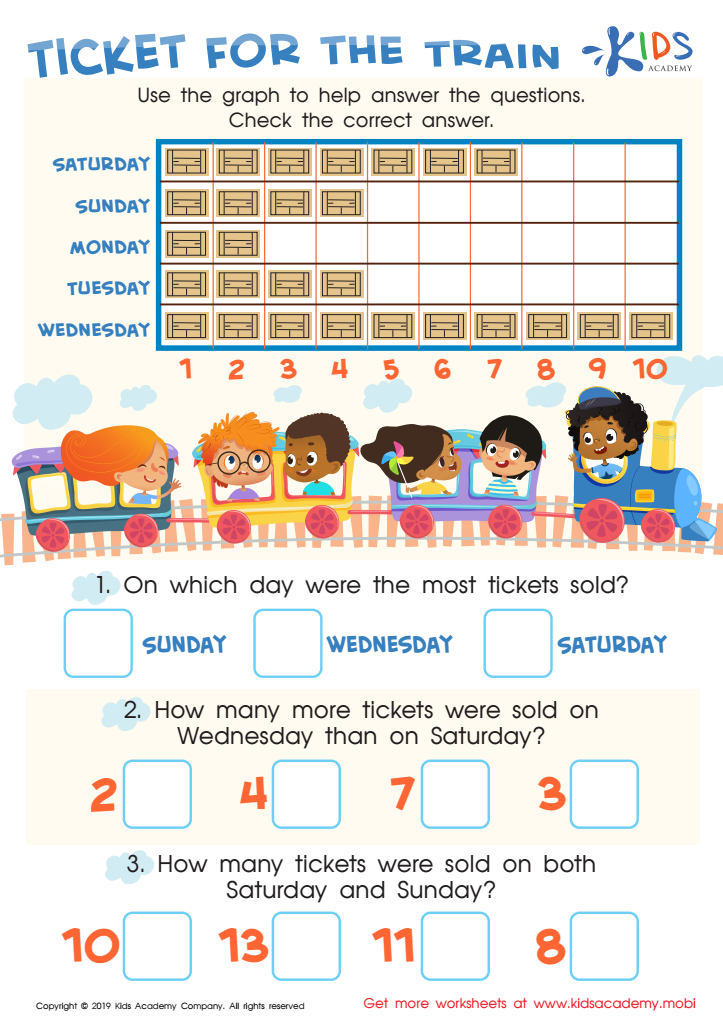
Ticket for the Train Worksheet








Parents and teachers should care about problem-solving skills graphs for 7-year-olds because these tools play a crucial role in a child's cognitive and developmental growth. At this age, children are beginning to develop the ability to think critically, work through challenges, and find solutions independently. Problem-solving skills graphs visually represent a child's progress, strengths, and areas needing improvement, providing valuable insights for both parents and educators.
Understanding these graphs helps in tailoring educational approaches to meet each child's unique needs. For example, if the graph shows that a child excels in numerical problem-solving but struggles with word problems, teachers can adjust their methods to provide more support in reading comprehension and context application. Parents can use this data to provide additional activities at home that target specific skills, further reinforcing what is learned in the classroom.
Moreover, these graphs encourage collaboration between parents and teachers, fostering a holistic support system for the child. By consistently monitoring and discussing progress, adults can create more cohesive learning experiences, boost the child’s confidence, and cultivate a more engaging and effective learning environment. In summary, problem-solving skills graphs are vital for guiding educational strategies that nurture well-rounded, resourceful, and confident young learners.








