
Analytical thinking Math Worksheets for 7-Year-Olds
3 filtered results
Difficulty Level
Grade
Age
-
From - To
Subject
Activity
Standards
Unlock your child's potential with our engaging Analytical Thinking Math Worksheets designed specifically for 7-year-olds! These worksheets foster critical thinking, problem-solving, and analytical skills through fun and interactive math challenges. By exploring various concepts, children will be equipped to tackle real-world math problems confidently. Our meticulously crafted resources cater to diverse learning styles, ensuring every child stays motivated and engaged. Encourage your child to practice their reasoning skills while enjoying captivating scenarios that make learning enjoyable. Perfect for use at home or in the classroom, these worksheets will support your child's educational journey and strengthen their math foundations today!
Favorites
With answer key
Interactive
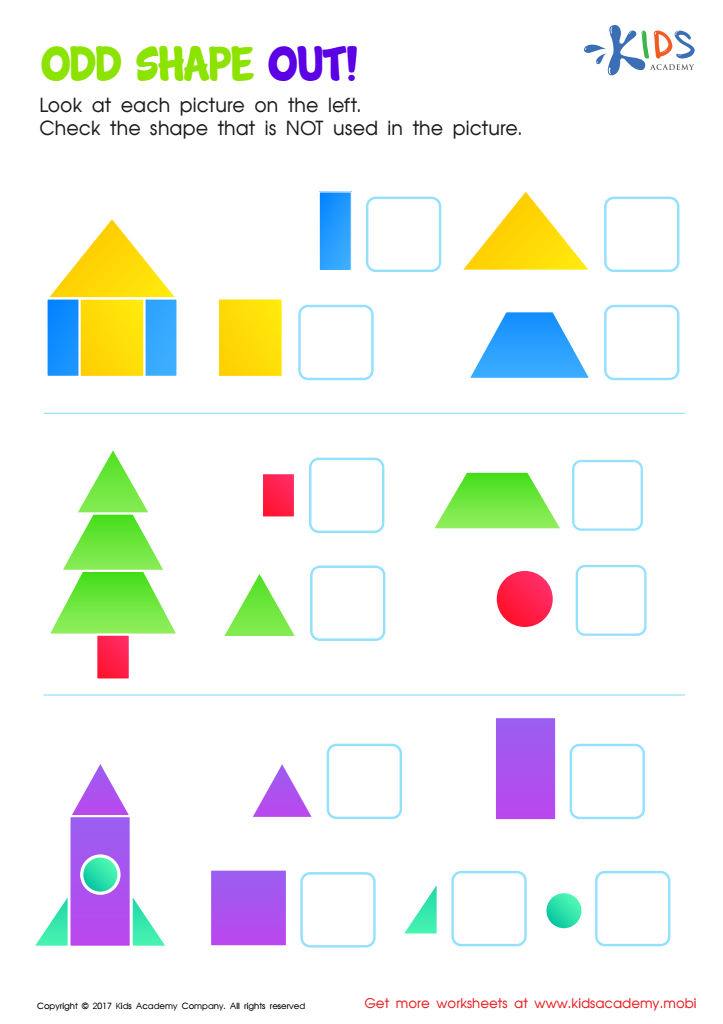
Odd Shape Out Worksheet for Grade 1
This worksheet can help your kids test their knowledge of shapes. They should have already been introduced to the most common shapes and be able to identify and draw them. Look at the picture and help your child identify each shape. Then, check which one isn't used to make the object.
 Assign to My Students
Odd Shape Out Worksheet for Grade 1
Worksheet
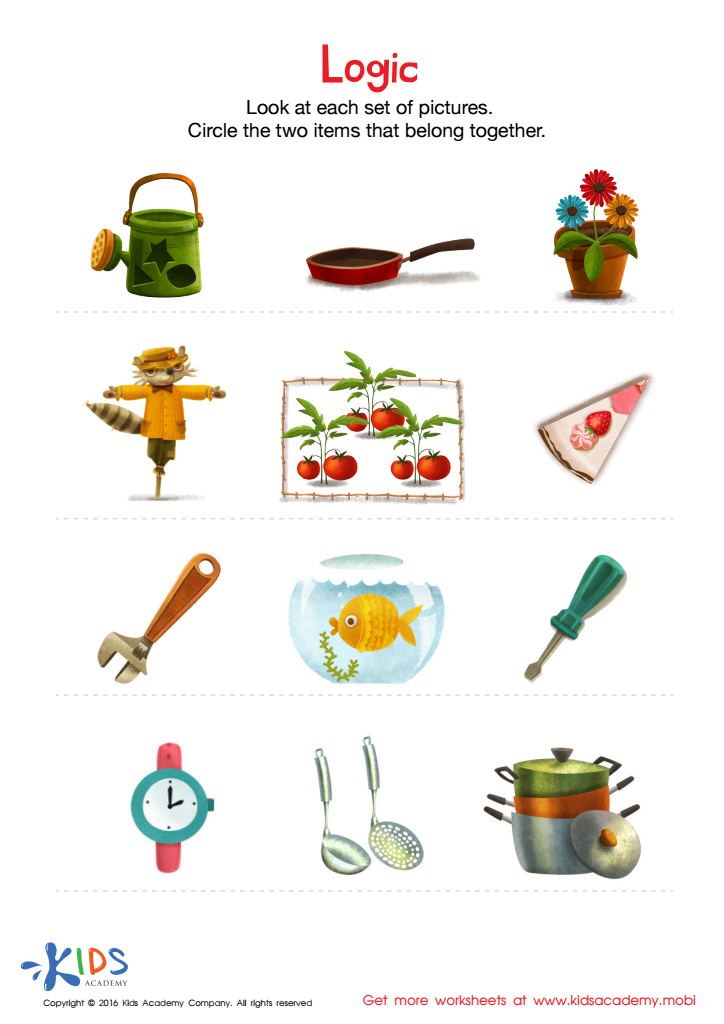
Logic Game Sorting Worksheet
Start your child's logic and reasoning development early with this fun matching worksheet! Through cute images and simple conversations, your little one can learn problem-solving, categorization, and matching skills. Plus, it's a great way for children to explore how items are used in real life. Try it and watch them boost skills with ease and fun!
Logic Game Sorting Worksheet
Worksheet
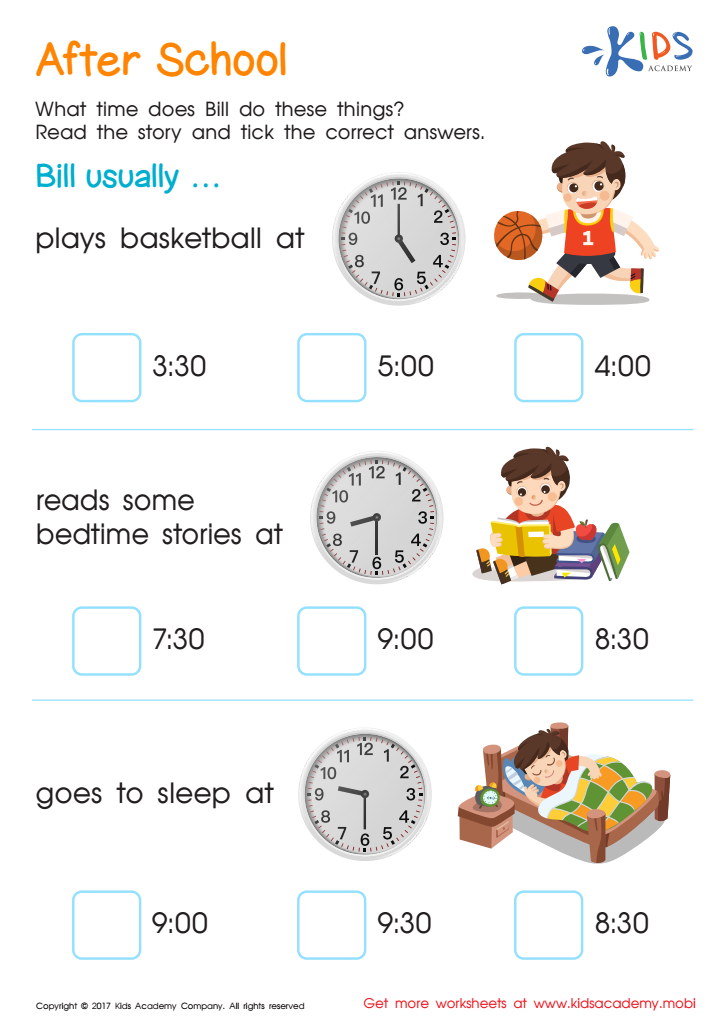
After School Time Printable
Meet Bill, a fun character who does the same things as all of us! This time-telling printable worksheet, 'After School', is an enjoyable way for your child to get familiar with Bill. It's a quick and cute activity to help understand the clocks and learn more about this new friend.
After School Time Printable
Worksheet
Join Kids Academy for Free
Who is primarily going to use this learning content?



%20(1).jpg)




Parents and teachers should prioritize analytical thinking in math for 7-year-olds because it lays the foundation for critical life skills. At this age, children's cognitive abilities are rapidly developing, making it an ideal time to encourage problem-solving and logical reasoning. Analytical thinking in math involves understanding patterns, making connections between concepts, and applying strategies to solve problems. This deepens a child's comprehension of mathematical concepts beyond rote memorization.
By fostering analytical skills, children gain confidence in their ability to tackle complex challenges, which can benefit them academically and in daily life. As they learn to break down problems and think critically about solutions, they cultivate perseverance and resilience. These skills are applicable not only in math but also in subjects like science, reading comprehension, and later in advanced coursework.
Moreover, analytical thinking fosters creativity. When children learn to explore multiple ways to arrive at a solution, they develop innovative thinking that is crucial for their future. Ultimately, nurturing analytical thinking equips 7-year-olds with the tools to be adaptive thinkers, preparing them for an ever-evolving world where problem-solving skills are essential. Thus, both parents and teachers play a vital role in supporting the development of these critical abilities.








