Mental math practice Math Worksheets for 7-Year-Olds
9 filtered results
-
From - To
Enhance your child’s math skills with our specially designed mental math practice worksheets for 7-year-olds! Our printable resources are perfect for young learners, offering engaging exercises to boost their arithmetic and problem-solving abilities. These worksheets cover essential topics like addition, subtraction, multiplication, and division, all tailored to the developmental needs of first and second graders. With fun themes and interactive challenges, kids will enjoy learning while improving their mental math speed and accuracy. Provide your child with the tools for success—in school and beyond—by incorporating our mental math practice into their daily routine.
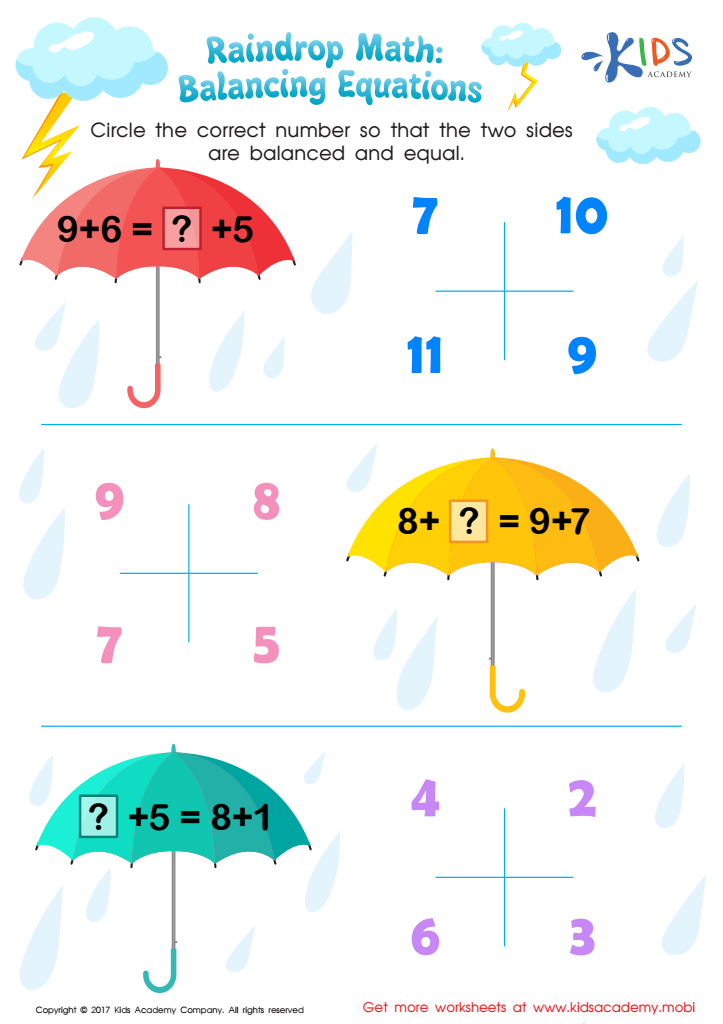
Raindrop Math Printable
 Assign to My Students
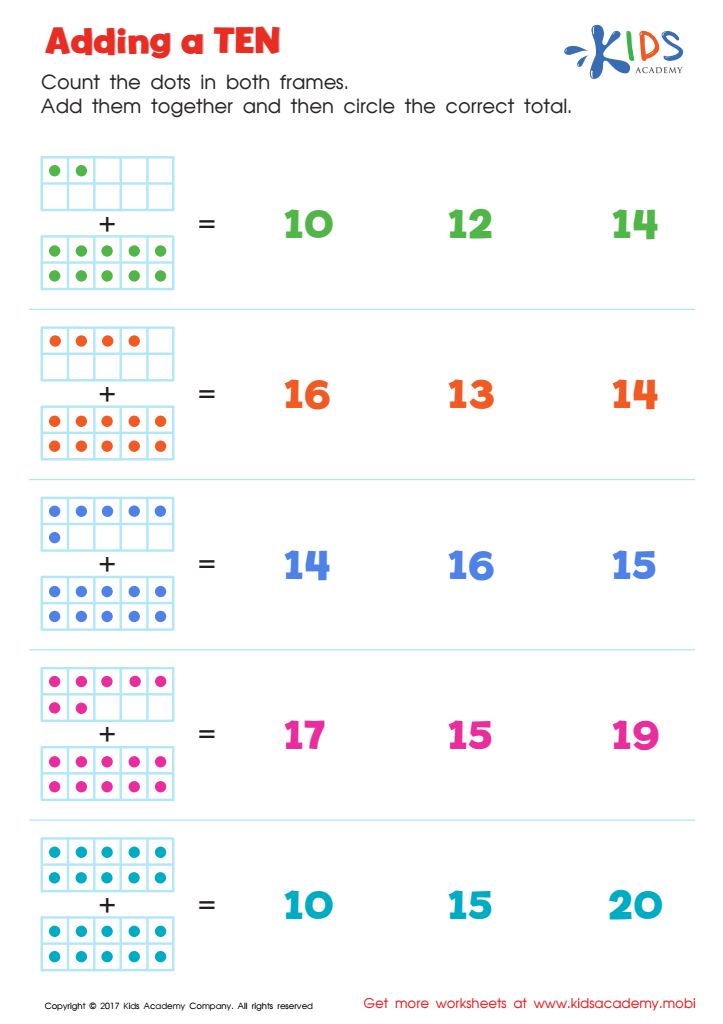
Adding a Ten Worksheet
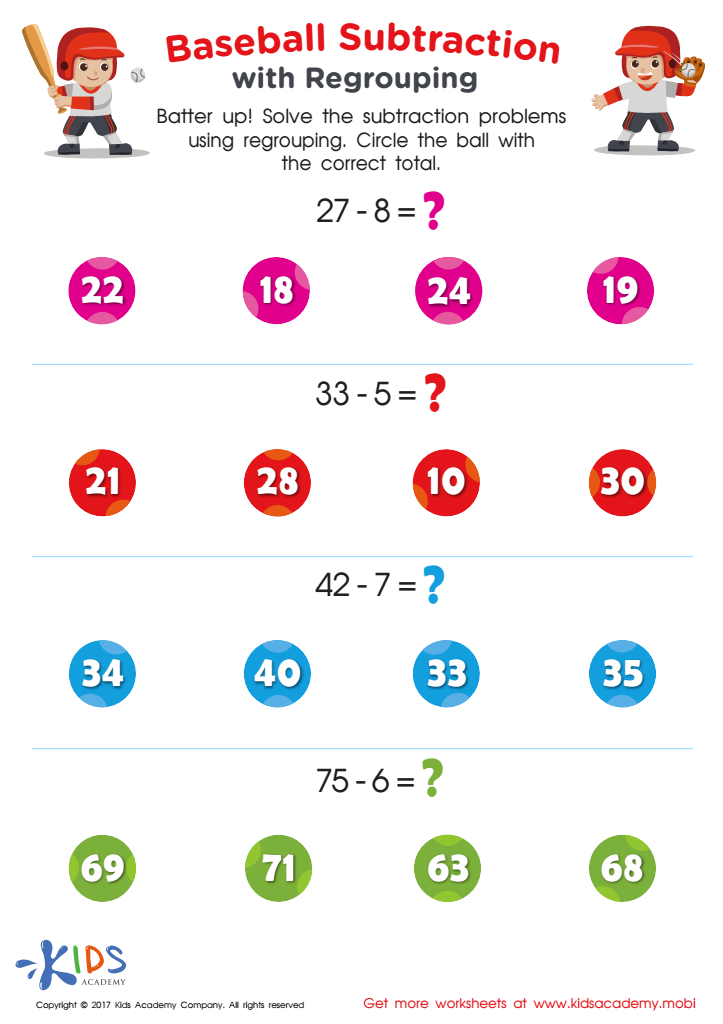
Subtraction With Regrouping for 2nd Grade Worksheet
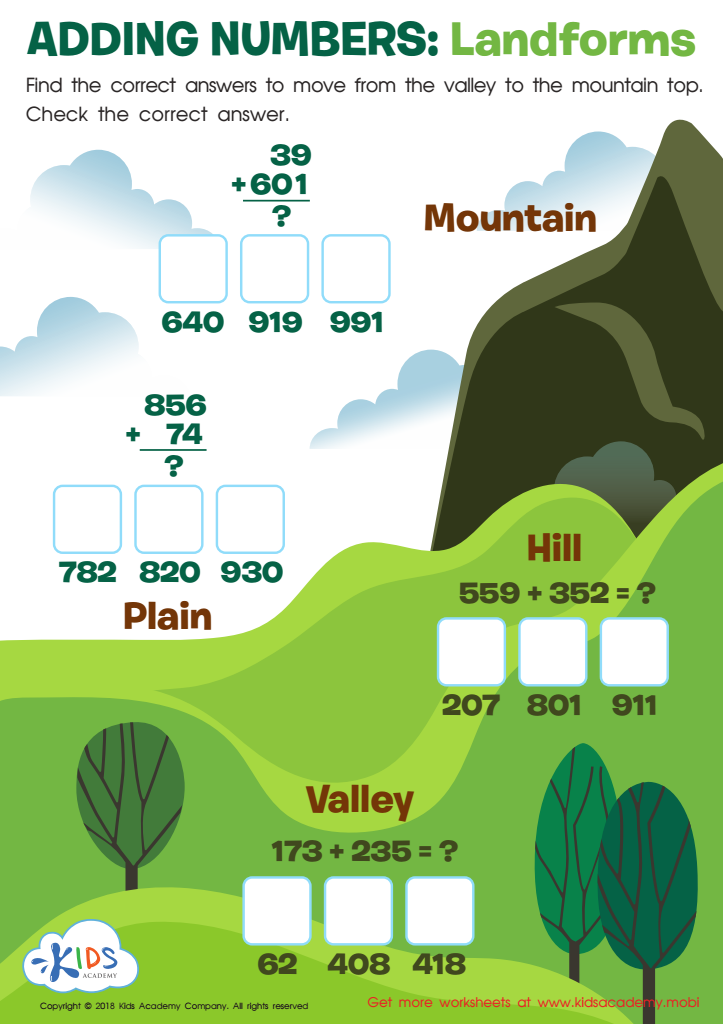
Adding Numbers: Landforms Worksheet
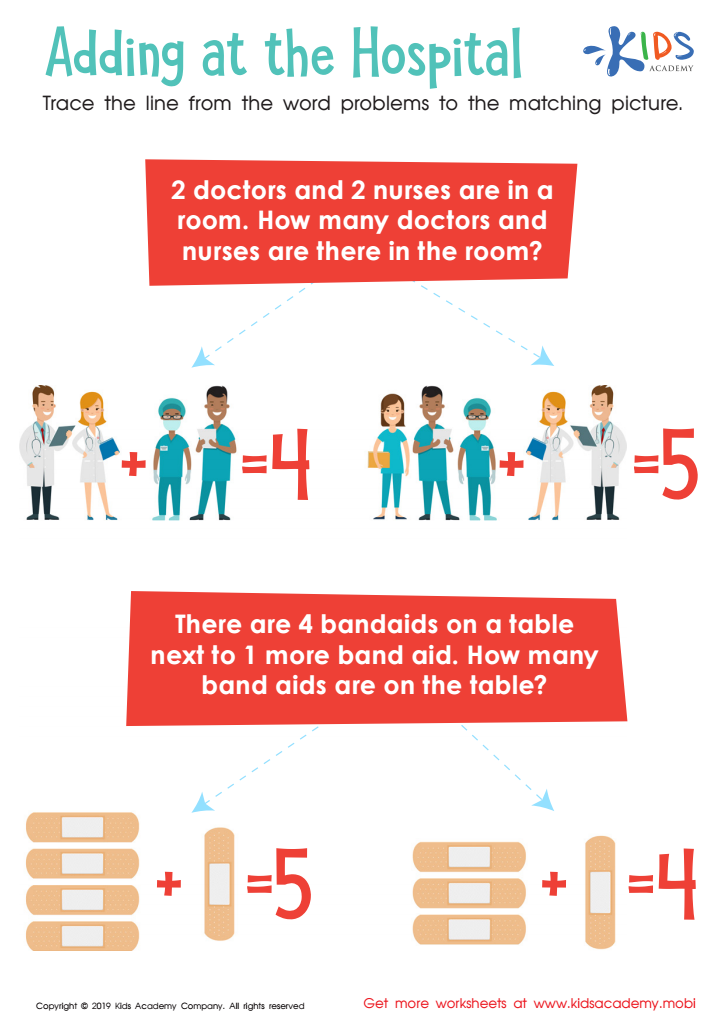
Adding at the Hospital Worksheet
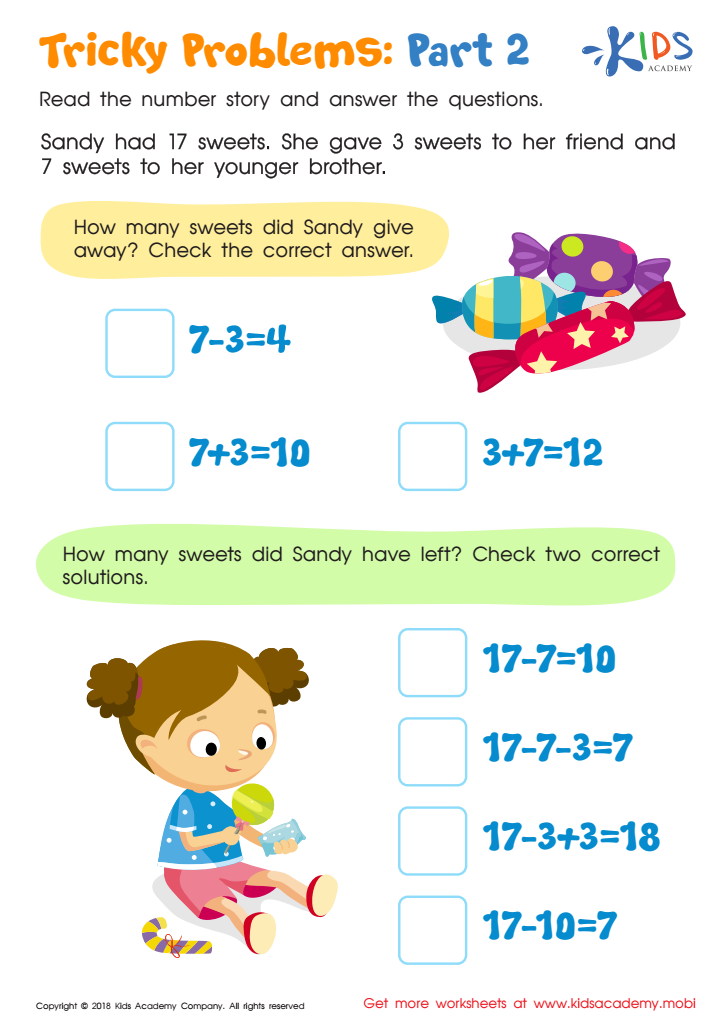
Tricky Problems Worksheet: Part 2
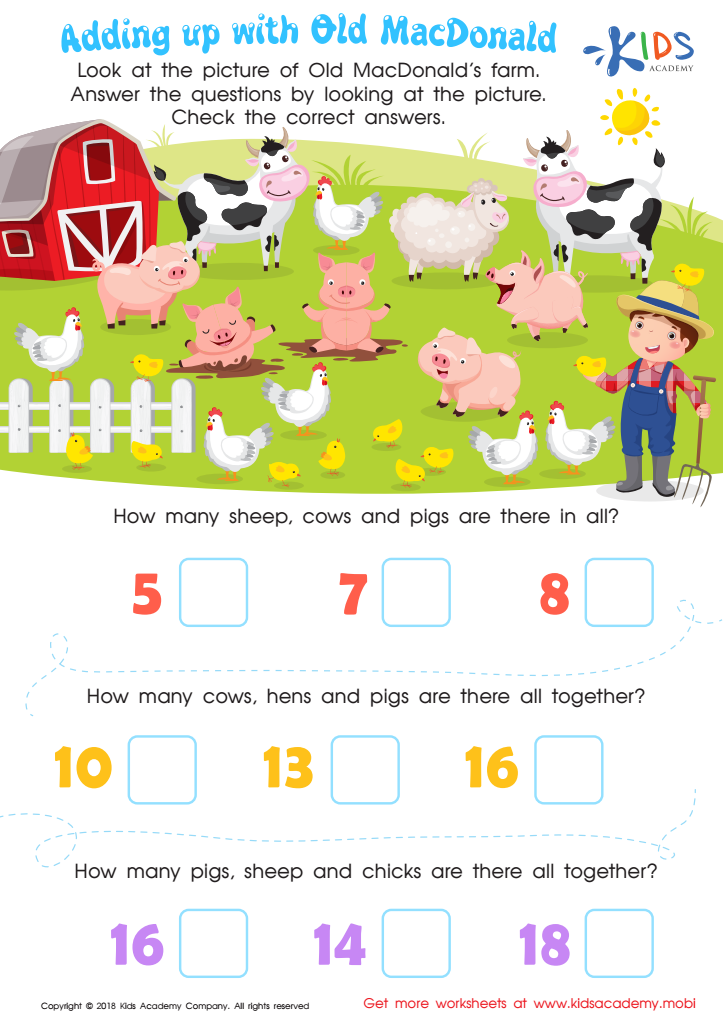
Adding Up with Old MacDonald Worksheet
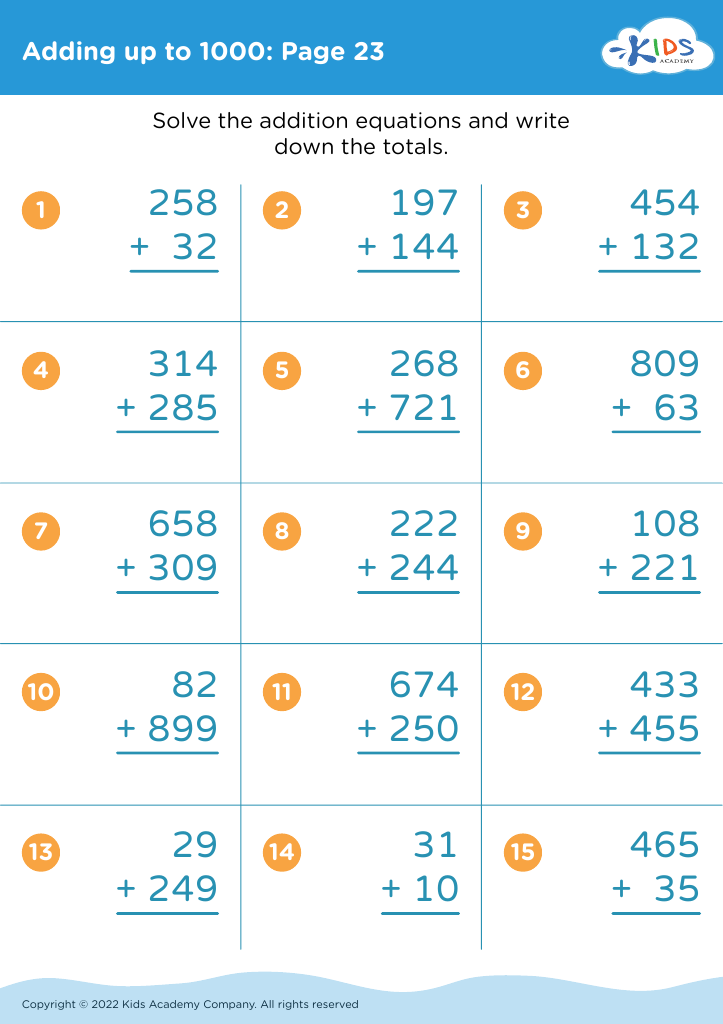
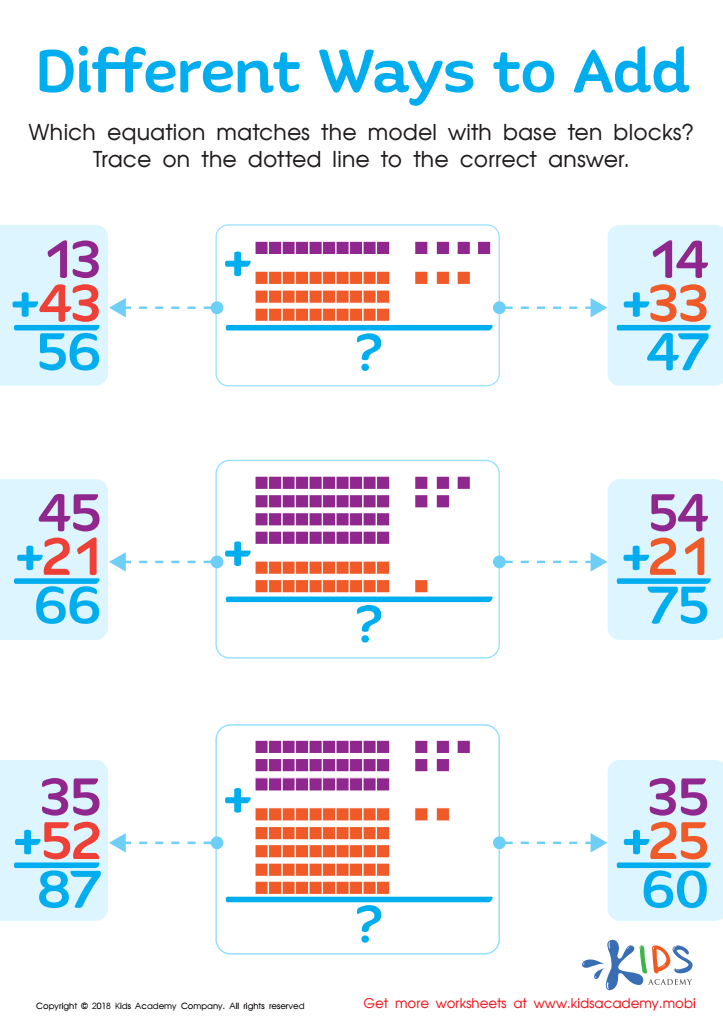
Different Ways to Add Worksheet







Parents and teachers should prioritize mental math practice for 7-year-olds because it lays a crucial foundation for their future academic success and cognitive development. At this age, children's brains are highly receptive to learning patterns and solving problems, so engaging in mental math exercises strengthens their neural pathways and enhances their ability to think quickly and accurately.
Firstly, mental math helps improve number sense, which is the intuitive understanding of numbers and their relationships. This foundational skill boosts children's confidence and proficiency in handling more complex mathematical concepts as they advance in their education. Moreover, mental math promotes critical thinking and problem-solving abilities, as children learn to break down problems and approach them with innovative strategies.
Secondly, practicing mental math fosters a positive attitude towards mathematics by making it an enjoyable and interactive experience. This positive mindset can diminish math anxiety and encourage a lifelong interest in the subject. Also, mental math practice supports the development of other essential cognitive skills, like memory, concentration, and logical reasoning.
Lastly, being adept at mental math equips children to tackle everyday tasks involving numbers, such as time management, money handling, and measurement, fostering their independence and practical life skills. Thus, integrating regular mental math practice lays a robust educational and cognitive groundwork for young learners.








