Check out this FREE Trial Lesson on Math for age 7!

Counting to 10

Favorites
With answer key
Interactive
  • 7
  • Understanding patterns
  • Math
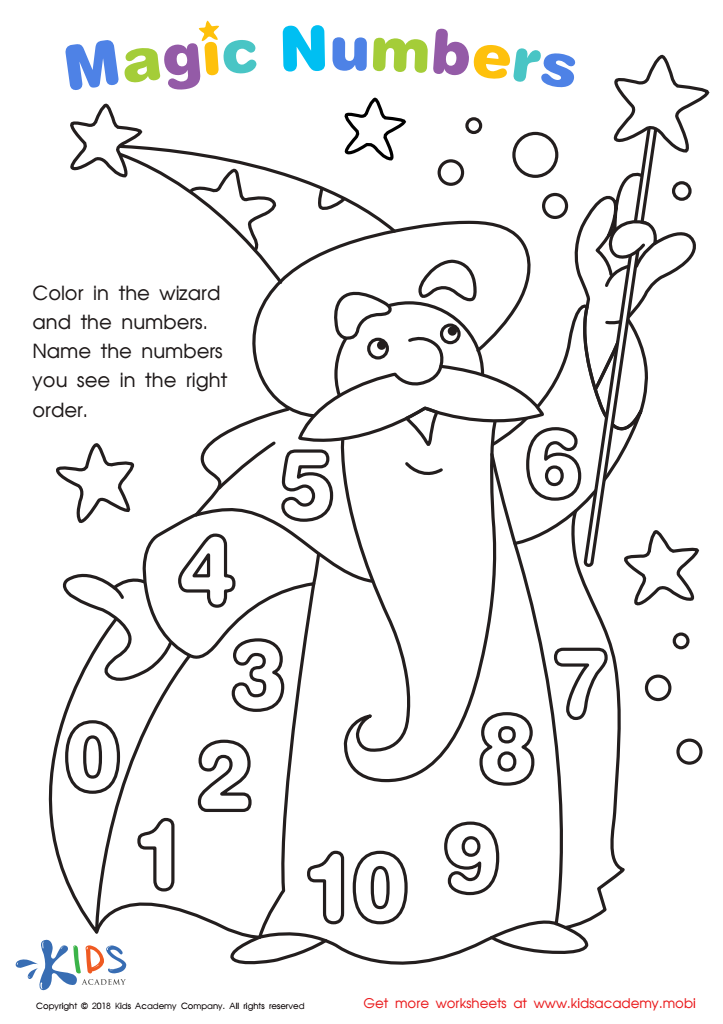
Magic Numbers Worksheet

Magic Numbers Worksheet

Does your child have an interest in magic? Here's something they'll love - a coloring sheet featuring a wizard! Ask them to name the numbers from smallest to highest, then let them pick colors to color in the wizard and the numbers. It's sure to excite them!
Download (PDF)
Assign to My Students
Magic Numbers Worksheet
Worksheet
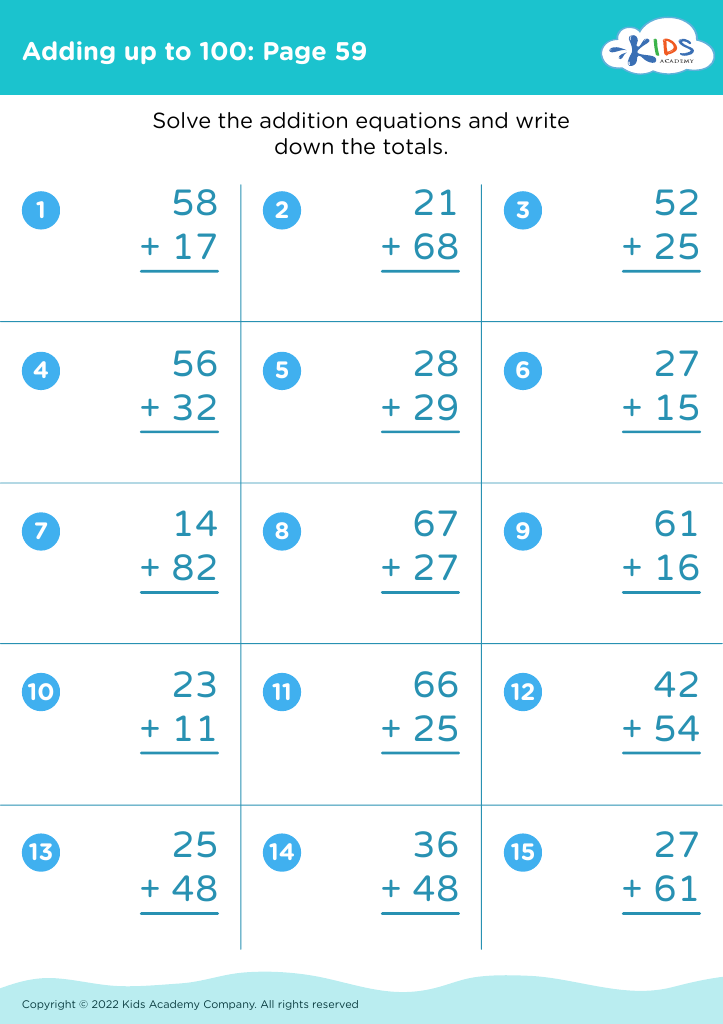
Adding up to 100: Page 59

Adding up to 100: Page 59

Adding up to 100: Page 59
Worksheet
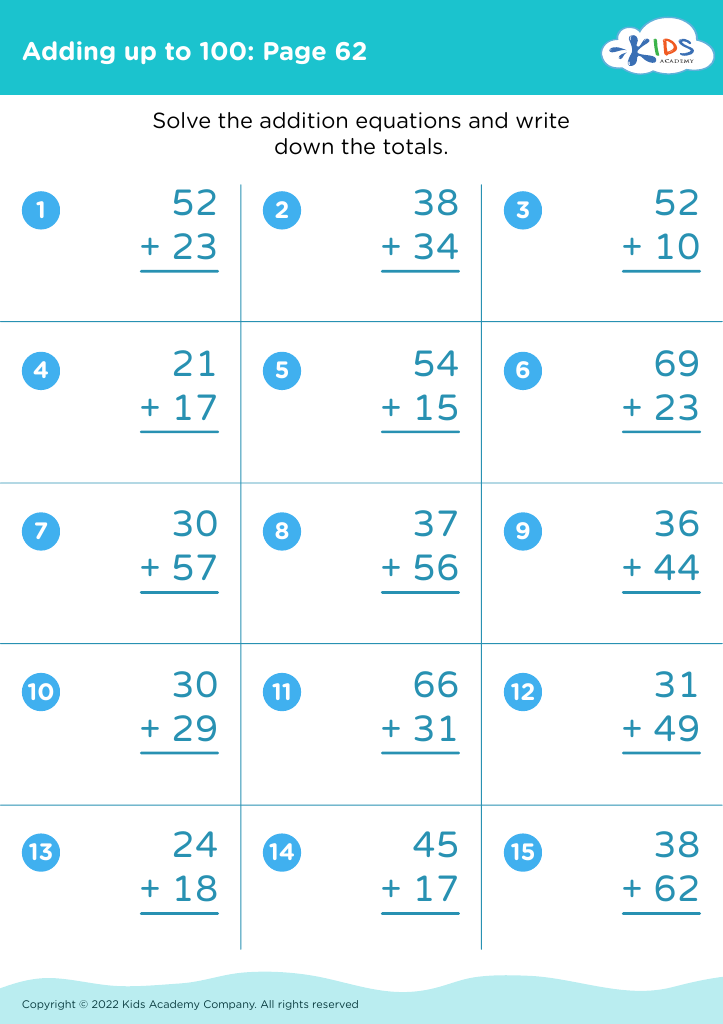
Adding up to 100: Page 62

Adding up to 100: Page 62

Adding up to 100: Page 62
Worksheet
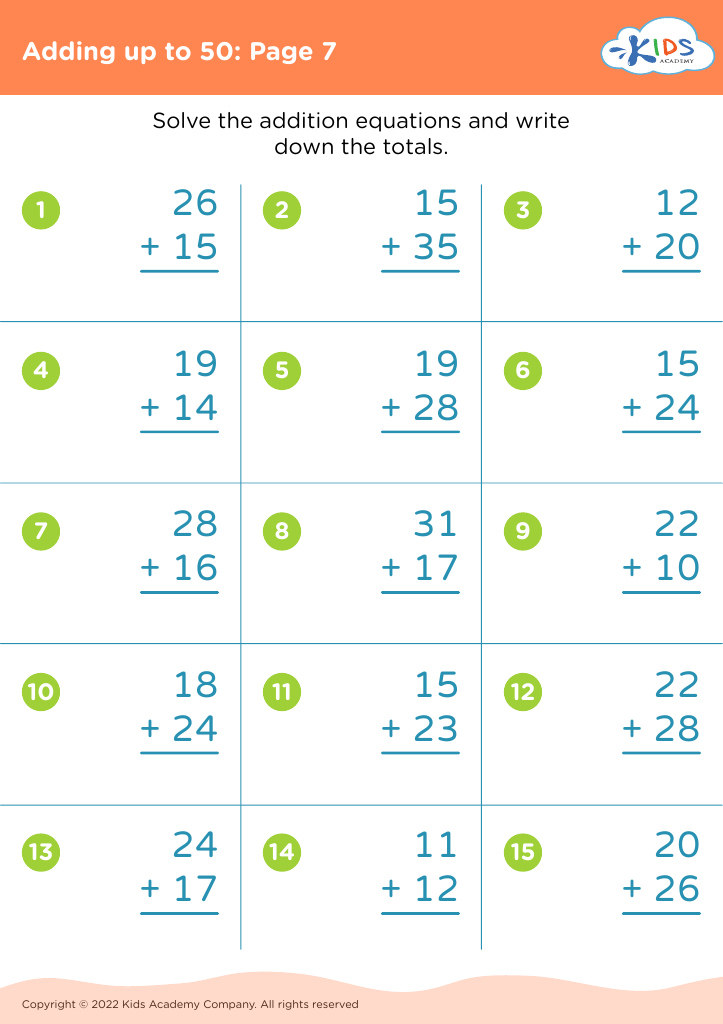
Adding up to 50: Page 7

Adding up to 50: Page 7

Adding up to 50: Page 7
Worksheet
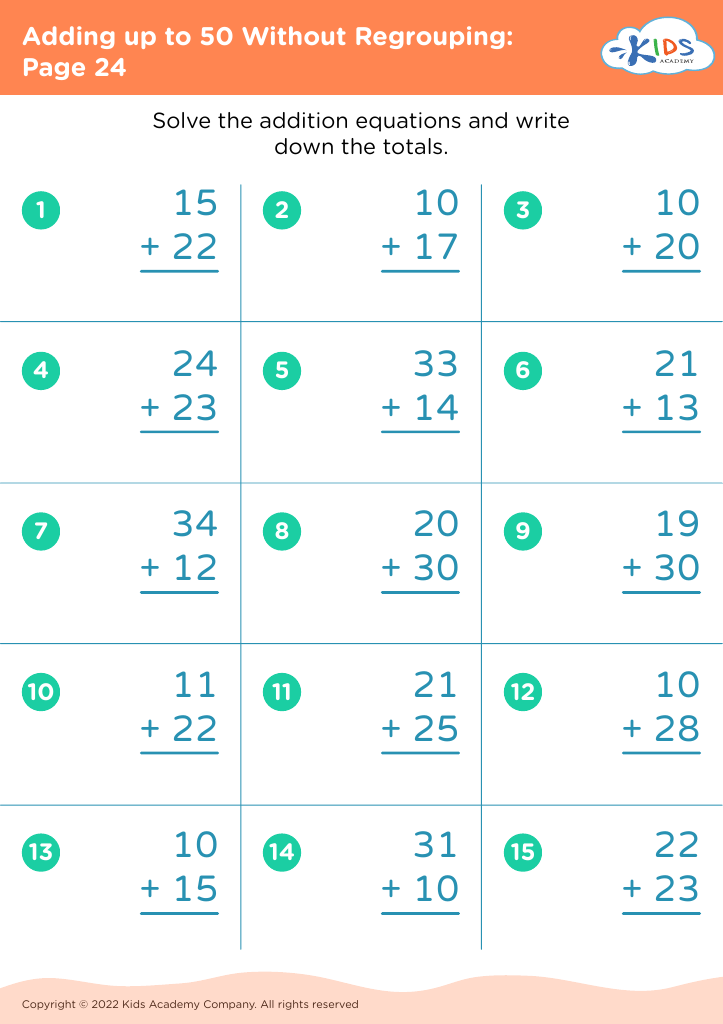
Adding up to 50 Without Regrouping: Page 24
Worksheet
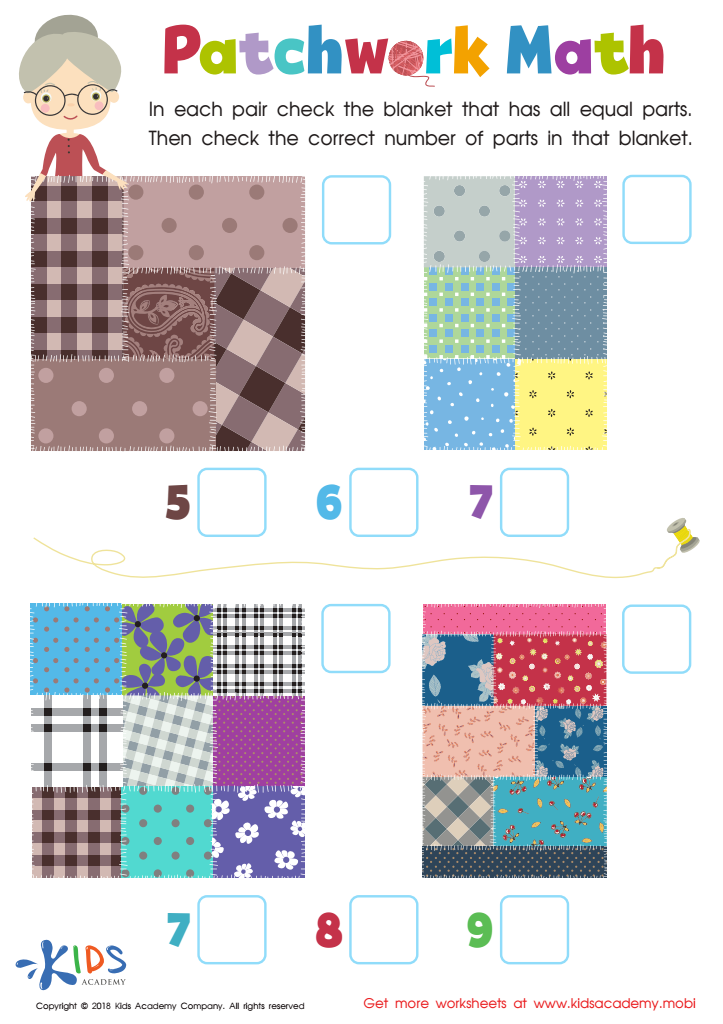
Patchwork Math Worksheet


Patchwork Math Worksheet

Test your children's knowledge with this colorful worksheet. They'll need to identify which of the blanket pairs have been cut in equal parts and count the number of parts. Check the provided options to ensure the correct answer.
Patchwork Math Worksheet
Worksheet
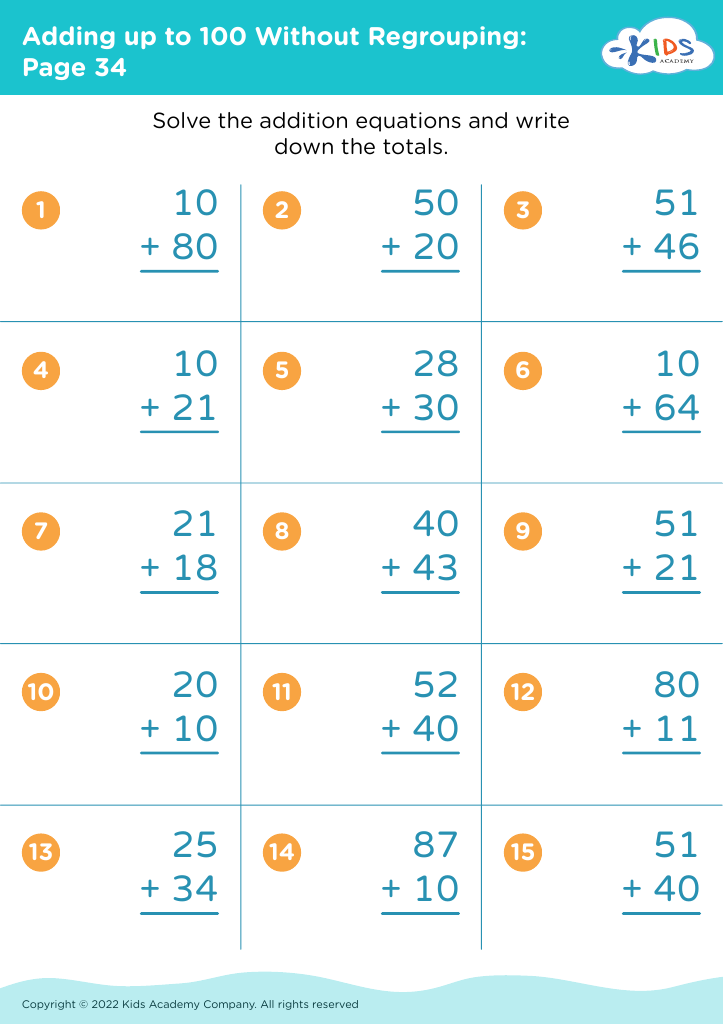
Adding up to 100 Without Regrouping: Page 34
Worksheet
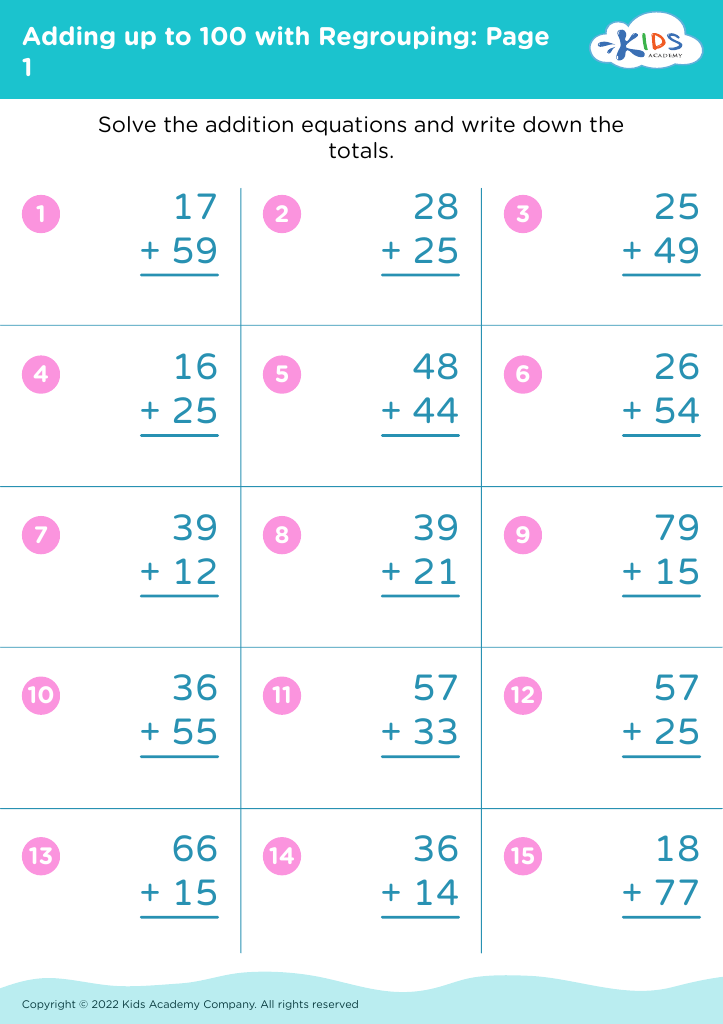
Adding up to 100 with Regrouping: Page 1
Worksheet
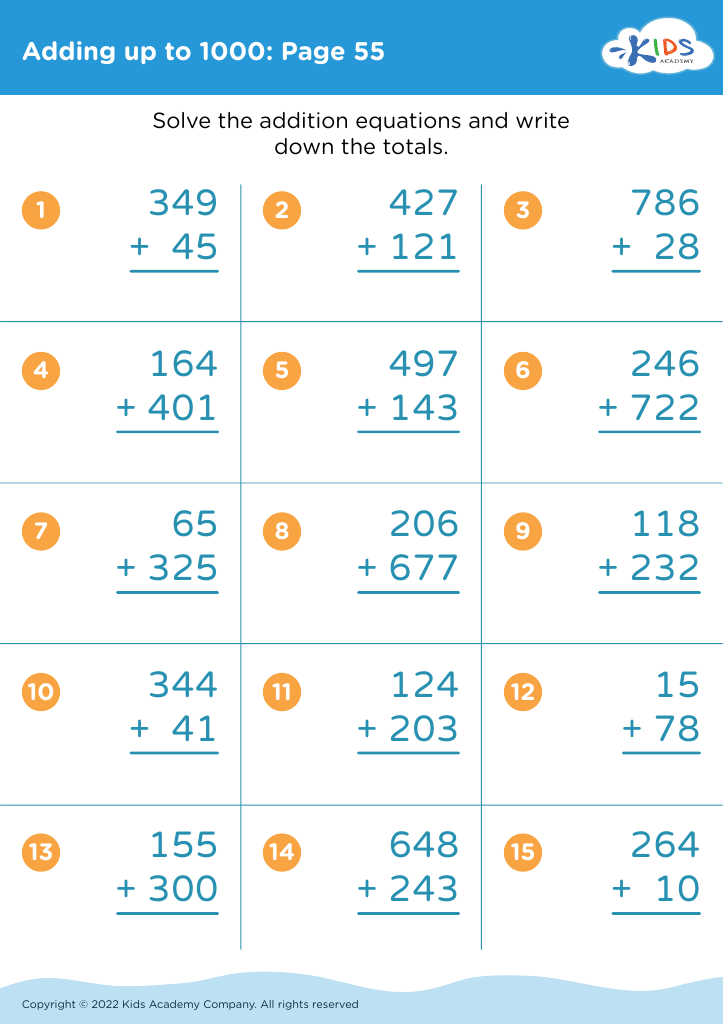
Adding up to 1000: Page 55

Adding up to 1000: Page 55

Adding up to 1000: Page 55
Worksheet
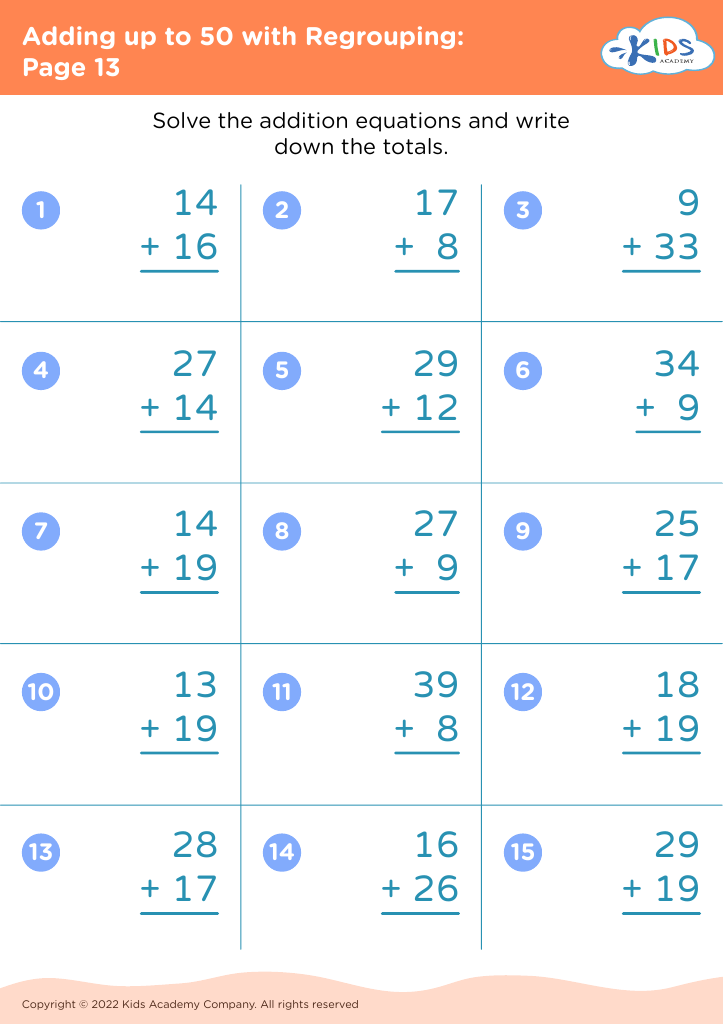
Adding up to 50 with Regrouping: Page 13
Worksheet


Understanding patterns in math is crucial for 7-year-olds, and it’s essential for both parents and teachers to be invested in this area of learning. Recognizing patterns not only helps children develop critical thinking and problem-solving skills, but it also forms the foundation for more complex mathematical concepts. When children can identify and predict patterns, they enhance their computational skills and ability to make connections between different ideas, such as addition, subtraction, and even early algebra.

Moreover, engaging with patterns fosters curiosity and promotes a positive attitude toward math. When children discover patterns in numbers, shapes, or everyday life, they often experience a sense of accomplishment that builds their confidence and encourages further exploration. This engagement can lead to a deeper understanding of mathematical concepts, making learning more enjoyable and interactive.

Parents and teachers play a vital role in nurturing these skills by creating an environment rich in opportunities for pattern exploration, whether through games, discussions, or hands-on activities. By emphasizing the importance of pattern recognition, parents and teachers equip children with the tools they need for future academic success and help cultivate a lifelong love of learning in mathematics.