
Visual recognition Math Worksheets for 7-Year-Olds
3 filtered results
Difficulty Level
Grade
Age
-
From - To
Subject
Activity
Standards
Unlock the power of visual learning with our expertly designed Visual Recognition Math Worksheets for 7-Year-Olds. Tailored to captivate young minds, these worksheets merge fun with education, enhancing essential math skills through engaging visual exercises. Kids will strengthen their ability to recognize patterns, shapes, and numbers, paving the way for a robust mathematical foundation. Perfect for classroom or home use, our printable worksheets ensure that learning feels less like work and more like play. Download now to help your child develop crucial visual recognition skills, boosting confidence and fostering a lifelong love for math!
Favorites
With answer key
Interactive
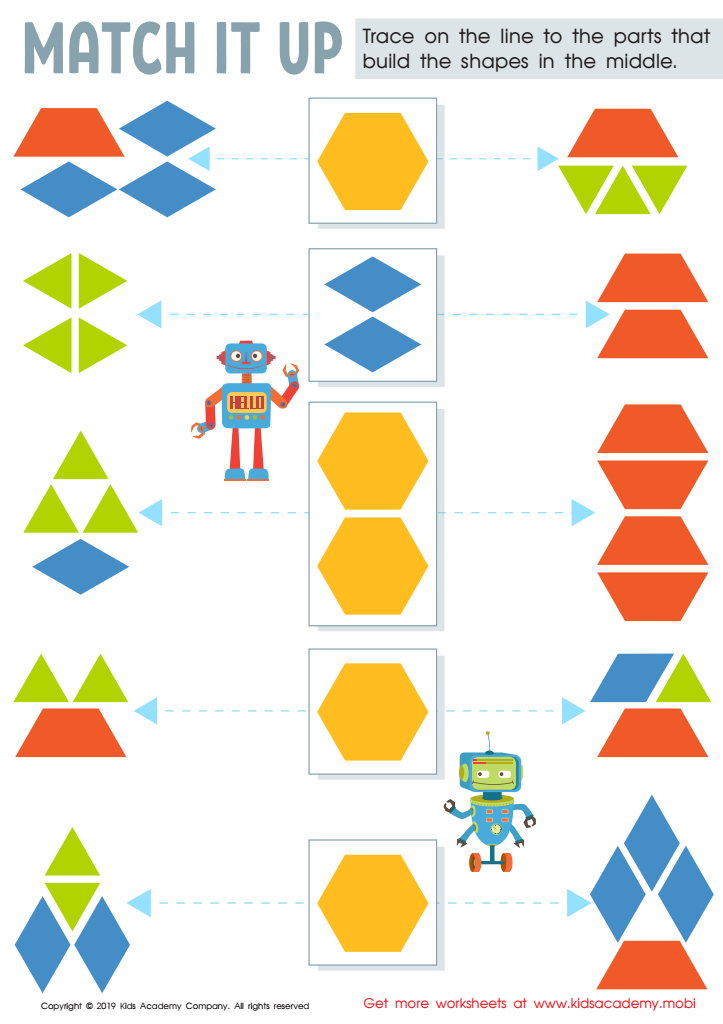
Match It up Worksheet
If your kids are into robots, they'll be thrilled to work on this worksheet. Ask them to name shapes they know, and help them draw and identify these shapes. Look at the shapes in the middle, and the sides. Finally, help your kids trace the lines to build the shapes in the middle.
 Assign to My Students
Match It up Worksheet
Worksheet
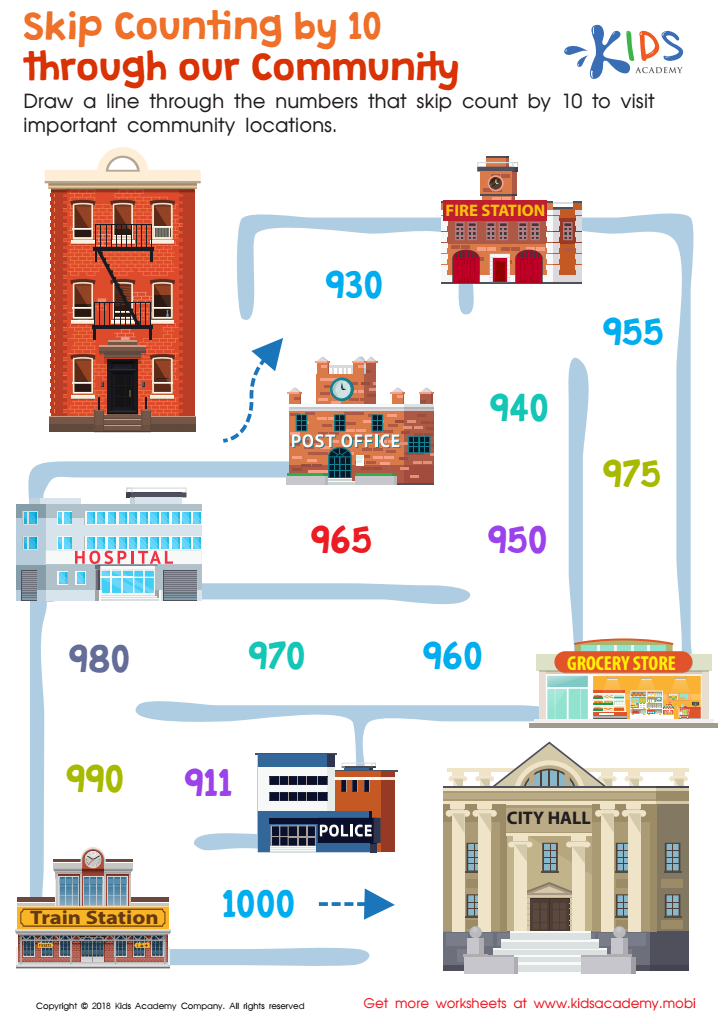
Skip Counting by 10 Through Our Community Worksheet
Our kids need to 'make a ten' and skip count by tens to boost their speed and accuracy in math. This cool, free worksheet takes them on a journey through their local community to practice counting by tens. They'll work on social studies and fine motor skills while having fun with the maze they get to count by tens in!
Skip Counting by 10 Through Our Community Worksheet
Worksheet
Join Kids Academy for Free
Who is primarily going to use this learning content?







%20(1).jpg)
Visual recognition in math is crucial for 7-year-olds because it builds foundational skills vital for future learning. At this age, children are developing cognitive abilities that underpin logical thinking and problem-solving. Visual aids, like number lines, graphs, and geometric shapes, help them understand abstract mathematical concepts by making them concrete and relatable.
One main reason parents and teachers should focus on visual recognition in math is that it enhances spatial reasoning. This skill helps children comprehend the relationships between objects, crucial for geometry, and understanding proportions and measurements. Visual learning supports memory retention and recall, as young children often remember images better than words or numbers alone.
Furthermore, visual recognition in math promotes engagement and interaction. Kids are naturally curious and tend to be more interested in activities involving shapes, colors, and patterns. This increases their motivation to participate and learn, fostering a positive attitude towards math.
Lastly, developing visual recognition skills early helps diagnose and address learning difficulties. Early intervention can significantly improve outcomes for children struggling with specific aspects of math. Recognizing these challenges early allows parents and teachers to tailor support strategies effectively, ensuring that every child has the opportunity to succeed in math.








