
Fine Motor Skills Matching Worksheets for 7-Year-Olds
3 filtered results
Difficulty Level
Grade
Age
-
From - To
Subject
Activity
Standards
Enhance your 7-year-old's fine motor skills with our engaging matching worksheets! Designed to promote hand-eye coordination and dexterity, these fun activities encourage children to connect related shapes, objects, and images. Each worksheet is specifically tailored to keep young learners entertained while fostering essential skills critical for writing, drawing, and everyday tasks. Kids will enjoy engaging visuals, colorful designs, and interactive challenges that make learning a joy. Perfect for home or classroom use, these worksheets are an excellent resource for educators and parents alike to support children's development in a playful manner. Download your fine motor skills matching worksheets today!
Favorites
With answer key
Interactive
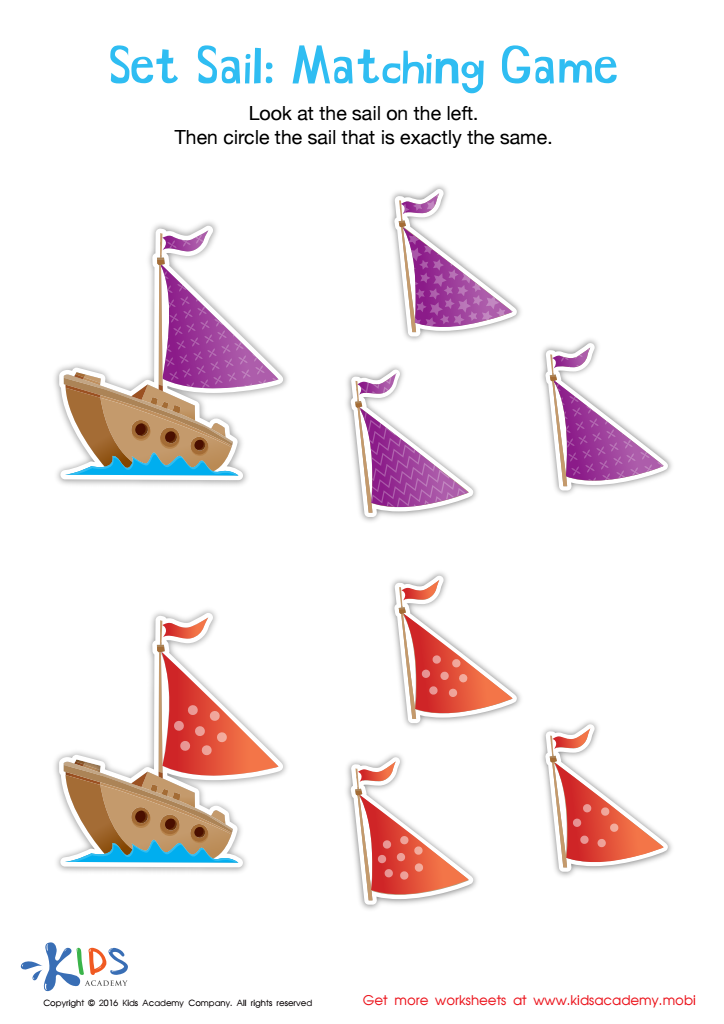
Set Sail Worksheet
Set sail with this fun matching game for toddlers! Kids will love finding the same pattern on the sails, improving their problem-solving and counting skills. Enjoy this bright and engaging worksheet!
 Assign to My Students
Set Sail Worksheet
Worksheet
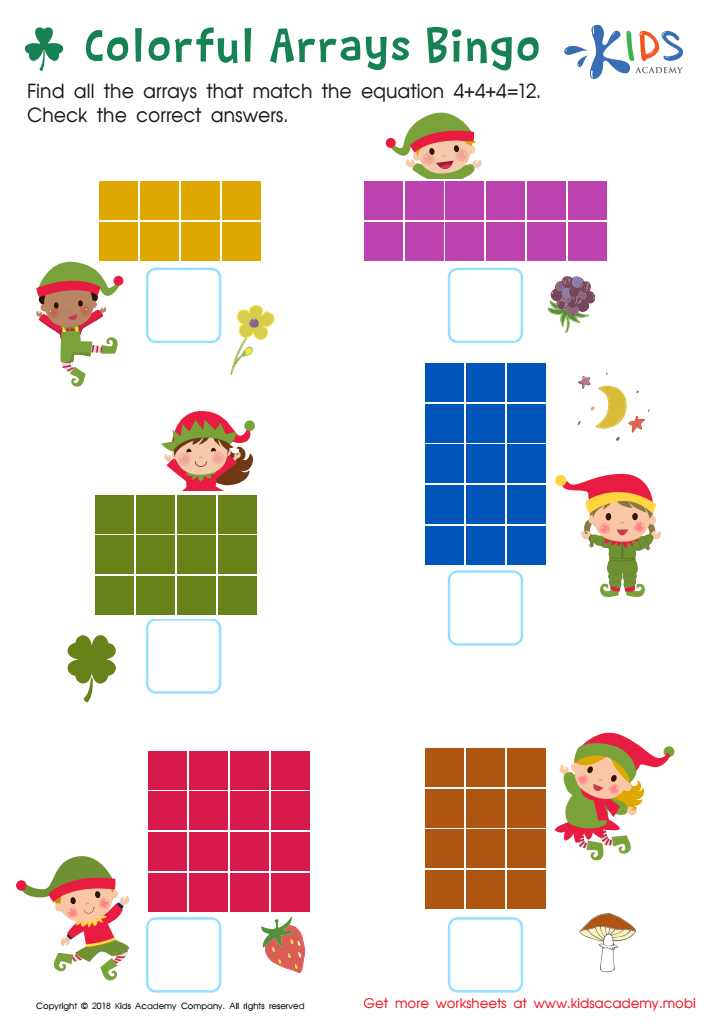
Colorful Arrays Bingo Worksheet
This worksheet stimulates thinking about arrays and how to represent them. Instruct students to count the 6 arrays and find which ones sum up to 12. Ask them to check the answers for accuracy.
Colorful Arrays Bingo Worksheet
Worksheet
Join Kids Academy for Free
Who is primarily going to use this learning content?








Fine motor skills are essential for children's overall development, particularly for 7-year-olds who are navigating both academic and everyday tasks. Parents and teachers should prioritize fine motor skills matching because these skills directly impact a child's ability to perform tasks requiring hand-eye coordination, dexterity, and precision.
As children engage in activities like writing, drawing, or manipulating small objects, fine motor skills enable them to express their ideas and creativity effectively. Proficient fine motor skills also contribute to a child’s self-confidence. Children who can successfully manage tasks such as buttoning clothes or using scissors experience a sense of accomplishment, fostering independence.
Moreover, fine motor skills play a crucial role in academic success. Many subjects, such as art and mathematics, require basic motor functions. Enhanced fine motor skills can improve handwriting, which is vital for successful communication in the classroom.
Additionally, children who struggle with fine motor skills may experience frustration, leading to disengagement or behavioral challenges. Thus, by fostering fine motor skills, we not only aid in cognitive development but also promote emotional well-being. Parents and teachers can implement simple matching games and practical activities to reinforce these skills in a fun and engaging manner.








