Interpreting data Measurement Worksheets for 7-Year-Olds
4 filtered results
-
From - To
Discover our engaging "Interpreting Data Measurement Worksheets for 7-Year-Olds," designed to enhance young learners' understanding of measurement concepts through fun activities. These worksheets offer a hands-on approach, allowing children to practice interpreting various data sets, from weighing objects to measuring lengths. With vibrant illustrations and relatable examples, these resources promote critical thinking and help students make connections between math and everyday situations. Ideal for reinforcing classroom learning, our worksheets cater to different learning styles, ensuring every child can succeed. Encourage your 7-year-old to explore the exciting world of data interpretation while building essential math skills that lay the groundwork for future learning!
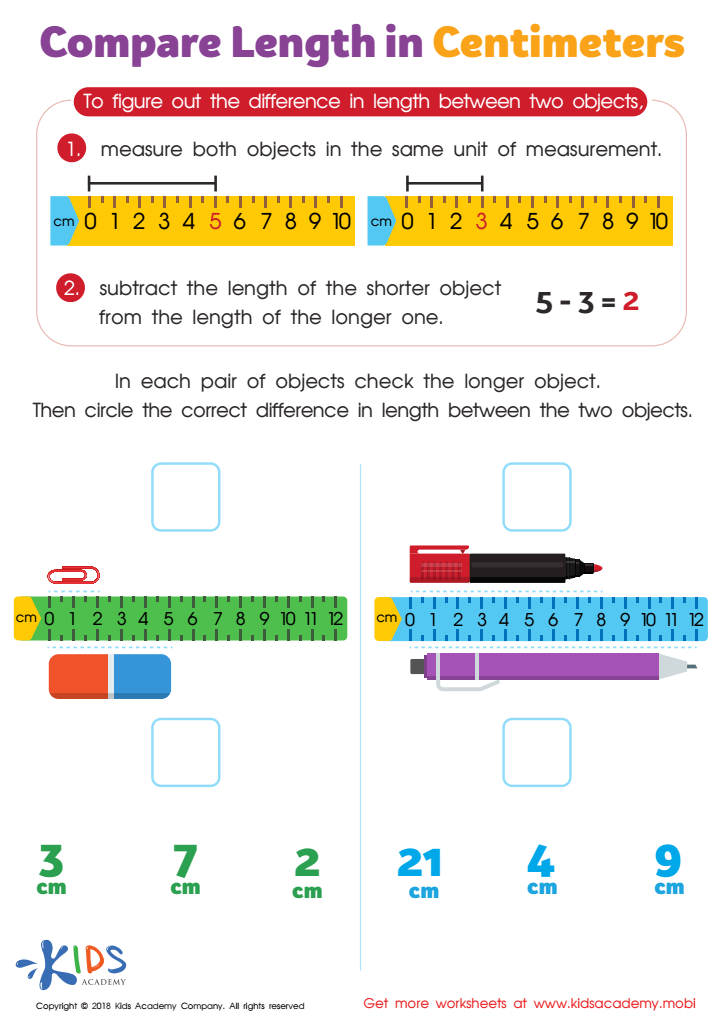
Compare Length in Centimeters Worksheet
 Assign to My Students
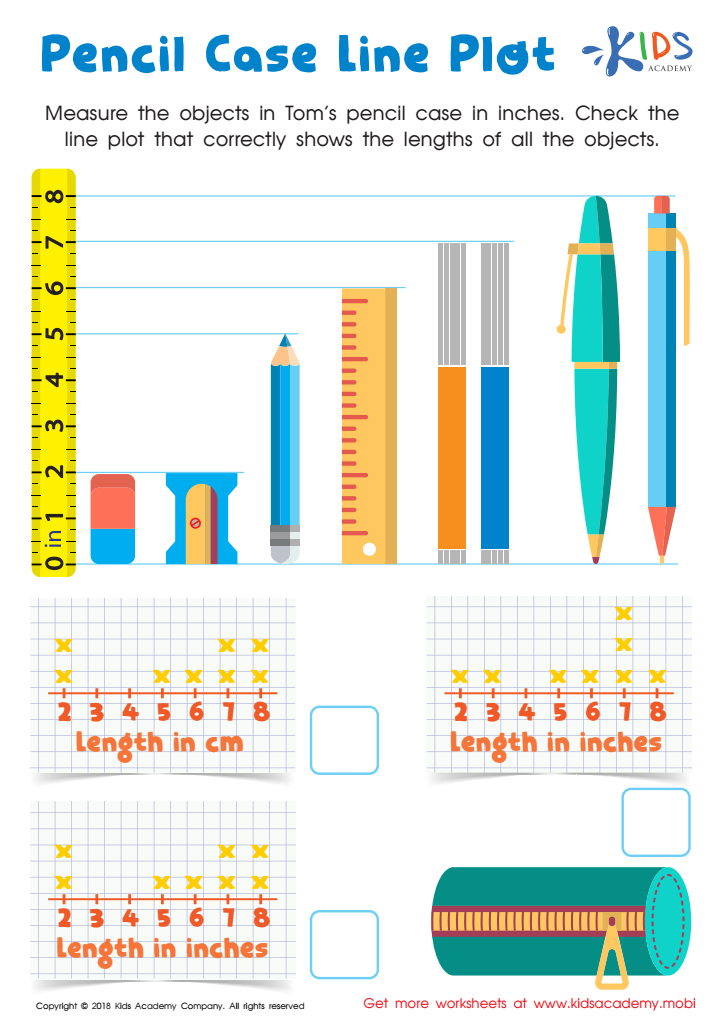
Pencil Case Line Plot Worksheet
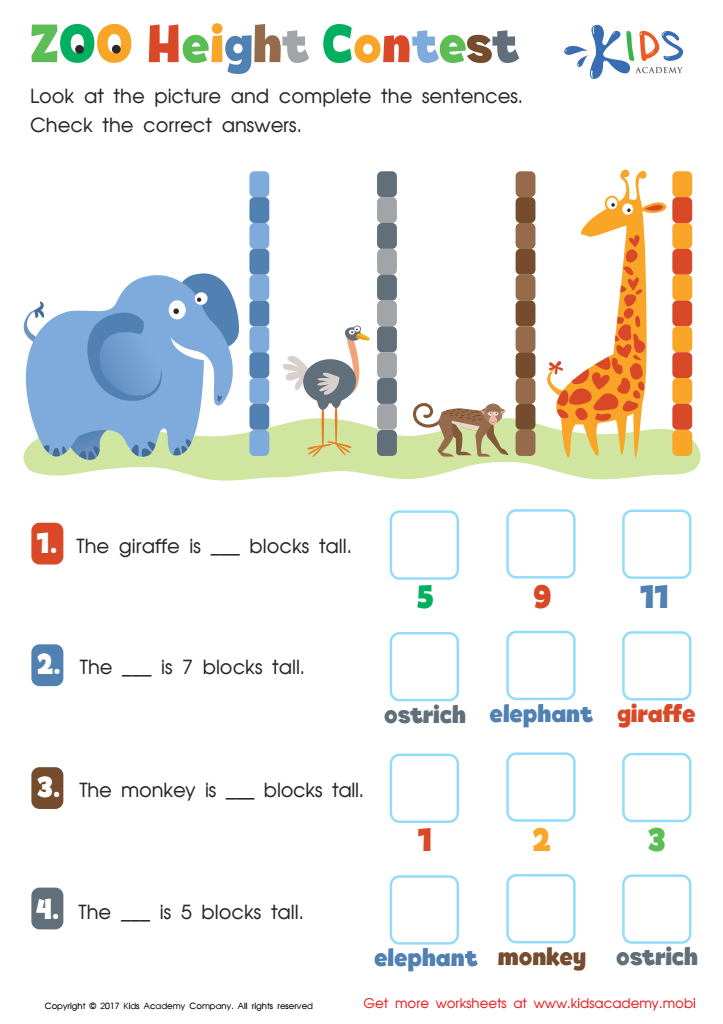
Zoo Height Contest Worksheet
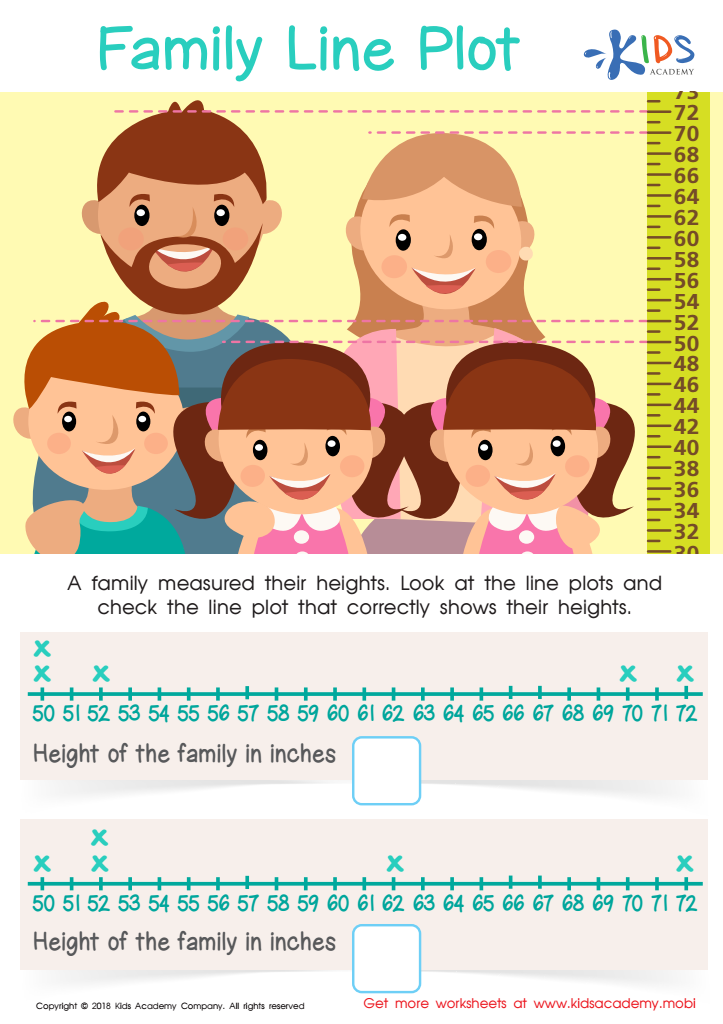
Family Line Plot Worksheet








Interpreting data measurement is crucial for 7-year-olds as it lays the foundation for their critical thinking and analytical skills. At this age, children are naturally curious, often asking questions about the world around them. By teaching them how to interpret data, parents and teachers can help them make sense of information they encounter in everyday life, from understanding weather patterns to analyzing sports statistics.
Engaging with data measurement encourages students to observe, compare, and draw conclusions, fostering engagement in subjects like math and science. It also hones their ability to problem solve, as they learn to use data to support their ideas and decisions. Furthermore, understanding data can help children develop a sense of agency in their learning, as they notice patterns and trends that apply to their experiences.
For parents and teachers, focusing on data interpretation promotes a growth mindset, making learning more interactive and enjoyable. Encouraging children to explore and understand the data helps them build confidence and independence in their learning journey. Ultimately, fostering these skills early equips children with essential tools for future academic success, preparing them to navigate an increasingly data-driven world.








