Problem Solving Subtraction Worksheets for 7-Year-Olds
3 filtered results
-
From - To
Enhance your 7-year-old's subtraction skills with our engaging Problem Solving Subtraction Worksheets! Tailored to support young learners, these worksheets offer a variety of fun and interactive exercises that foster critical thinking and problem-solving abilities. Children will tackle real-world scenarios, applying their subtraction knowledge to find solutions. Each worksheet is designed to boost confidence while making math enjoyable. With colorful illustrations and age-appropriate challenges, your child will be motivated to practice and improve their subtraction mastery. Perfect for classroom use or at-home learning, our resources ensure your little mathematician is well-equipped for success! Start exploring and solving today!
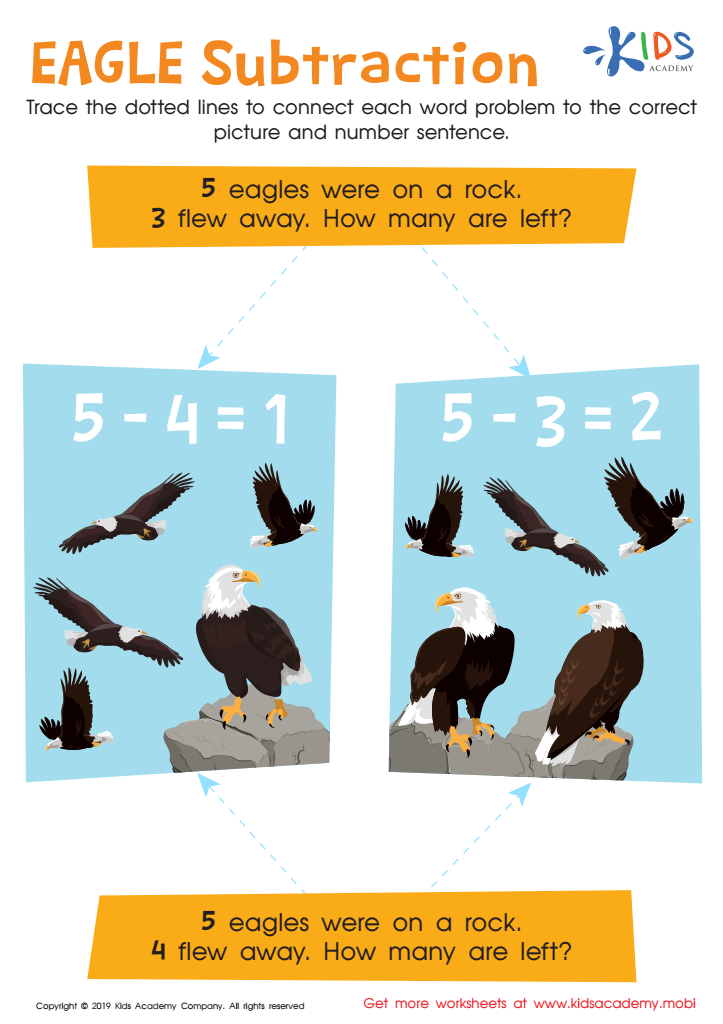
Eagle Subtraction Worksheet
 Assign to My Students
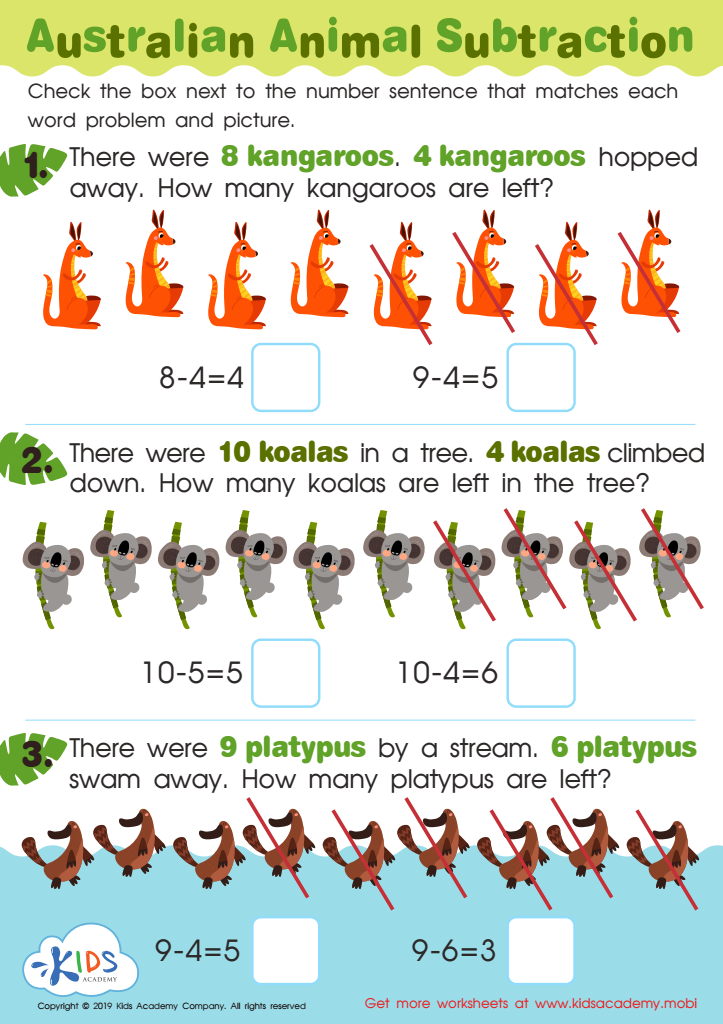
Australian Animal Subtraction Worksheet
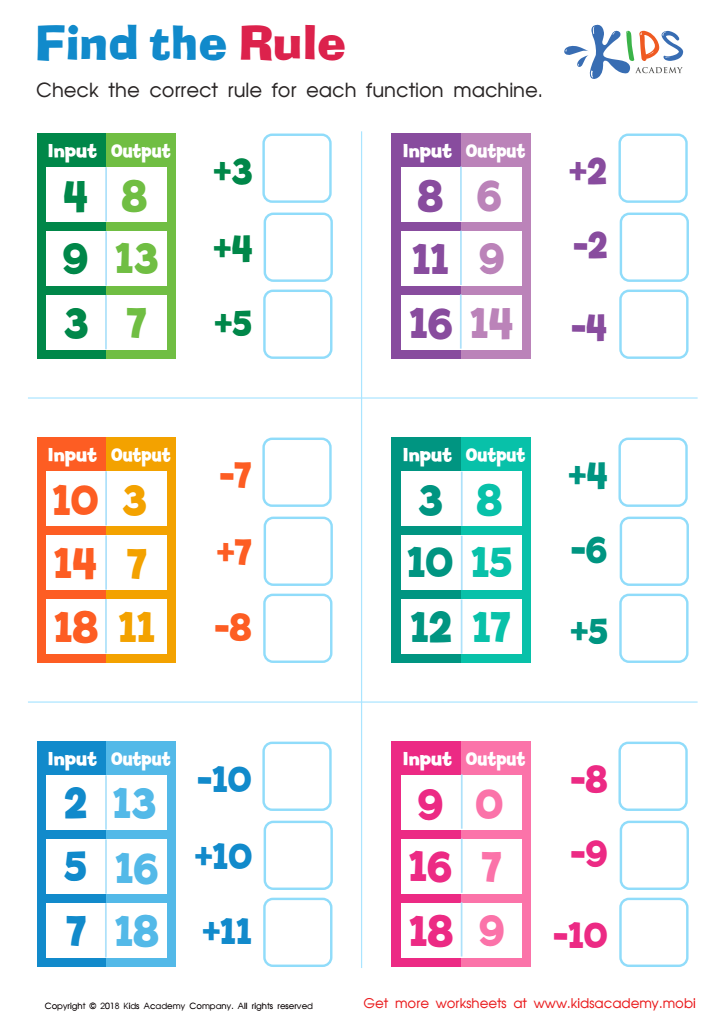
Find the Rule Worksheet








Parents and teachers should prioritize teaching problem-solving subtraction to 7-year-olds for several important reasons. At this developmental stage, children deepen their understanding of numbers and gain essential skills they will use throughout their lives. Problem-solving subtraction encourages critical thinking, as it requires students to analyze situations, make connections between numbers, and develop strategies for finding solutions.
By mastering subtraction in a problem-solving context, children enhance their computational skills, boosting their confidence in mathematics. This foundational knowledge lays the groundwork for more complex mathematical concepts, such as division and advanced arithmetic, later in their education. Additionally, problem-solving activities often relate to real-world scenarios, helping children understand the relevance of math beyond the classroom.
Moreover, learning through problem-solving nurtures perseverance and resilience. When children encounter challenges, they learn to approach problems methodically, fostering a growth mindset and honing their ability to tackle difficulties independently.
Lastly, parents and teachers can promote collaborative learning through group problem-solving, enhancing social skills and communication. When parents and teachers engage in this process, they model enthusiasm for mathematics, making it a positive experience, and igniting a lifelong appreciation for learning.








