Reading comprehension Building Vocabulary Worksheets for 7-Year-Olds - Page 3
52 filtered results
-
From - To
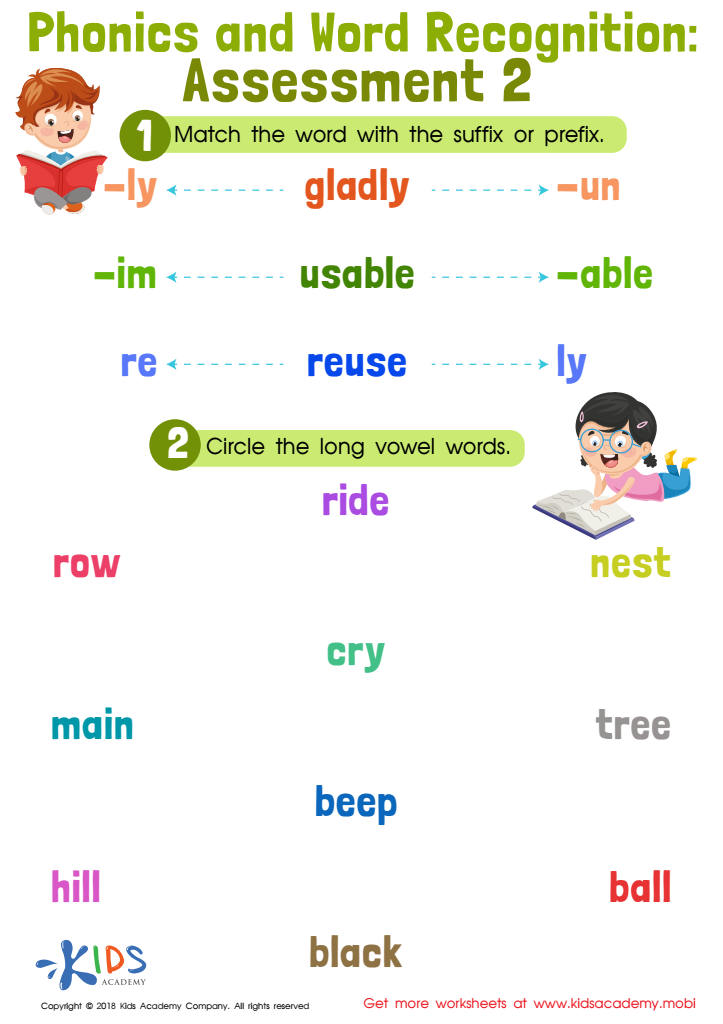
Phonics and Word Recognition: Assessment 2
 Assign to My Students











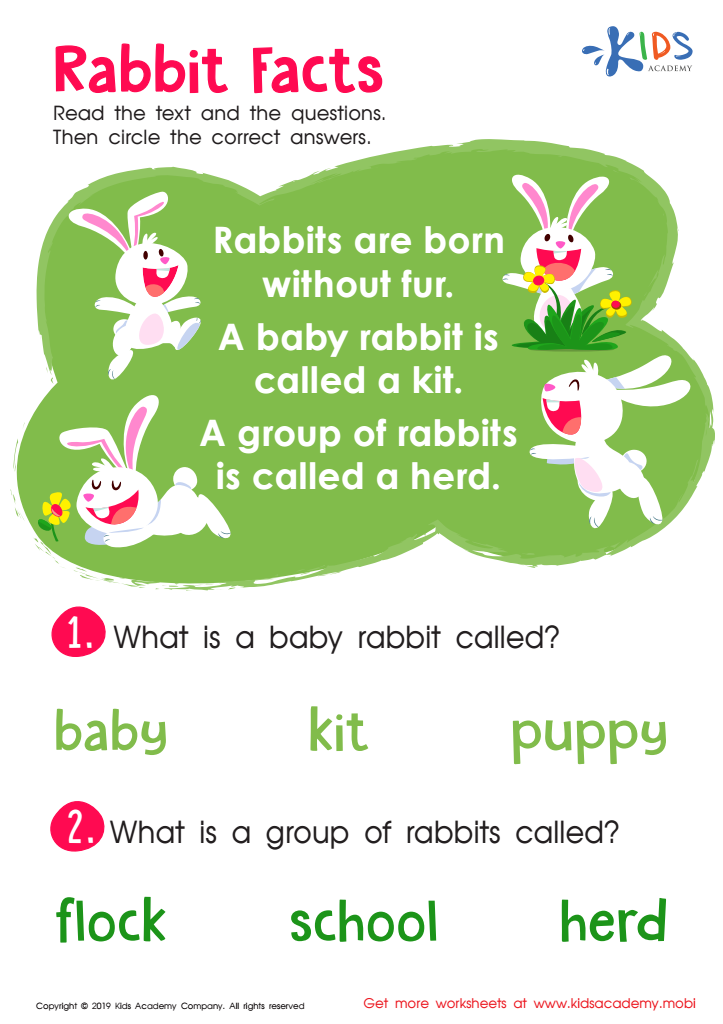
Rabbit Facts Worksheet
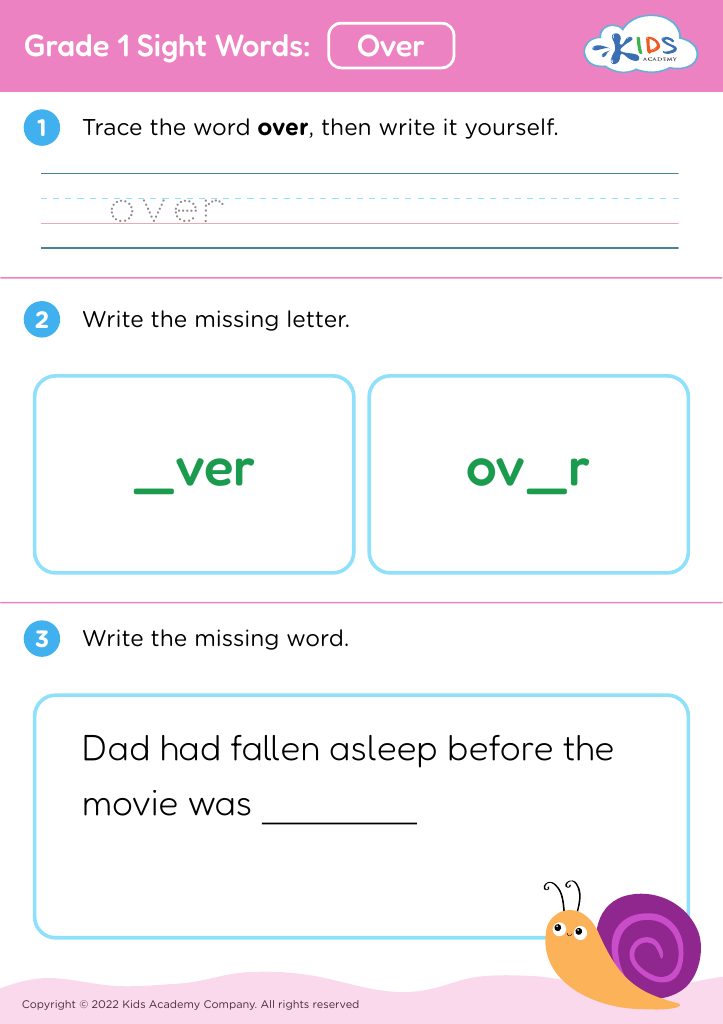
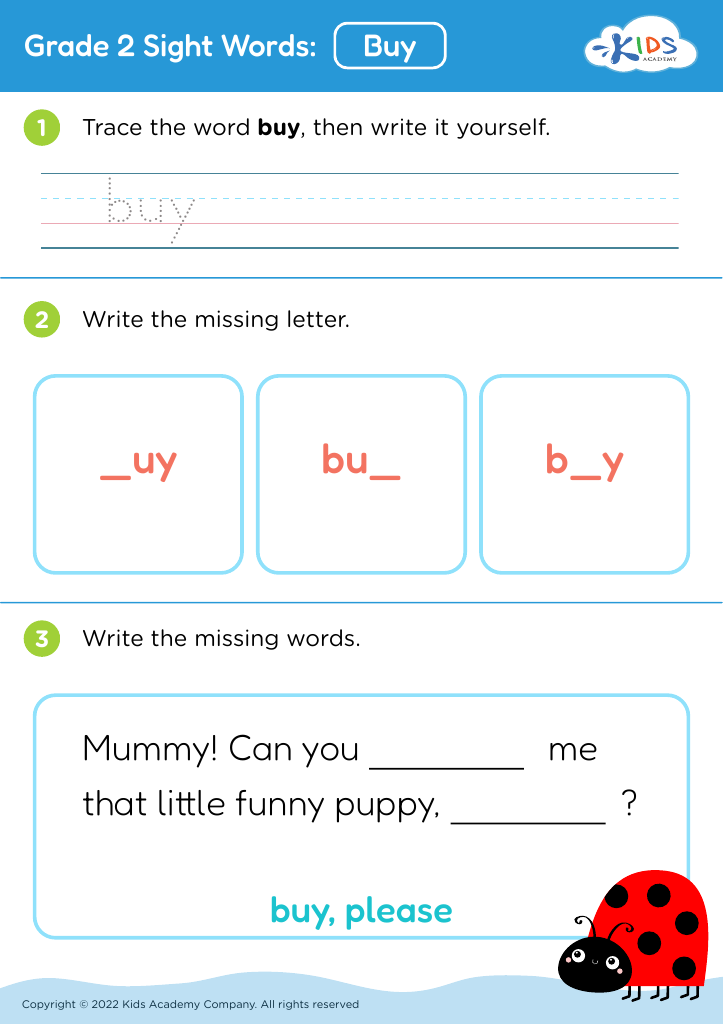





.jpg)


Reading comprehension and vocabulary building are essential aspects of a child's academic development, especially for 7-year-olds who are typically in the early stages of formal education. At this age, children's brains are highly receptive to new information, making it a crucial period for language and cognitive development.
Reading comprehension allows children to understand and interpret text, boosting not only their academic success but also their critical thinking skills. Proficient reading comprehension aids in grasping complex concepts across all subjects, leading to a more rounded educational foundation. This prevents potential learning disabilities from hindering long-term academic performance.
Building vocabulary is equally important as it equips children with the necessary words to express themselves clearly and effectively. A rich vocabulary enhances a child's ability to understand instructions, participate in conversations, and build relationships. It sets the stage for lifelong learning and communication skills, crucial for both personal and professional aspects of life.
Parents and teachers play vital roles in nurturing these skills by introducing children to a diverse range of age-appropriate books, engaging them in conversations, and providing multisensory learning experiences. This support helps children develop a love for reading and learning, setting them up for future success.








