
Understanding patterns Building Vocabulary Worksheets for 7-Year-Olds
4 filtered results
Difficulty Level
Grade
Age
-
From - To
Subject
Activity
Standards
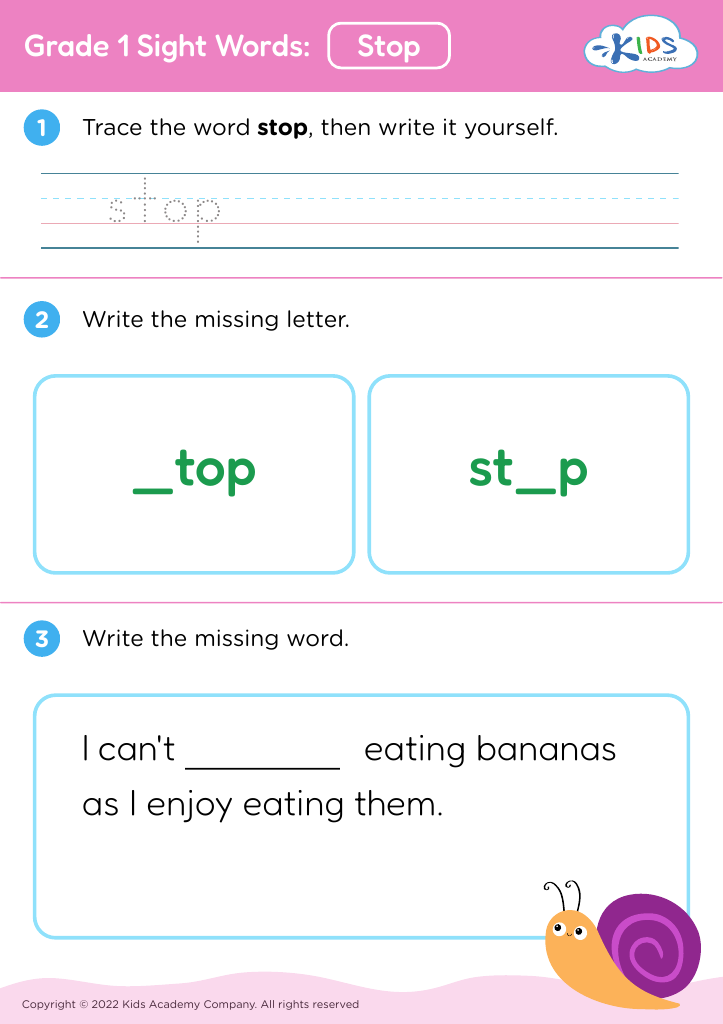
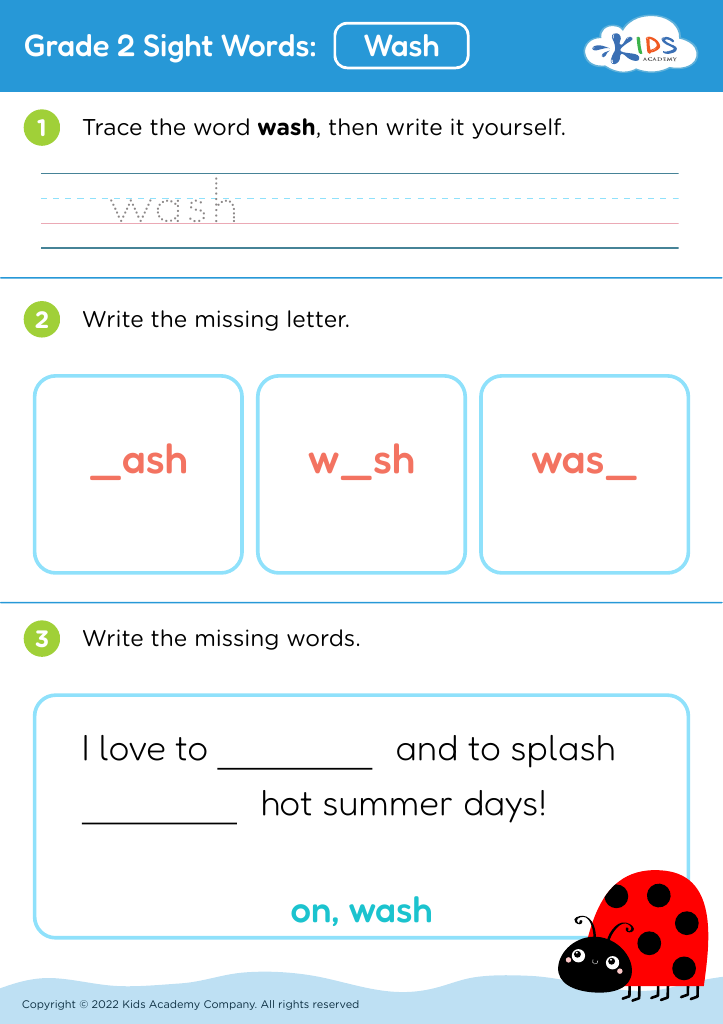
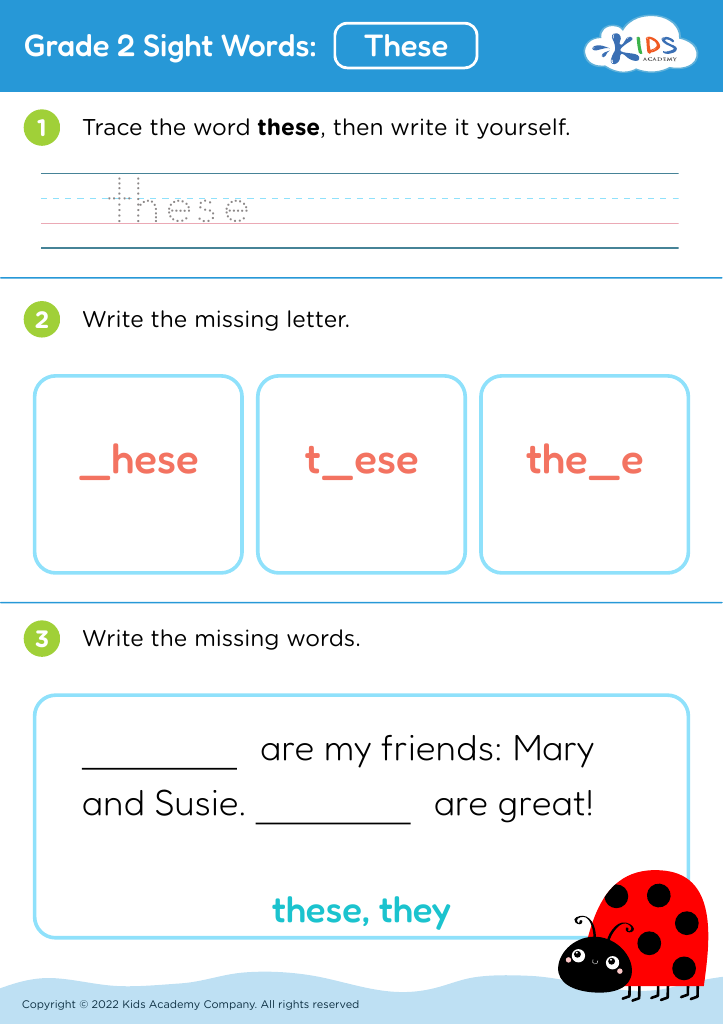
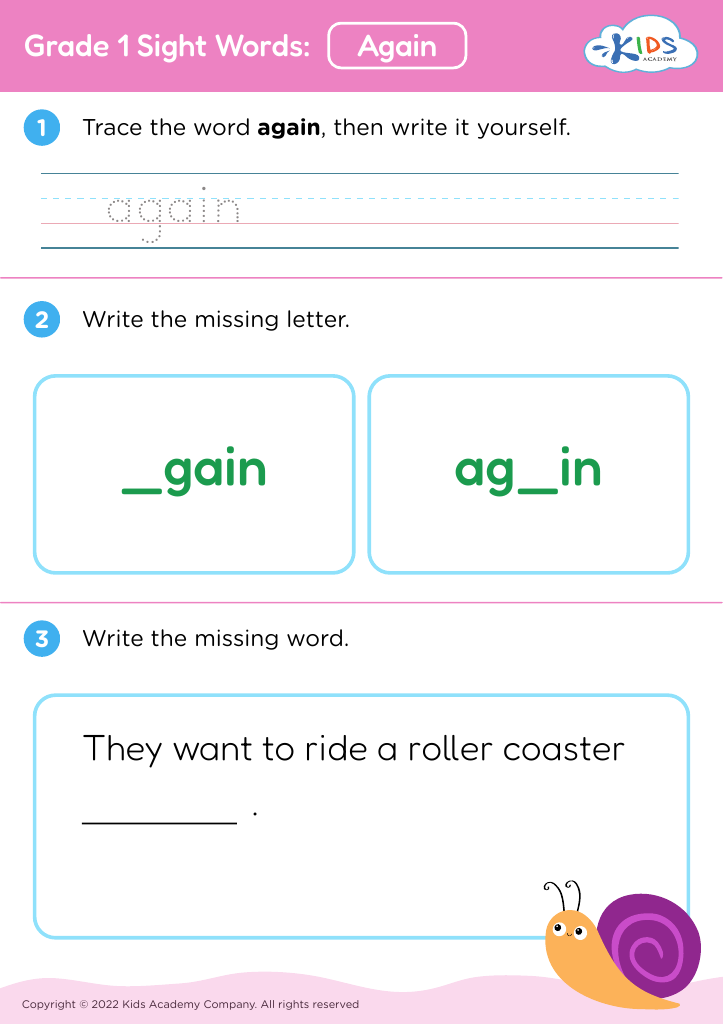
Welcome to our "Understanding Patterns: Building Vocabulary Worksheets for 7-Year-Olds!" On this engaging webpage, you'll find a collection of fun and interactive worksheets designed specifically to enhance your child's vocabulary skills through the exploration of patterns. These resources enable young learners to recognize and create patterns in language, helping to strengthen their reading comprehension and fluency. Our worksheets feature colorful illustrations and age-appropriate exercises that make learning enjoyable and effective. Empower your child’s learning journey with activities that promote critical thinking and vocabulary growth. Dive in to discover how understanding patterns can expand your child's linguistic abilities in a playful way!
Favorites
With answer key
Interactive











Join Kids Academy for Free
Who is primarily going to use this learning content?








Understanding patterns and building vocabulary are crucial for the cognitive and linguistic development of 7-year-olds. At this age, children are naturally curious and eager to learn, making it an ideal time for parents and teachers to nurture these skills. Recognizing patterns enhances critical thinking and problem-solving abilities, which are essential for subjects like mathematics and science. When children learn to identify patterns, they can predict outcomes, make connections between concepts, and develop reasoning skills, laying the groundwork for more complex learning.
Building vocabulary is equally important as it enriches comprehension and expression. A robust vocabulary allows children to articulate their thoughts and engage more meaningfully in conversations, both written and oral. This skill serves as a foundation for reading comprehension; the more words they know, the better they can understand what they read. It also fosters a love for language, inspiring creativity in writing and speaking.
Integrating pattern recognition and vocabulary-building activities into daily routines can help support children's overall academic success and boost their confidence. Therefore, parents and teachers should actively prioritize these two areas, recognizing their significant role in shaping well-rounded, engaged learners.








