Understanding symmetry Building Vocabulary Worksheets for 7-Year-Olds
3 filtered results
-
From - To
Explore our "Understanding Symmetry: Building Vocabulary Worksheets for 7-Year-Olds." Designed to blend language learning with mathematical concepts, these worksheets guide young minds in grasping symmetry while enriching their vocabulary. Through engaging activities, students visualize symmetry and acquire new words, fostering both their reading and math skills. Each worksheet integrates fun challenges and visual aids to help children understand symmetrical patterns and their applications. Perfect for parents and teachers aiming to support educational development, our program ensures a balanced approach to learning. Visit Kids Academy for printable resources that make learning symmetry delightful and educational for young learners.
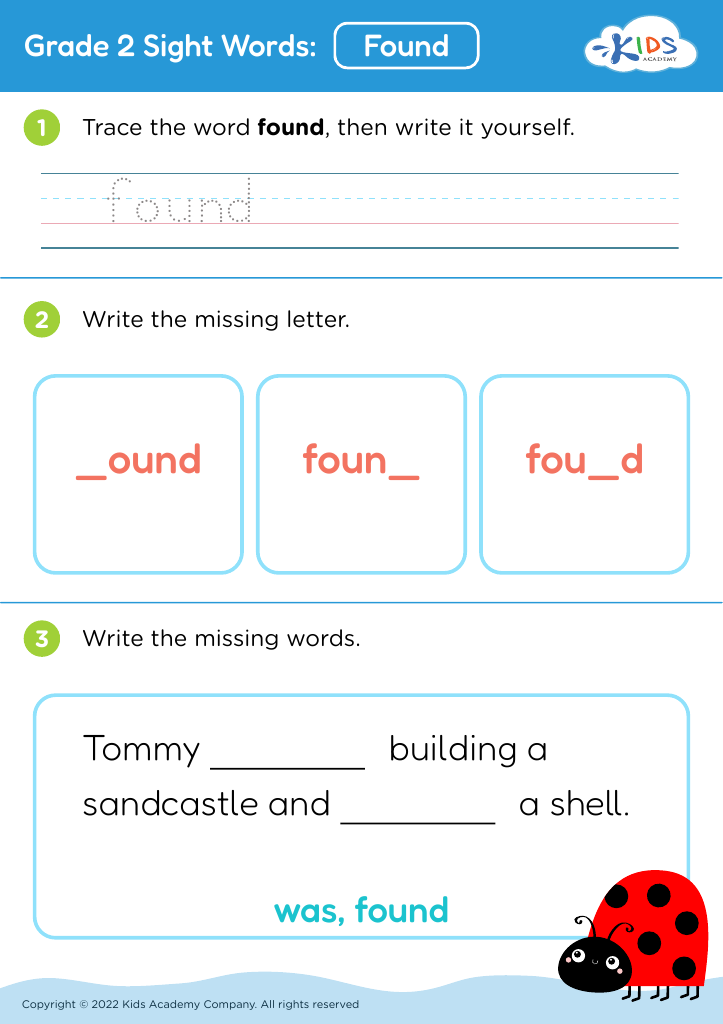











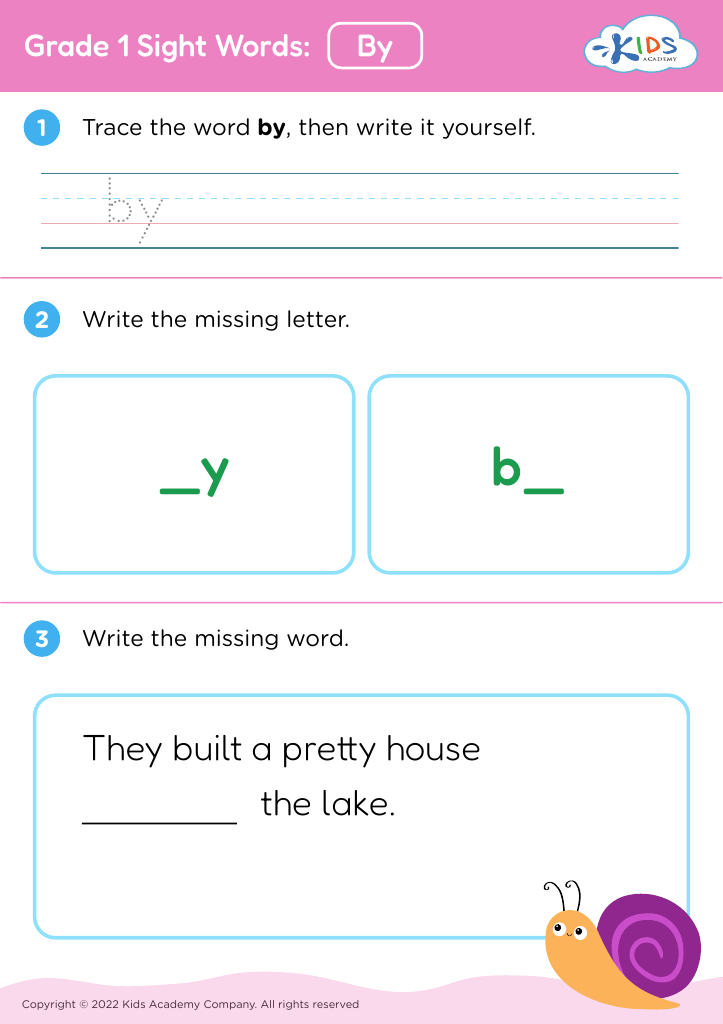
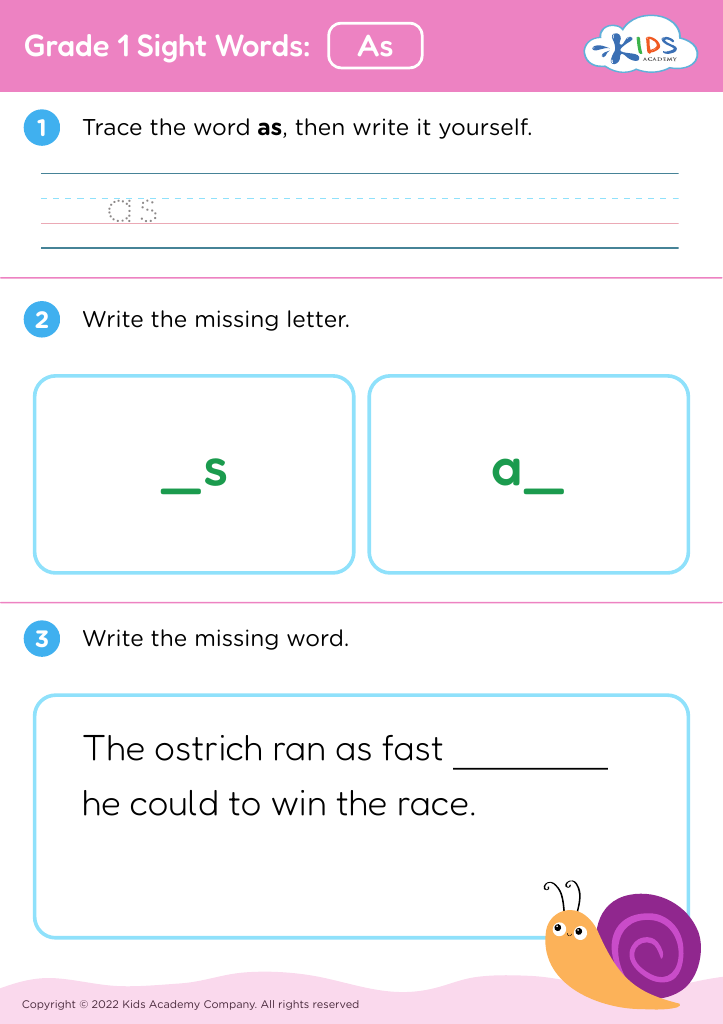








Understanding symmetry and building vocabulary are crucial aspects of a 7-year-old’s development for different yet interrelated reasons. Symmetry, often found in nature, art, and daily life, is fundamental to developing spatial awareness and mathematical reasoning. Grasping these concepts enhances visual processing skills and lays the groundwork for more advanced geometrical and analytical thinking that children will encounter in future education. It nurtures attention to detail and problem-solving capabilities, essential competencies across various subjects.
Simultaneously, building a rich vocabulary at this age is vital for effective communication, reading comprehension, and academic success. A larger vocabulary allows children to express themselves more clearly and understand instructions and content across all subjects. Integrating symmetrical concepts into vocabulary lessons can make learning more engaging. For example, discussing words like "mirror," "balance," and "pattern" in the context of symmetry makes both mathematical and language lessons more cohesive and memorable.
Therefore, focusing on these skills offers a dual benefit: it makes children more adept learners by enhancing cognitive skills through symmetry and empowering them to articulate their thoughts and understand others through a stronger vocabulary. By fostering these abilities early, parents and teachers set children up for a well-rounded and successful educational journey.








