
Logical Reasoning Reading Fiction Worksheets for 7-Year-Olds
3 filtered results
Difficulty Level
Grade
Age
-
From - To
Subject
Activity
Standards
Discover our engaging Logical Reasoning Reading Fiction Worksheets specifically designed for 7-year-olds! These worksheets promote critical thinking and comprehension skills by inviting young readers to analyze stories and characters. Through fun and interactive activities, children will enhance their ability to infer, predict outcomes, and make connections within the text. Our worksheets support literacy development while also encouraging a love for reading, making learning enjoyable and dynamic. Ideal for both classroom and home use, these resources align with educational standards and foster essential reasoning skills. Explore the joy of reading while developing logical reasoning with our thoughtfully crafted materials!
Favorites
With answer key
Interactive
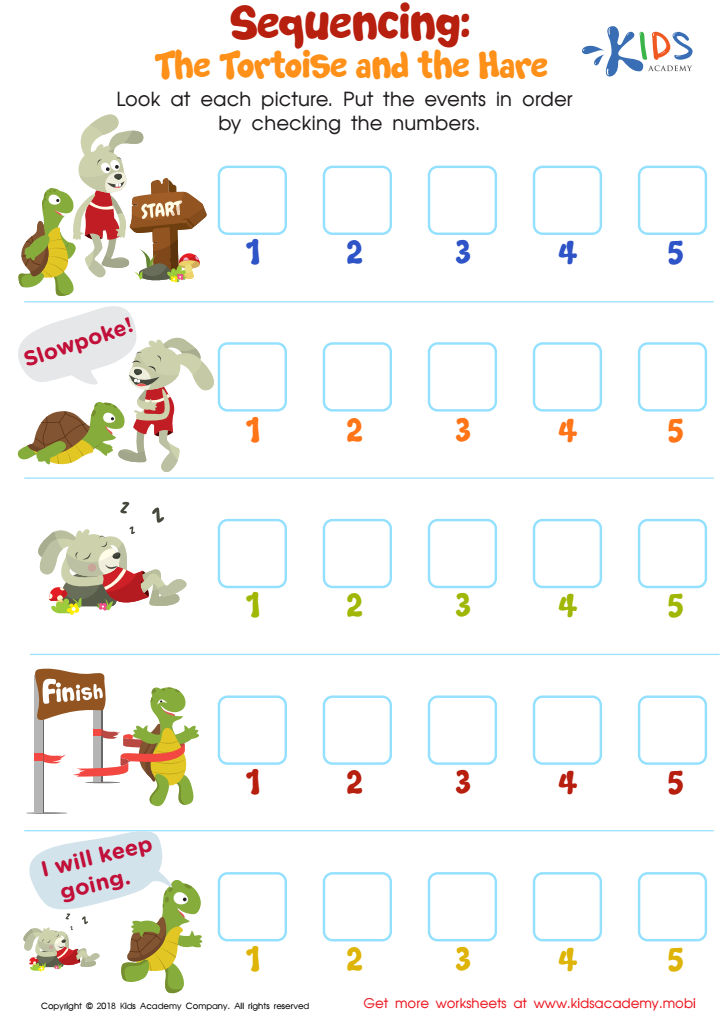
Sequencing: The Tortoise and the Hare Worksheet
Help your child become an independent reader and critical thinker with a sequencing worksheet from Kids Academy! Have them read the classic tale of the tortoise and the hare and use the accompanying worksheet to check their understanding of the story's sequence of events. Have kids identify the correct order of events by selecting the box next to the correct number for each image!
 Assign to My Students
Sequencing: The Tortoise and the Hare Worksheet
Worksheet
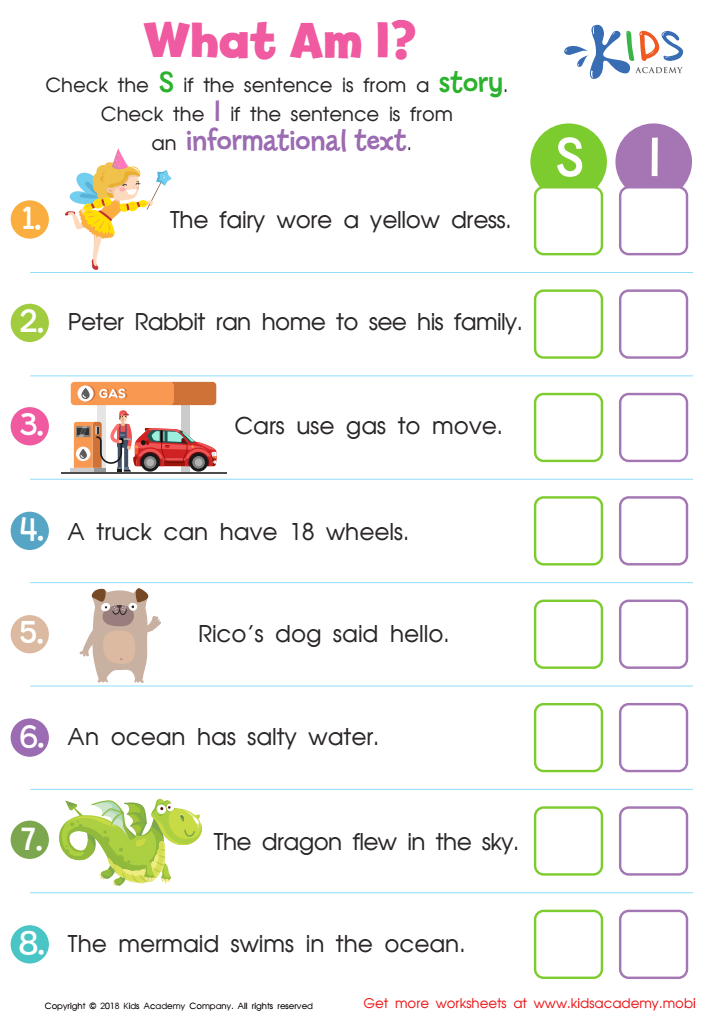
What Am I? Worksheet
This worksheet assesses students' ability to differentiate between stories and texts they read for facts. Students learn to distinguish between reading for pleasure and reading for information. It includes statements from both a story and an informational text, and students must decide what type of text it is.
What Am I? Worksheet
Worksheet
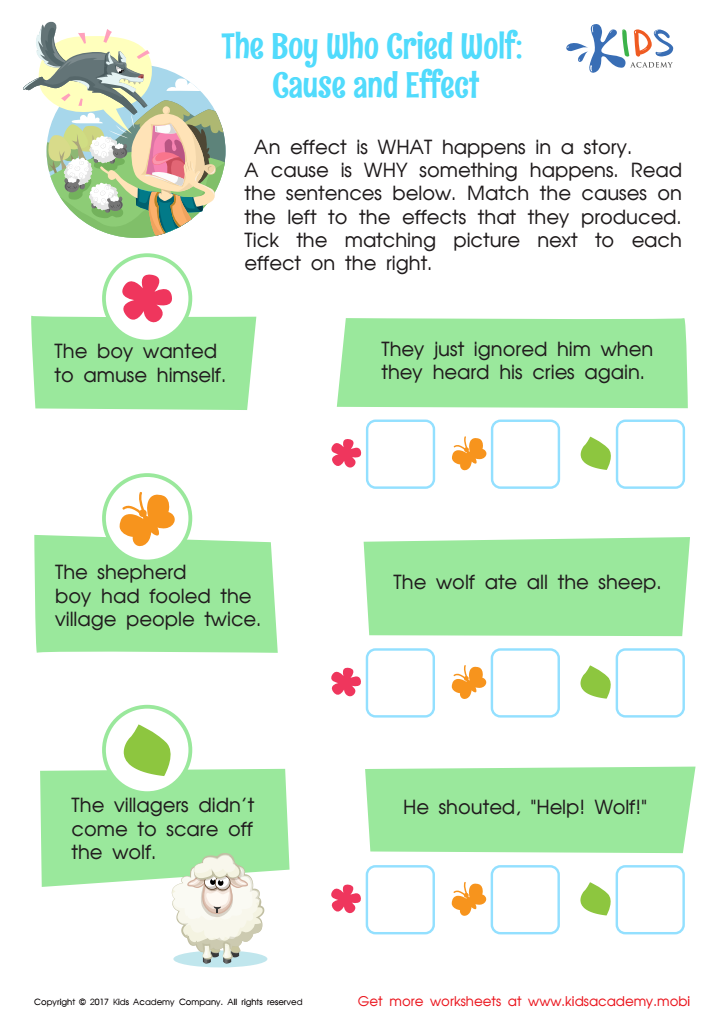
The Boy Who Cried Wolf: Cause and Effect Worksheet
With classic stories and fables, learning reading comprehension is easy - and fun!
The Boy Who Cried Wolf: Cause and Effect Worksheet
Worksheet
Join Kids Academy for Free
Who is primarily going to use this learning content?








Parents and teachers should prioritize logical reasoning and reading fiction for 7-year-olds because these skills are foundational for cognitive development and learning. Logical reasoning helps children to analyze situations, identify relationships, and solve problems systematically, which is essential for effective critical thinking. At this age, children begin to better understand cause-and-effect relationships and can enhance their reasoning through engaging stories.
Fictional reading develops imagination and creative thinking while exposing children to diverse perspectives and cultures. When children read or listen to stories, they learn to put themselves in others’ shoes, fostering empathy and emotional intelligence. Interacting with fictional plots sharpens their ability to predict outcomes, draw conclusions, and understand various narrative structures, directly linking back to logical reasoning skills.
By combining logical reasoning exercises with fiction, educators can create rich, engaging discussions that encourage deeper thinking and comprehension. Furthermore, these skills lay a crucial groundwork for more complex subjects as children progress through school. Encouraging a love for reading not only boosts academic confidence but also cultivates lifelong learners who are equipped to think critically in everyday situations. Therefore, fostering these skills should be a comprehensive goal for parents and teachers alike.








