Vocabulary development Animals Worksheets for 7-Year-Olds
3 filtered results
-
From - To
Explore our engaging Vocabulary Development Animals Worksheets designed specifically for 7-year-olds! These interactive resources help young learners enhance their language skills while discovering fascinating facts about various animals. Each worksheet is carefully crafted to boost vocabulary through a range of fun activities, including matching, fill-in-the-blanks, and creative writing prompts. As children explore different species, they will not only expand their word knowledge but also cultivate a love for learning through nature. Perfect for home or classroom use, these worksheets provide the ideal blend of education and entertainment, making vocabulary development an exciting adventure. Boost your child’s learning journey today!
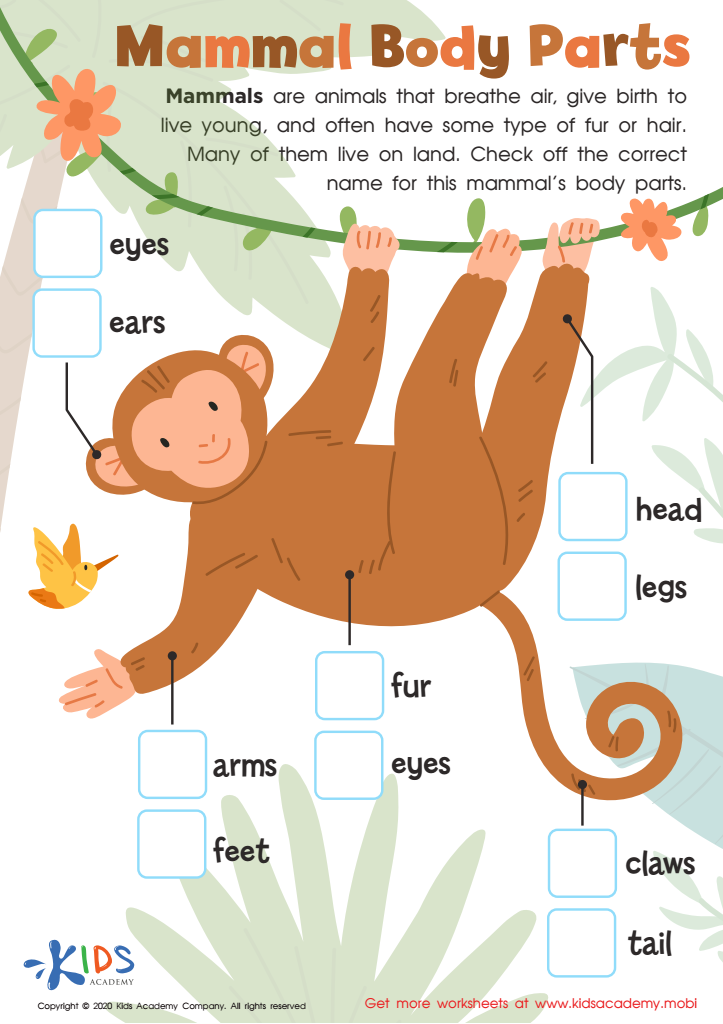
Mammal Body Parts Worksheet
 Assign to My Students
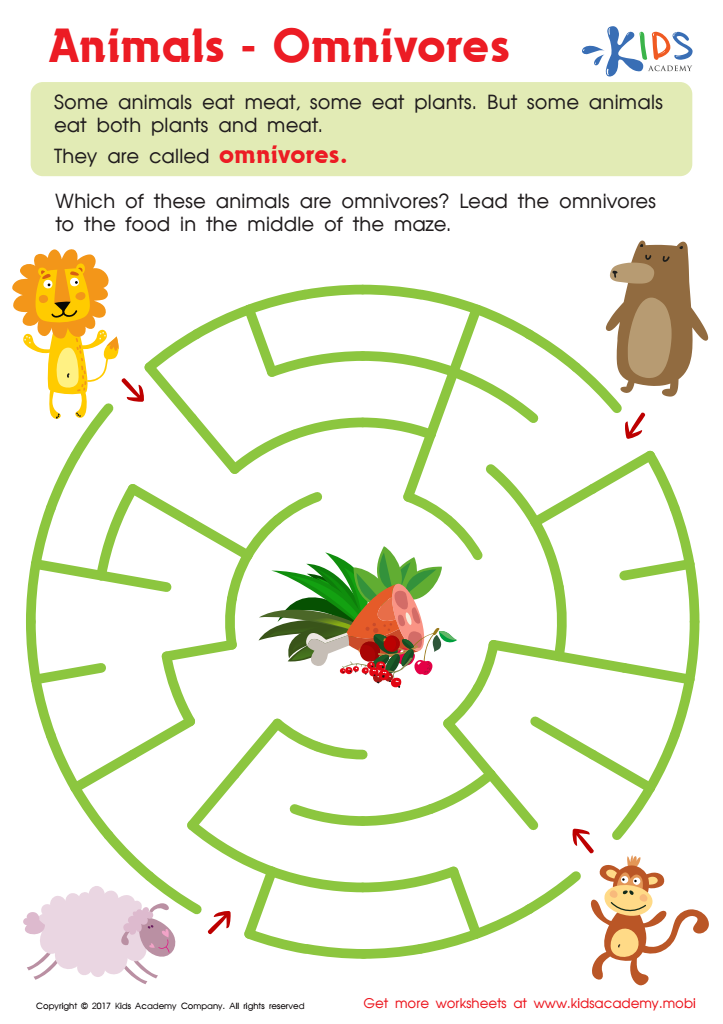
Omnivores Animals Worksheet
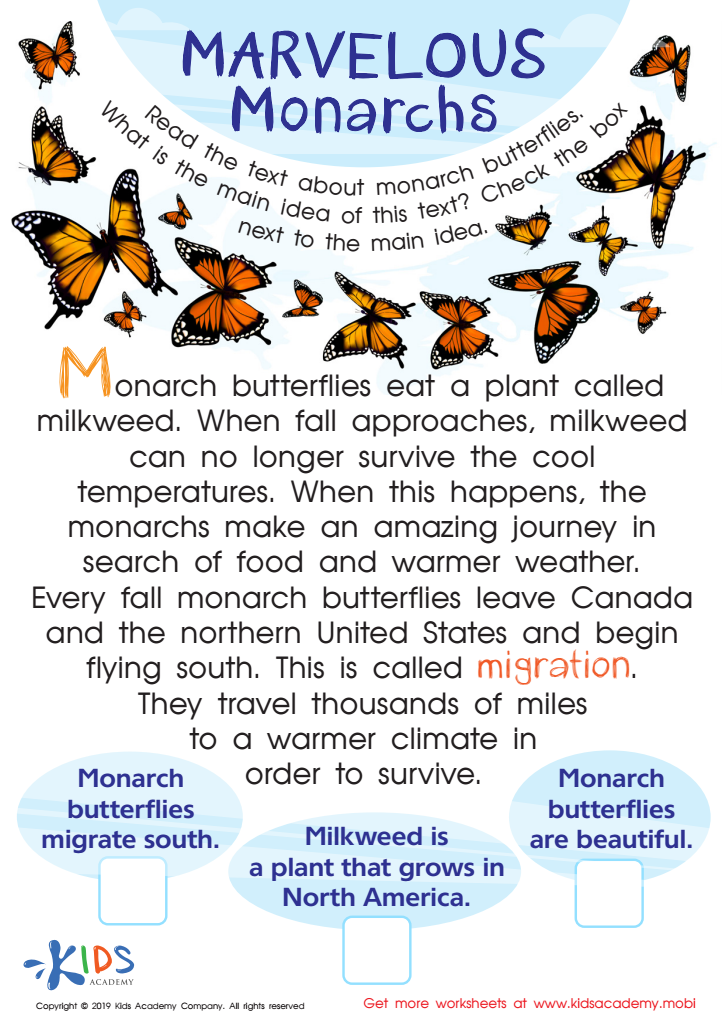
Marvelous Monarchs Worksheet








Vocabulary development in children, particularly regarding animals, is crucial for several reasons. First, at the age of 7, children are rapidly expanding their language skills. Introducing them to animal-related vocabulary not only enhances their lexicon but also encourages literacy by fostering reading comprehension and expressive language abilities. Understanding animal names, habitats, behaviors, and classifications enriches their conversations and helps them make connections with the world around them.
Moreover, learning about animals offers opportunities for interdisciplinary learning, blending science, art, and social studies. For instance, discussions about endangered species can lead to conversations about ecology and conservation, nurturing empathy and awareness in young minds. Engaging with animal vocabulary through stories, images, and hands-on experiences, such as visits to zoos or nature documentaries, can ignite children's curiosity and imagination.
Additionally, positive relationships between teachers and parents concerning vocabulary development create a supportive learning environment, reinforcing language skills at home and school. Encouragement and activities that focus on animal vocabulary not only build confidence in children’s verbal skills but also stimulate cognitive skills, vital for their overall academic journey. Prioritizing this development ultimately leads to well-rounded, knowledgeable individuals with a lifelong love for learning.








