Word identification Grammar Worksheets for 7-Year-Olds
5 filtered results
-
From - To
Discover our engaging Word Identification Grammar Worksheets designed specifically for 7-year-olds! At Kids Academy, we focus on making learning fun and effective. Our expertly crafted worksheets help young learners enhance their reading and writing skills by identifying and understanding different types of words. From nouns and verbs to adjectives and more, these worksheets provide interactive activities that boost kids' confidence and proficiency in grammar. Perfect for classroom use or at-home practice, our worksheets offer a thorough and enjoyable learning experience. Explore now and empower your child with the foundational language skills they need for academic success!
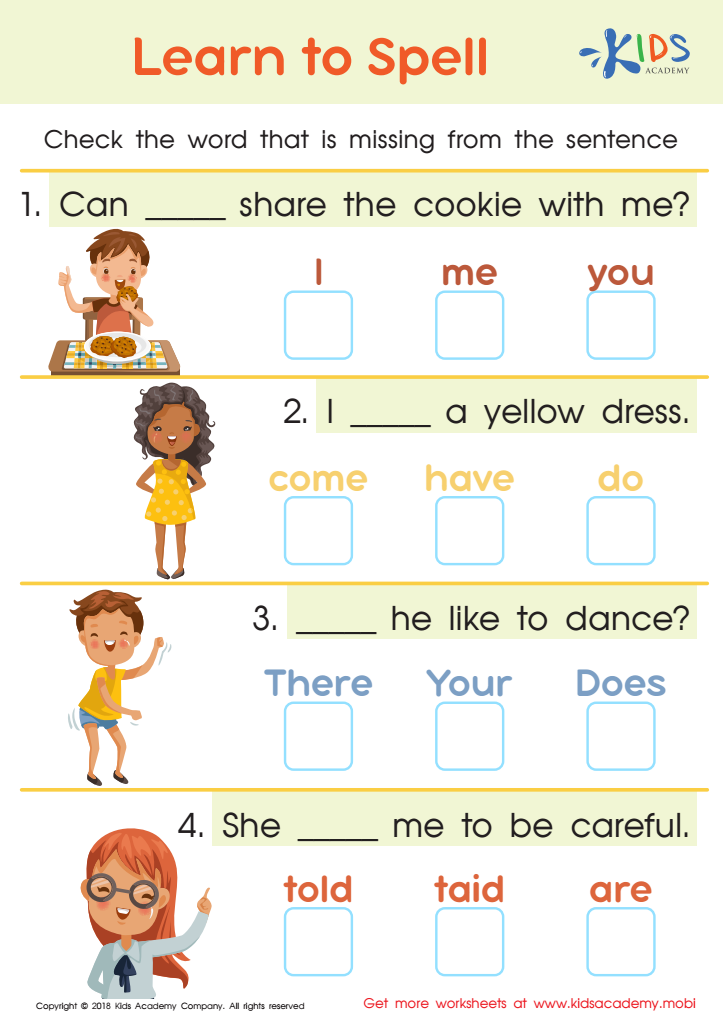
Learn to Spell Worksheet
 Assign to My Students
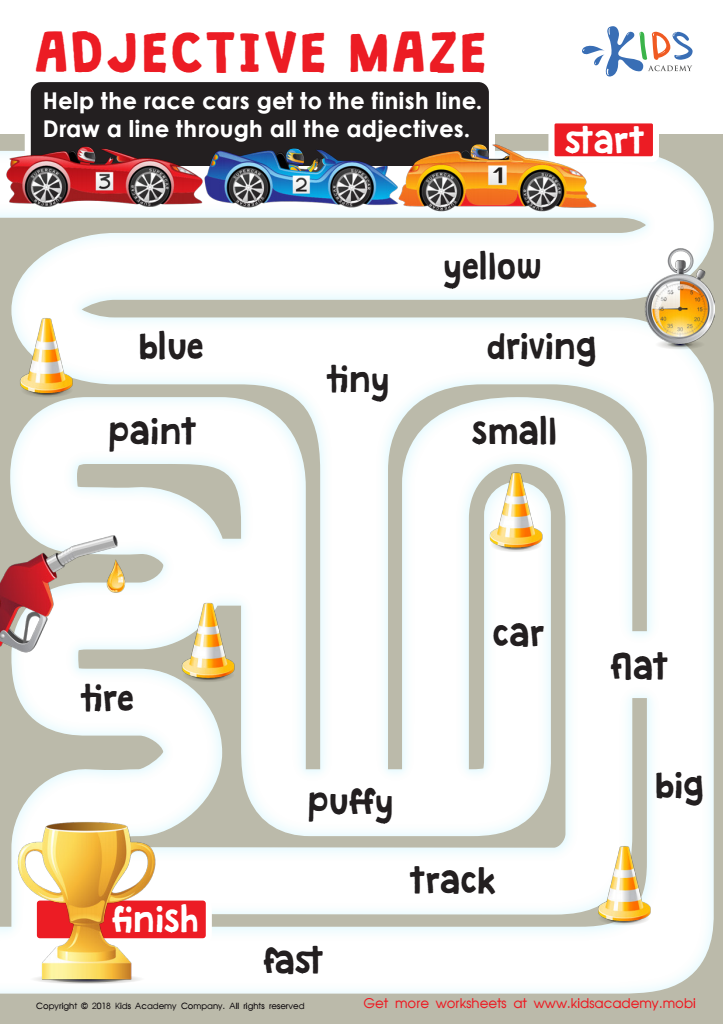
Adjective Maze Worksheet
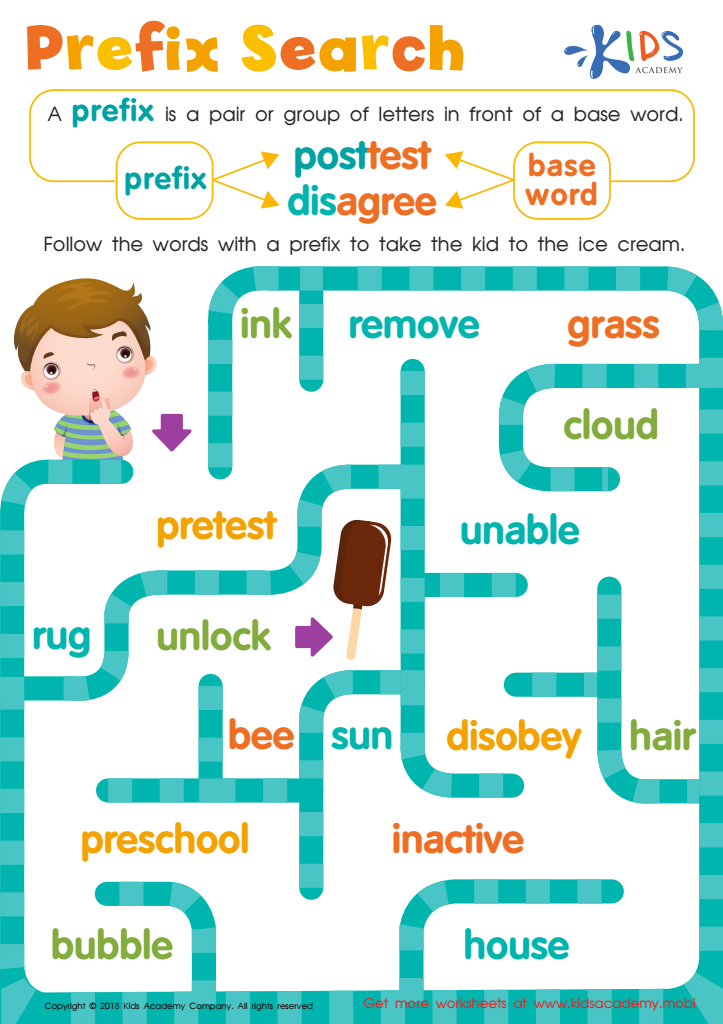
Reading: Prefix Search Worksheet
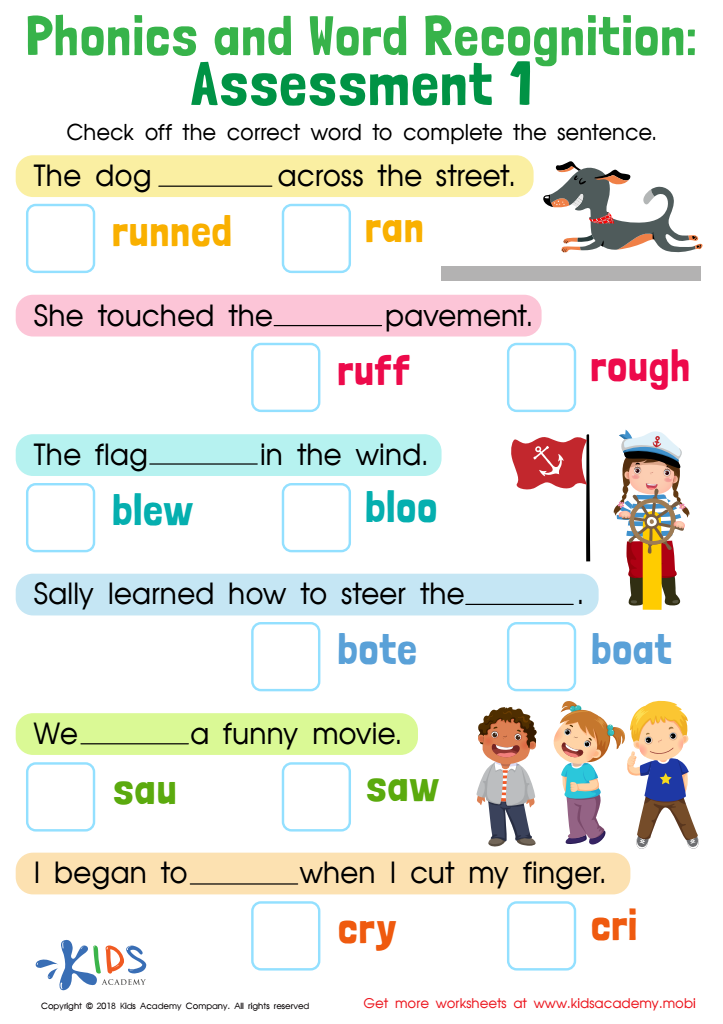
Phonics and Word Recognition: Assessment 1 Worksheet
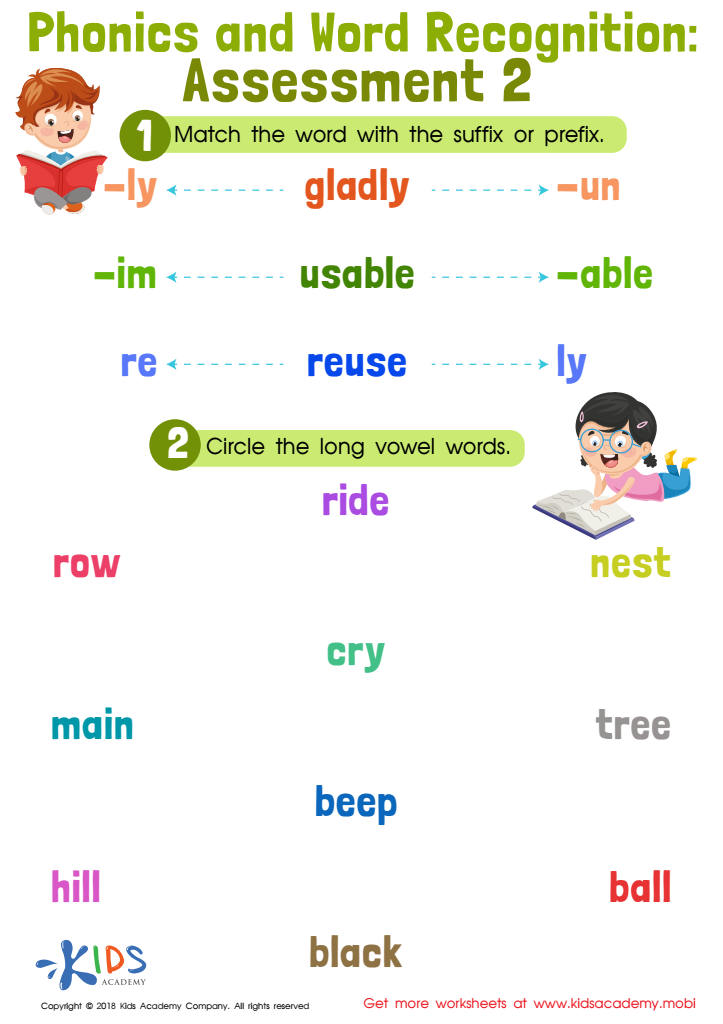
Phonics and Word Recognition: Assessment 2




.jpg)


Word identification and grammar are fundamental elements in the early education of 7-year-olds. These skills form the foundation for literacy, which is essential for academic success and lifelong learning.
Firstly, word identification enables young readers to recognize and understand words quickly. This fluency is crucial for comprehension; a child who cannot easily identify words will struggle to make sense of sentences and passages. Rapid word identification supports smoother reading, allowing the child to focus on meaning and enjoy the reading experience.
Secondly, grammar is the backbone of effective communication. Understanding grammatical structures helps children comprehend how words fit together to convey precise meanings. It aids in both expressive and receptive language skills. For writing, grammar skills allow children to construct clear, coherent sentences, enhancing their ability to express thoughts and ideas succinctly. In reading, grammatical knowledge assists in understanding the nuances of different texts.
Ignoring these skills can lead to academic struggles, lowered self-esteem, and frustration in later years. Therefore, parents and teachers should prioritize word identification and grammar. By nurturing these skills in a balanced and engaging manner, they empower children to become confident readers and proficient communicators, laying a strong groundwork for future learning success.








