Alphabet understanding ABC Order Worksheets for Ages 8-9
3 filtered results
-
From - To
Discover our engaging Alphabet Understanding ABC Order Worksheets designed specifically for children aged 8-9! These worksheets help enhance your child's literacy skills by providing fun activities focused on alphabetization. Students will practice organizing words, improving their spelling, and understanding alphabetical order in an interactive way. With diverse exercises and colorful illustrations, kids will not only learn the importance of the ABC sequence but also develop critical thinking and organizational skills. Ideal for classroom use or at-home learning, our worksheets make mastering the alphabet a joyful experience. Start your child's journey to literacy and vocabulary excellence today!
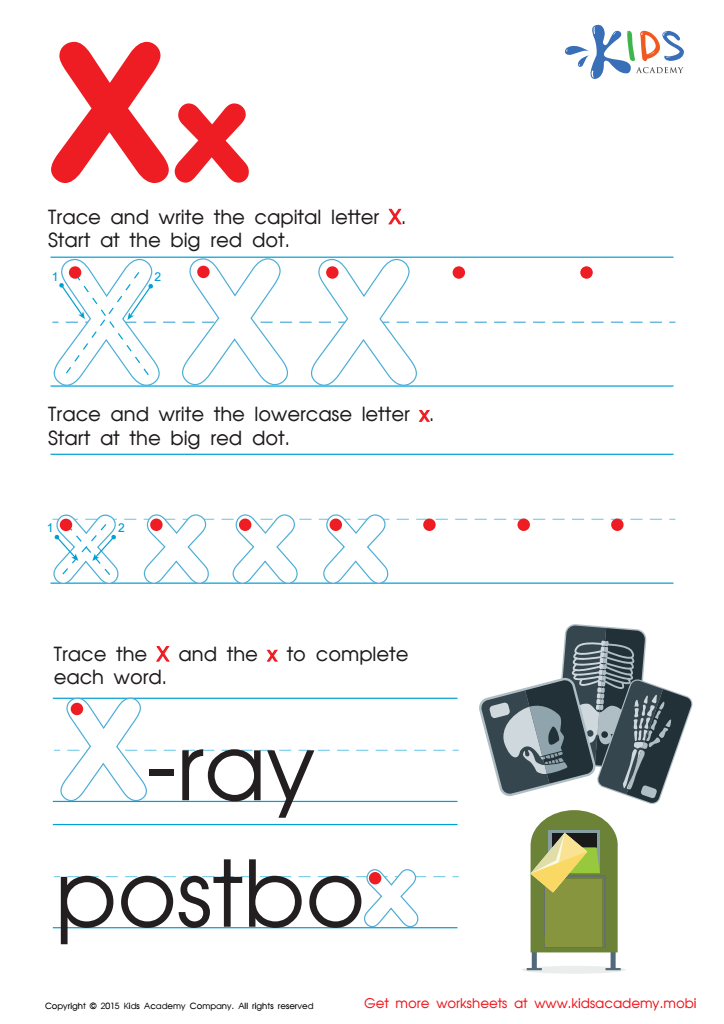
Letter X Tracing Page
 Assign to My Students


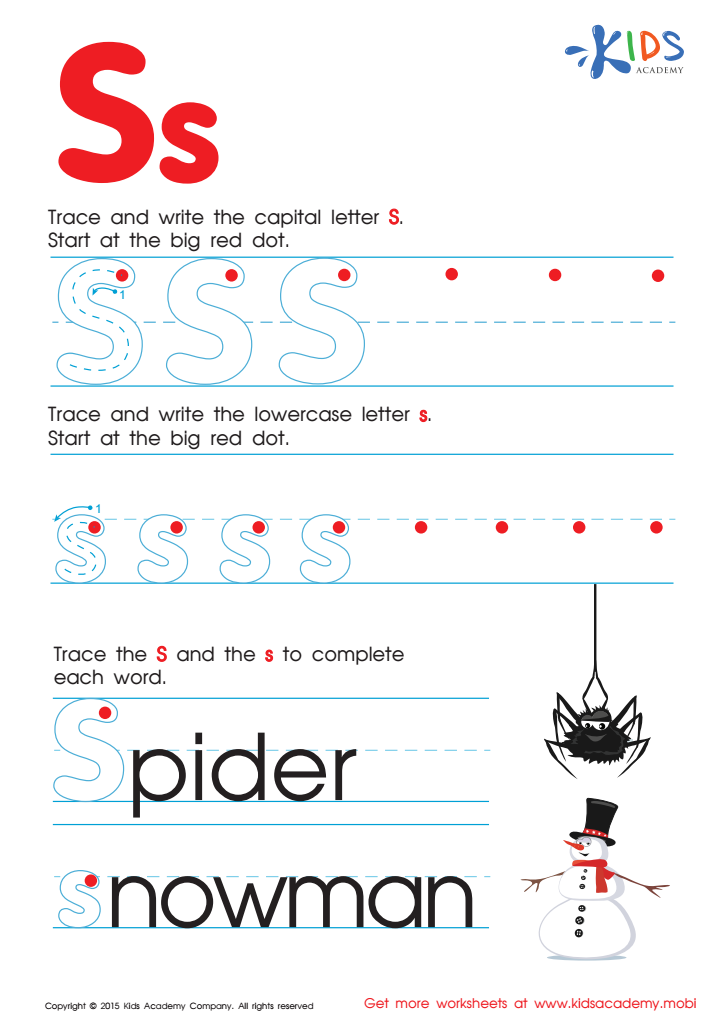
Letter S Tracing Page
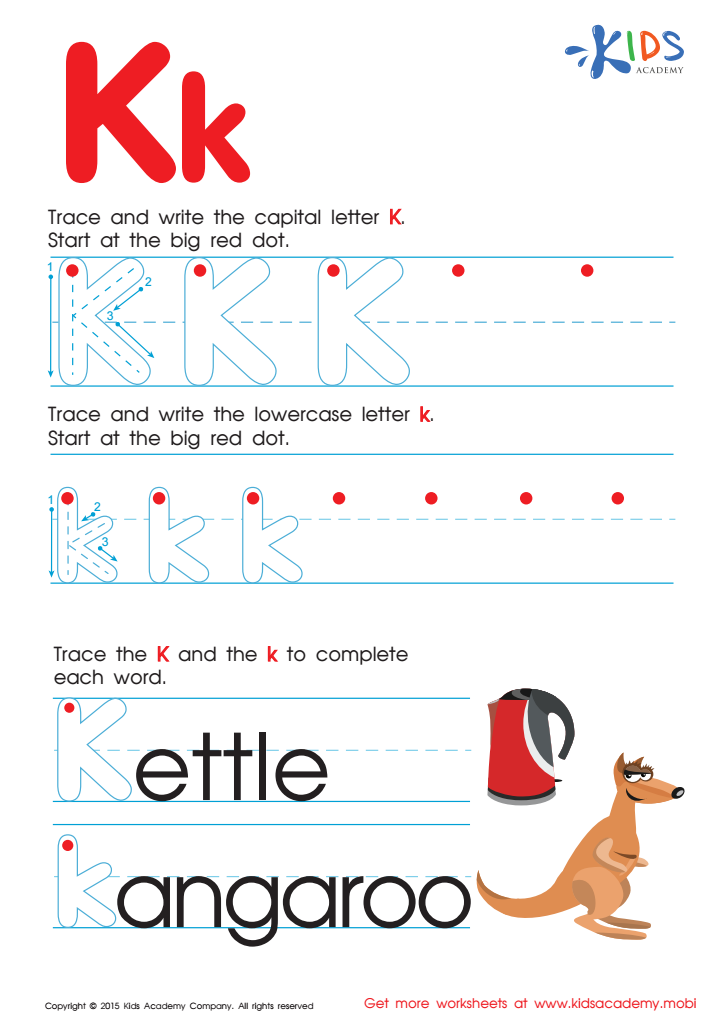
Letter K Tracing Page







Understanding alphabet order, especially for children ages 8-9, is crucial for several reasons. First, it enhances literacy skills, as being familiar with the sequence of letters aids in decoding words and improving reading fluency. This foundational skill supports children in recognizing words faster and contributes to better comprehension overall.
Additionally, knowing the ABC order is essential for effective research and navigation within texts. As children start using dictionaries, encyclopedias, and even digital searches, proficiency in alphabetization allows them to locate information quickly and efficiently. This skill fosters independence in learning and strengthens critical thinking abilities.
Furthermore, alphabet understanding is also connected to organization and memory. Children learn to categorize and arrange information, which simplifies studying and aids retention. As they engage in group activities or projects, knowing how to organize content can enhance teamwork and collaboration skills.
Finally, developing a strong grasp of alphabet order cultivates confidence in literacy activities, encouraging children to take on more complex reading and writing tasks. For these reasons, both parents and teachers should prioritize alphabet understanding, ensuring students reap the full benefits of this essential skill.