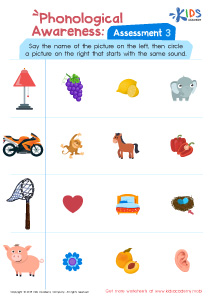
Reading comprehension Rhyming Worksheets for Ages 8-9
6 filtered results
Difficulty Level
Grade
Age
-
From - To
Subject
Activity
Standards
Enhance your child's reading comprehension skills with our engaging Rhyming Worksheets, designed specifically for ages 8-9. These printable resources focus on the art of rhyme while boosting linguistic understanding, vocabulary, and phonemic awareness. Children will enjoy exploring various fun activities that promote critical thinking and listening skills, as they engage with rhyming words through interactive exercises. Perfect for classroom use or at-home learning, these worksheets foster a love of reading in a creative and enjoyable way. Help your young learners embark on an exciting educational journey while mastering essential literacy skills with our thoughtfully crafted rhyming exercises.
Favorites
With answer key
Interactive
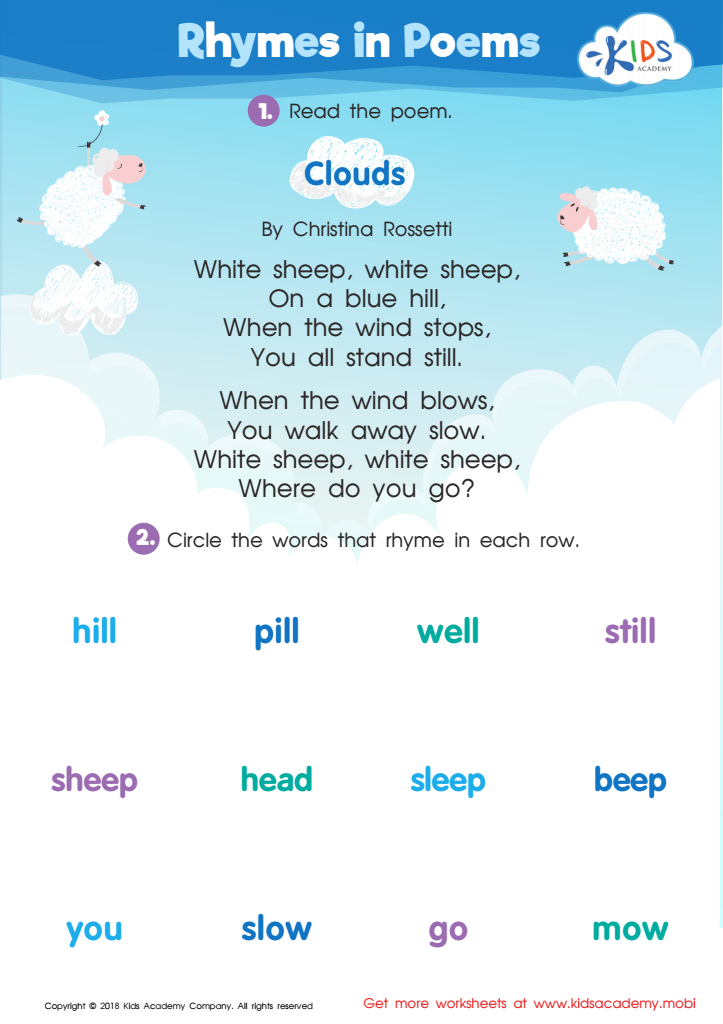
Rhymes in Poems Worksheet
Poems are lovely works of literature; some with rhymes, and some without. This poem for kids is full of rhymes and tells the tale of a sheep. Read it aloud to your kids, then help them circle the rhyming words.
 Assign to My Students
Rhymes in Poems Worksheet
Worksheet
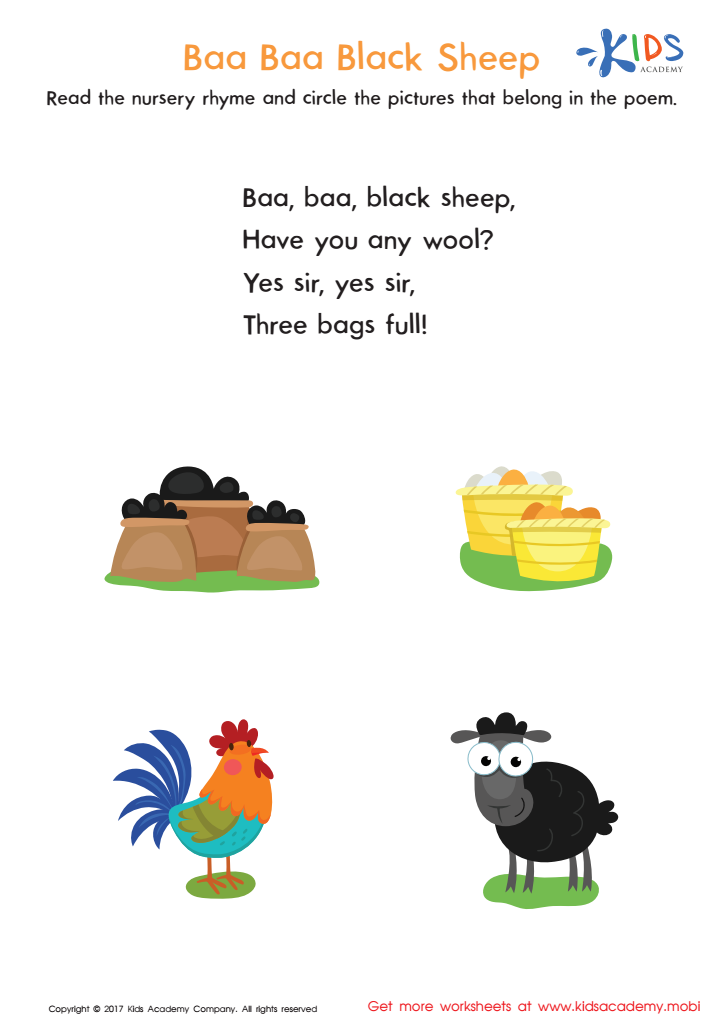
Baa Baa Black Sheep Printable
Jumpstart your child's reading skills with this printable Baa Baa Black Sheep worksheet! Recite the lines with them, then have them select the pictures associated with the poem to test comprehension. Fun and educational!
Baa Baa Black Sheep Printable
Worksheet
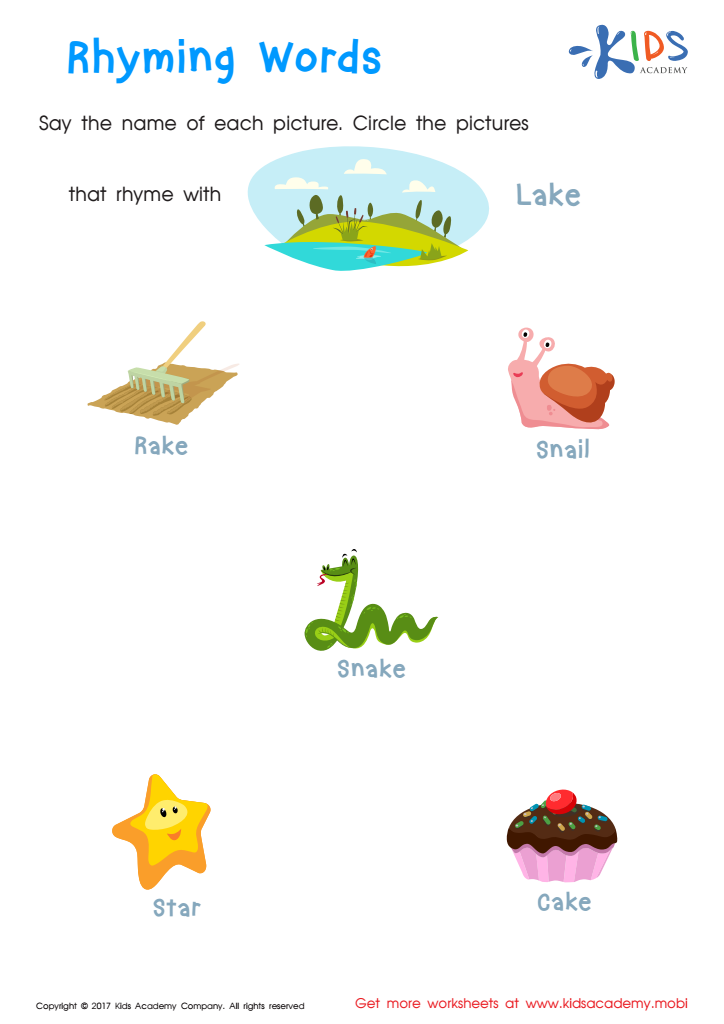
Rhyming Words Rhyming Worksheet
This worksheet is great for honing pre-reading skills. It helps kids make connections between pictures and written words, use problem-solving, and recognize sounds and words that rhyme. Have fun exploring rhyming words with your child, and they'll be rhyming in no time!
Rhyming Words Rhyming Worksheet
Worksheet
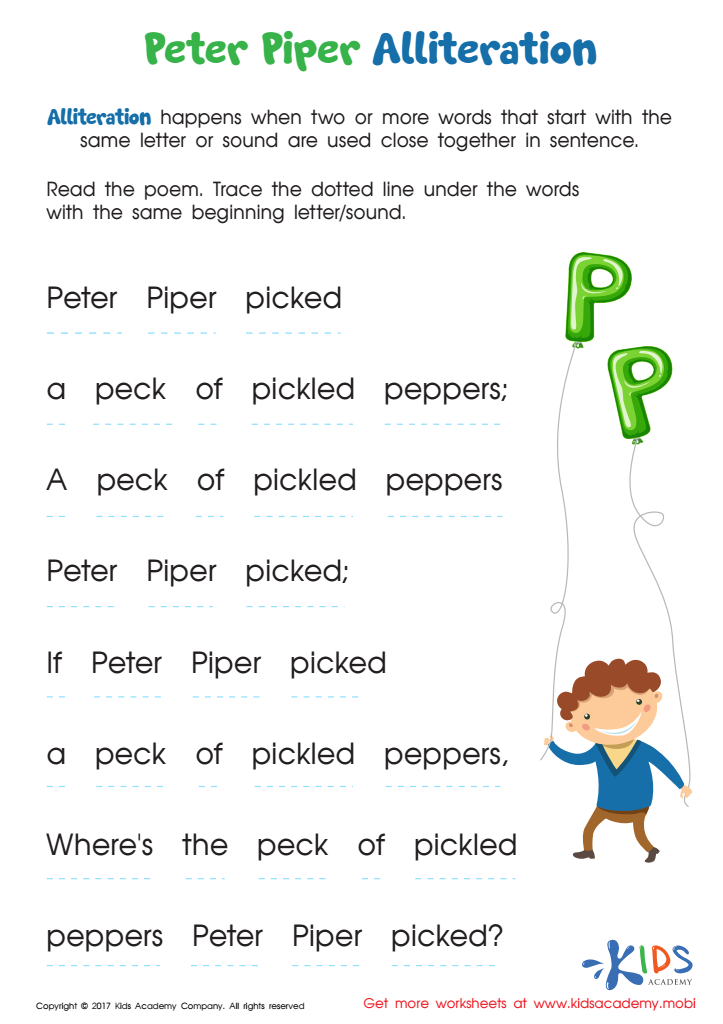
Peter Piper Alliteration Worksheet
Kids love tongue twisters! This worksheet familiarizes them with alliteration through Peter Piper, a beloved nursery rhyme. They underline words that start with the same letter sound, learning to recognize alliteration.
Peter Piper Alliteration Worksheet
Worksheet
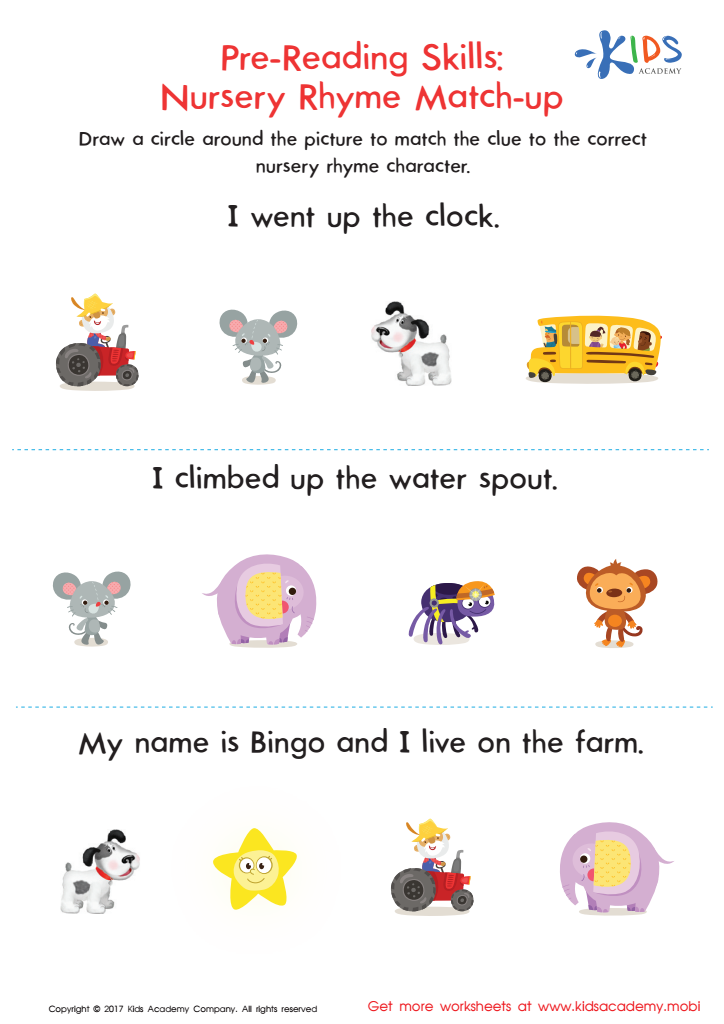
Nursery Rhyme Match–Up Worksheet
This worksheet helps kids build pre-reading skills using stories they know and love! By connecting with prior knowledge, kids can develop ideas about characters and set the stage for reading strategies.
Nursery Rhyme Match–Up Worksheet
Worksheet
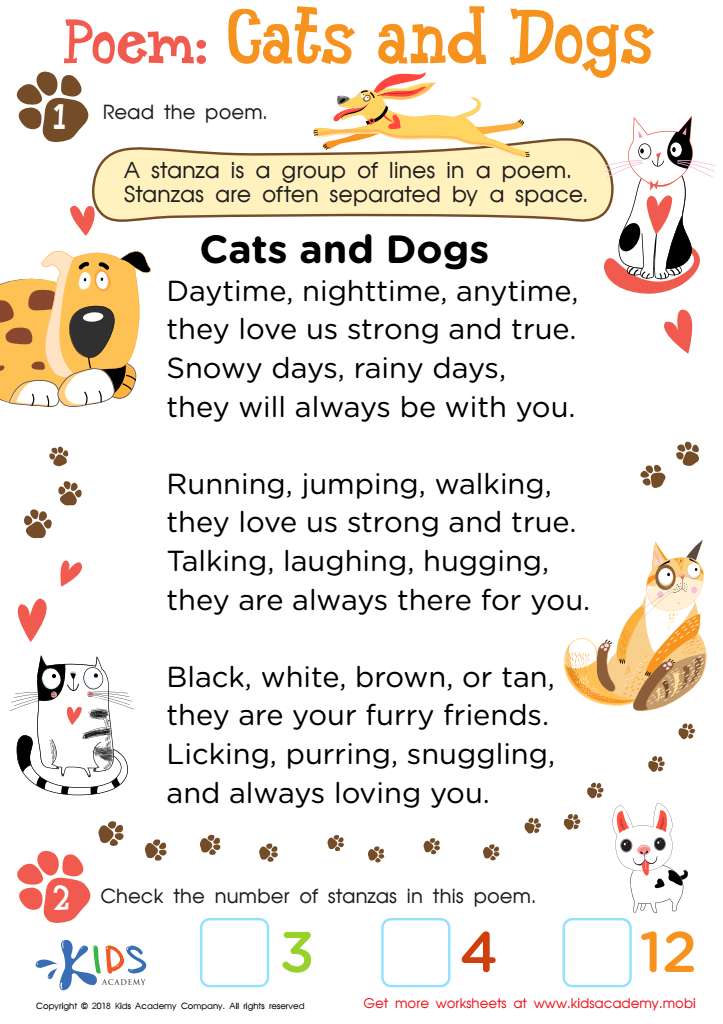
Poem: Cats and Dogs Worksheet
Read the poem to your child and point out where each stanza ends. Ask if they know what a stanza is (if not, explain it's a group of lines in a poem). Help them answer the question at the bottom of the printout. This simple, sweet poem about cats is easy for your child to relate to.
Poem: Cats and Dogs Worksheet
Worksheet
Join Kids Academy for Free
Who is primarily going to use this learning content?








Reading comprehension is a vital skill for children aged 8-9, as it lays the foundation for their academic success and overall communication abilities. Incorporating rhyming into reading comprehension activities can enhance this skill in several ways.
Firstly, rhyming helps children develop phonemic awareness, a critical component in understanding how words are constructed and how sounds work. This awareness is crucial for decoding new words, improving vocabulary, and fostering a love for reading.
Additionally, rhyming text often employs playful language, making reading more engaging and enjoyable. This enjoyment can motivate children to read more often, leading to increased practice and improved comprehension over time. When children comprehend what they read, they're more likely to connect with the material, enhancing their critical thinking and analytical skills.
Moreover, discussing rhyming passages can facilitate conversations about themes, characters, and stories, further reinforcing comprehension skills. Parents and teachers should care about this approach, as it combines literacy development with fun, nurturing a positive attitude toward reading that can last a lifetime. Ultimately, fostering strong reading comprehension through rhyming ensures that children are well-equipped for future educational challenges and eager to explore the world through literature.