
Rhyme recognition Rhyming Worksheets for Ages 8-9
3 filtered results
Difficulty Level
Grade
Age
-
From - To
Subject
Activity
Standards
Enhance your child's phonemic awareness with our Rhyme Recognition Rhyming Worksheets for ages 8-9. These engaging printables are designed to boost literacy skills by helping young learners identify and generate rhyming pairs. Each worksheet presents fun and interactive exercises that captivate students' interests while solidifying their understanding of word sounds and patterns. Ideal for both classroom use and at-home practice, our rhyming worksheets support vocabulary building, reading fluency, and critical thinking. Give your child a head start in mastering the delight of rhymes and poetry with our expertly crafted educational resources. Download now and watch their confidence soar!
Favorites
With answer key
Interactive
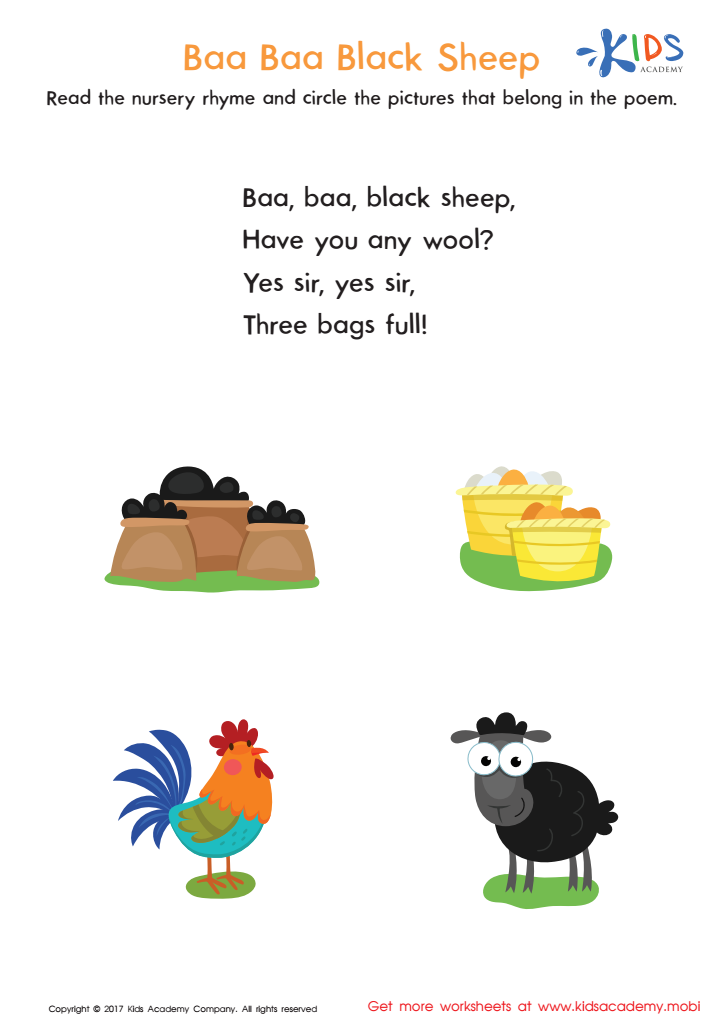
Baa Baa Black Sheep Printable
Jumpstart your child's reading skills with this printable Baa Baa Black Sheep worksheet! Recite the lines with them, then have them select the pictures associated with the poem to test comprehension. Fun and educational!
 Assign to My Students
Baa Baa Black Sheep Printable
Worksheet
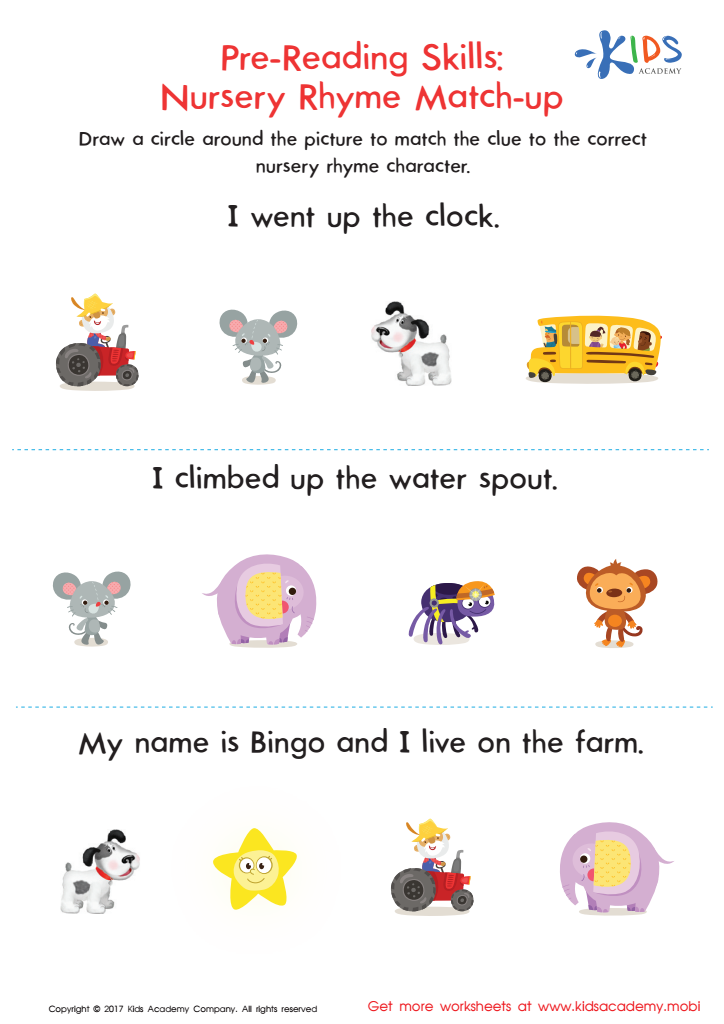
Nursery Rhyme Match–Up Worksheet
This worksheet helps kids build pre-reading skills using stories they know and love! By connecting with prior knowledge, kids can develop ideas about characters and set the stage for reading strategies.
Nursery Rhyme Match–Up Worksheet
Worksheet
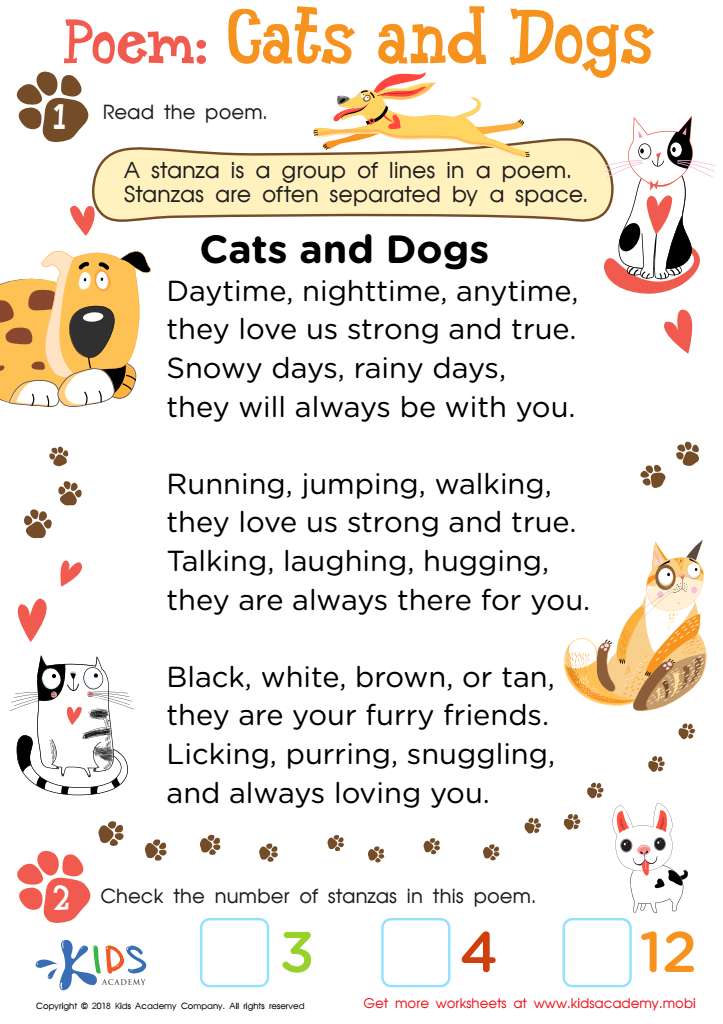
Poem: Cats and Dogs Worksheet
Read the poem to your child and point out where each stanza ends. Ask if they know what a stanza is (if not, explain it's a group of lines in a poem). Help them answer the question at the bottom of the printout. This simple, sweet poem about cats is easy for your child to relate to.
Poem: Cats and Dogs Worksheet
Worksheet
Join Kids Academy for Free
Who is primarily going to use this learning content?







Rhyme recognition and rhyming are essential skills for children ages 8-9 as they play a vital role in early literacy development. At this age, students are solidifying foundational reading and writing skills, and understanding rhyme can greatly enhance their phonemic awareness. This awareness—the ability to hear, identify, and manipulate individual sounds in words—is crucial for reading fluency and comprehension.
First, rhyming helps children recognize sound patterns and anticipate words, which improves their decoding skills when reading. This familiarity with sound can make reading a more intuitive and smoother process. For writing, being able to produce rhyme aids in vocabulary expansion and can make learning spelling patterns easier.
Secondly, engaging in rhyme activities, such as reading rhyming books, playing rhyming games, or writing simple poems, can make learning enjoyable and interactive, which encourages a positive attitude towards literacy. This emotional enjoyment of literature can instill a lifelong love for reading and writing.
Lastly, the social aspect of rhyming, through activities like group readings or songs, helps children develop listening skills and practice verbal expression in a fun, supportive environment. It also allows for better memory retention as rhythmic patterns are easier for the brain to remember.
In summary, parents and teachers should care about rhyme recognition and rhyming activities because they support phonemic awareness, enhance reading and writing skills, promote a love for literature, and involve enjoyable, interactive learning.







