
Following instructions Color Words Worksheets for Ages 8-9
4 filtered results
Difficulty Level
Grade
Age
-
From - To
Subject
Activity
Standards
Enhance your child's ability to follow directions with our "Following Instructions Color Words Worksheets" designed for ages 8-9. These engaging activities help young learners in recognizing and applying color words through fun, interactive exercises. Ideal for English as a Second Language (ESL) students, these worksheets improve vocabulary, reading comprehension, and cognitive skills. Encourage your child to color by following specific instructions, boosting their attention to detail and ability to process information accurately. Suitable for classroom and home use, these worksheets provide a delightful way to learn and reinforce important language skills. Make learning vibrant and effective with our expertly crafted resources!
Favorites
With answer key
Interactive
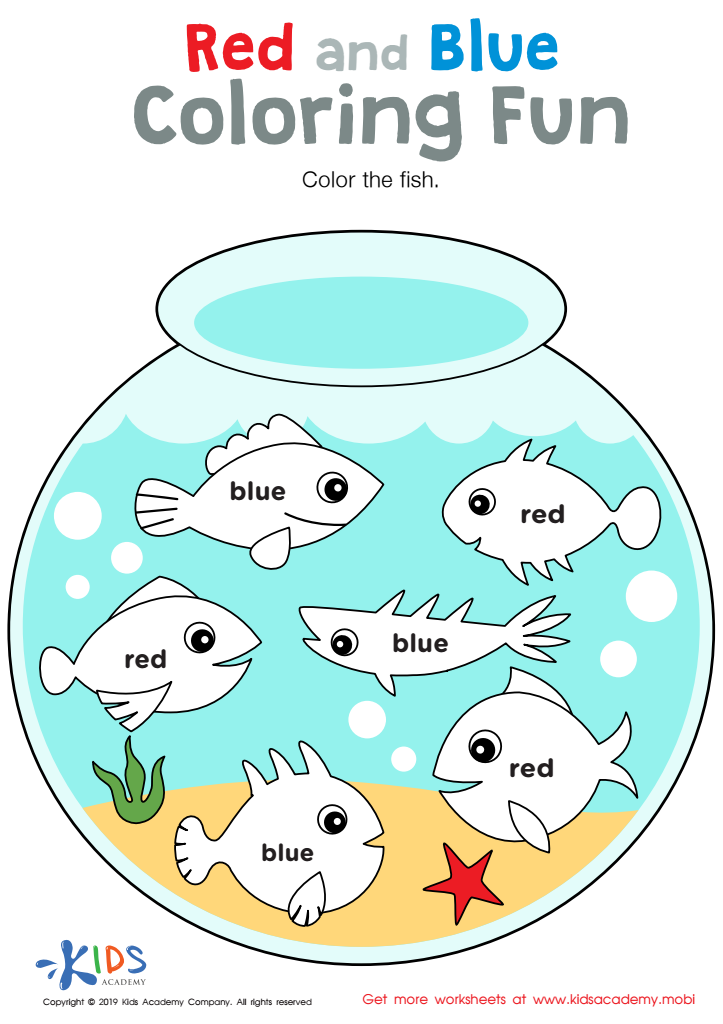
Red and Blue Coloring Fun Worksheet
Kids know colors like red and blue. But can they read these words? Give them practice with this fun fish bowl coloring sheet. They'll look at the fish, then color them the corresponding hue. Home or classroom, they'll be sure to get a kick out of learning colors in this creative way!
Download (PDF)
 Assign to My Students
Assign to My Students
Red and Blue Coloring Fun Worksheet
Worksheet
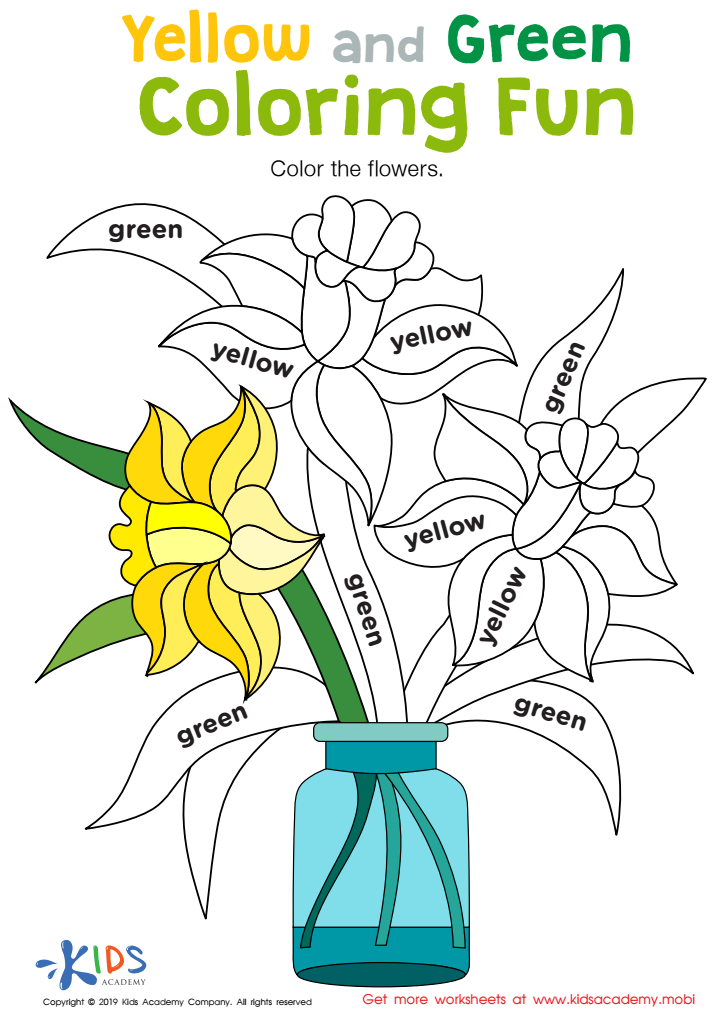
Yellow and Green Coloring Fun Worksheet
Sight words like "yellow" and "green" are easy to teach and fun for kids to learn. This free downloadable worksheet has kids read the color words and color the flower with yellow and green. A great activity for learning to read color words!
Download (PDF)
Assign to My Students
Assign to My Students
Yellow and Green Coloring Fun Worksheet
Worksheet
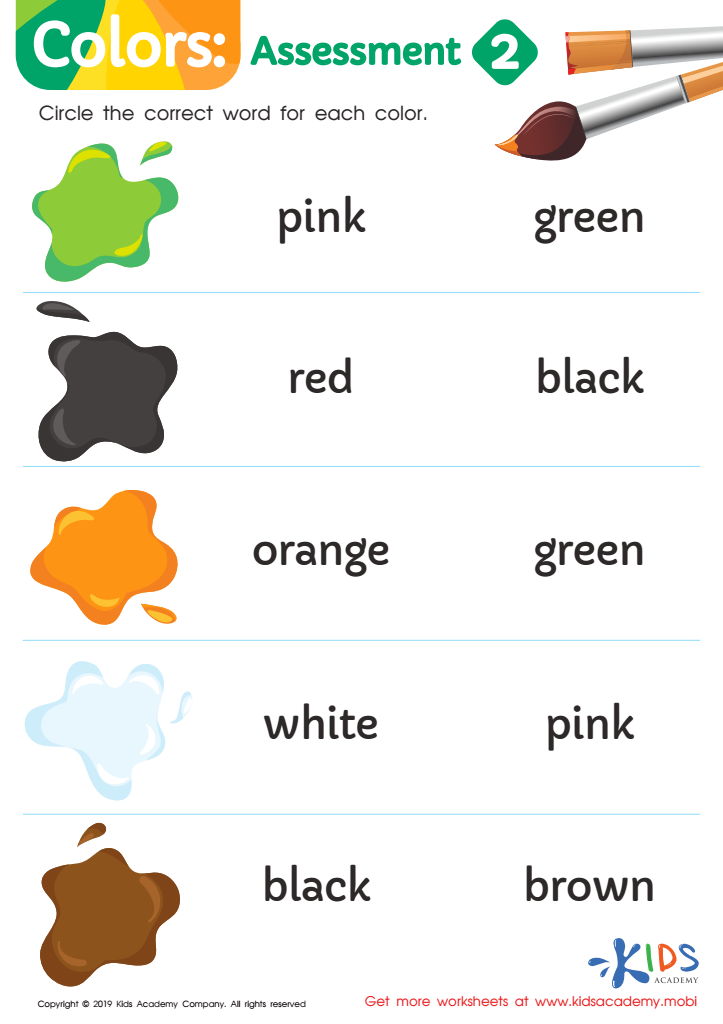
Colors: Assessment 2 Worksheet
Teach color words to young students to build fluency and confidence. Check knowledge with an assessment worksheet. Have students look at paint samples and circle the correct color word. This assessment helps parents and teachers measure a child’s accuracy when reading color words.
Colors: Assessment 2 Worksheet
Worksheet
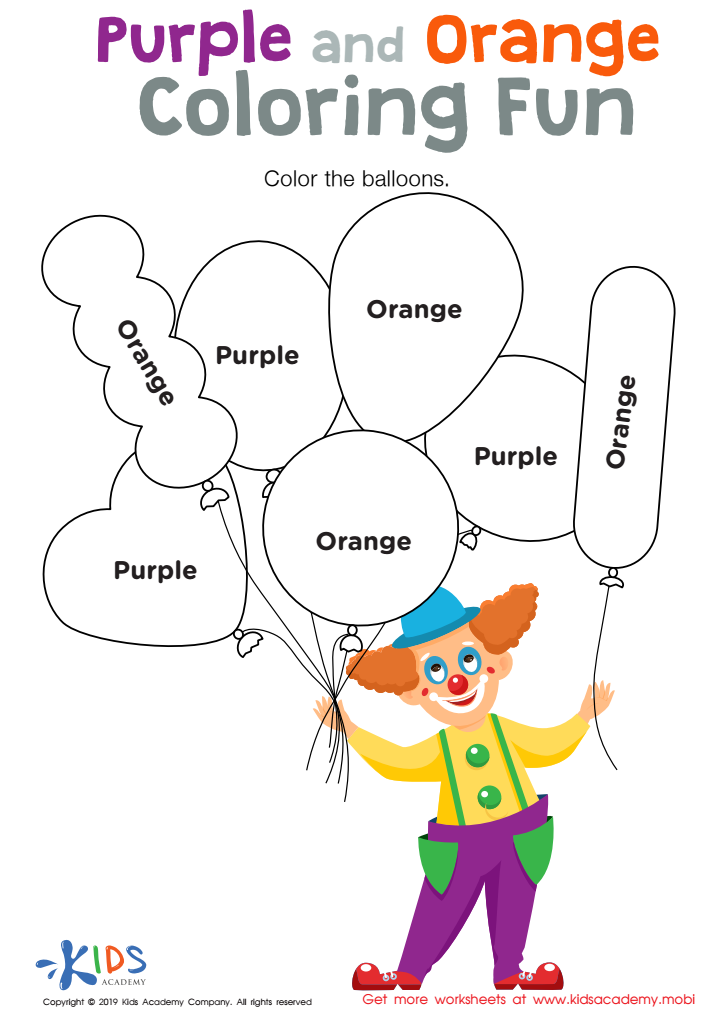
Purple and Orange Coloring Fun Worksheet
Children should learn to read color words early on. This coloring worksheet helps with that! Kids read the words "purple" and "orange" on each balloon and color them accordingly. It's a great activity for boosting literacy and having fun at the same time! Watch your child gain more reading confidence with this cute clown printable.
Download (PDF)
Assign to My Students
Assign to My Students
Purple and Orange Coloring Fun Worksheet
Worksheet
Join Kids Academy for Free
Who is primarily going to use this learning content?



Parents or teachers should care about following instructions involving color words for children ages 8-9 for several essential reasons. Firstly, mastery of following instructions is a key developmental milestone that significantly enhances a child's cognitive abilities. Tasks that incorporate color words strengthen comprehension and vocabulary skills, fostering an improved understanding of language nuances and contextual usage.
Additionally, this practice sharpens attentiveness and listening skills. Children must process specific details and apply them accurately, which lays a foundational groundwork for academic success across various subjects, such as reading and math. For instance, hearing and correctly interpreting "color the circle blue" versus "color the square yellow" demands keen focus and effective implementation of instructions given.
Moreover, such activities promote fine motor skills and hand-eye coordination essential for writing, drawing, and other classroom activities. Through color-based exercises, children engage creatively and exhibit their understanding practically, reinforcing visual learning.
Furthermore, the ability to follow multi-step directions develops critical thinking and problem-solving skills, both of which are vital beyond the classroom setting. Support from parents and teachers in adding such structured interactivity ensures that children gain self-confidence and independence as learners and thinkers, preparing them well for future academic and life challenges.








