Develops counting skills Worksheets for Ages 8-9
3 filtered results
-
From - To
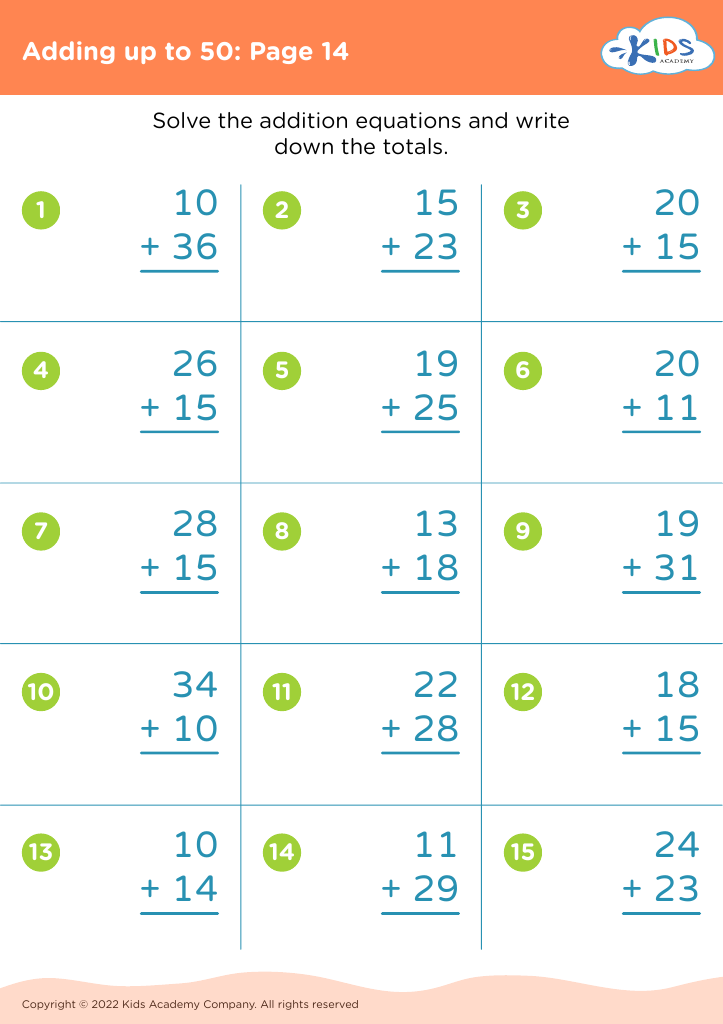
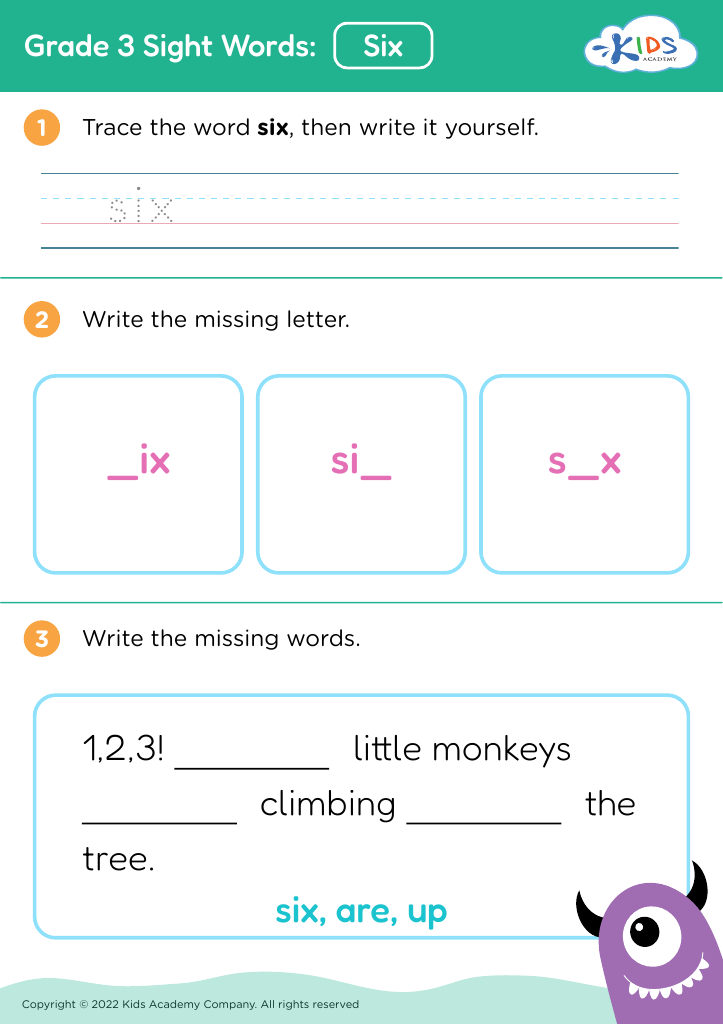
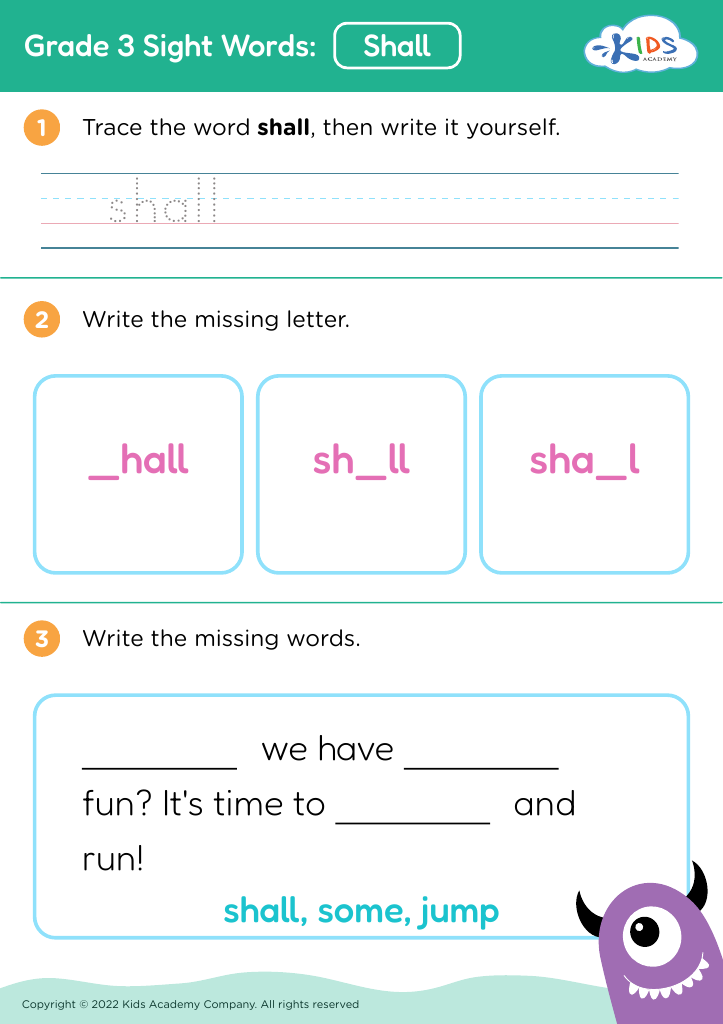
Enhance your child's counting skills with our specially designed worksheets for ages 8-9! Our engaging and interactive activities help build a strong numerical foundation, fostering confidence in math abilities. Each worksheet focuses on essential counting concepts, enabling students to practice addition, subtraction, and pattern recognition in a fun way. By using colorful graphics and appealing themes, we capture children's attention and make learning enjoyable. Perfect for both classroom and at-home use, these worksheets are an excellent tool for parents and educators alike. Start your child's countdown to success today with our comprehensive collection of counting skills worksheets!



.jpg)



Developing counting skills in children aged 8 to 9 is crucial for several reasons that benefit their overall mathematical understanding and daily life. At this age, children are transitioning from basic counting to more complex mathematical concepts, including addition, subtraction, multiplication, and even fractions. Strong counting skills provide the foundation for these subsequent learning stages.
Furthermore, counting is not just about numbers; it enhances children's ability to understand sequences and patterns, essential skills in both math and logical reasoning. Proficiency in counting lays the groundwork for higher-level problem-solving and critical thinking as children progress through school.
Moreover, counting skills directly impact their confidence and attitude towards math. Mastery in counting allows children to engage in classroom activities more effectively, fostering a sense of accomplishment. Parents and teachers play a vital role in this process by incorporating fun and engaging counting games, real-life counting scenarios, and supportive encouragement, reinforcing the importance of these skills.
In summary, prioritizing the development of counting skills in 8- to 9-year-olds not only equips them with essential academic tools but also nurtures their confidence and enthusiasm for learning—skills that will serve them throughout their education and beyond.








