
Improve handwriting skills Worksheets for Ages 8-9
3 filtered results
Difficulty Level
Grade
Age
-
From - To
Subject
Activity
Standards
Discover our engaging "Improve Handwriting Skills Worksheets" designed specifically for ages 8-9! These worksheets provide a fun and interactive way for children to enhance their fine motor skills and practice letter formation. Tailored to suit young learners, our resources feature a variety of exercises including tracing, copying, and creative writing prompts. With a focus on building confidence and fluency, these worksheets also incorporate enjoyable themes to keep kids motivated. Help your child develop neat, legible handwriting that will serve them for years to come. Start improving their handwriting skills today with our comprehensive and colorful worksheets!
Favorites
With answer key
Interactive
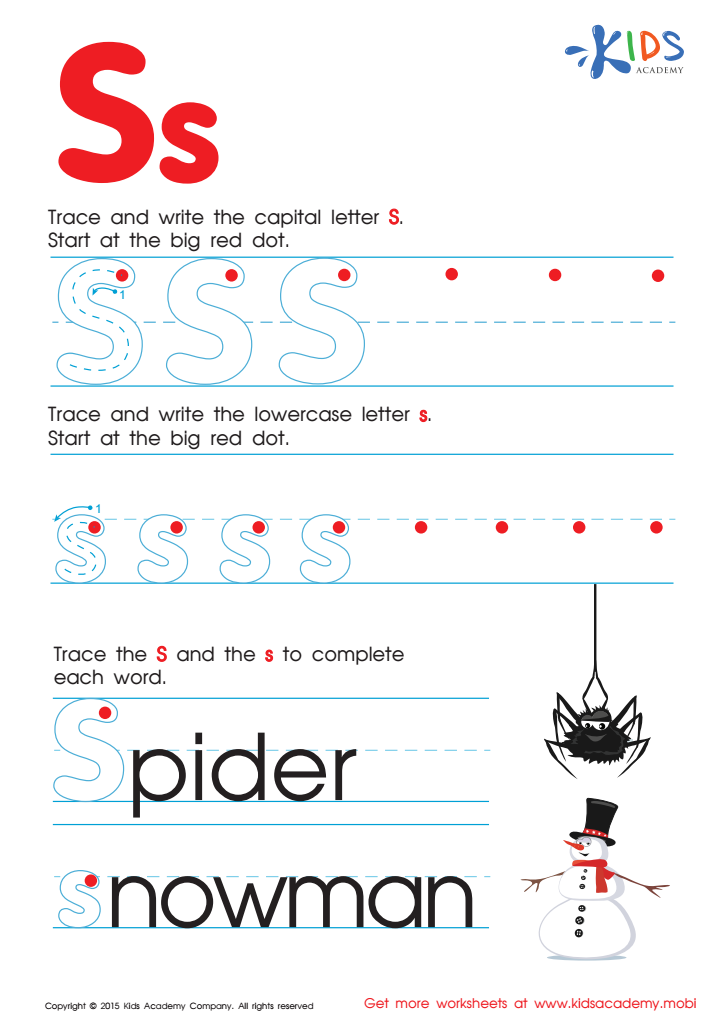
Letter S Tracing Page
Trace and write the capital and lowercase "S" on this ABC worksheet for kindergarten. Start with the big red dot and be careful. When you finish, help the spider and snowman in the pictures restore their words with the capital and lowercase letters. Continue learning the alphabet with Kids Academy.
 Assign to My Students
Letter S Tracing Page
Worksheet
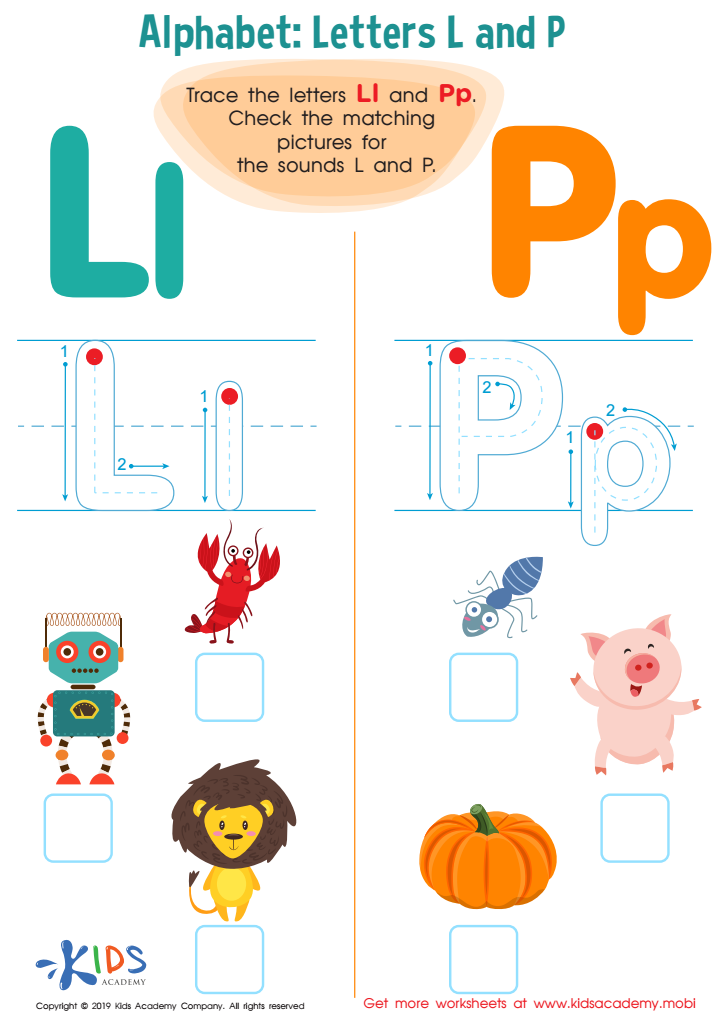
Letter L and P Tracing Worksheet
This traceable worksheet can motivate your students to learn and practice core skills. They'll trace the letters 'L' and 'P' and identify the pictures next to them. With this exercise, they'll unlock their learning abilities and excel in the subject!
Letter L and P Tracing Worksheet
Worksheet
Join Kids Academy for Free
Who is primarily going to use this learning content?








Handwriting skills are crucial for children aged 8-9 as they play a significant role in their overall academic development and self-expression. At this age, students are typically transitioning from learning to write to writing to learn, making legible handwriting essential for effectively communicating their ideas and knowledge across subjects. Poor handwriting can hinder a child's ability to convey thoughts clearly, potentially impacting their grades and self-esteem.
Additionally, developing good handwriting habits can foster discipline and focus in children. Writing neatly requires attention to detail and the ability to concentrate, skills that benefit academic progress and future tasks. Moreover, as children grow, proficient handwriting skills can contribute to their confidence in areas like standardized tests, where legibility is vital for assessment.
Teachers and parents should also recognize that handwriting is linked to motor skills development. Strong fine motor skills, honed through writing practice, can enhance a child's overall dexterity and coordination. Lastly, in an increasingly digital world, neat handwriting remains a valuable skill for everyday tasks, encouraging children to appreciate the art of written communication. Supporting handwriting improvement ensures that children build a foundation for successful learning and personal expression in their academic journeys and beyond.








