Improve problem-solving abilities Worksheets for Ages 8-9
3 filtered results
-
From - To
Discover our specially designed worksheets to enhance problem-solving abilities for children ages 8-9 at Kids Academy. Our engaging challenges stimulate critical thinking, creativity, and analytical skills. Each worksheet presents fun puzzles, brain teasers, and logic exercises tailored to this age group, fostering intellectual growth through interactive learning. Boost your child's confidence and problem-solving skills with our expertly crafted resources, perfect for guided or independent practice. With Kids Academy, learning becomes an exciting adventure, ensuring young minds develop the necessary tools to tackle complex problems with ease and enthusiasm. Download our worksheets today and watch your child thrive!

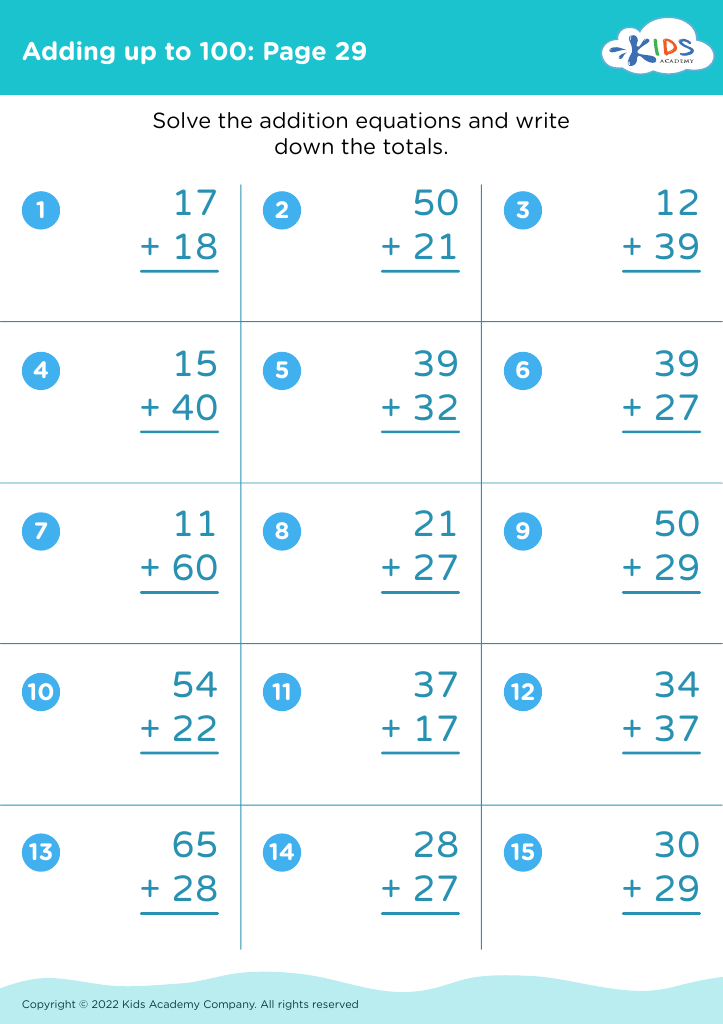
Addition and Subtraction within 100: Assessment 1 Worksheet
 Assign to My Students
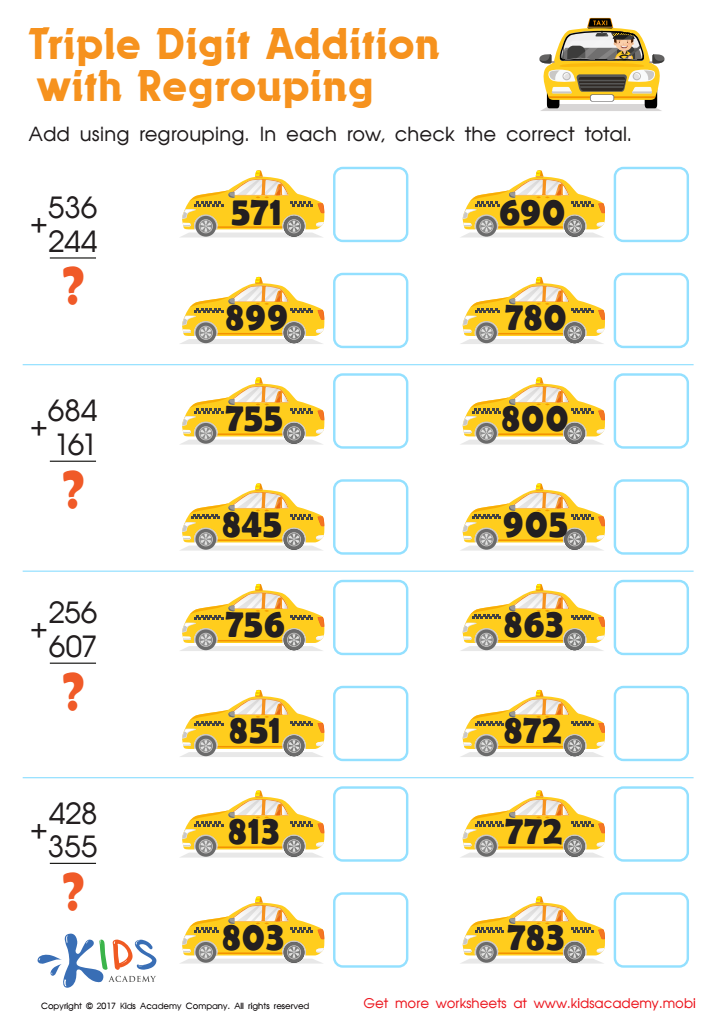
Triple Digit Addition with Regrouping Worksheet








Improving problem-solving abilities in children aged 8-9 is crucial for their academic and personal development. At this age, children are transitioning from concrete to more abstract thinking. Encouraging problem-solving not only enhances their intellectual capability but also builds essential life skills. When children learn to approach challenges methodically, they develop critical thinking, creativity, and resilience.
Problem-solving skills enable children to tackle academic subjects more effectively. For example, in mathematics, children learn to decipher word problems, strategize, and arrive at solutions independently. These abilities translate into improved academic performance and confidence in their problem-solving instructional methodologies. Beyond academics, problem-solving fosters social and emotional growth. Children learn to navigate social dynamics, resolve conflicts amicably, and make sound decisions. This emotional intelligence is pivotal in developing empathy, cooperation, and strong interpersonal relationships.
Moreover, fostering problem-solving skills from a young age prepares children for future challenges in a rapidly changing world. It equips them with the ability to innovate and adapt, vital traits in the 21st century. Parents and teachers, as the primary guides in these formative years, play a crucial role in creating an environment that encourages curiosity, experimentation, and critical thinking. Consequently, nurturing these skills early on sets a strong foundation for lifelong learning and success.








