Matching skills Worksheets for Ages 8-9
8 filtered results
-
From - To
Enhance your child's learning experience with our Matching Skills Worksheets designed specifically for ages 8-9! These engaging worksheets are perfect for developing critical thinking and cognitive abilities while introducing fun challenges. Kids will practice identifying relationships, pairing items, and enhancing visual discrimination through creative exercises and captivating themes. Each worksheet is crafted to align with educational standards, ensuring a balance between learning and enjoyment. Perfect for classroom use or at-home learning, our matching skills worksheets keep young minds active and inquisitive. Explore our diverse collection today to support your child's educational journey and make learning exciting!
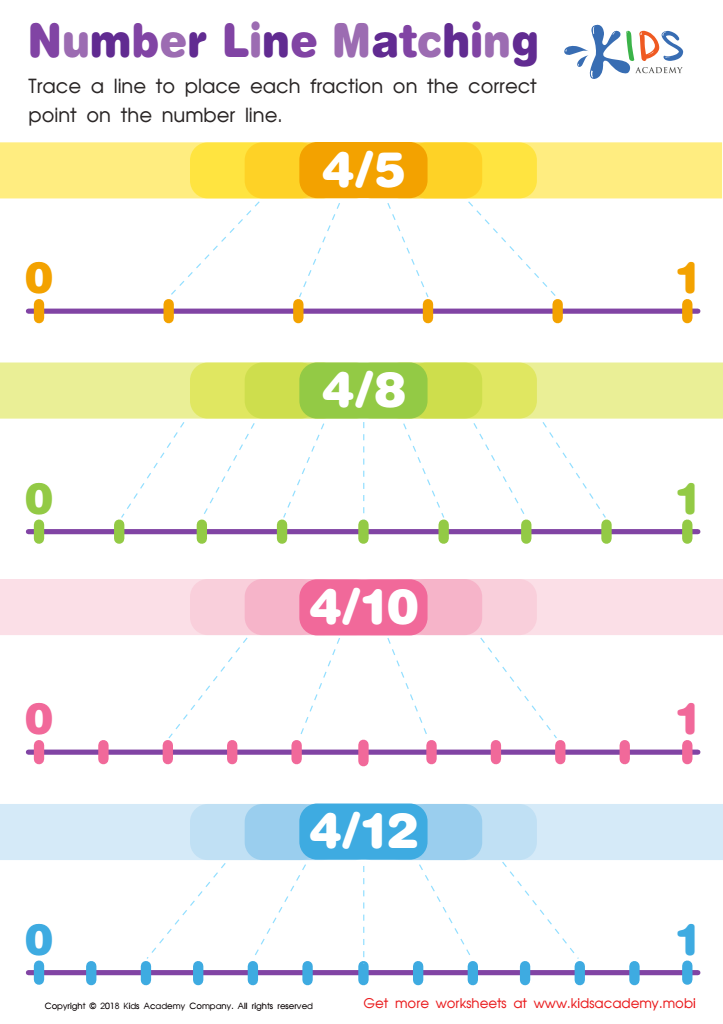
Number Line Matching Worksheet
 Assign to My Students
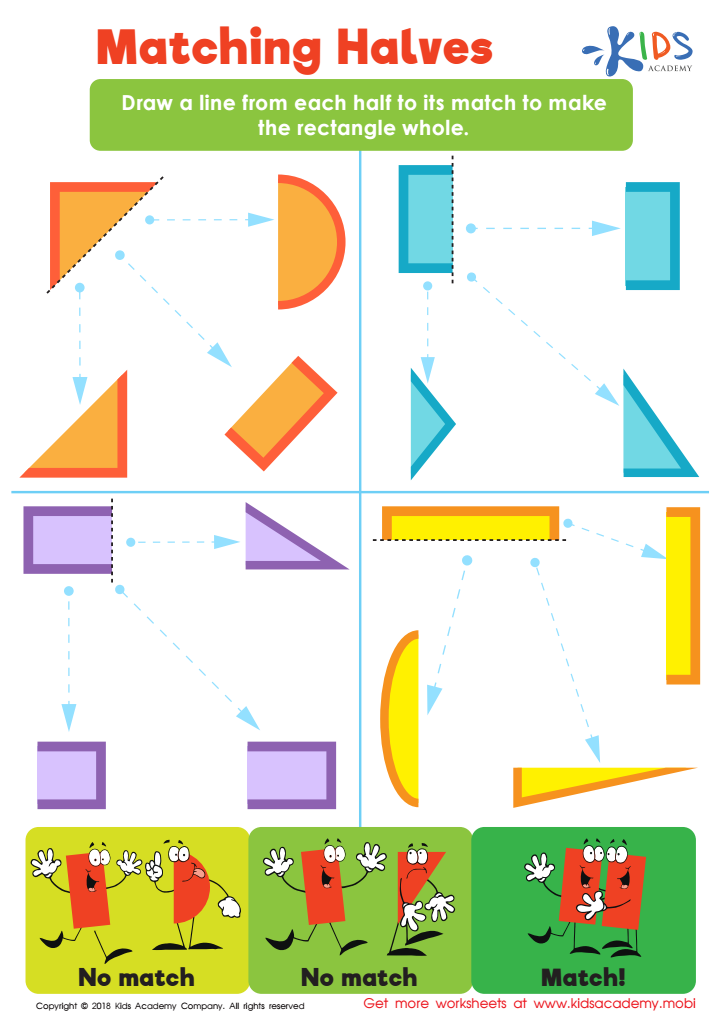
Matching Halves Worksheet
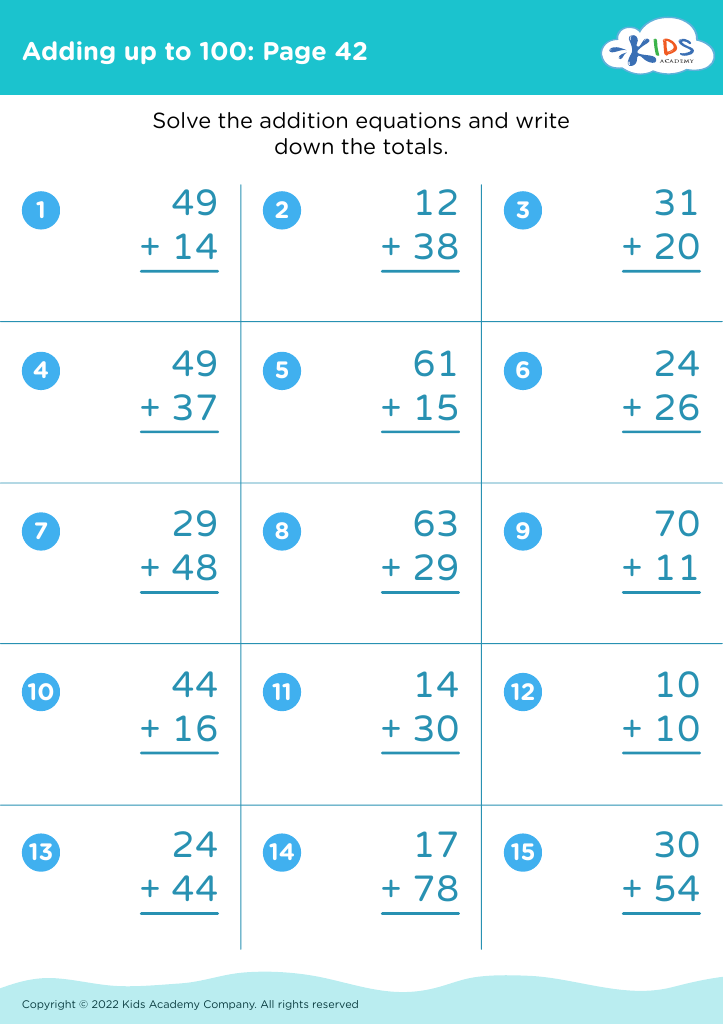
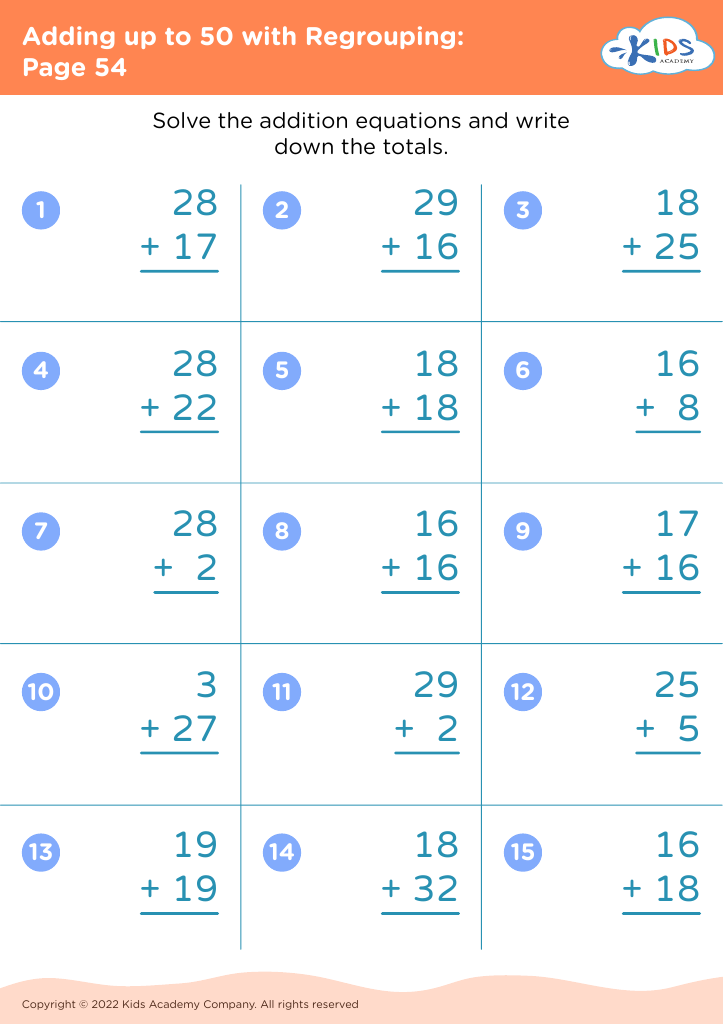
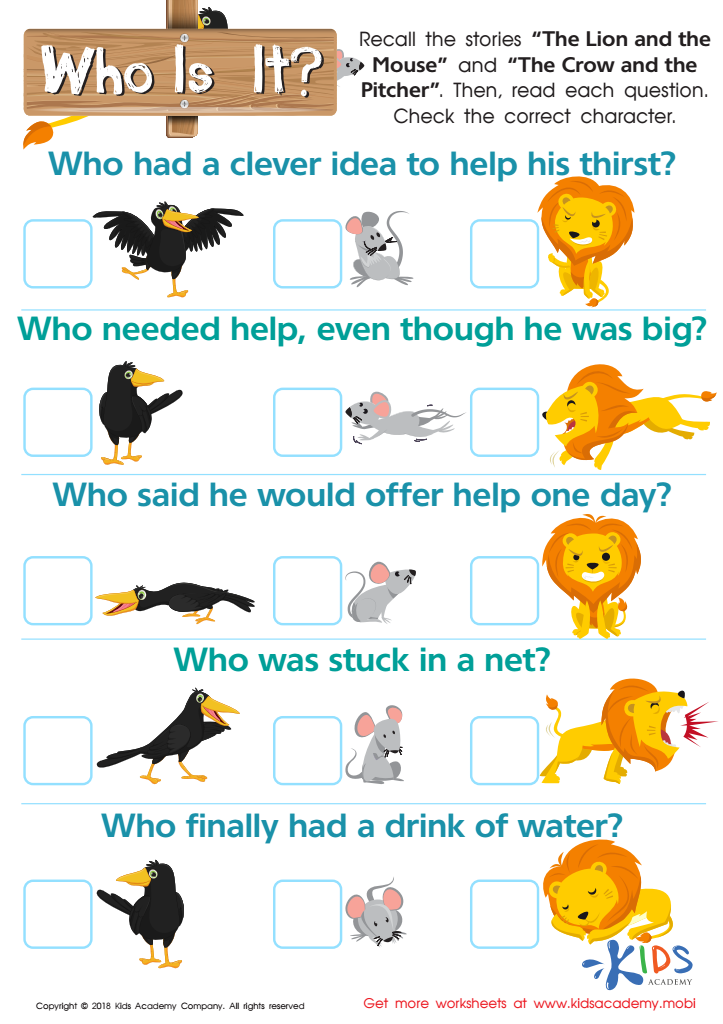
Who Is It? Worksheet
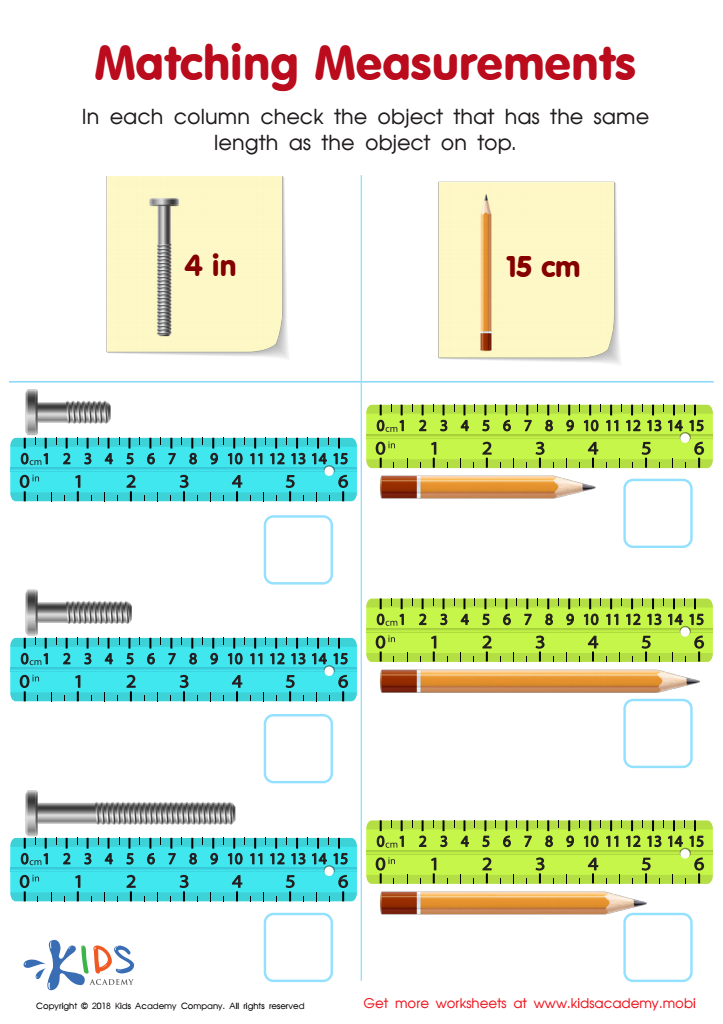
Matching Measurements Worksheet
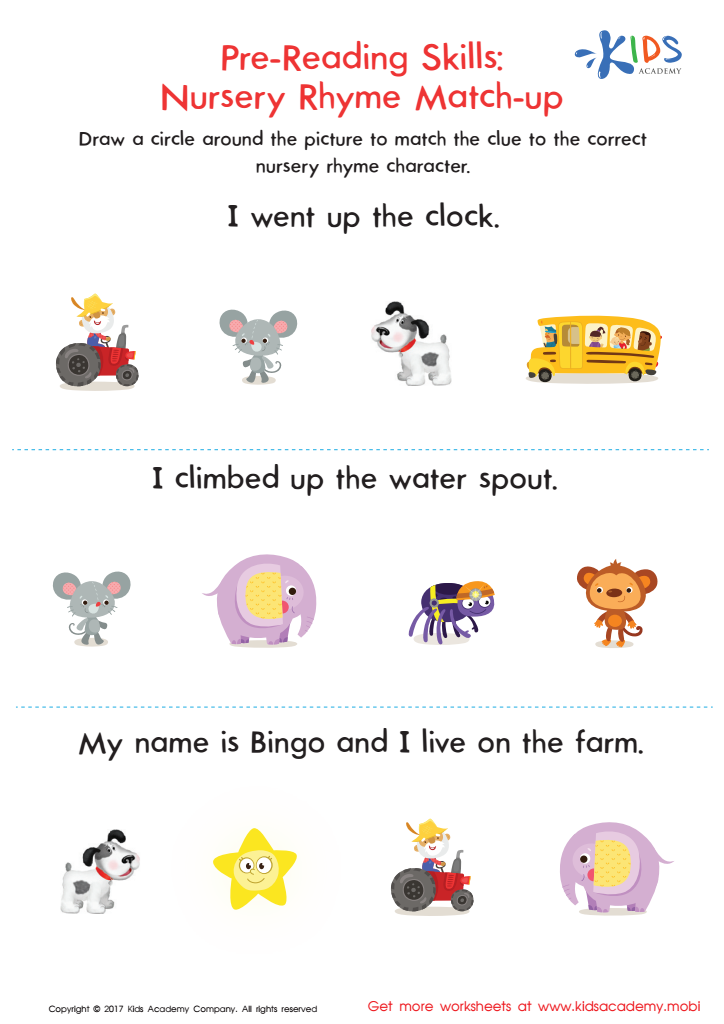
Nursery Rhyme Match–Up Worksheet








Matching skills are crucial for children aged 8-9, as this stage of development marks a transitional period where cognitive abilities expand significantly. At this age, children start to develop greater logic and reasoning skills, and matching activities promote essential cognitive development. By identifying relationships between objects, symbols, or concepts, children strengthen their analytical thinking and enhance memory retention.
For parents and teachers, nurturing matching skills is essential for academic success. These foundational skills improve children’s ability to understand more complex subjects, including mathematics, literacy, and science. Matching activities can boost literacy by helping children connect words with their meanings or visuals, reinforcing language skills.
Furthermore, engagement in matching games can boost social skills. Collaborative activities encourage turn-taking, cooperation, and healthy competition, helping build social emotional skills. Additionally, these activities can strengthen fine motor skills through hands-on manipulation of objects.
Investing time in matching skills not only supports educational outcomes but also cultivates critical life skills. Parents and teachers who prioritize these activities contribute significantly to a child's overall development, ensuring they thrive in both academic and social environments, ultimately setting the foundation for lifelong learning experiences.








