Practice addition Worksheets for Ages 8-9
6 filtered results
-
From - To
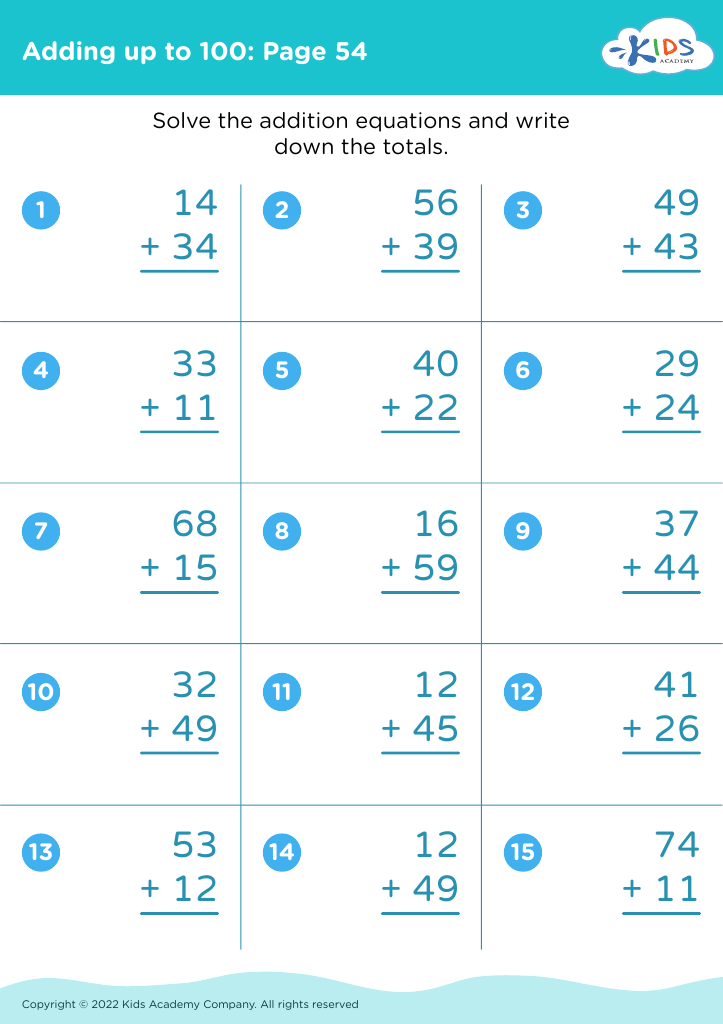
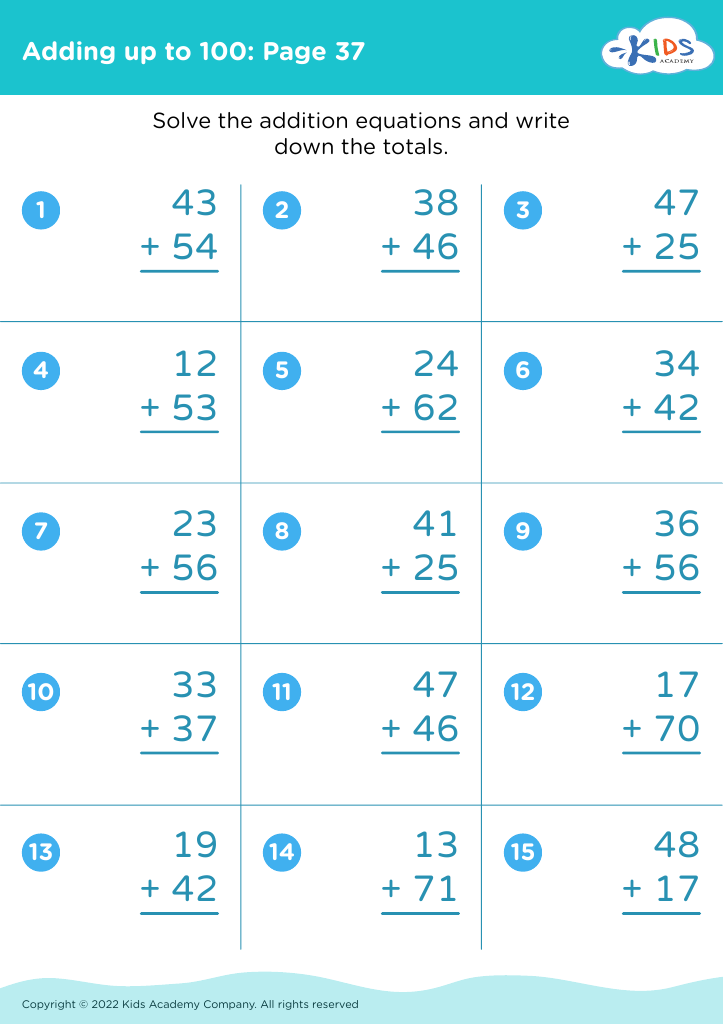
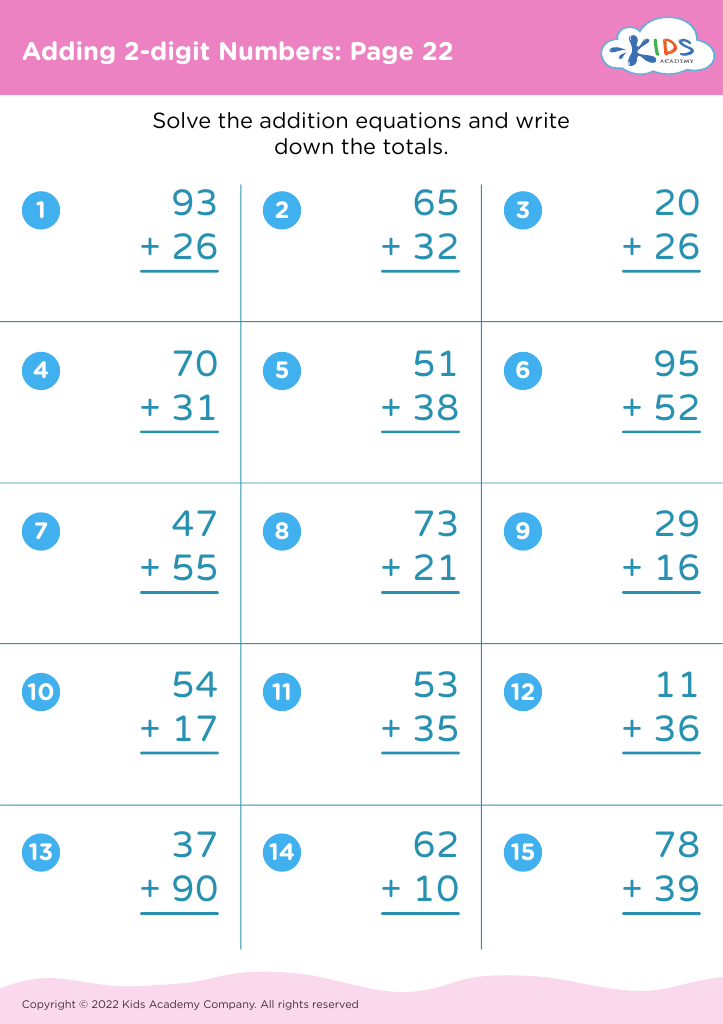
Unlock your child's potential with our "Practice Addition Worksheets for Ages 8-9." Designed for balanced learning and fun, these age-appropriate sheets provide ideal practice to enhance math skills. Each worksheet encourages practice of fundamental concepts in engaging ways. Tailored for kids aged 8-9, this collection helps reinforce knowledge through structured exercises and playful problem-solving activities. Created by educational experts, our worksheets facilitate better understanding and confidence in addition, fostering a solid foundation in math. Ideal for in-home learning or classroom support, our printables make learning addition an exciting adventure. Explore now and watch your child excel!
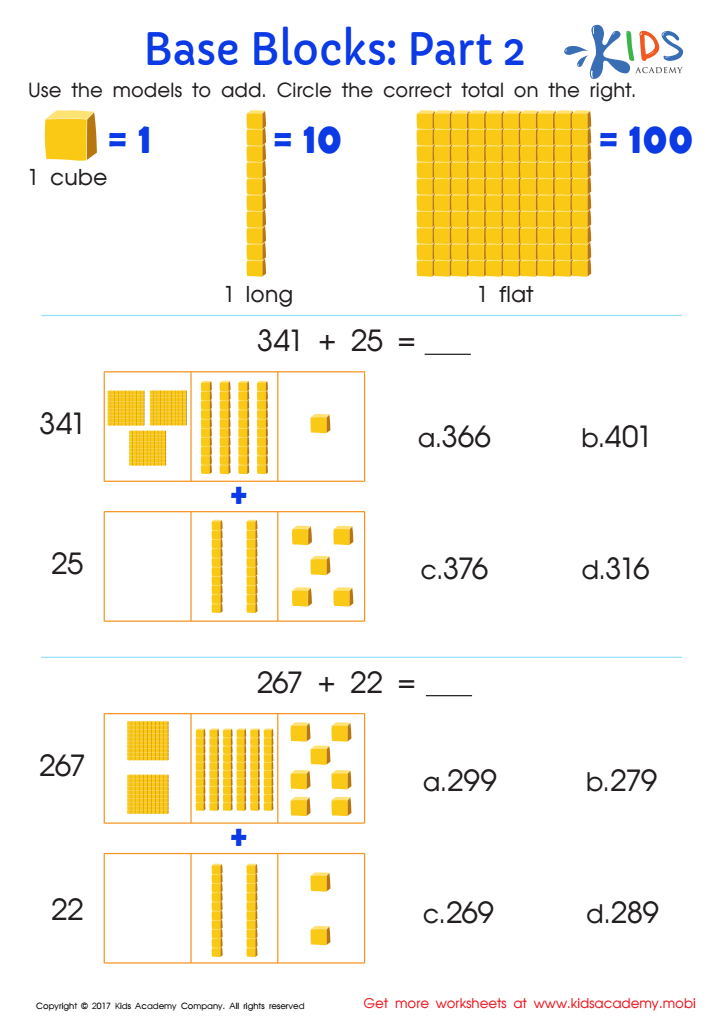
Base Ten Blocks Worksheet: Part 2
 Assign to My Students
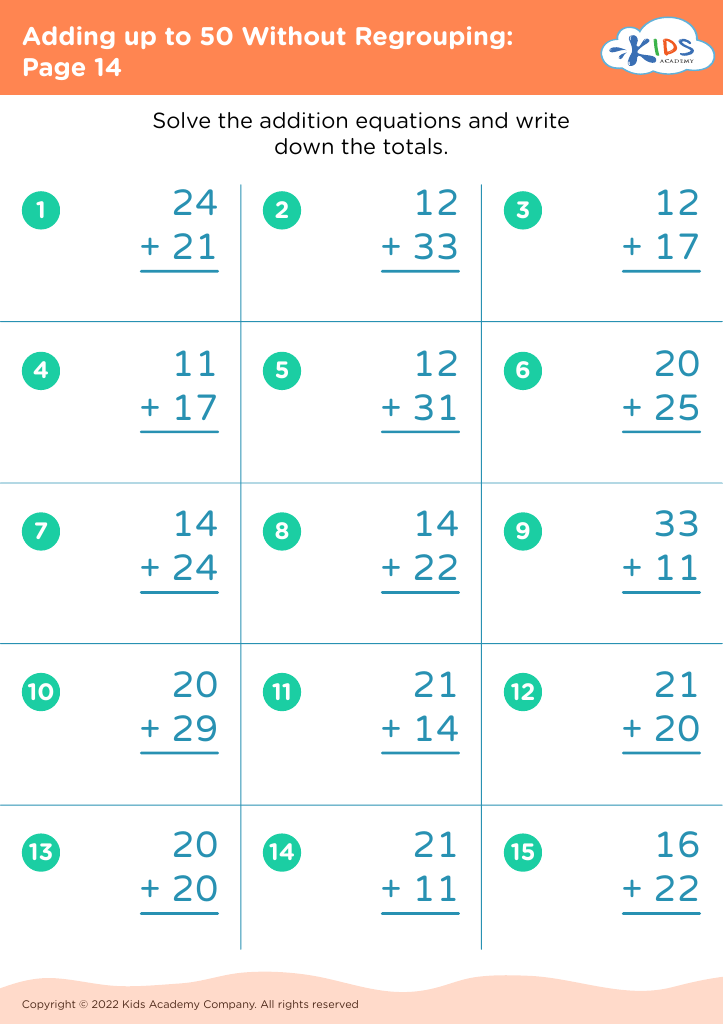








Practicing addition for children aged 8-9 is crucial as it builds the foundation for more complex mathematical concepts they'll encounter later. At this developmental stage, kids typically move from simple single-digit addition to more challenging problems involving multiple digits and carrying over. Ensuring mastery here sets the stage for success in more advanced subjects like multiplication, division, fractions, and algebra.
First, fluency in addition enhances cognitive skills, such as problem-solving, analytical thinking, and logical reasoning. These skills are not only vital for academic success but also crucial for daily life activities, such as managing time and money.
Second, secure understanding and confidence in their math abilities contribute directly to a positive attitude toward the subject. Students who struggle early on are more likely to develop math anxiety, resulting in aversion and lower performance in the future.
Moreover, mathematical proficiency is increasingly recognized as essential in our technology-driven world. Careers in science, technology, engineering, and mathematics (STEM) are growing, and fundamental math skills are critical building blocks.
Parents and teachers serving as supportive and encouraging figures can make practicing addition an engaging and positive experience. Using real-life contexts and interactive methods can transform practice sessions into enjoyable and rewarding activities, instilling both competence and confidence in young learners.








