
Prefix understanding Worksheets for Ages 8-9
3 filtered results
Difficulty Level
Grade
Age
-
From - To
Subject
Activity
Standards
Our engaging prefix understanding worksheets for ages 8-9 are specially designed to enhance children's language skills. These vibrant worksheets explore common prefixes, helping young learners understand and decode new words. Each activity provides clear examples and fun exercises to reinforce comprehension. Perfect for both classroom use and at-home practice, these worksheets aim to build a strong vocabulary foundation, improve reading abilities, and boost confidence in language arts. Tailored to the developmental needs of 8 to 9-year-olds, they make learning prefixes enjoyable and effective. Dive into a world of word formation and watch your child's linguistic skills grow!
Favorites
With answer key
Interactive
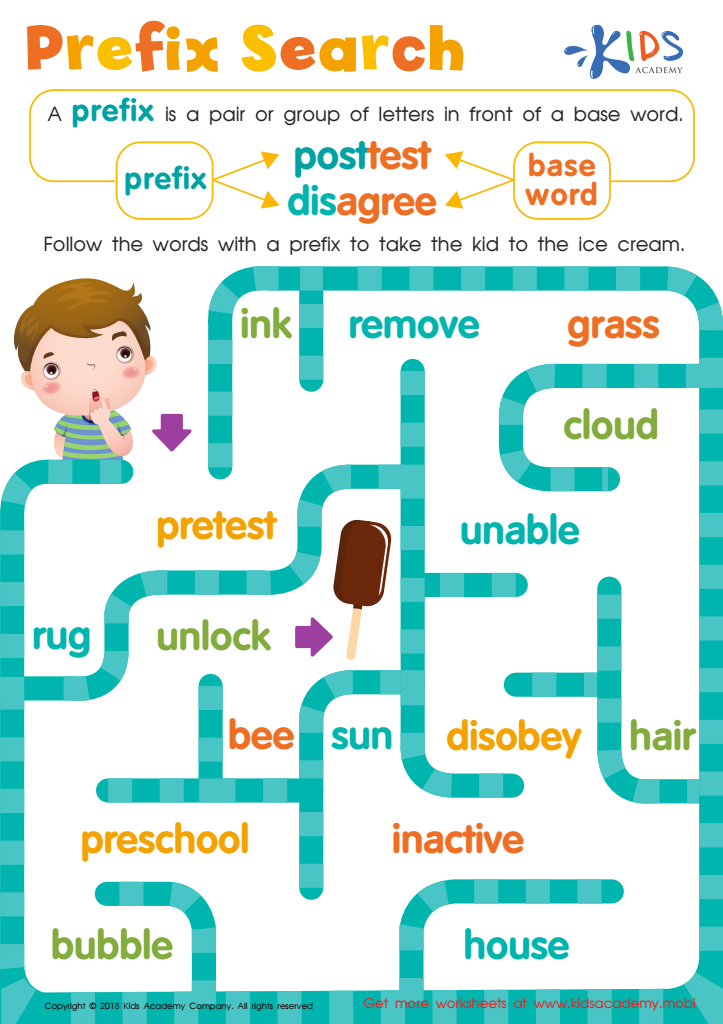
Reading: Prefix Search Worksheet
Maze your way through prefixes! This worksheet helps students practice reading new words with a prefix and figuring out the base word. An understanding of prefixes gives students the skills to comprehend new words. A fun and useful activity for the reading classroom!
 Assign to My Students
Reading: Prefix Search Worksheet
Worksheet
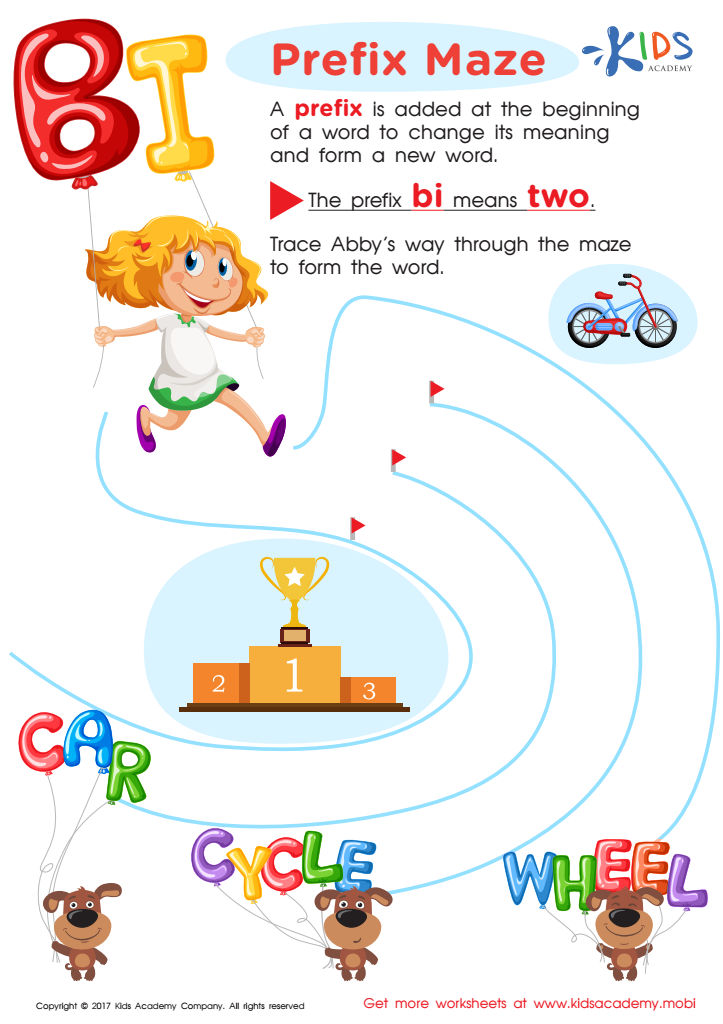
Prefix Bi Words Worksheet
Help "bi" find its root word in this fun and colorful prefix worksheet! Your child will learn how words are built while having a great time!
Prefix Bi Words Worksheet
Worksheet
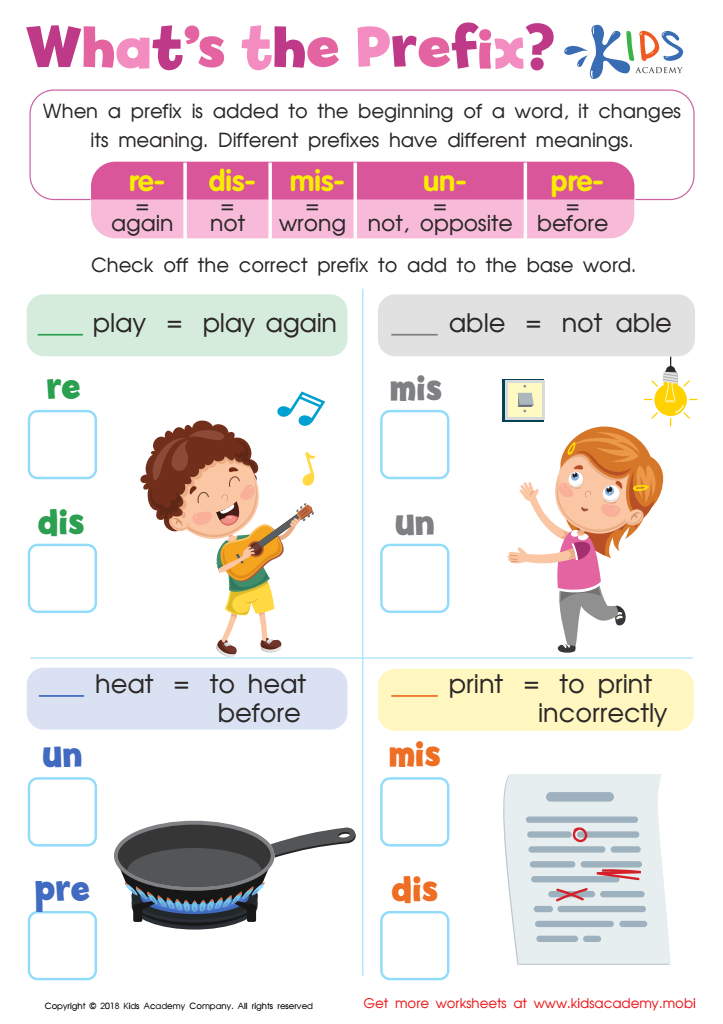
Reading: What Is the Prefix Worksheet
This worksheet helps children learn about prefixes by matching pictures and base words with the correct prefix. Learning these prefixes and their meanings is essential for reading and vocabulary comprehension. Use this free download to check your students' understanding.
Reading: What Is the Prefix Worksheet
Worksheet
Join Kids Academy for Free
Who is primarily going to use this learning content?







Understanding prefixes at ages 8-9 is fundamental to a child’s linguistic and cognitive development. As children transition into more advanced reading and writing, knowledge of prefixes equips them with the tools to decode and comprehend a broader array of words. Prefixes, which are added to the beginning of root words, can significantly alter the meaning of the base words, empowering students to discern meanings of unfamiliar words and enrich their vocabulary.
For example, knowing that "un-" means "not," children can infer that "unhappy" means "not happy." This skill fosters better reading comprehension, as they can make educated guesses about words within context, enhancing their ability to grasp the essence of the text without frequent dictionary consultation. Better comprehension leads to more enjoyable and engaging reading experiences, helping to cultivate a lifelong love of reading.
Additionally, understanding prefixes aids in spelling and writing. When children recognize patterns and rules within words, they can apply these strategies to spell more accurately and improve their writing fluency. This foundational skill supports their overall academic performance across subjects, as many domains rely heavily on reading and vocabulary knowledge.
Parents and teachers play a crucial role in encouraging prefix understanding, thus laying groundwork for academic success, confident communication, and a richer imagination. Engaging children with fun activities and games related to prefixes can make this learning process enjoyable and effective.








