Understanding number sequence Worksheets for Ages 8-9
6 filtered results
-
From - To
Welcome to our "Understanding Number Sequence Worksheets for Ages 8-9" page! Here, you will find engaging and educational worksheets designed to help young learners grasp the concept of number sequences. These resources are ideal for enhancing critical thinking and mathematical skills through fun activities tailored for children aged 8 to 9. Our worksheets promote pattern recognition, sequencing skills, and problem-solving abilities, allowing students to observe and create number patterns in a visually appealing way. Perfect for home or classroom use, these interactive tools make learning about number sequences enjoyable while reinforcing essential math foundations. Explore our collection and watch your child thrive!
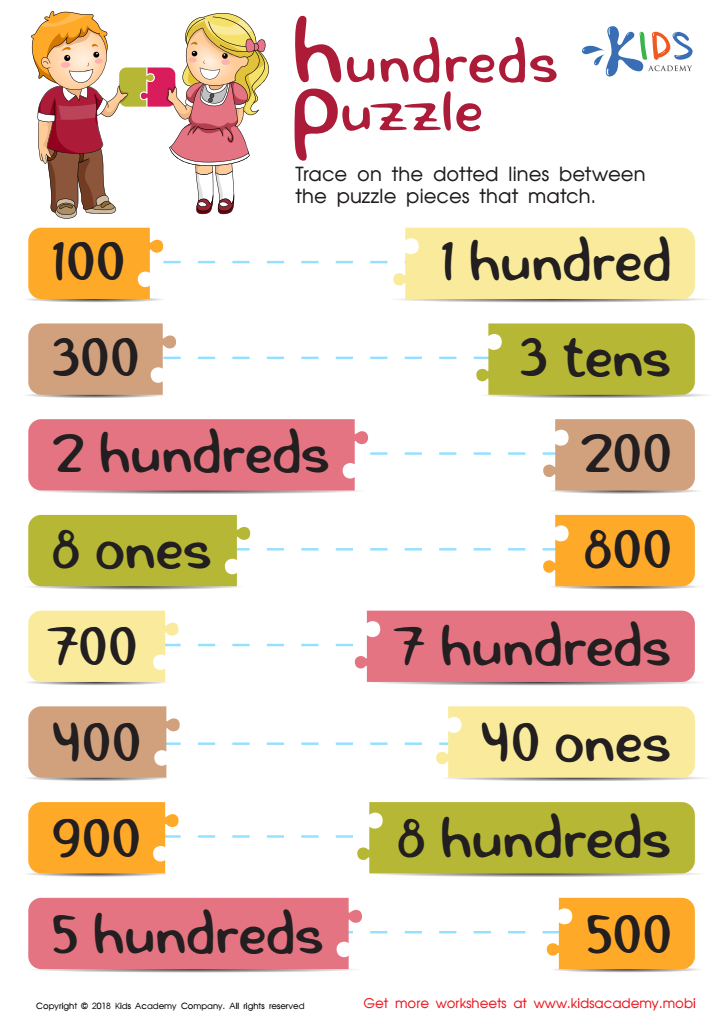
Hundreds Puzzle Worksheet
 Assign to My Students
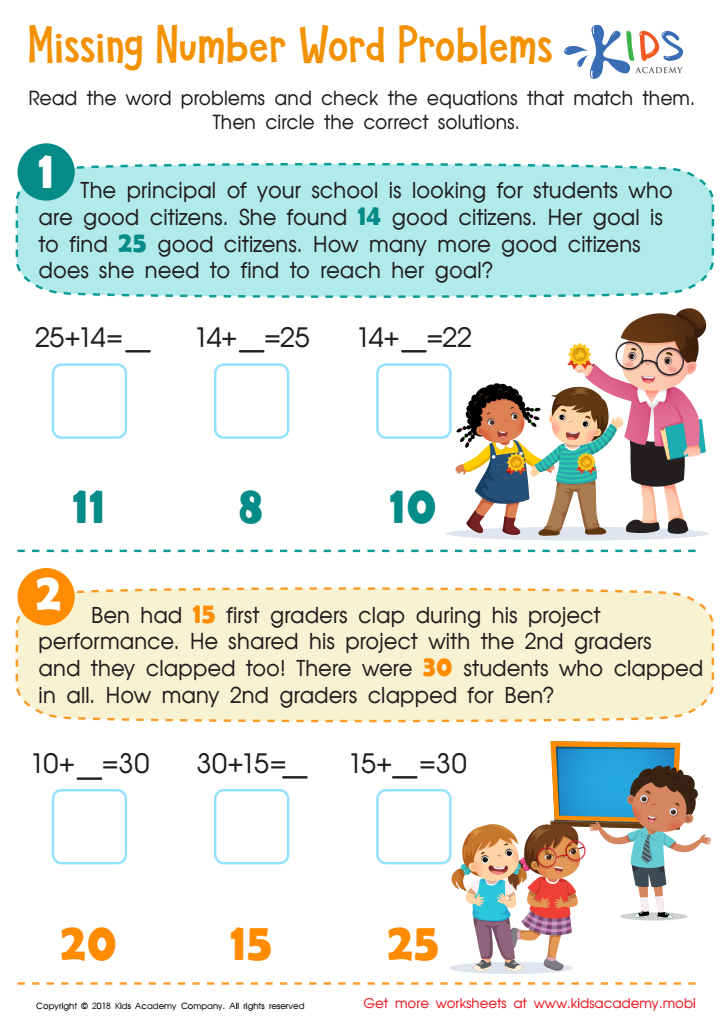
Missing Number Word Problems Worksheet
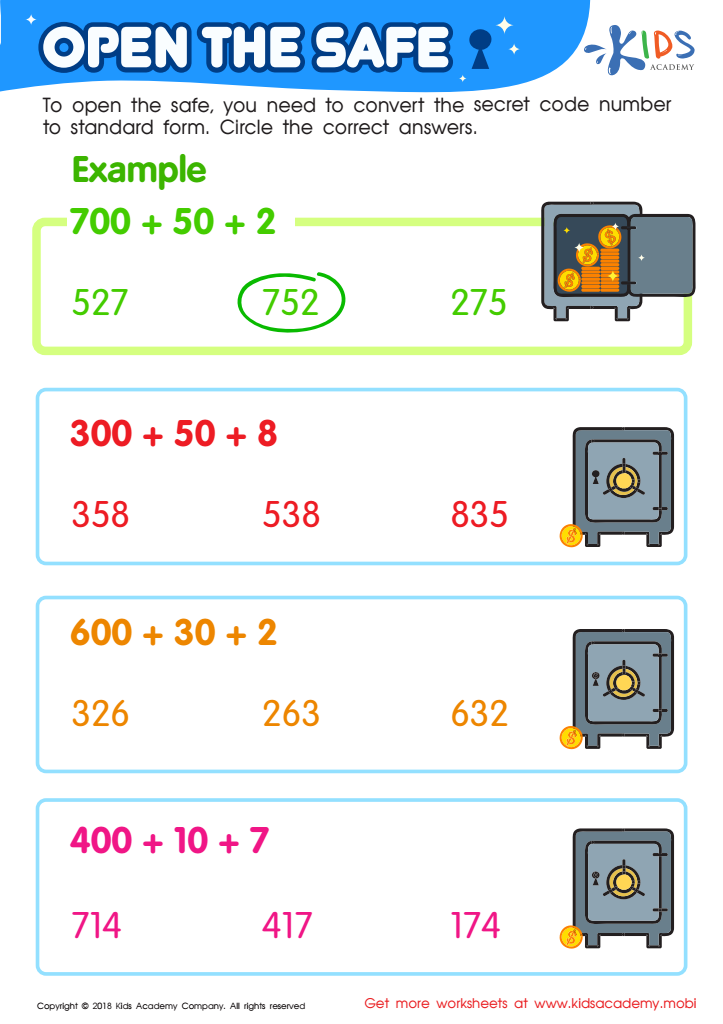
Open the Safe Worksheet






Understanding number sequences is crucial for children aged 8-9 because it lays the foundation for more complex mathematical concepts. At this developmental stage, students begin to encounter patterns, relationships between numbers, and the principles of arithmetic. By mastering number sequences, children enhance their problem-solving skills and can recognize and predict numerical patterns, which are essential for high-level math, including algebra and beyond.
Moreover, number sequences play a vital role in daily life, from understanding timelines and scheduling to managing money. Familiarity with sequences strengthens a child's analytical thinking, promoting a systematic approach to reasoning through problems. It also aids in developing their cognitive abilities, as children learn to make connections between numbers, identify patterns, and follow logical progression.
For parents and teachers, fostering an environment that encourages exploration of number sequences not only boosts children's mathematical skills but also builds confidence. Encouragement in these early stages can lead to a greater passion for math and an increased ability to tackle more challenging concepts in the future. In essence, helping children understand number sequences equips them with essential tools that will benefit them academically and in everyday life.








