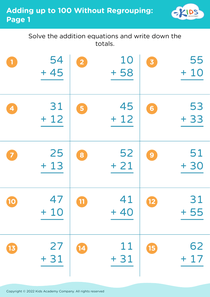
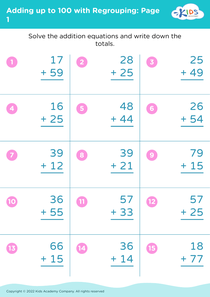
Addition Practice Adding up to 100 Misc Worksheets for Ages 8-9
3 filtered results
-
From - To
Boost your child’s math skills with our "Addition Practice Adding up to 100 Misc Worksheets" designed for ages 8-9. These engaging worksheets help young learners improve their addition proficiency by practicing sums up to 100. Featuring a mix of problems that challenge and entertain, these resources are perfect for reinforcing school learning or extra practice at home. Each worksheet is crafted to build confidence and encourage a love for math in young students. Accessible and easy to use, they support children's learning journey and essential arithmetic skills. Suitable for teachers, parents, and homeschoolers dedicated to their child’s success.
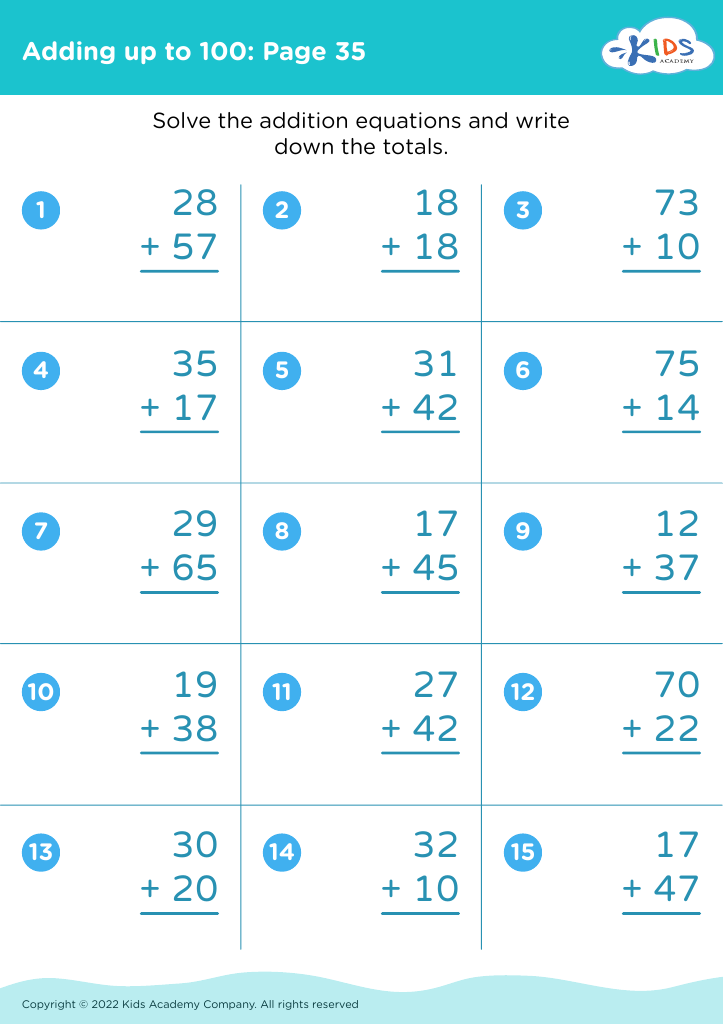
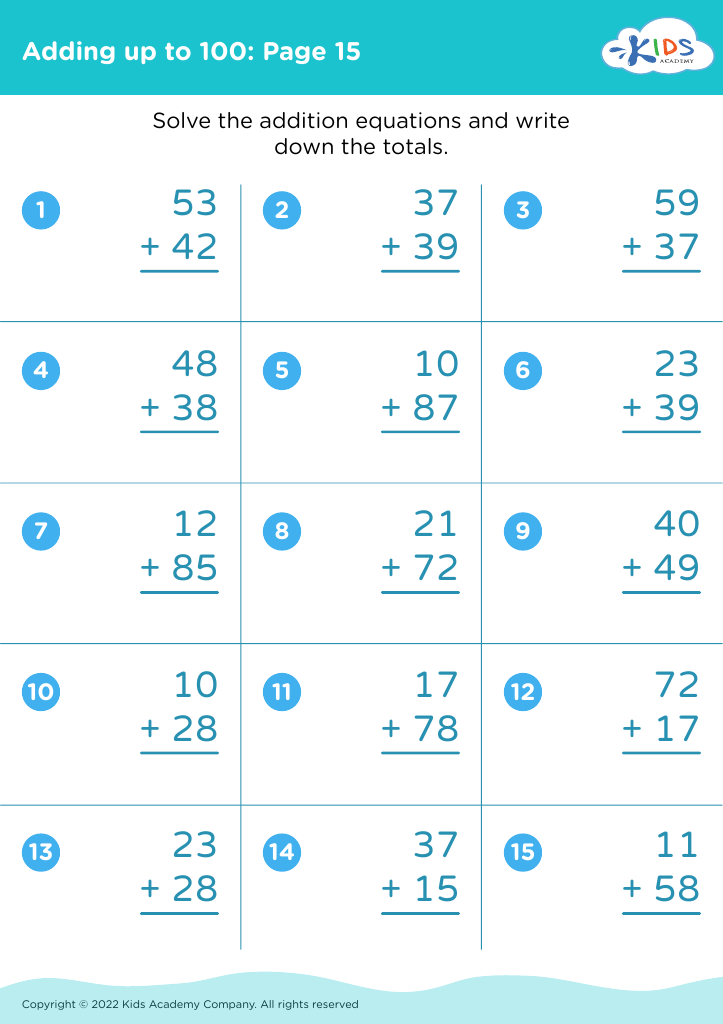
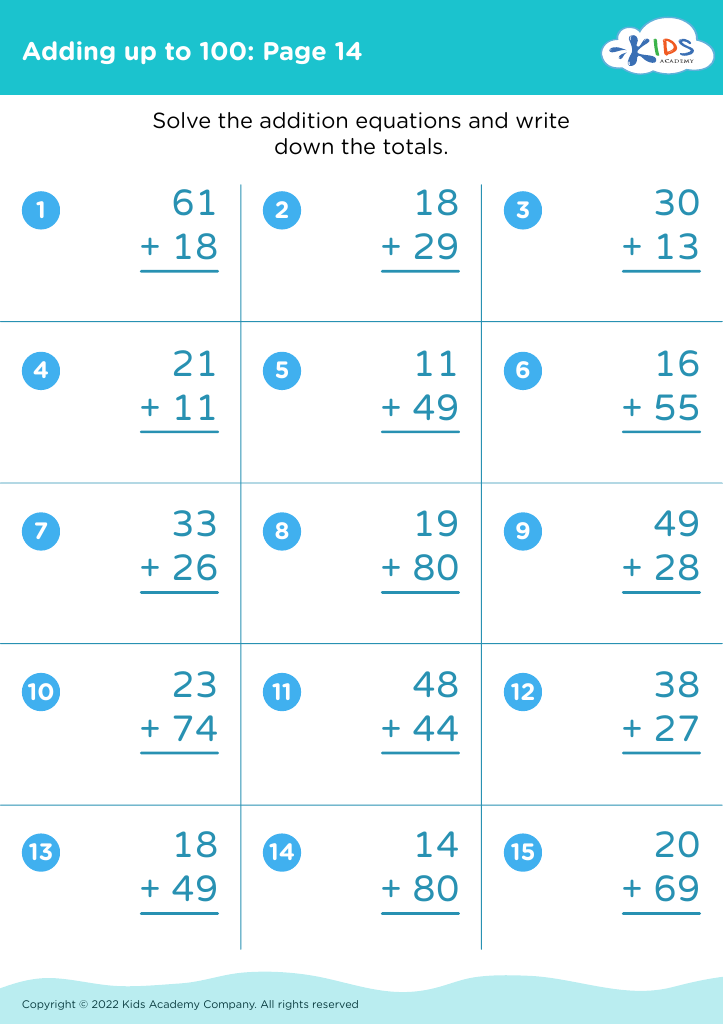


Parents and teachers should prioritize addition practice adding up to 100 for children aged 8-9 because it forms a crucial foundation for their overall mathematical development. Mastery of basic addition is essential for understanding more complex mathematical concepts such as subtraction, multiplication, division, and fractions. At this age, children are developing their number sense, which refers to their ability to understand, relate, and connect numbers. Consistent practice with addition enhances their mental math skills, aiding in quicker and more accurate problem-solving abilities.
Furthermore, proficiency in addition boosts children's confidence in math, making them more likely to engage positively with the subject in future academic years. This foundational skill also plays a significant role in their day-to-day activities, from calculating money during purchases to figuring out time intervals. Regular practice helps solidify these concepts, ensuring that children can apply them in practical, real-world situations.
Lastly, integrating fun and interactive addition practices can help maintain the child's interest and enthusiasm for learning, promoting a lifelong love for mathematics and critical thinking skills. Providing structured and engaging opportunities for addition practice allows both parents and teachers to support children's academic growth and overall cognitive development effectively.