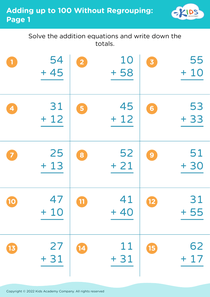
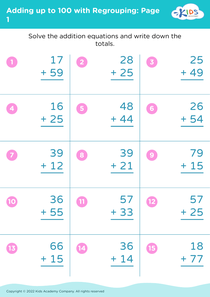
Counting practice Adding up to 100 Misc Worksheets for Ages 8-9
4 filtered results
-
From - To
Discover our engaging "Counting Practice: Adding Up to 100" worksheets designed for children aged 8-9! These diverse and fun activities help young learners strengthen their addition skills while enhancing their understanding of number concepts. With a variety of exercises tailored to build confidence in math, students can practice counting, adding multiple numbers, and solving real-world problems. Ideal for classroom use or at-home learning, these worksheets cater to different learning styles, ensuring every child can master addition up to 100 with ease. Dive into our collection and watch your child's math skills flourish! Perfect for educators and parents alike!
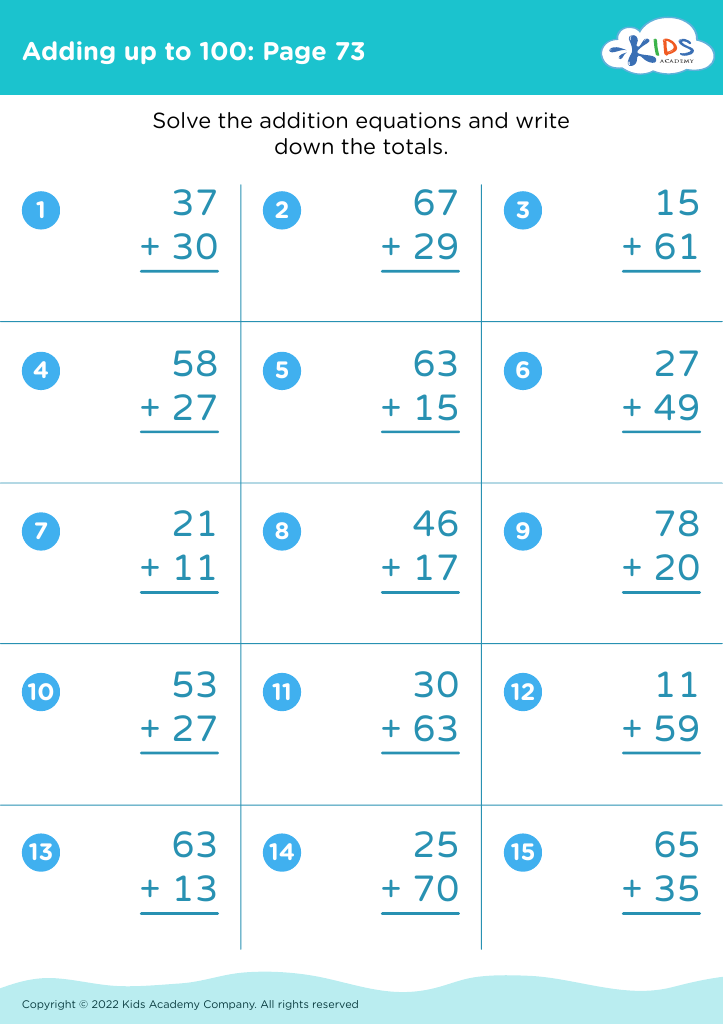
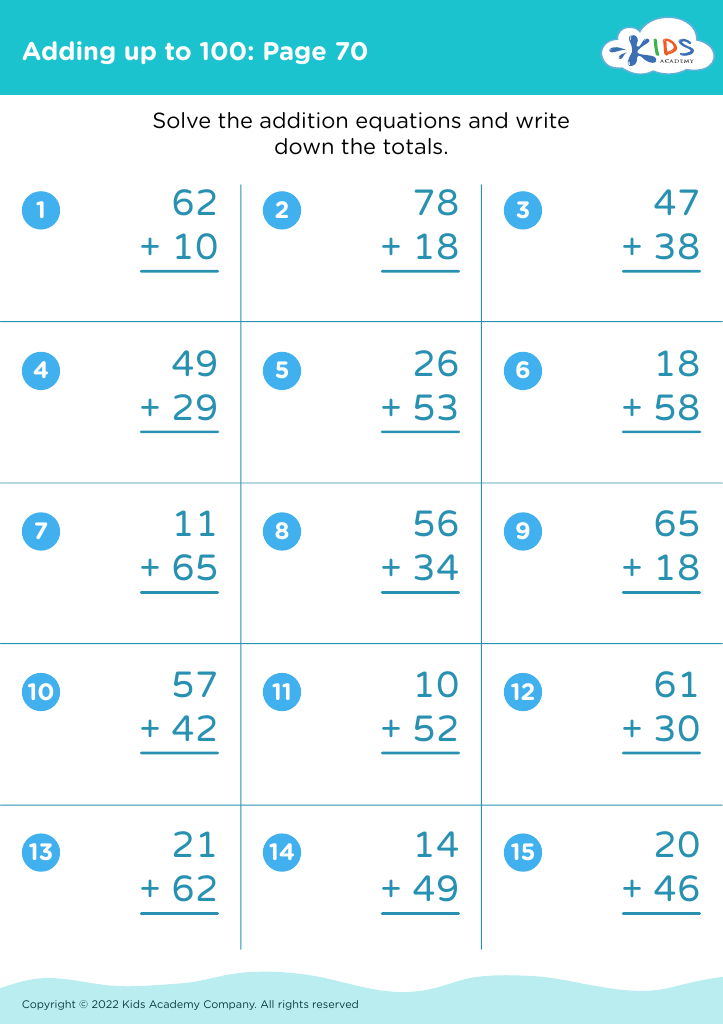
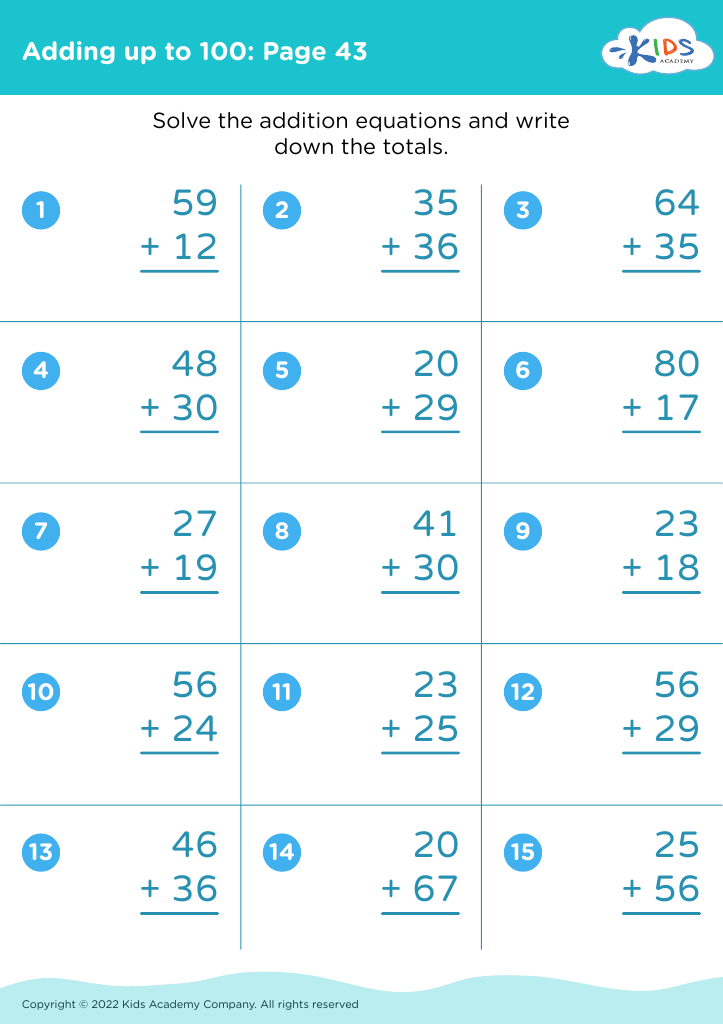
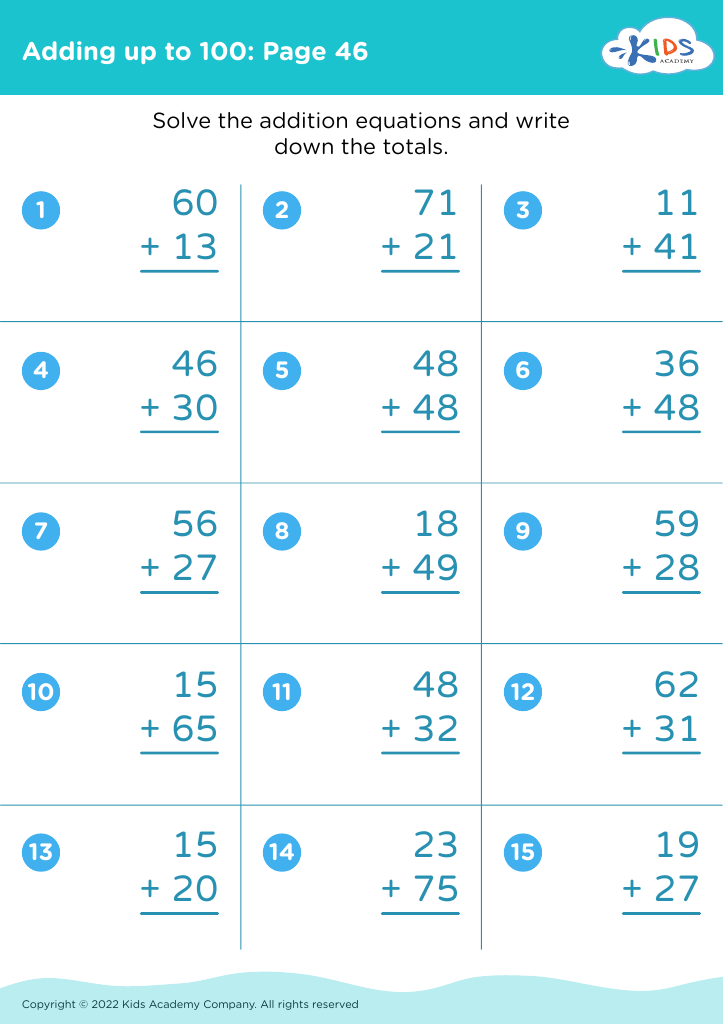


Counting practice and adding up to 100 are essential skills for children aged 8-9, forming a foundation for their future mathematical understanding. At this age, children are transitioning from basic arithmetic to more complex concepts, making it crucial for parents and teachers to prioritize these practices.
First, strong counting skills enhance a child’s ability to solve problems efficiently. Mastering counting and addition lays the groundwork for understanding more advanced topics, such as multiplication, division, and fractions. The early establishment of these skills fosters confidence in their mathematical abilities, promoting a positive attitude towards learning.
Moreover, engaging in counting activities can cultivate critical thinking and problem-solving skills. As children practice, they learn to approach numbers from different angles and develop strategies for tackling mathematical challenges.
Additionally, this practice fuels cognitive development; it encourages memory retention and strengthens attention spans. Interactive counting exercises can create enjoyable learning environments, further engaging students.
Involving parents in this process is also beneficial, as it creates opportunities for family bonding through educational activities. By focusing on counting practice and addition, parents and teachers help build a solid mathematical foundation that supports children's overall academic success and self-efficacy.