Enhance number recognition Adding up to 100 Misc Worksheets for Ages 8-9
5 filtered results
-
From - To
Enhance your child's number recognition skills with our collection of Adding up to 100 Misc Worksheets, designed specifically for ages 8-9. These engaging, well-structured activities help students master addition within 100 while reinforcing their understanding of numerical relationships. Our printable worksheets, available at Kids Academy, feature a variety of exercises that promote critical thinking and problem-solving in a fun, interactive way. Perfect for use at home or in the classroom, these resources offer an enjoyable learning experience while ensuring children develop essential math skills. Help your child build confidence and achieve math proficiency with these fantastic worksheets!
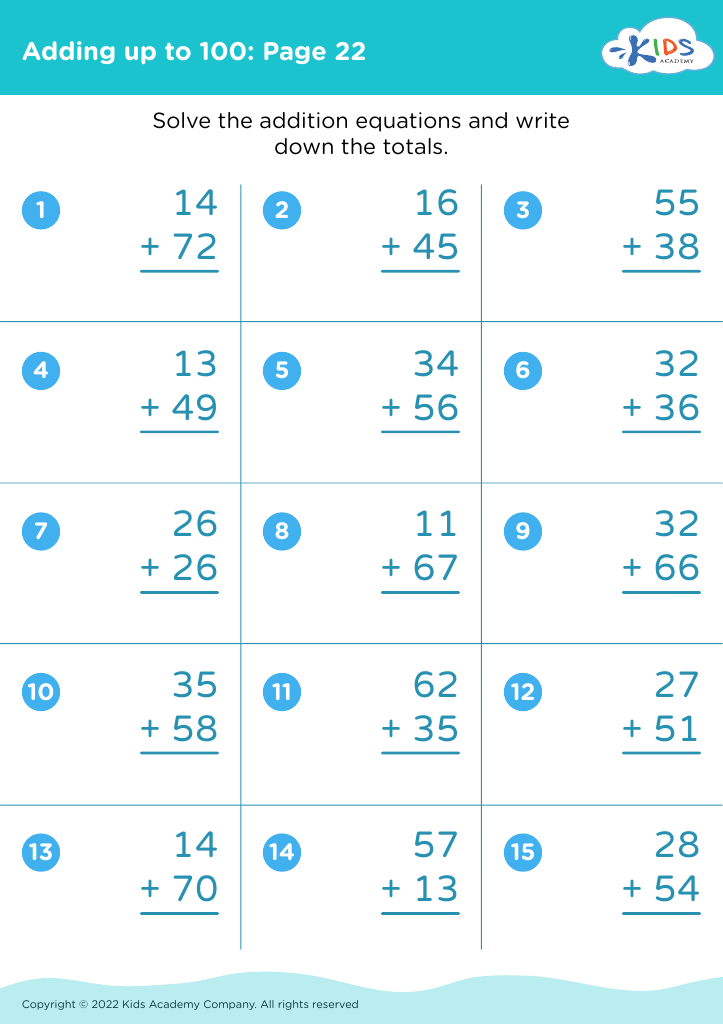
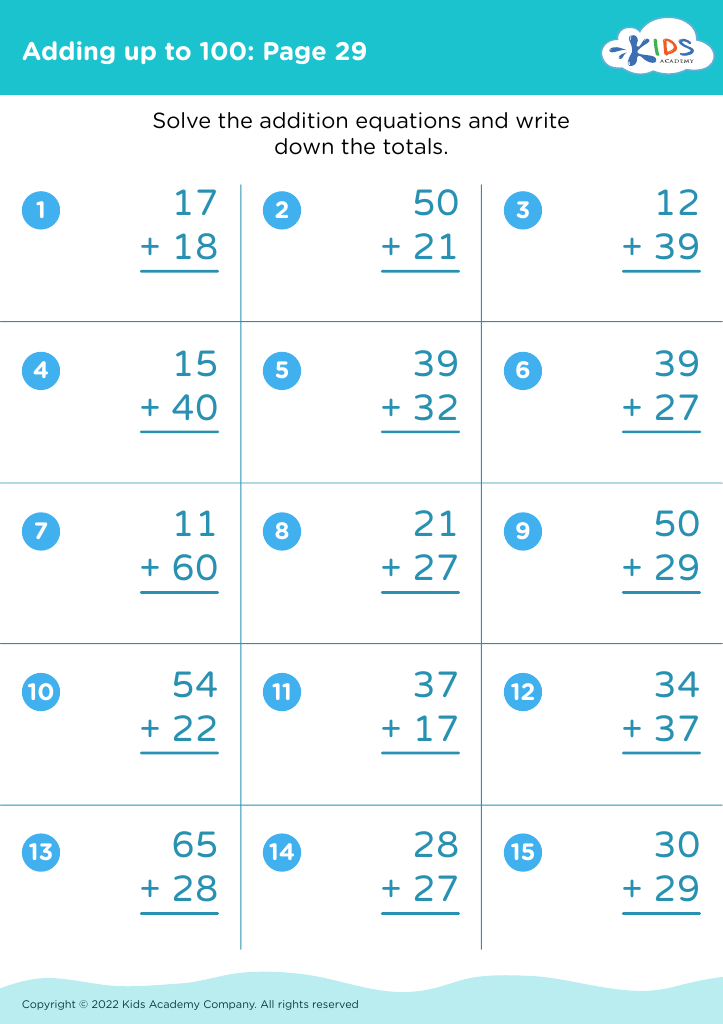
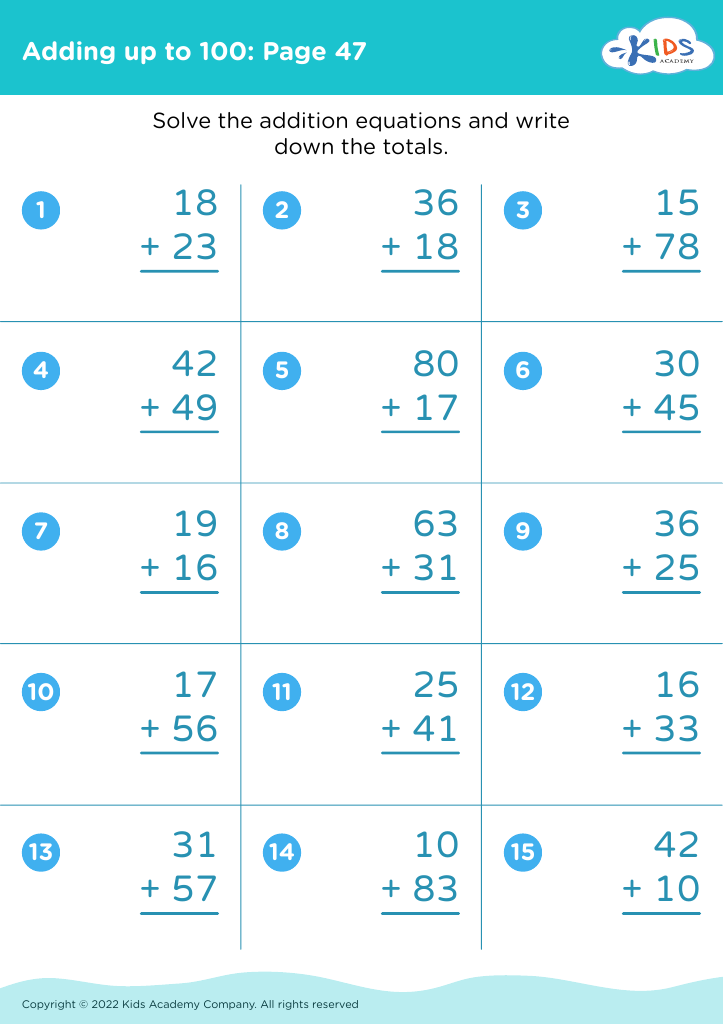
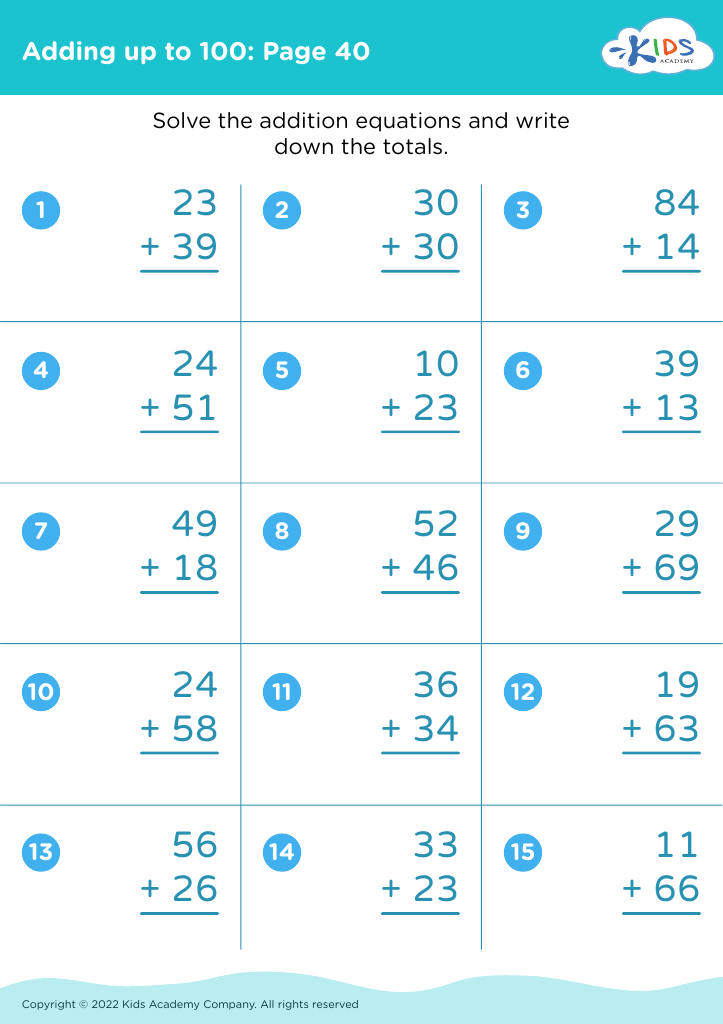
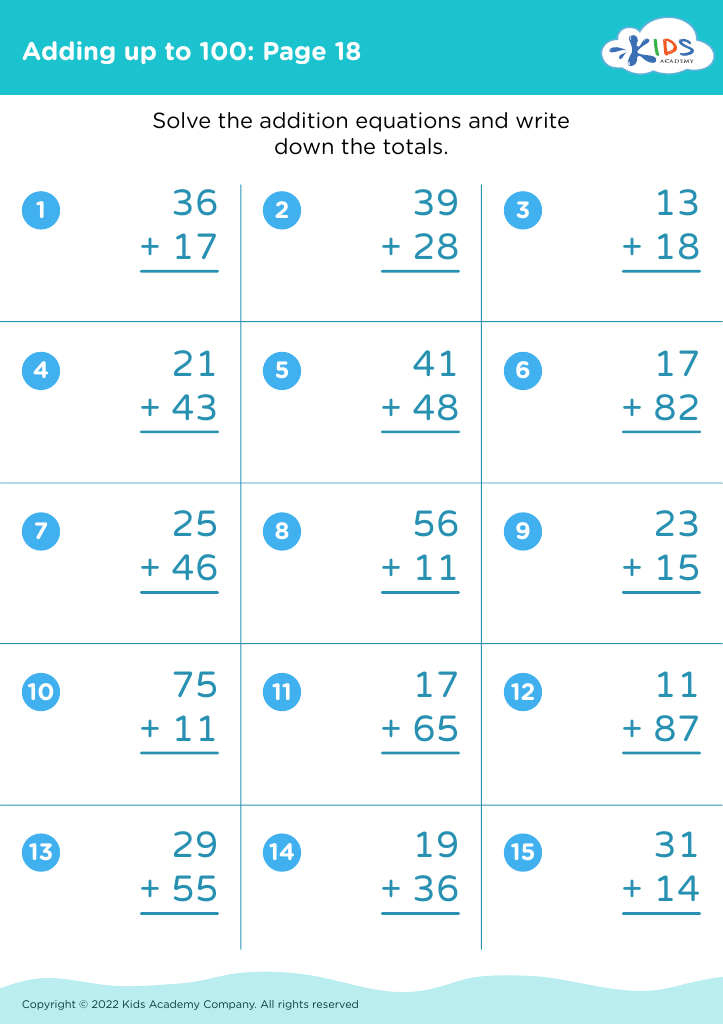


Enhance number recognition and addition skills up to 100 for ages 8-9 is crucial for several key reasons. At this developmental stage, children are transitioning from basic to more advanced math concepts. By mastering number recognition, they build a strong foundation for understanding place value, which is vital for more complex arithmetic operations.
Encouraging these skills early prepares children for future math challenges, fosters confidence, and reduces anxiety about the subject. Number recognition enhances children's ability to participate in daily activities, such as reading clocks and handling money, equipping them with practical life skills.
At the early elementary level, cognitive development is at a prime, and focusing on number recognition and addition helps reinforce neural pathways that support various cognitive skills, including problem-solving and logical reasoning. This also promotes a positive attitude towards learning and academics, as children who experience success in math are more likely to enjoy it and pursue it further.
Teachers and parents play an integral role in this developmental process. Engaging children with interactive, fun activities like games and hands-on exercises makes learning seamless and enjoyable. By prioritizing these foundational skills, adults help set children on a path of academic success and lifelong competence in mathematics.