Problem-Solving Skills Adding up to 100 Misc Worksheets for Ages 8-9
7 filtered results
-
From - To
Enhance your child's math prowess with our Problem-Solving Skills Adding up to 100 Misc Worksheets, designed for ages 8-9. Our engaging collection emphasizes boosting problem-solving abilities through fun and interactive addition exercises. Each worksheet is carefully crafted to challenge young minds and improve their skills in adding up to 100. Perfect for classroom use or extra practice at home, your child will enjoy learning while building their confidence and competence in math. Discover the perfect blend of education and entertainment with these effective and enjoyable resources.
Make problem-solving fun and engaging with our worksheets!
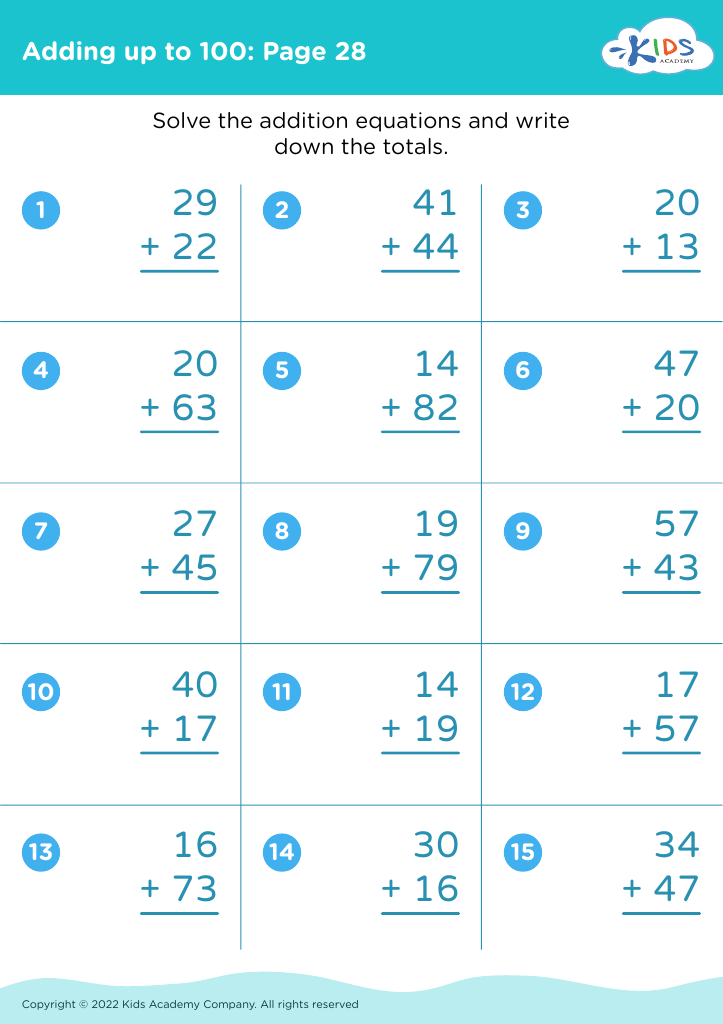
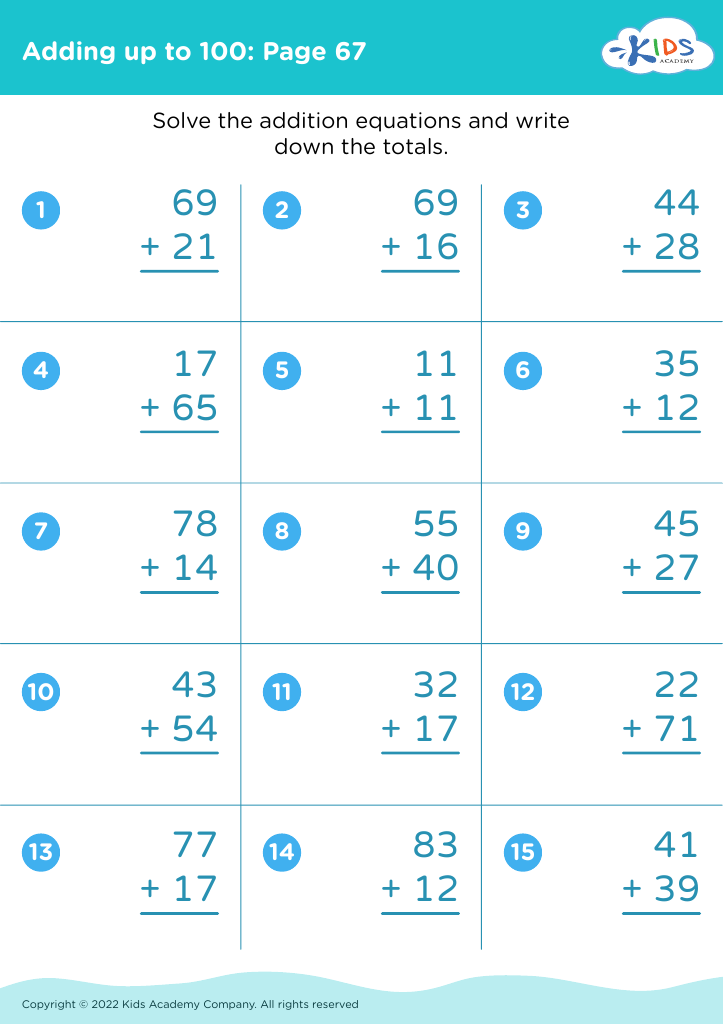
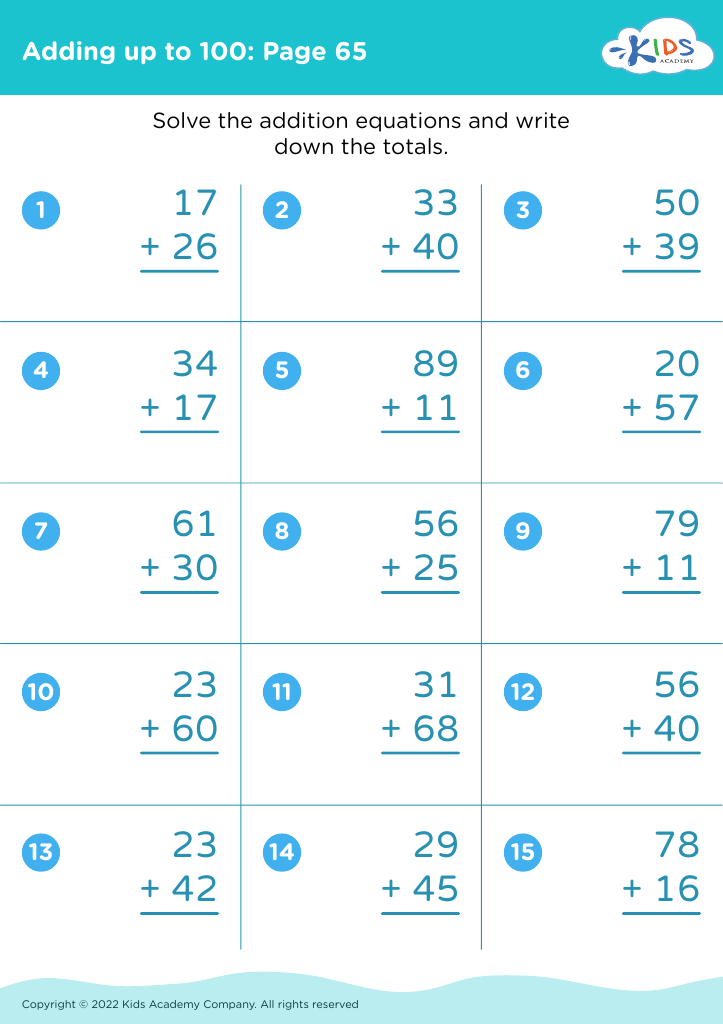
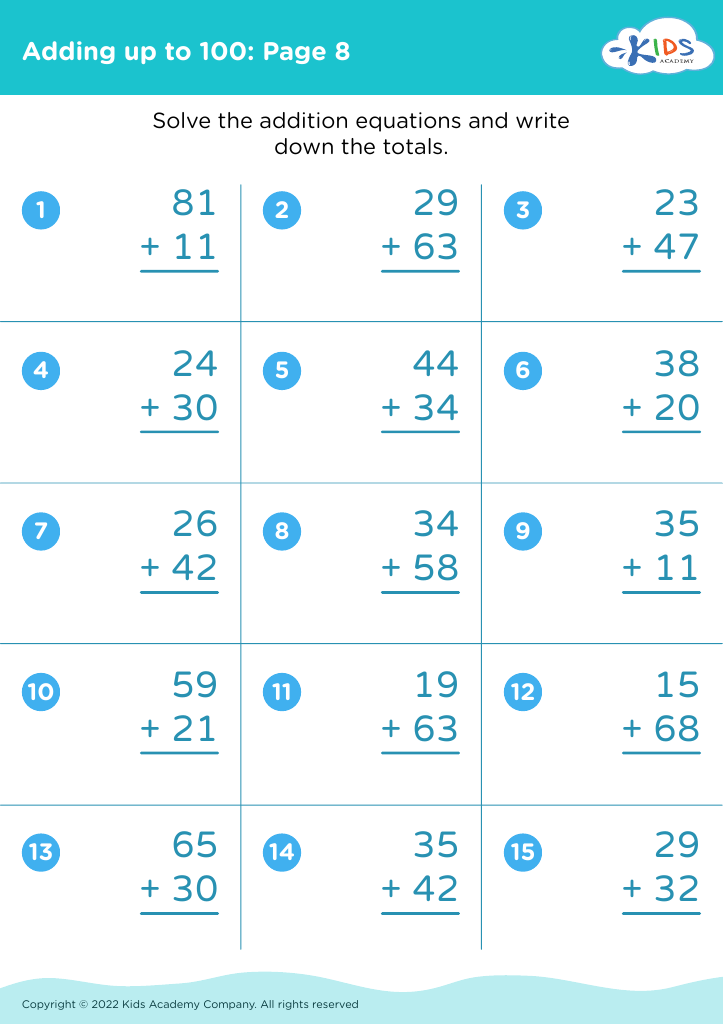
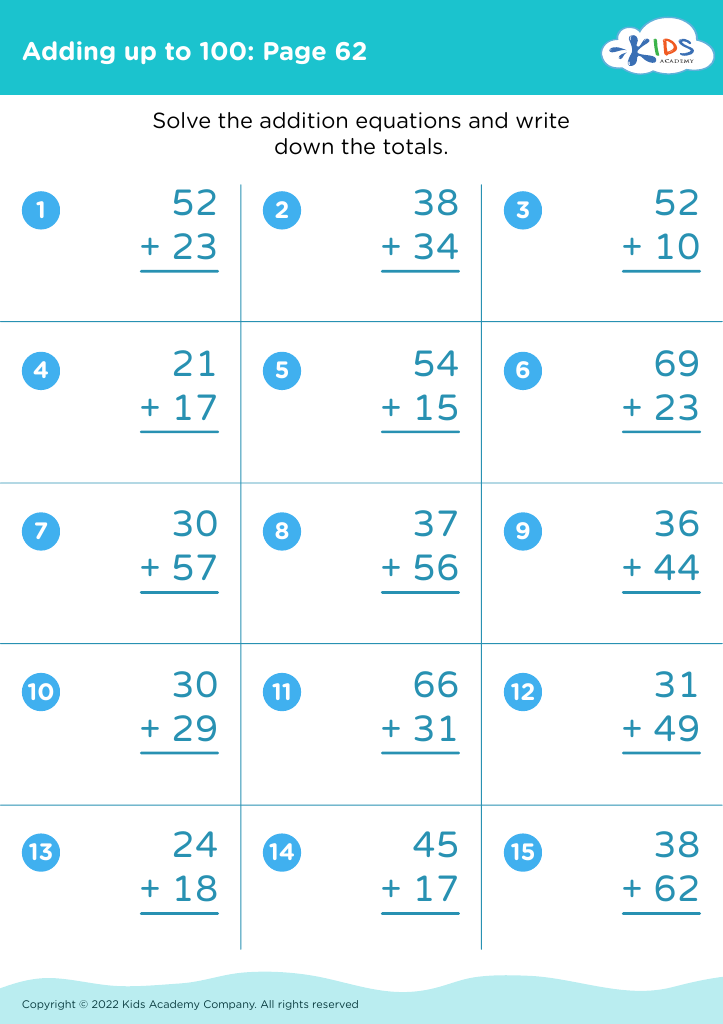
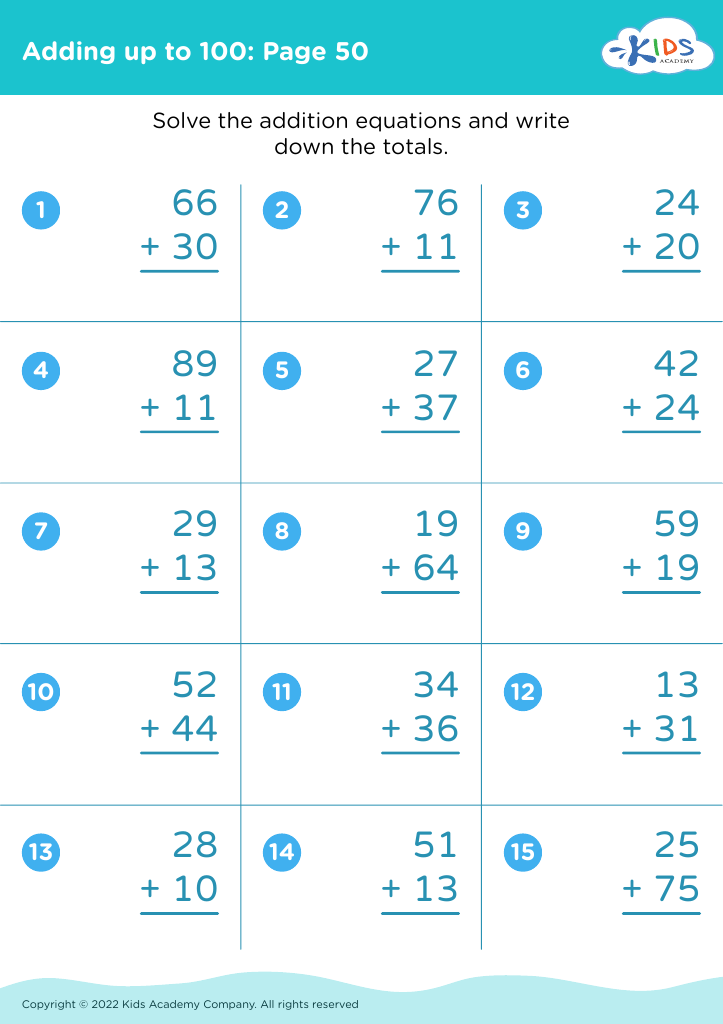
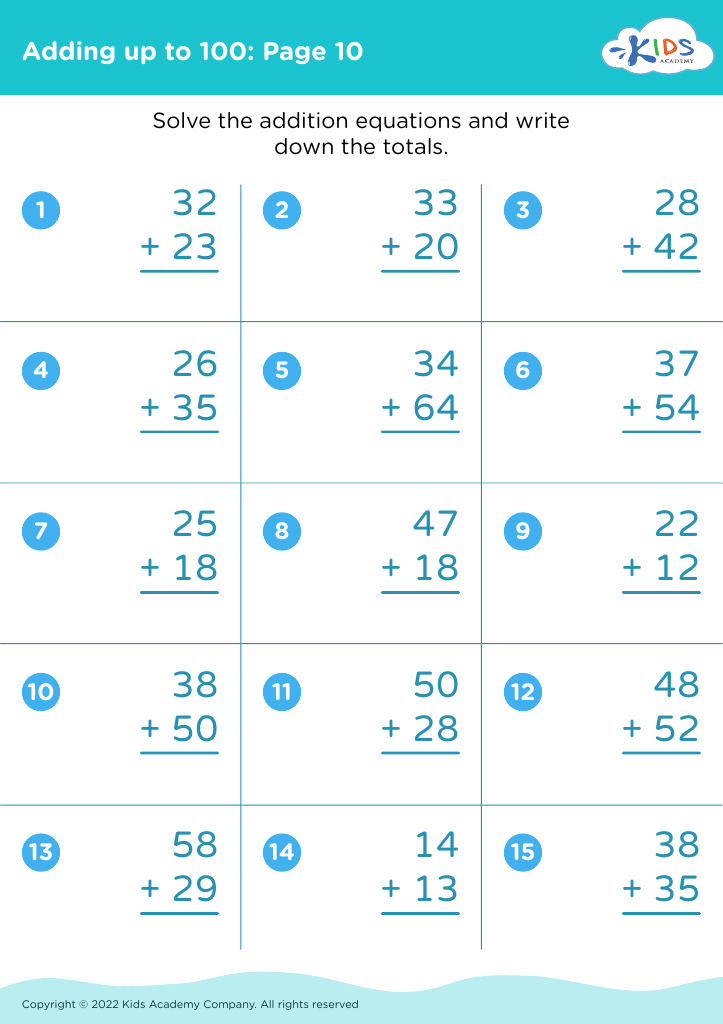


Parents and teachers should prioritize fostering problem-solving skills, especially through exercises like adding up to 100, for children aged 8-9 because these skills are foundational for academic and real-life success. At this developmental stage, children are honing their numerical understanding and logical reasoning. Problem-solving tasks that involve addition up to 100 allow children to practice mental arithmetic, reinforce their grasp of number bonds and the decimal system, and cultivate a sense of numerical relationships.
Moreover, these exercises enhance critical thinking by requiring children to assess various methods to reach the same sum, thus encouraging flexibility in thought and persistence in finding solutions. As children work through these problems, they also develop important life skills such as patience, attention to detail, and confidence in tackling challenges, which are beneficial both in and out of academic settings.
For parents, engaging in problem-solving activities fosters a bonding opportunity and allows them to track their child's progress. For teachers, it provides a hands-on assessment tool to gauge a student’s grasp of core math concepts, guiding subsequent instruction tailored to each child’s needs. Overall, instilling robust problem-solving skills early on lays the groundwork for more advanced topics and bolsters a child’s ability to navigate complex problems in everyday life.