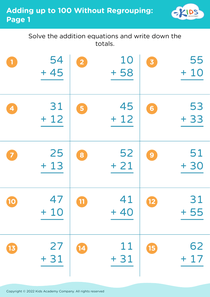
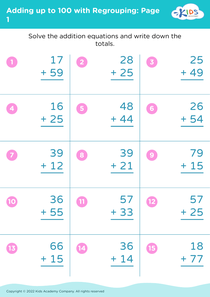
Recognizing shapes Adding up to 100 Misc Worksheets for Ages 8-9
4 filtered results
-
From - To
Discover engaging and educational worksheets designed for children aged 8-9, focusing on two essential math skills: recognizing shapes and adding up to 100. These printable activities offer a fun and interactive way to strengthen spatial understanding and arithmetic abilities. Each worksheet is thoughtfully crafted to cater to varied learning styles, ensuring all students grasp and enjoy the concepts. Perfect for educators and parents seeking to support their child's math journey, these worksheets will turn learning into a delightful experience, paving the way for academic success and confidence in young mathematicians.
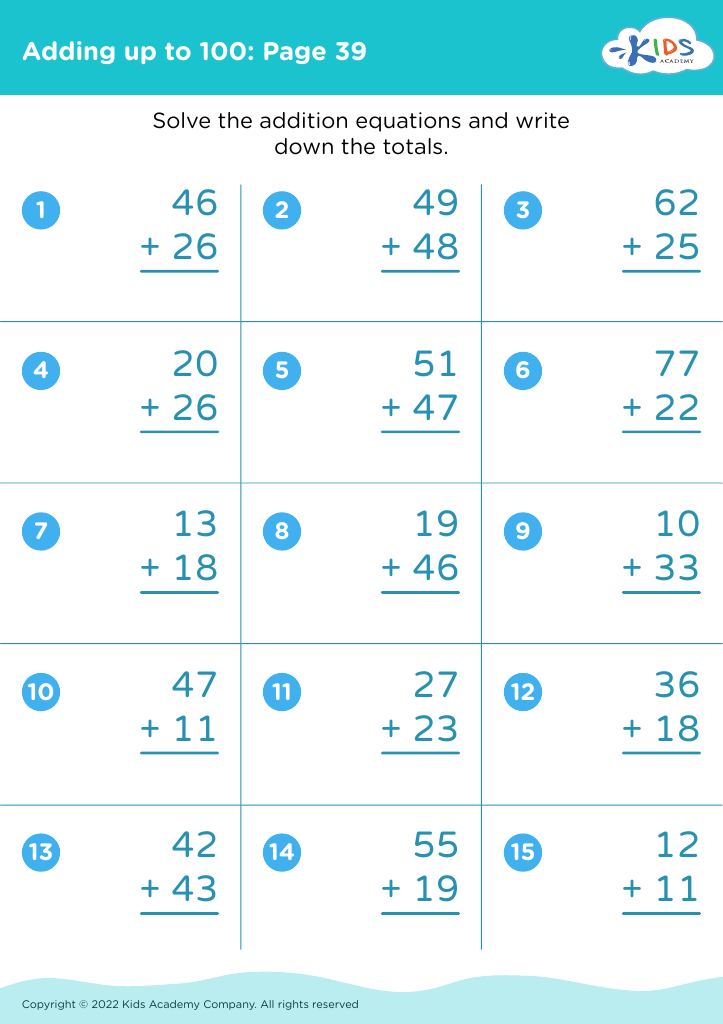
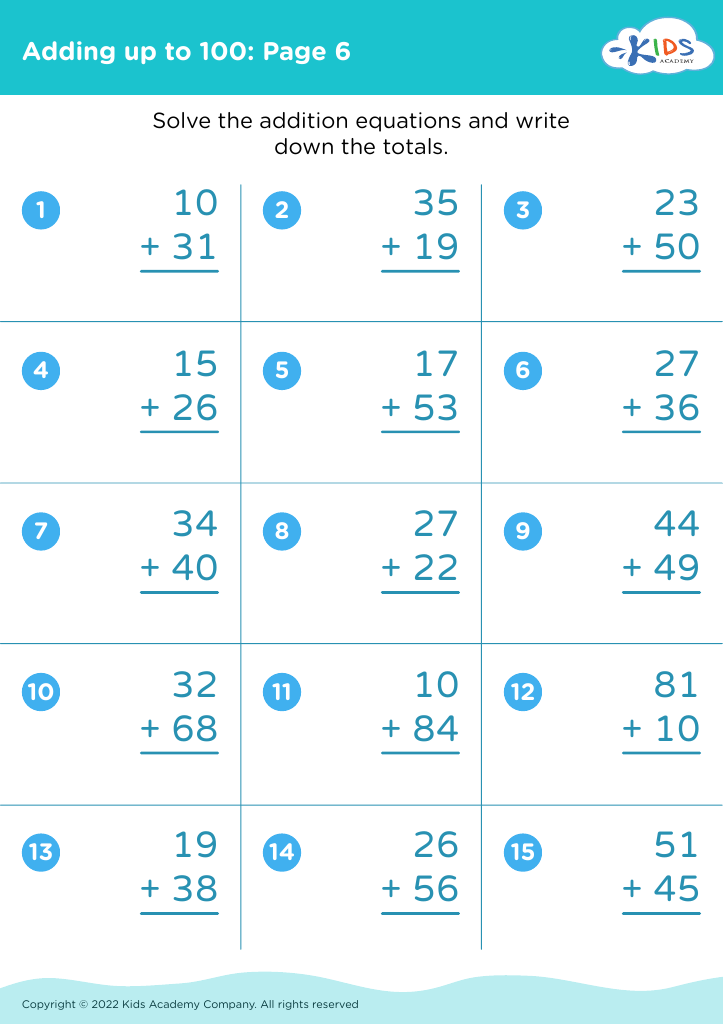
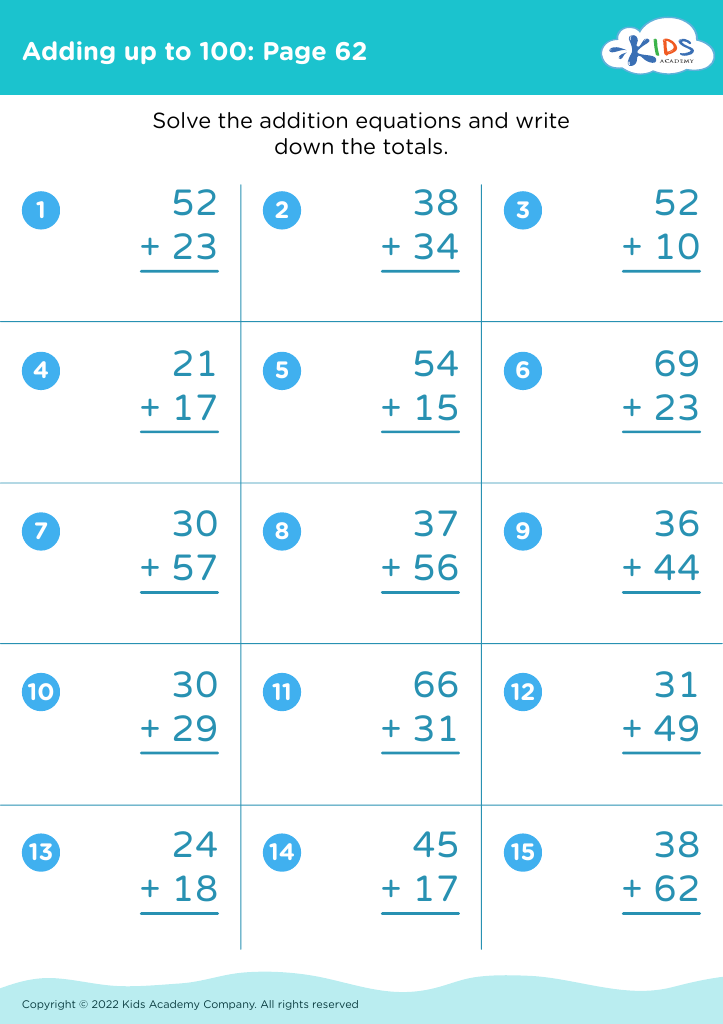
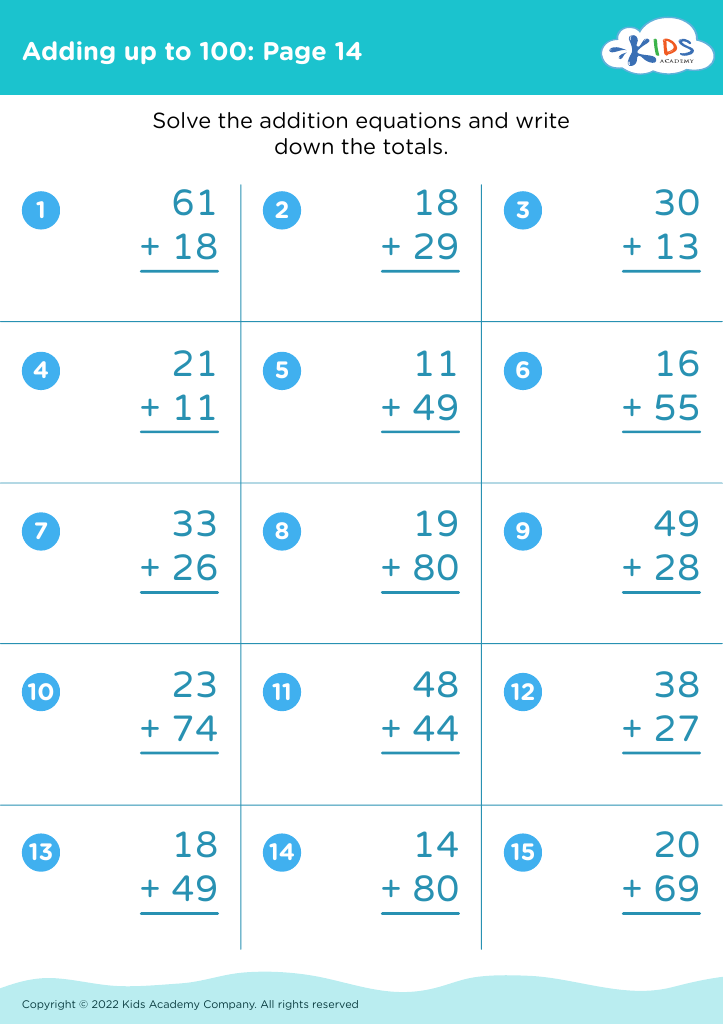


Recognizing shapes, adding up to 100, and engaging in miscellaneous educational activities are pivotal for children aged 8-9 as these skills lay the foundation for future academic success and cognitive development.
First, recognizing shapes is more than just distinguishing circles from squares; it's about developing spatial awareness and reasoning skills. These abilities are crucial for subjects like geometry, physics, and even art. Understanding shapes also aids in problem-solving and interpreting real-world environments, fostering a child's ability to think critically and visualize concepts.
In addition, adding up to 100 is a fundamental math skill that sets the groundwork for more complex arithmetic and mathematical operations. This capability ensures that children grasp the basics of number operations, such as addition, subtraction, multiplication, and division. Mastery of basic math facts leads to greater confidence in handling more challenging math problems and is essential for everyday tasks, such as money management and time-telling.
Engaging in miscellaneous educational activities around these concepts further enriches children's learning experiences. Activities may include puzzles, games, and practical tasks that make learning fun and engaging, encouraging curiosity and a love for learning. They also help develop fine motor skills, attention to detail, and collaboration when carried out in group settings. In essence, fostering these skills prepares children not only for academic achievement but for practical, everyday problem-solving scenarios.