Understand fractions Adding up to 100 Misc Worksheets for Ages 8-9
3 filtered results
-
From - To
Explore our comprehensive "Understand Fractions Adding Up to 100" worksheets designed specifically for children aged 8-9. These engaging resources help young learners grasp essential fraction concepts, improving their math skills through interactive practice. The worksheets include various activities, enabling students to manipulate and visualize fractions in relatable contexts, fostering a deeper understanding. With clear instructions and fun visuals, your students will find joy in mastering fractions and connecting them to the number 100. Boost their confidence in math while building a solid foundation in fraction comprehension with our thoughtfully curated materials! Perfect for classrooms or at-home learning.
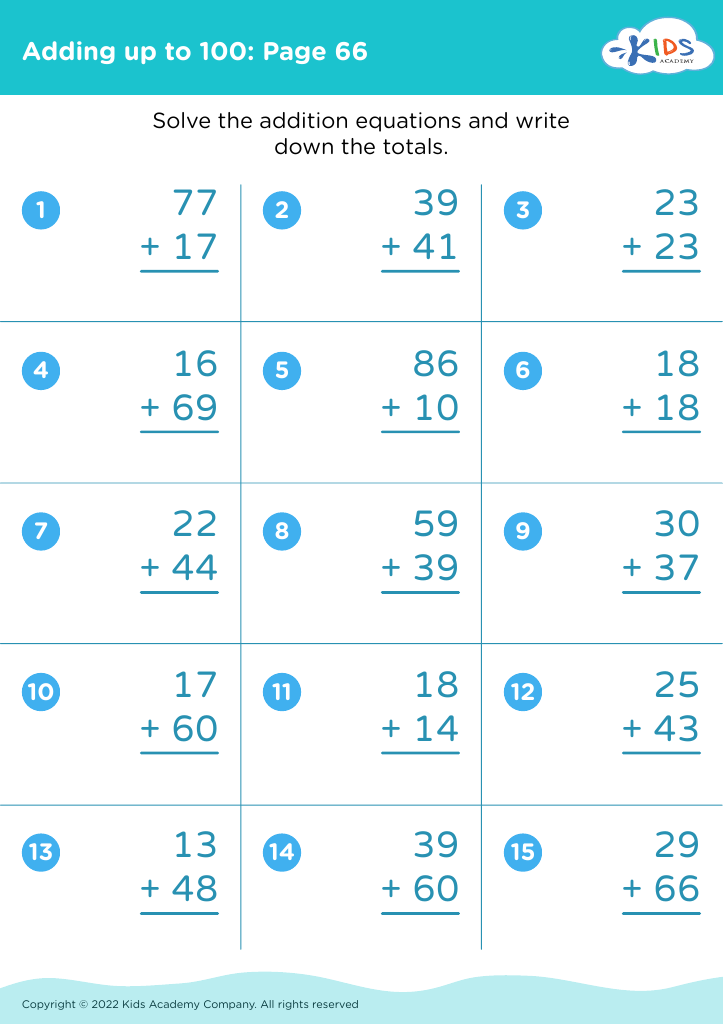
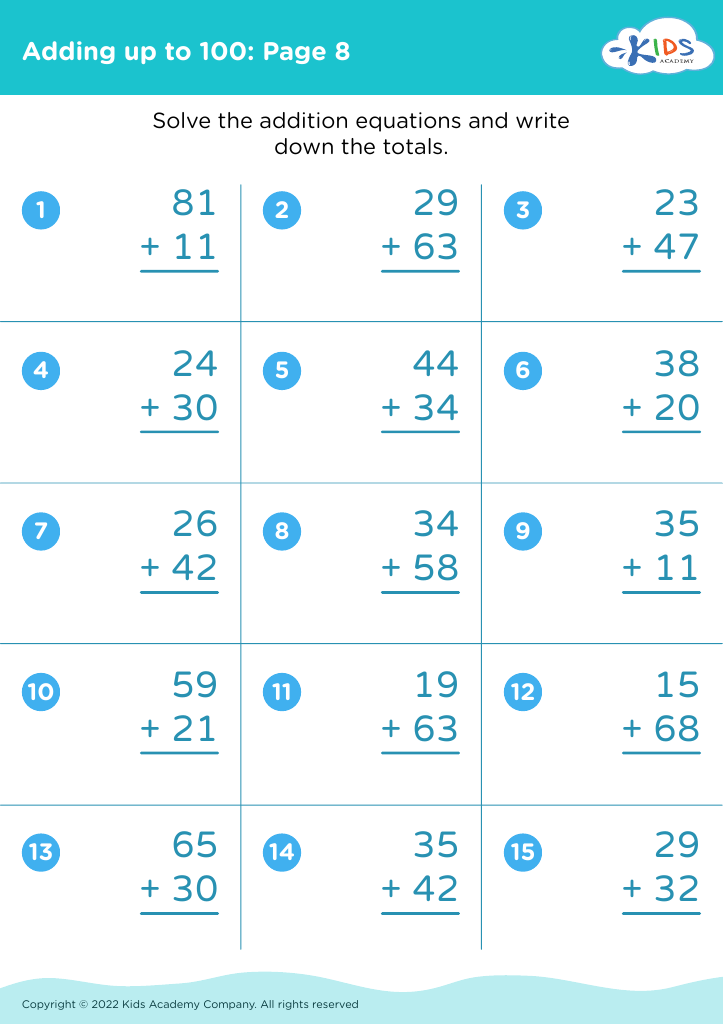
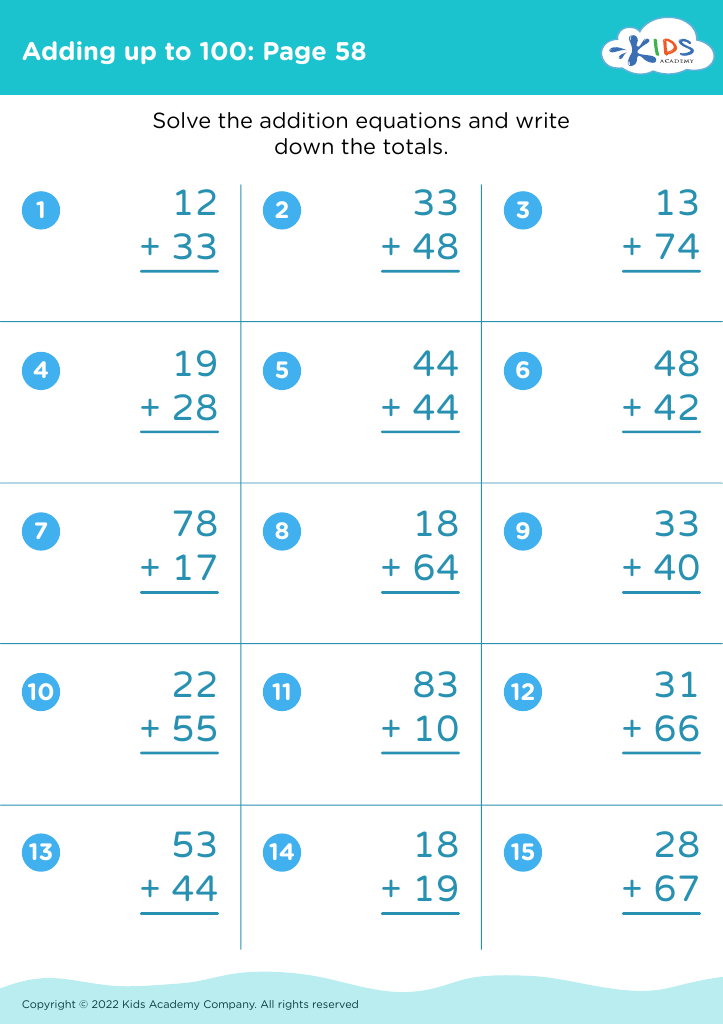


Understanding fractions and their role in adding up to 100 is crucial for children aged 8-9, as it lays the foundation for more complex mathematical concepts in the future. At this age, students are developing critical thinking skills, and grasping the concept of fractions helps enhance their problem-solving abilities. Recognizing how fractions fit into whole numbers aids in their understanding of division and percentages, both of which are important in everyday life, especially when making decisions involving money and measurements.
Moreover, mastering fractions helps to foster a sense of proportional reasoning, essential for tasks ranging from cooking to budgeting. Engaging with fractions in practical situations can cultivate a child's confidence and comfort with math, reducing anxiety around the subject. Parents and teachers should care about this area of learning because a strong grasp of fractions not only supports academic success but also nurtures a lifelong appreciation for mathematics. Furthermore, children who understand fractions are better equipped to tackle real-world challenges, making them more competent in navigating a range of life situations that require mathematical thinking. By focusing on this topic, adults play a crucial role in empowering children's growth both in and out of the classroom.