Understanding fractions Adding up to 100 Misc Worksheets for Ages 8-9
16 filtered results
-
From - To
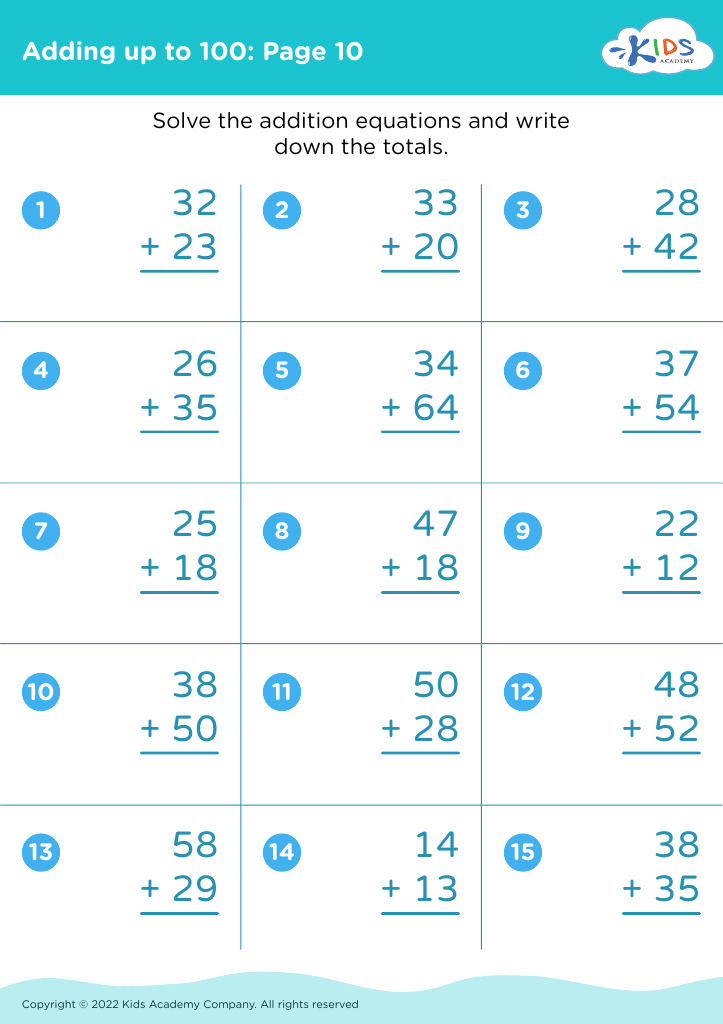
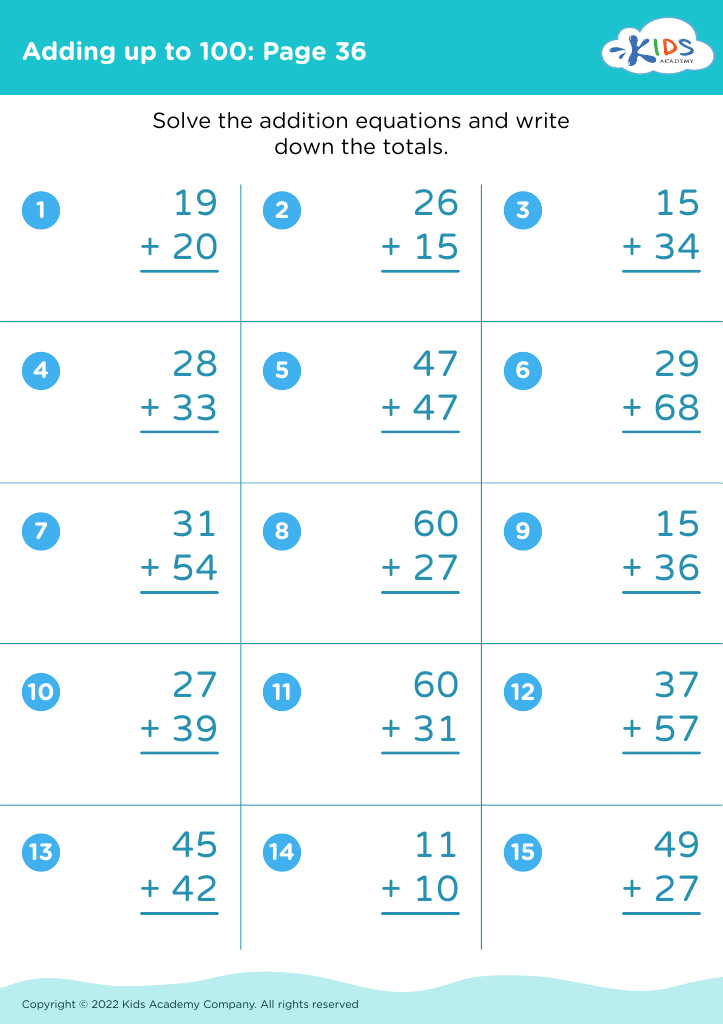
Unlock the world of fractions with our "Understanding Fractions Adding Up to 100" worksheets, specially designed for ages 8-9! These dynamic resources provide a engaging way for young learners to grasp the concept of fractions and their relationship to whole numbers. Our easy-to-follow worksheets include diverse exercises that help children practice adding fractions with a focus on reaching a sum of 100. Each activity is tailored to enhance problem-solving skills and boost confidence in mathematics. Perfect for home or classroom use, these worksheets make learning fractions fun and interactive. Encourage your child's mathematical growth today!
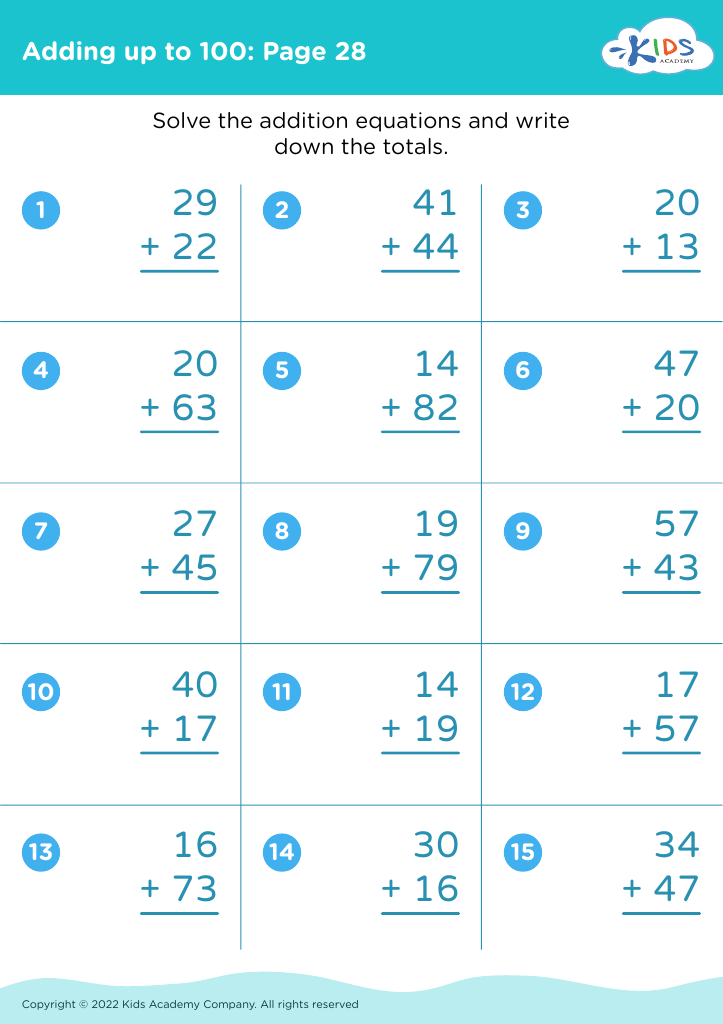
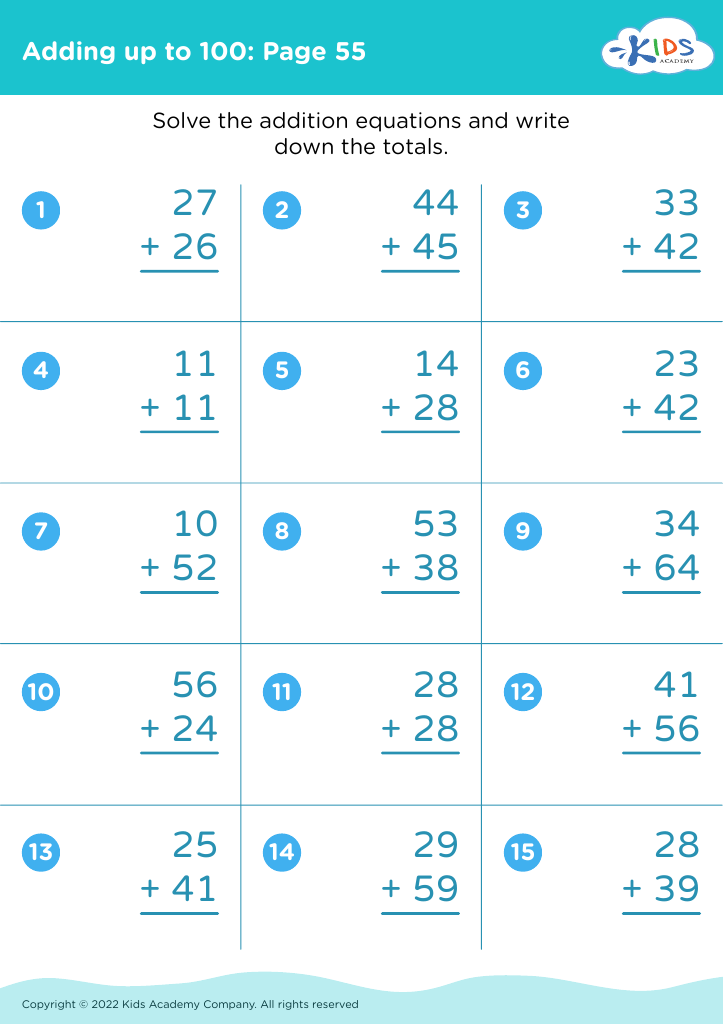
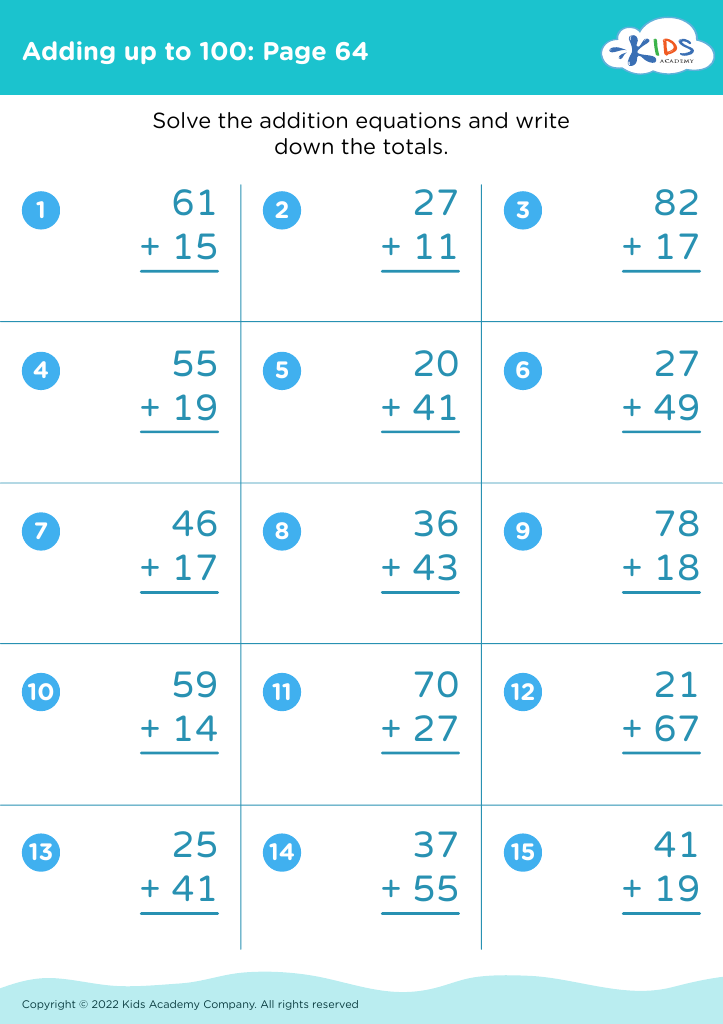
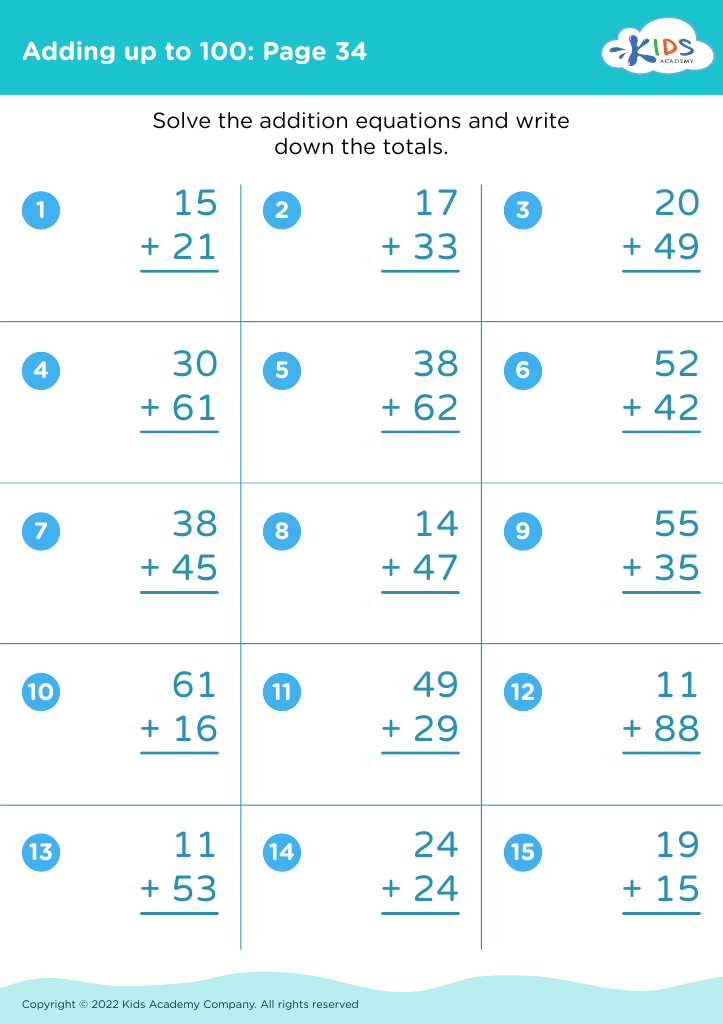
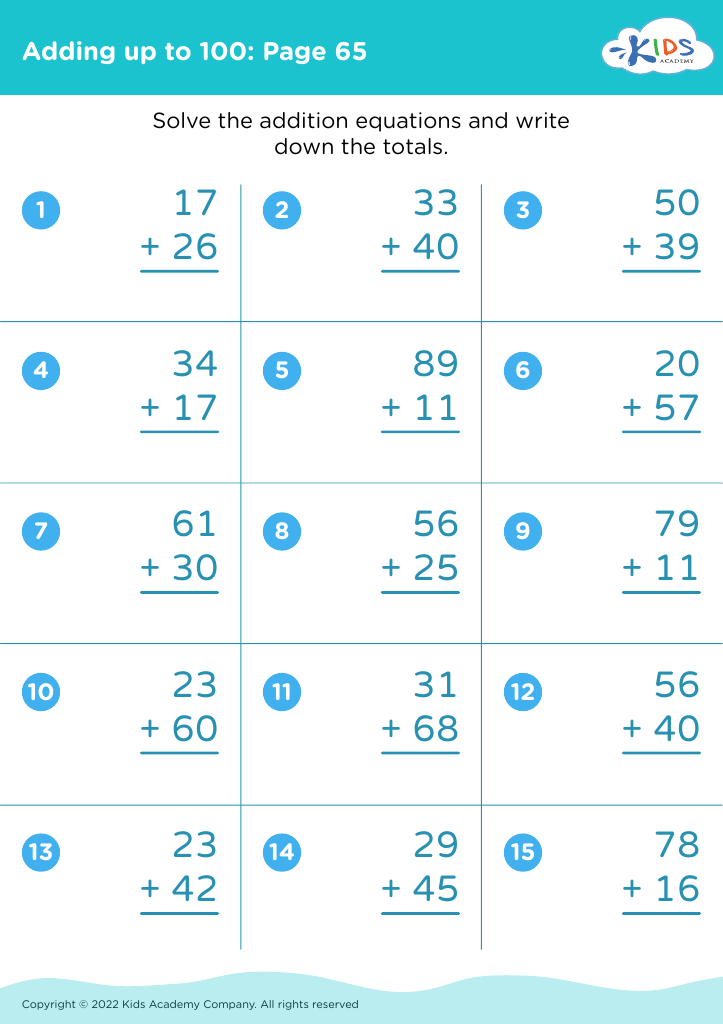
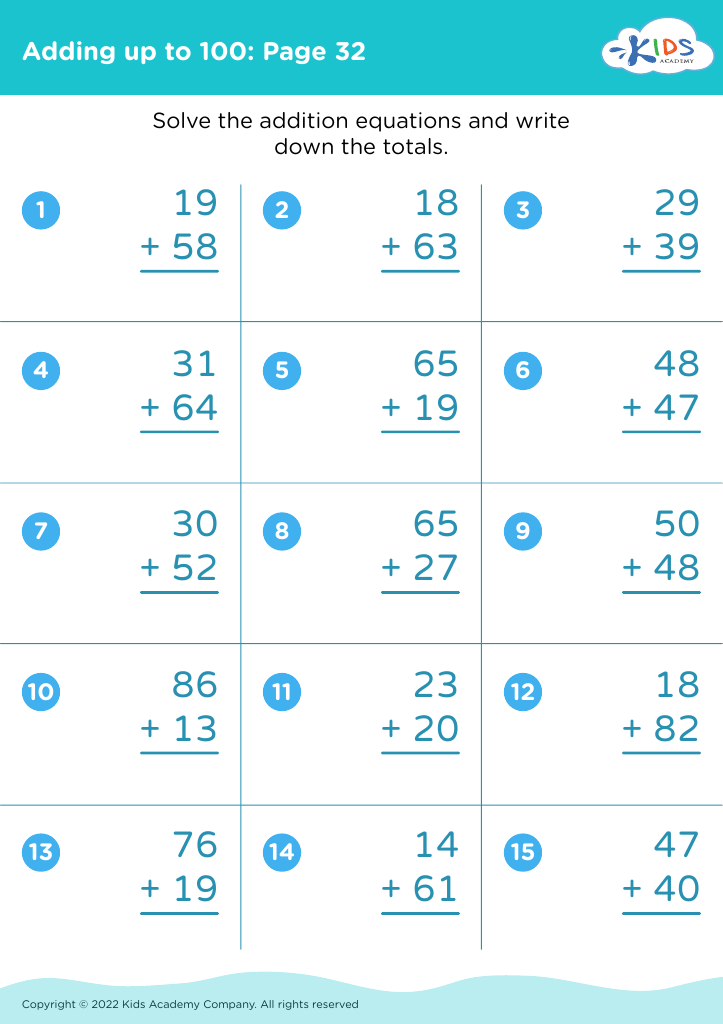
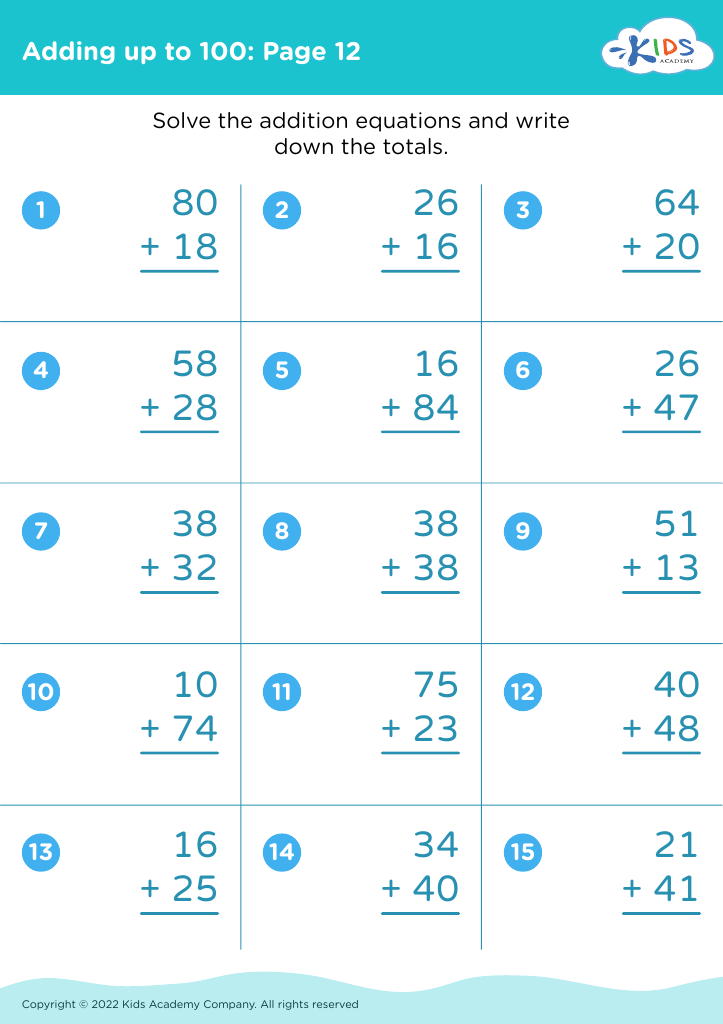
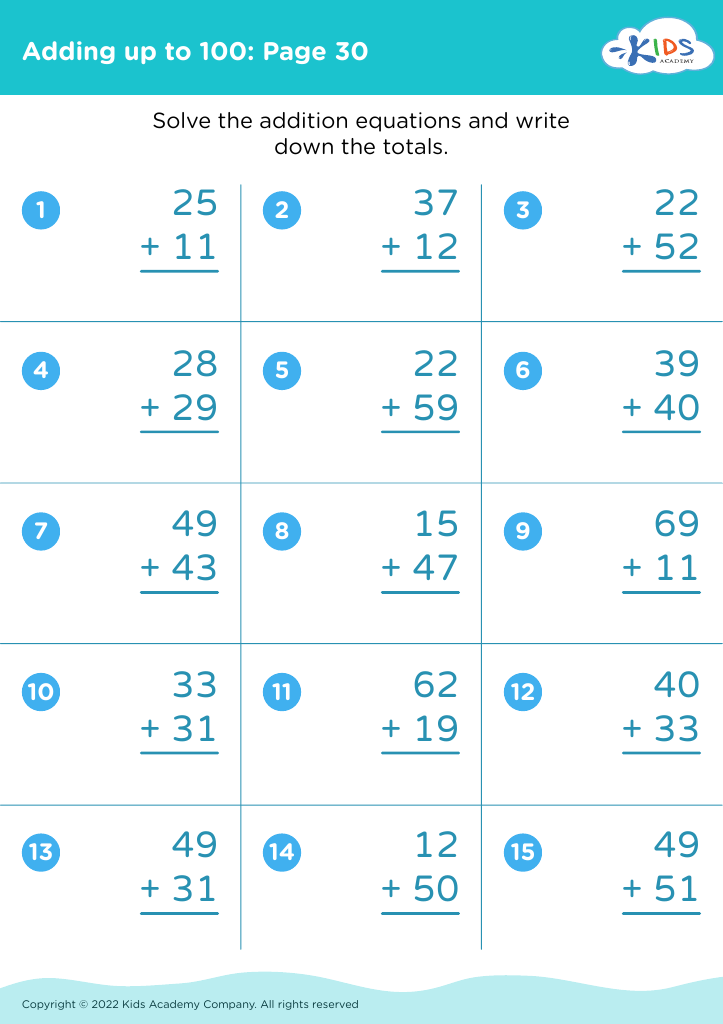
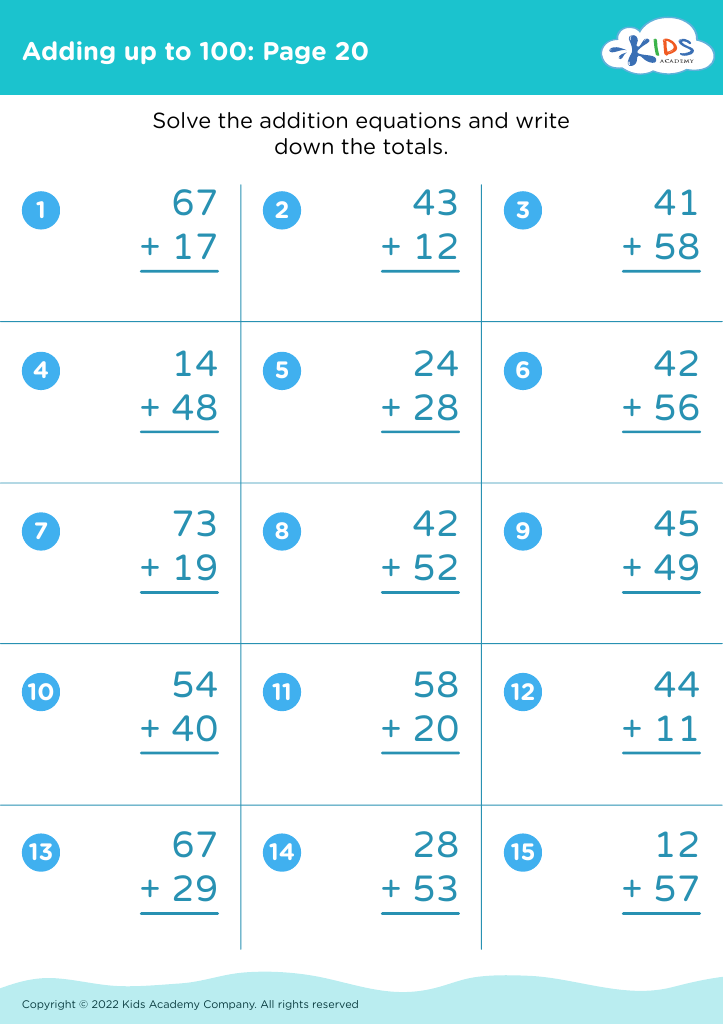
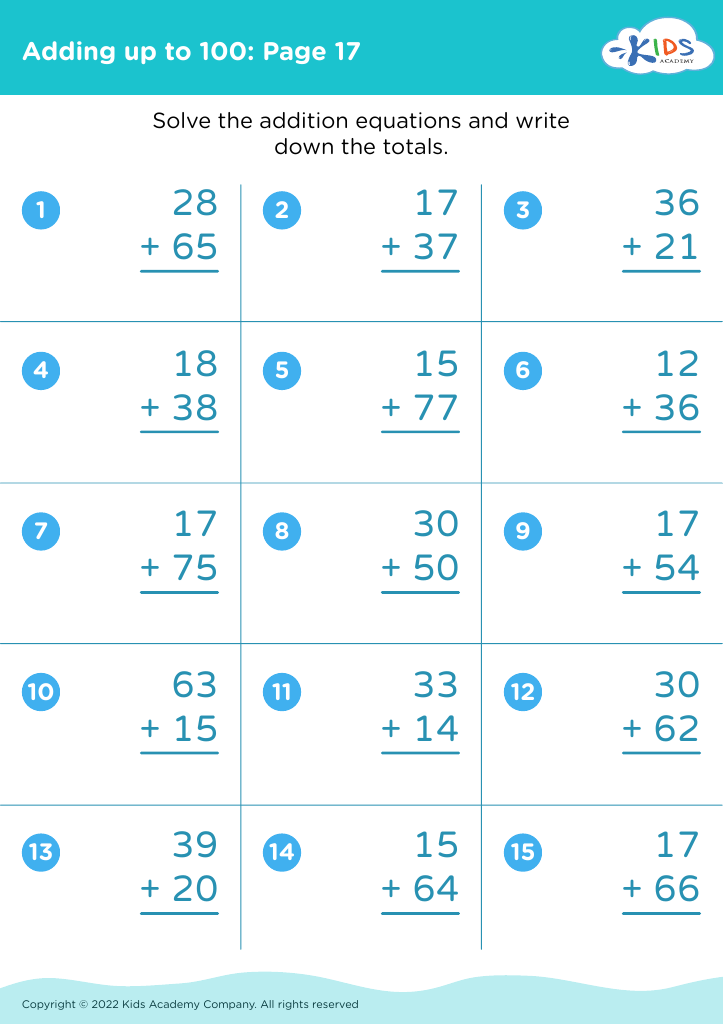
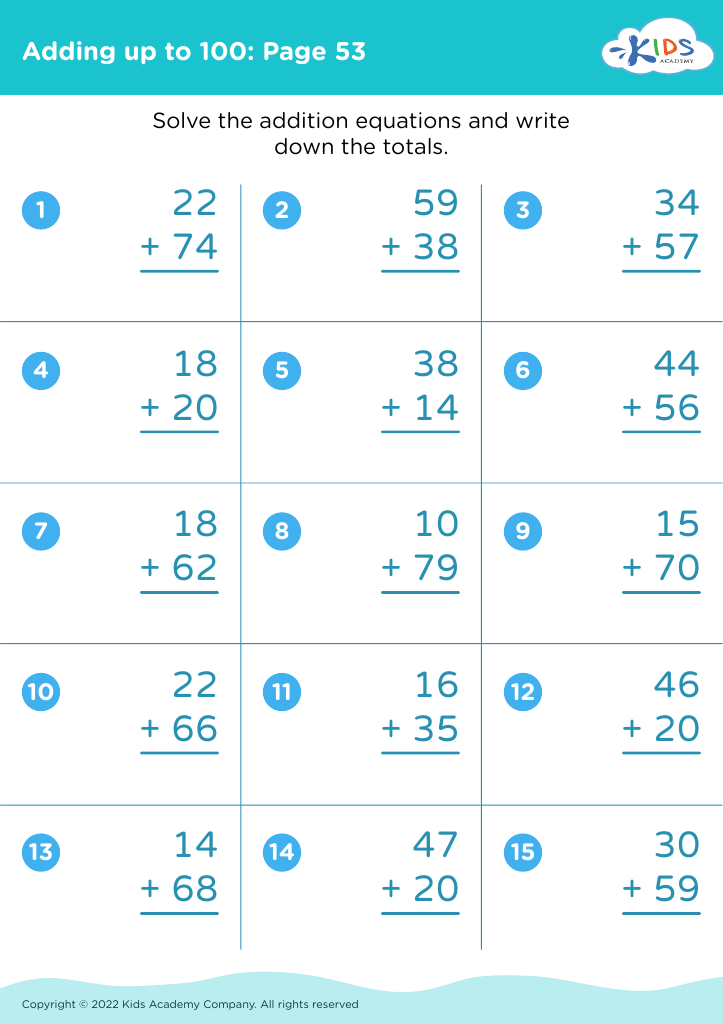
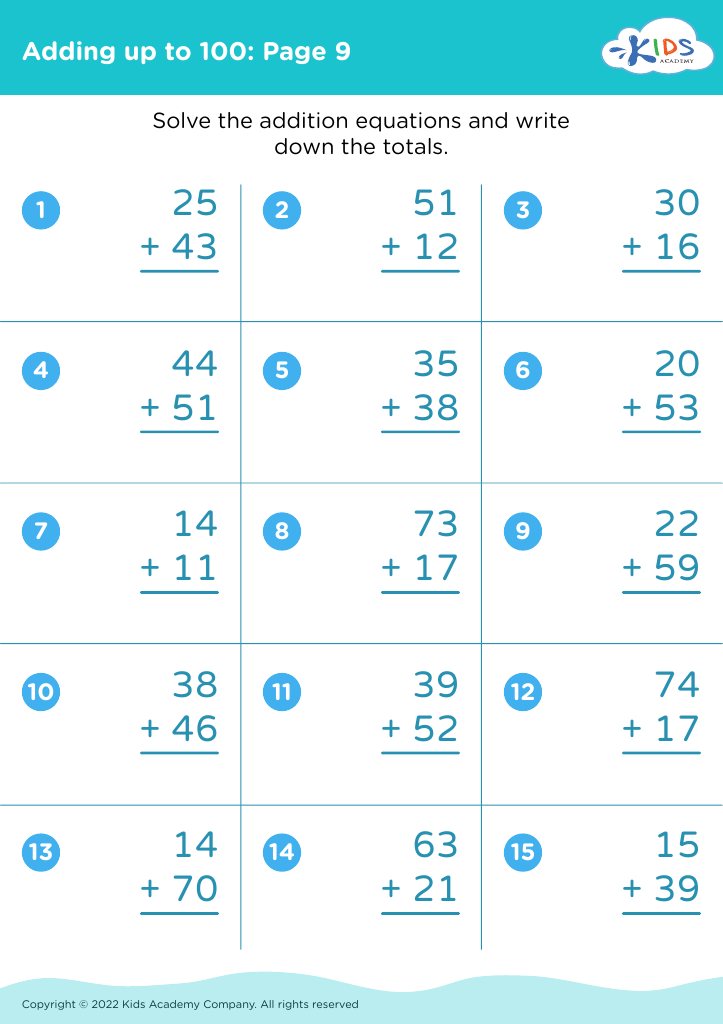
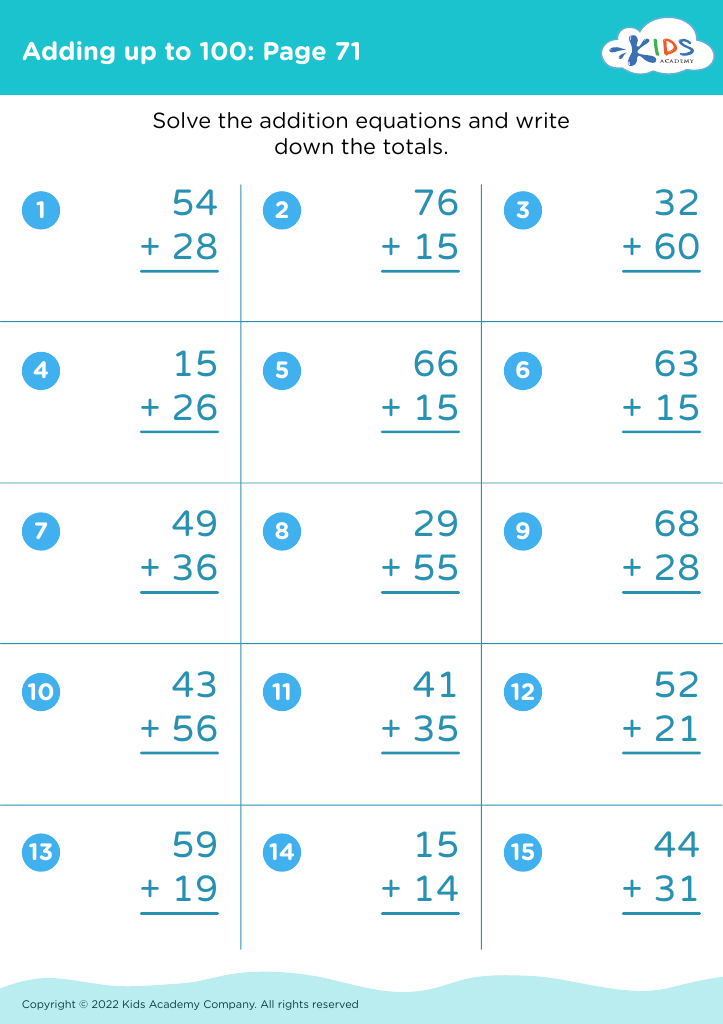
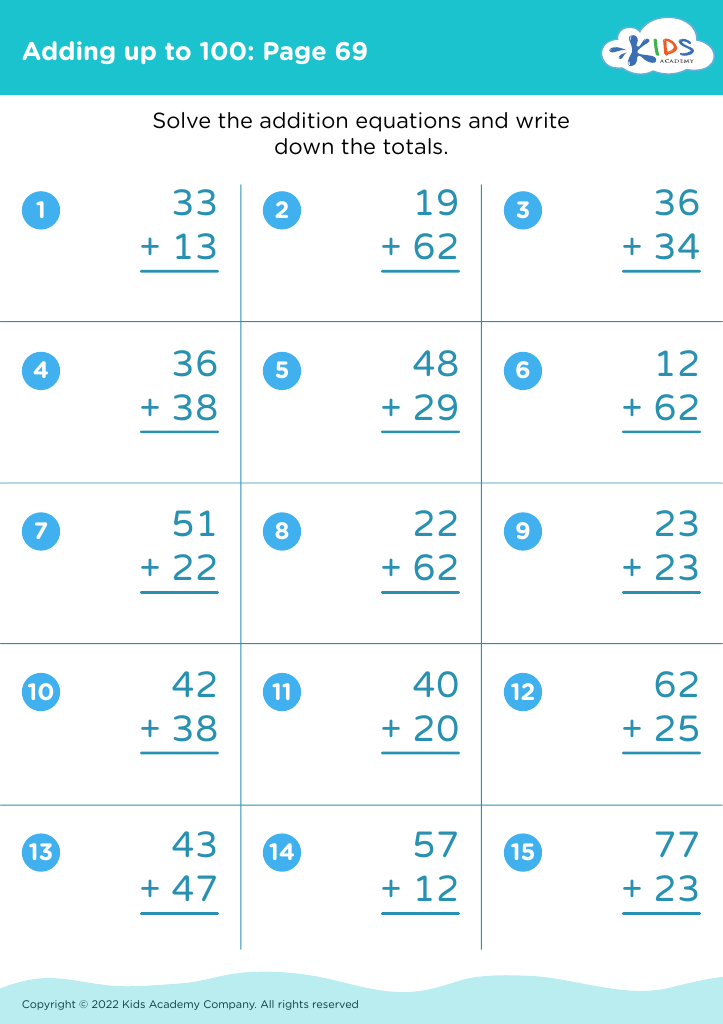


Understanding fractions is a fundamental mathematical skill that significantly impacts students' overall numeracy and problem-solving abilities. For children aged 8-9, grasping fractions is essential as it lays the groundwork for more advanced math concepts, such as ratios, proportions, and algebra. At this developmental stage, students begin comparing and manipulating fractions, an important step in enhancing their critical thinking and reasoning skills.
Moreover, the concept of adding fractions to 100 is not just an abstract number exercise; it enriches young learners' understanding of part-whole relationships. When children learn to work with fractions that sum to 100, they develop an understanding of how fractions fit together and how to make calculations relevant to real-life scenarios, including measurement, cooking, and budgeting.
For parents and teachers, fostering a strong foundation in fractions equips children with confidence in mathematics, which can lead to better academic performance and a positive attitude towards learning. As children navigate through everyday activities, understanding fractions promotes their ability to analyze, reason, and communicate mathematically. This nurtures lifelong skills that extend beyond the classroom, making it crucial for educators and parents to engage with this important facet of mathematics.