Understanding Sequences Adding up to 100 Misc Worksheets for Ages 8-9
4 filtered results
-
From - To
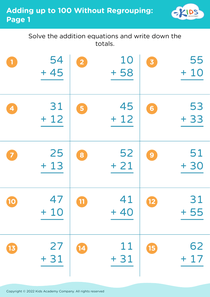
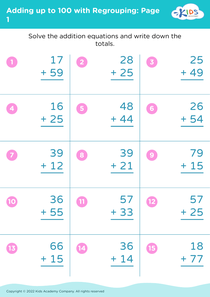
Discover a variety of engaging worksheets designed to help children ages 8-9 master sequence understanding. Our "Sequences Adding Up to 100" printable worksheets offer a fun and interactive way for kids to practice math skills and enhance their numerical abilities. Suitable for classroom or home learning, these activities cover essential topics such as number patterns, skip counting, and mental math strategies. Tailored to align with learning standards, each worksheet ensures that kids build confidence while solving sequences that sum up to 100, propelling them towards math proficiency in an enjoyable manner!
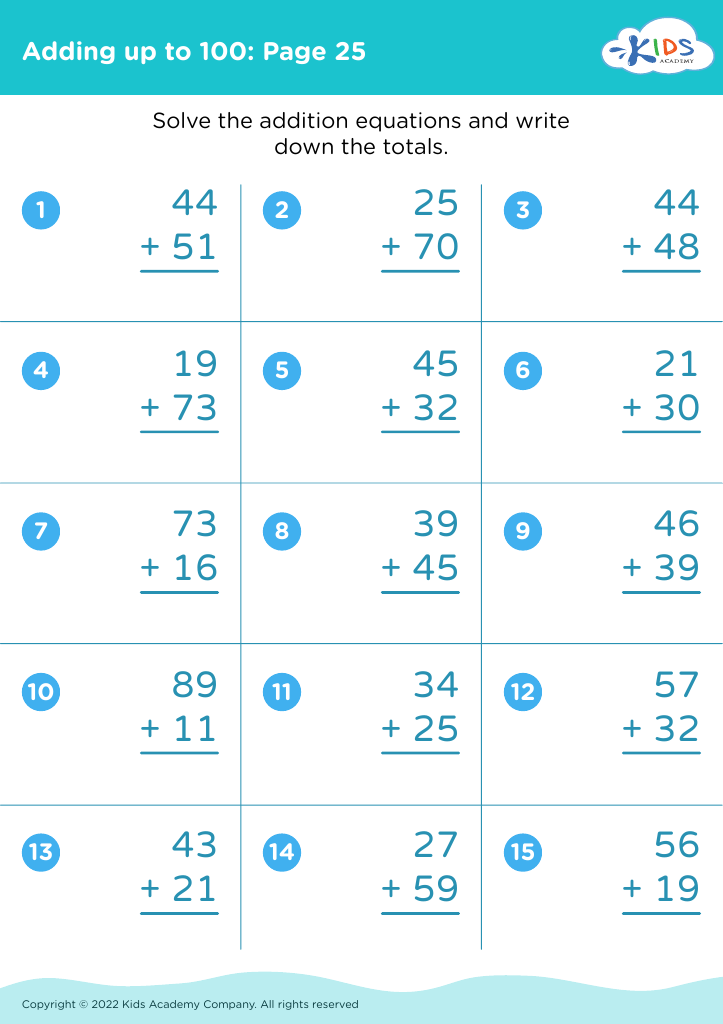
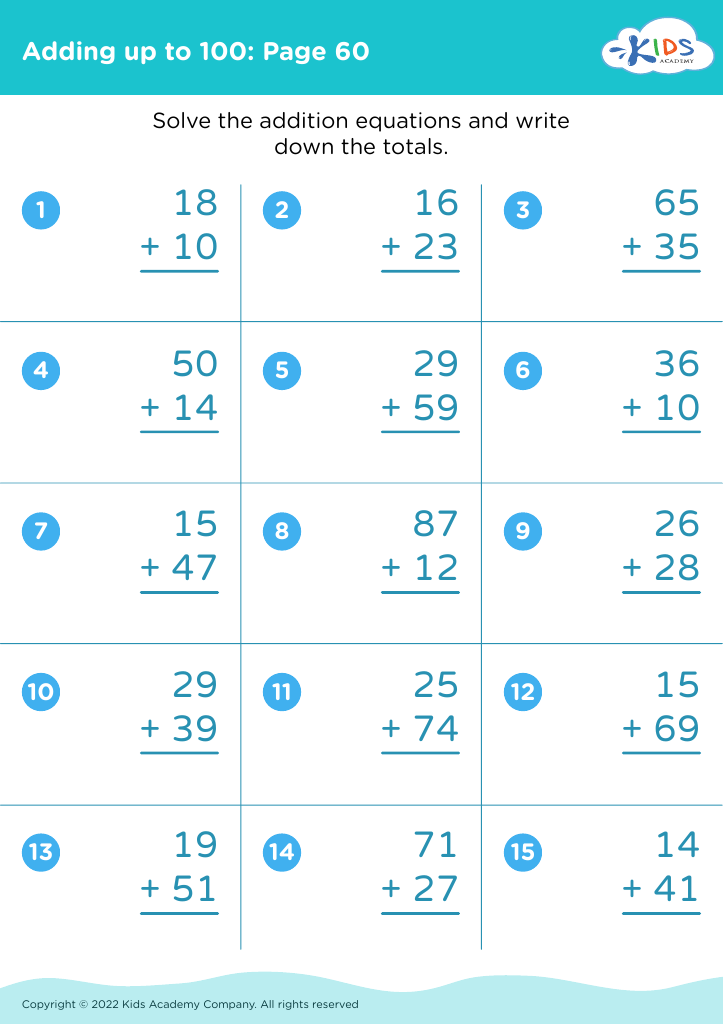
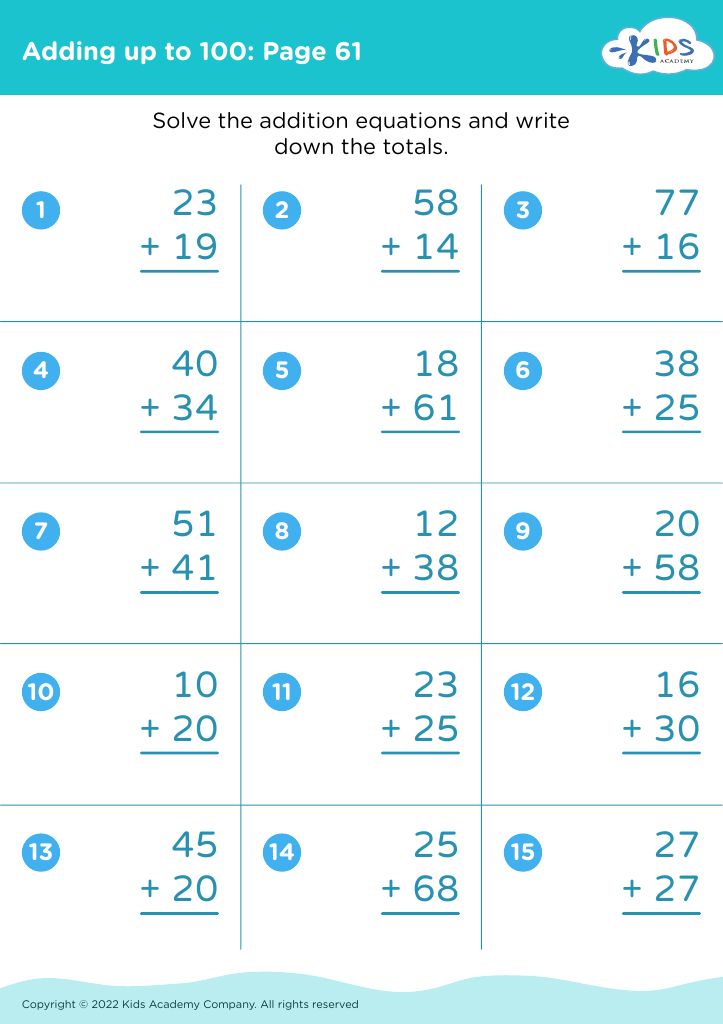
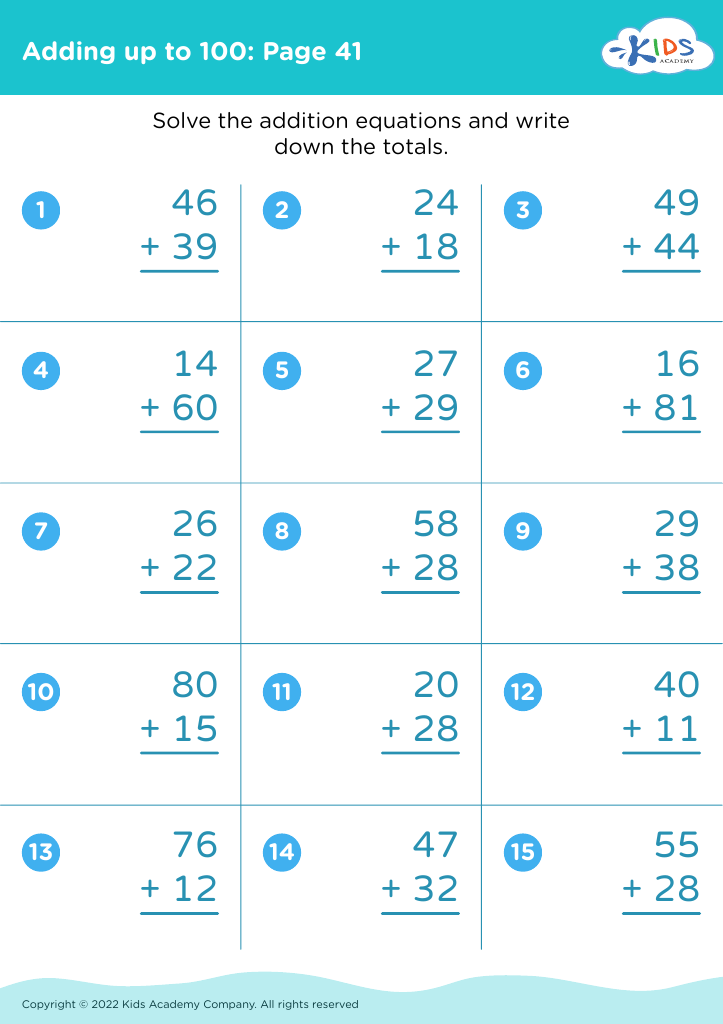


Understanding sequences that add up to 100 is an essential math skill for children aged 8-9 for several reasons. Firstly, it promotes numerical fluency and familiarity with numbers within a meaningful context, enhancing their ability to perform arithmetic calculations. Being able to recognize and work with sequences cultivates pattern recognition, a foundational cognitive skill critical not just in mathematics, but in all aspects of learning and problem solving.
More importantly, such exercises foster a deep comprehension of number relations and arithmetic properties, like addition and the concept of multiples, which are pertinent to more advanced math topics. By learning to identify and generate these sequences, children develop a methodological approach to problem-solving. This skill is invaluable as it equips students with logical and strategic thinking capabilities, aiding their overall academic journey.
Teachers and parents should also foster an environment that encourages curiosity and resilience, fundamental attributes of lifelong learners. Engaging children in puzzles and activities that involve sequences can be a fun and effective way to build a positive attitude towards math, sparking their interest and a sense of achievement. This helps in building their confidence to tackle more complex math problems in the long-term. By encouraging mastery of such concepts early on, we lay a strong foundation for future success in mathematics.