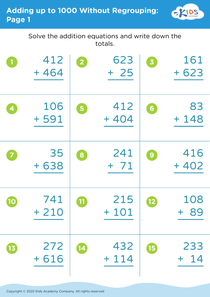
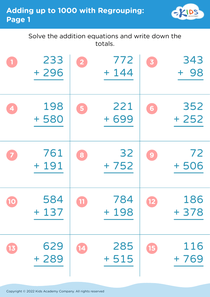
Comparing Fractions Adding up to 1000 Misc Worksheets for Ages 8-9
5 filtered results
-
From - To
Unlock your child's math potential with our "Comparing Fractions Adding up to 1000 Misc Worksheets" designed for ages 8-9! These engaging worksheets help young learners master the skill of comparing fractions, ensuring they develop a strong foundation in math. Each worksheet encourages practice and reinforces understanding through a variety of fun exercises tailored to their age group. Spellbound by the challenge of fractions, your child will enjoy honing their problem-solving skills while working with numbers that add up to 1000. Sign up now to support their learning journey and make math enjoyable and accessible every step of the way!
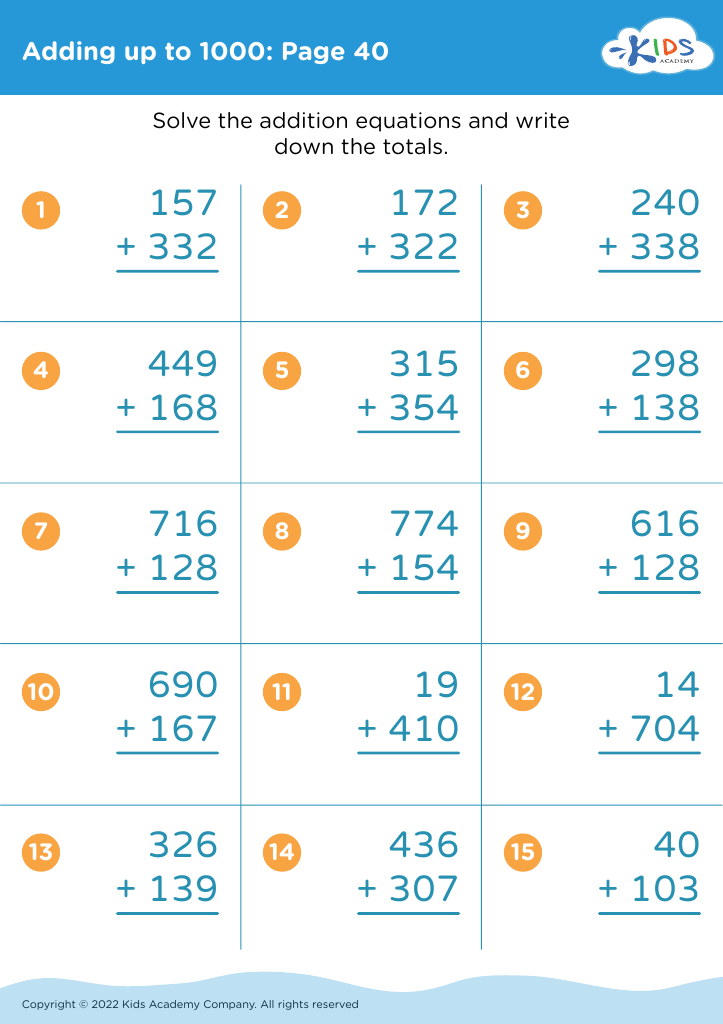
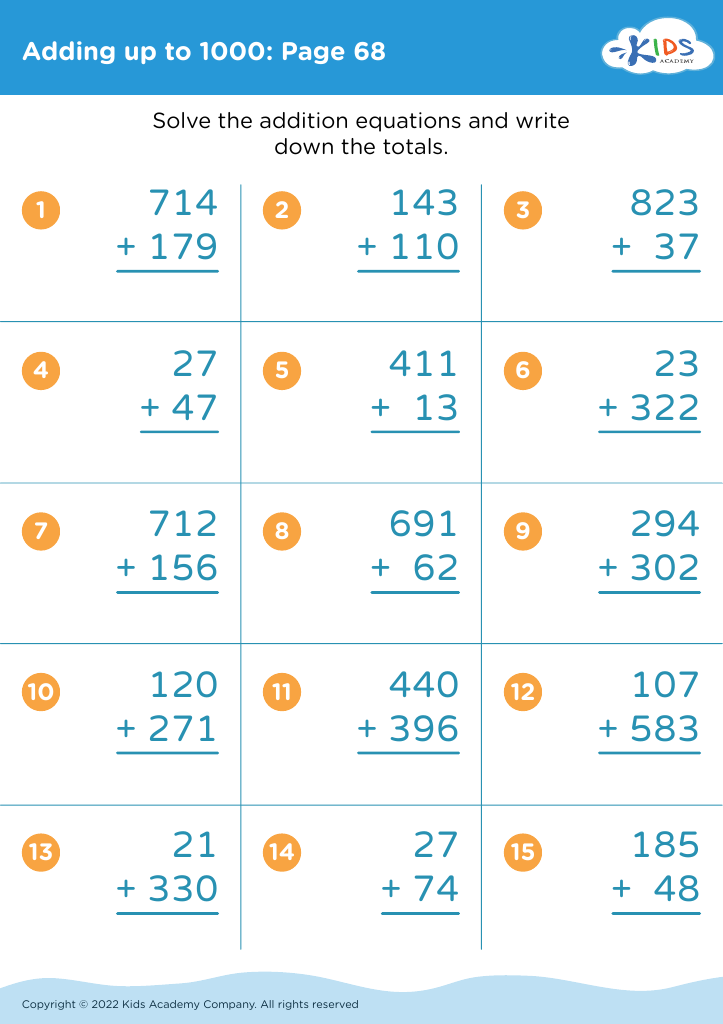
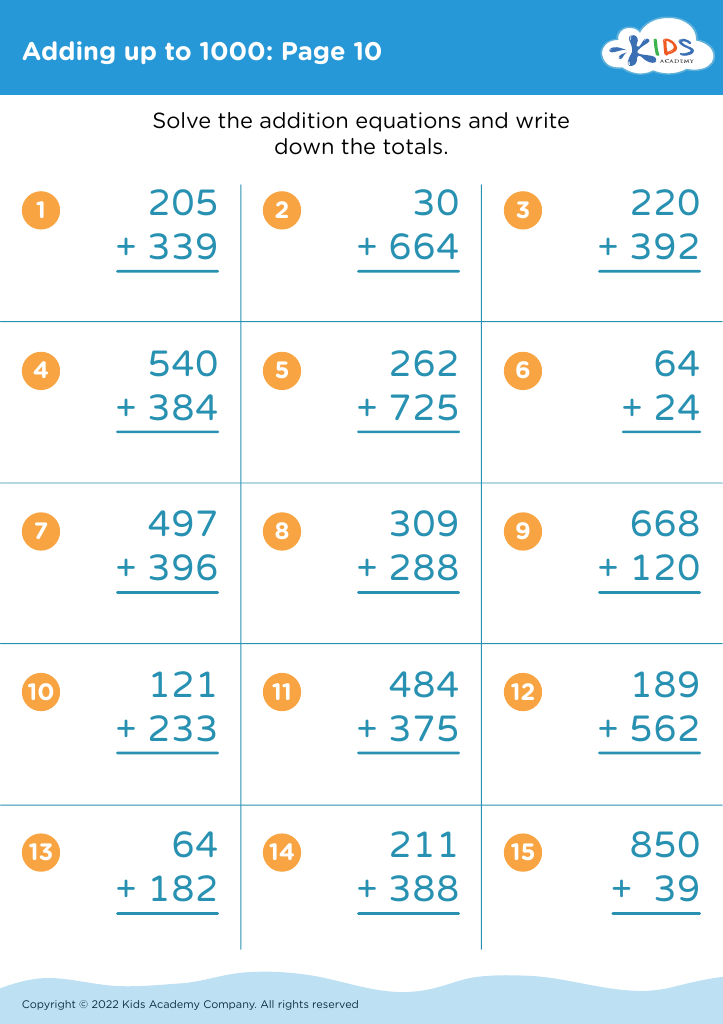
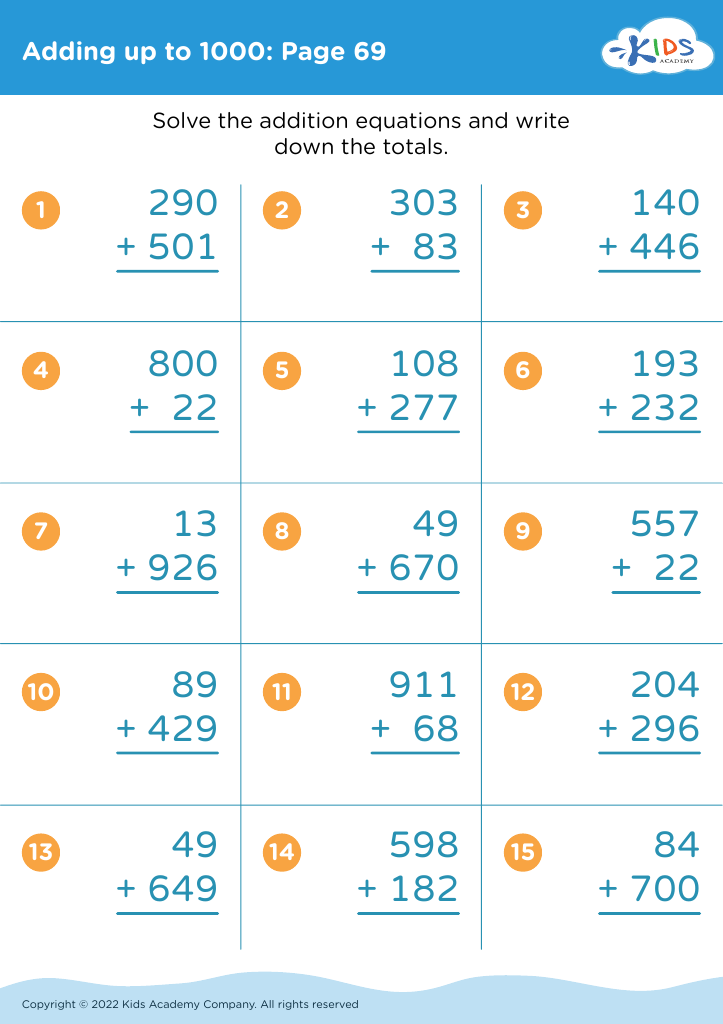
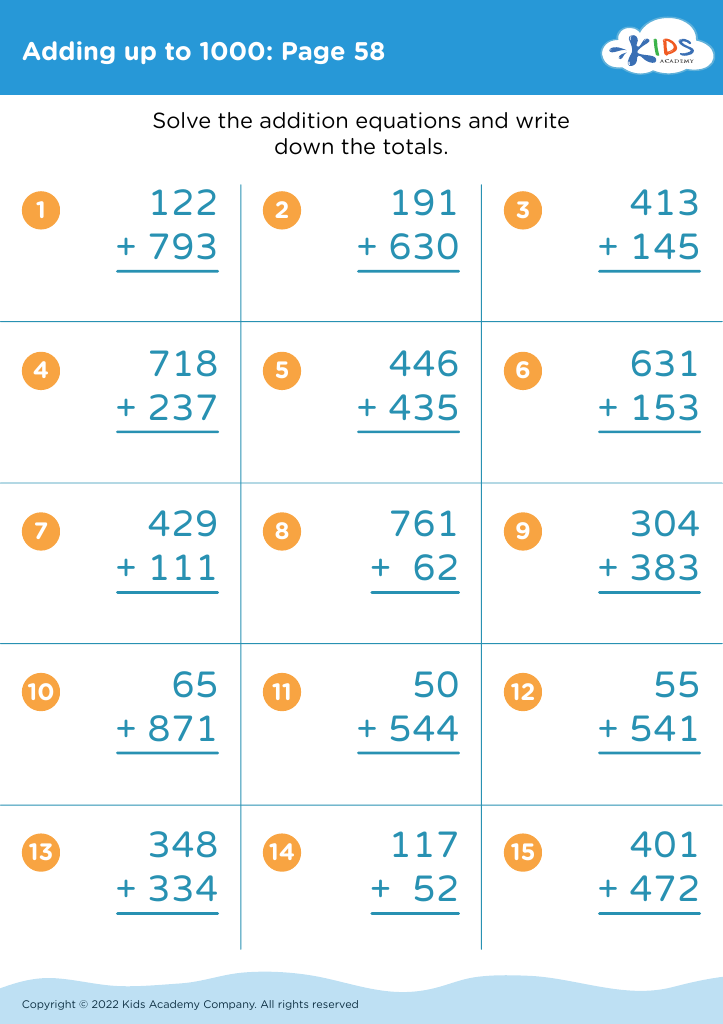


Understanding comparing fractions is crucial for children aged 8-9, as it lays the foundation for more complex mathematical concepts. At this age, students are developing critical thinking skills and number sense, which are essential for their academic growth. Comparing fractions helps children grasp concepts such as greater than, less than, and equivalency, fostering their ability to make informed decisions based on mathematical reasoning.
When fractions are incorporated into larger numerical contexts, like adding up to 1000, it encourages learners to engage with real-world applications of math. This makes learning more relatable and enjoyable. For instance, they can visualize how fractions relate to parts of a whole, with practical scenarios such as cooking or sharing pizza, making the subject more relevant.
Additionally, when parents and teachers emphasize the significance of comparing fractions, they guide students toward becoming confident problem solvers. This skill is not just applicable in academics; it's also valuable in everyday life. Mastering these concepts can lead to a more robust understanding of mathematics overall, setting students up for success in future educational endeavors. Thus, engaging with fractions and their comparison is an essential stepping stone in fostering mathematical proficiency for children.