Critical Thinking Adding up to 1000 Misc Worksheets for Ages 8-9
3 filtered results
-
From - To
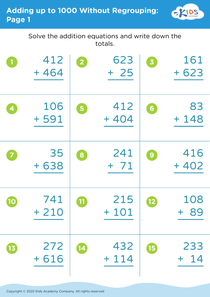
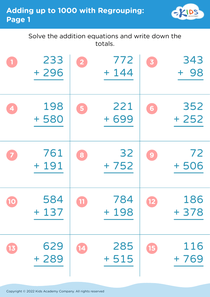
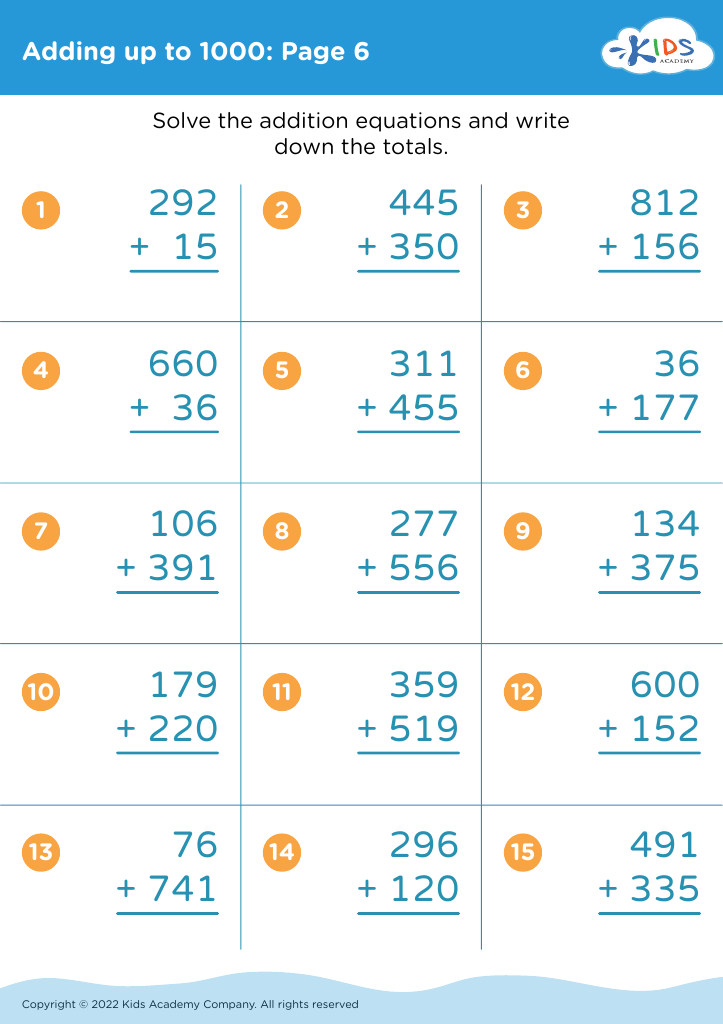
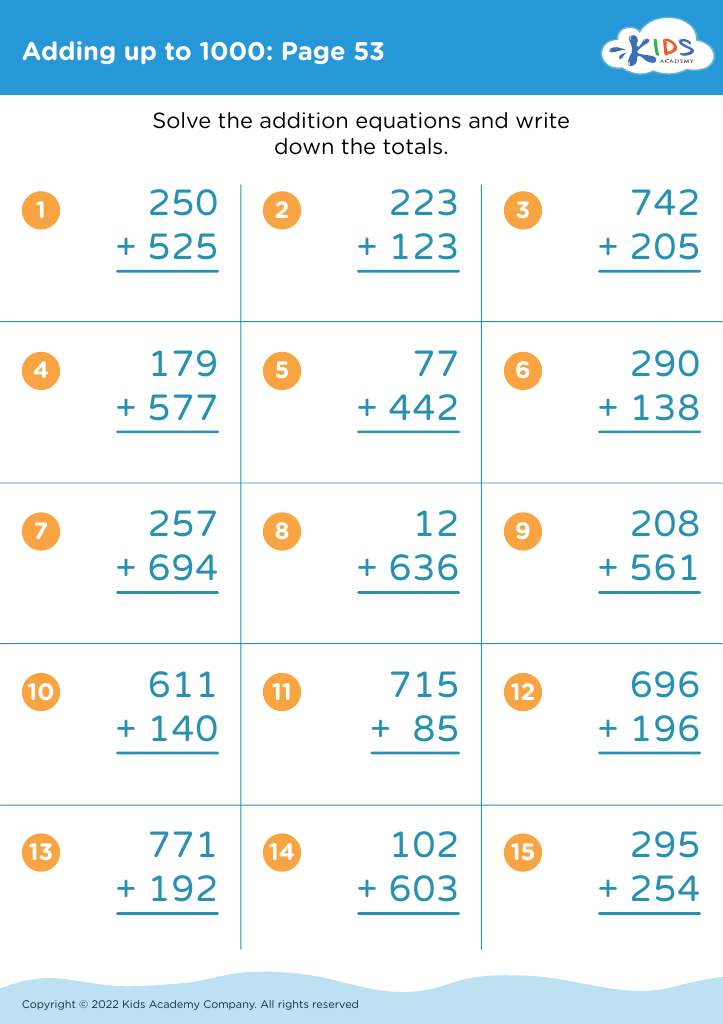
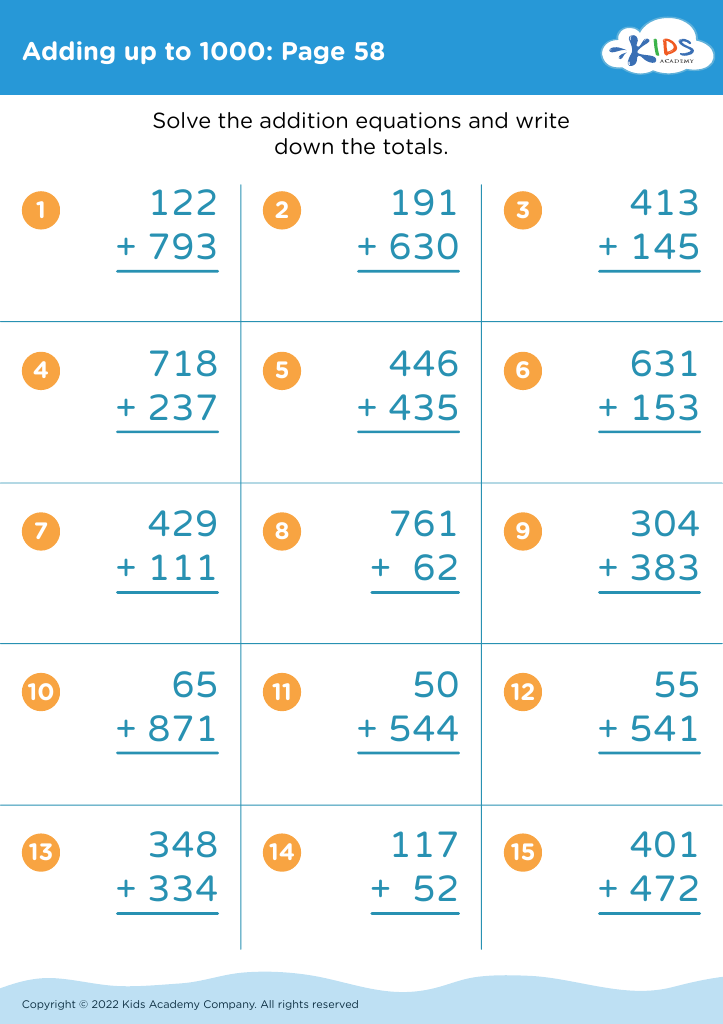
Unlock your child's potential with our engaging "Critical Thinking Adding up to 1000 Misc Worksheets" designed for 8-9-year-olds! These worksheets focus on enhancing critical thinking skills while providing a fun and interactive approach to math. Children will tackle diverse challenges that go beyond simple calculations, encouraging them to analyze, evaluate, and solve problems creatively. From word problems to puzzles, each activity is crafted to inspire confidence and foster a love of learning. Perfect for classrooms or at-home practice, these resources make mastering addition and critical thinking enjoyable. Dive into a world where math meets critical thinking today!


Critical thinking is a crucial skill that should be emphasized for children aged 8-9, as it lays the foundation for effective problem-solving and decision-making in their lives. Parents and teachers should care about developing critical thinking abilities because these skills empower children to navigate complexities in school and beyond.
At this age, children begin to form their own ideas and beliefs, and critical thinking helps them analyze information rather than accept it at face value. Additionally, it encourages creativity, enabling them to think outside the box and approach problems with innovative solutions. As they engage in discussions and debates, they learn to appreciate diverse perspectives, fostering empathy and collaboration.
Moreover, critical thinking is essential for academic success. When children learn to evaluate evidence, recognize biases, and construct logical arguments, they enhance their performance in subjects like math, science, and reading. These skills also prepare them for future challenges in a rapidly changing world where adaptability and analytical skills are paramount.
Ultimately, by nurturing critical thinking in children, parents and teachers equip them with the tools they need to thrive in school, relationships, and life decision-making. Remember, cultivating these skills at an early age can lead to a generation of thoughtful, informed, and responsible individuals.