Fraction simplification Adding up to 1000 Misc Worksheets for Ages 8-9
5 filtered results
-
From - To
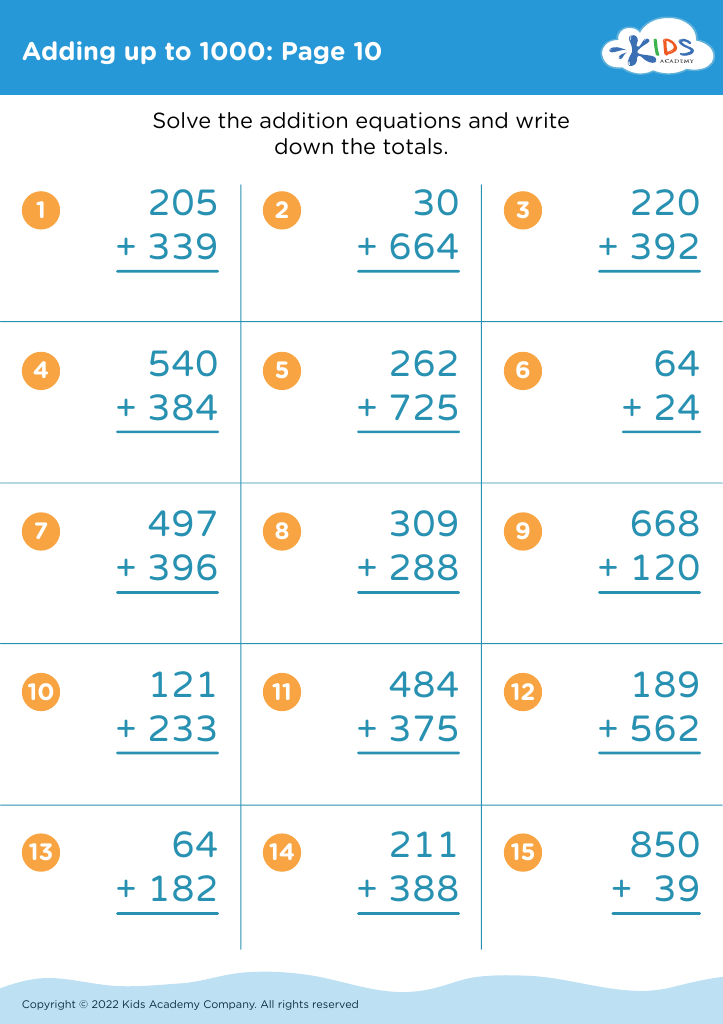
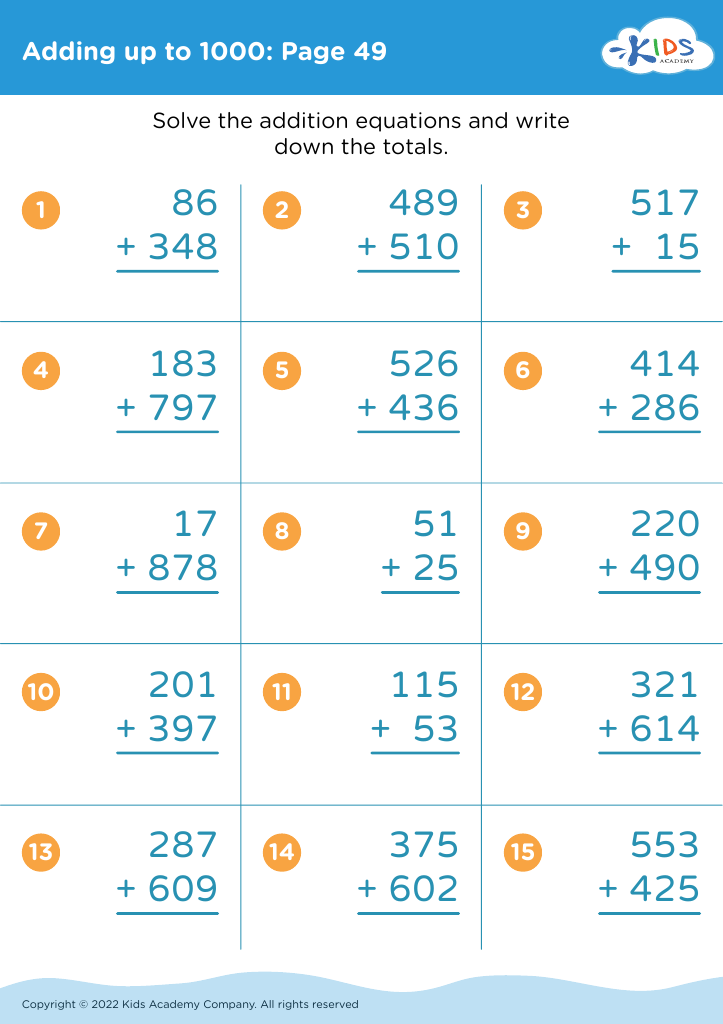
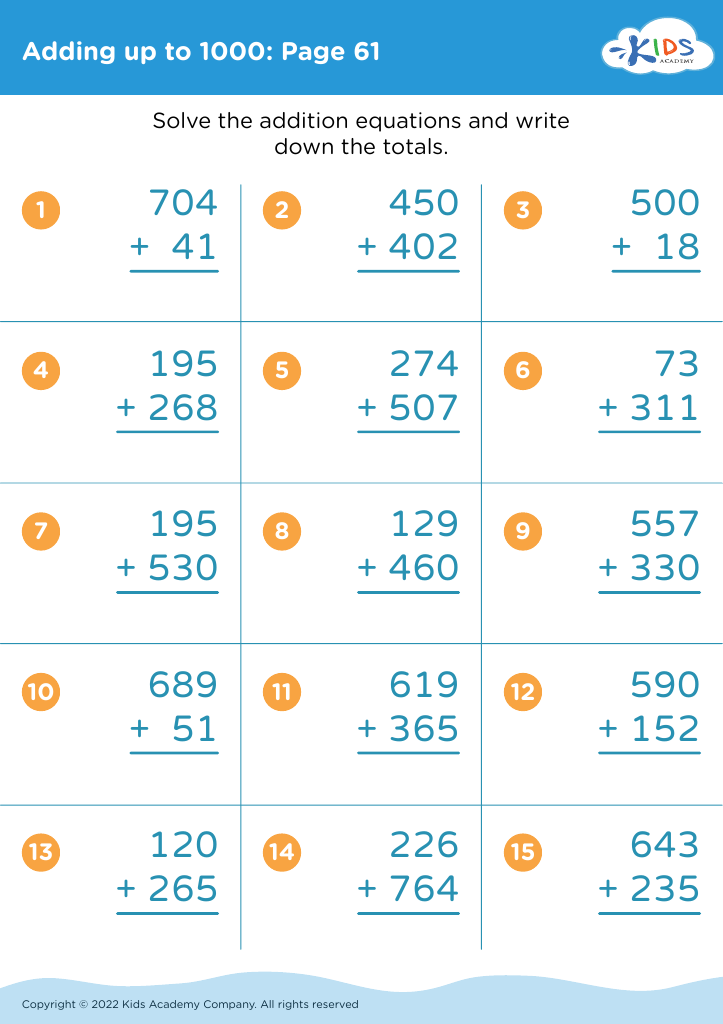
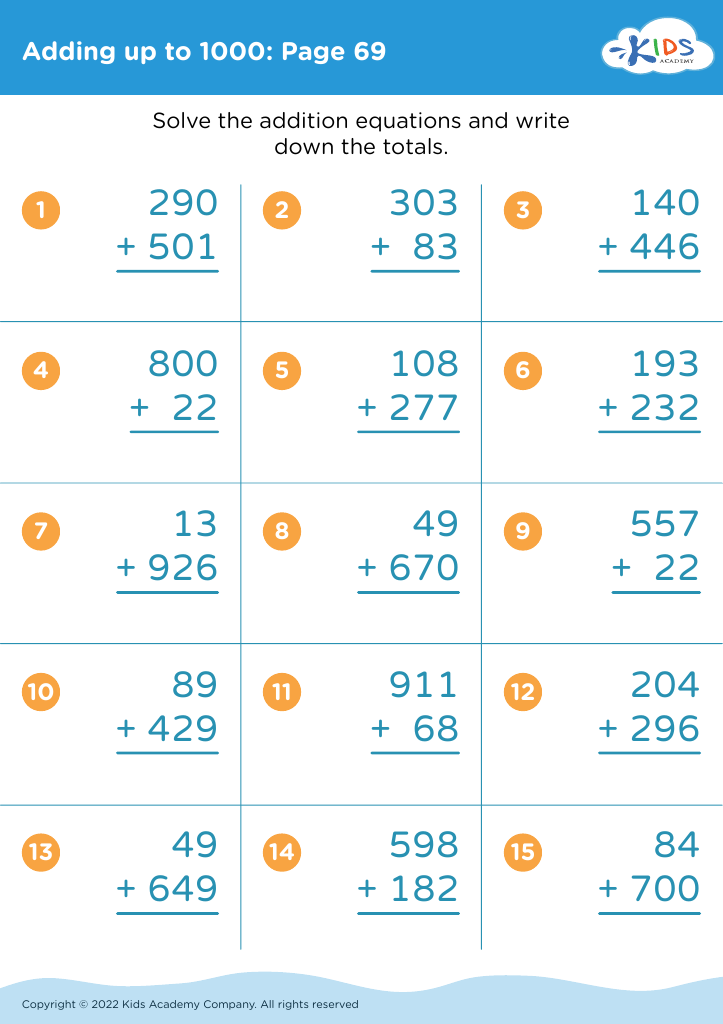
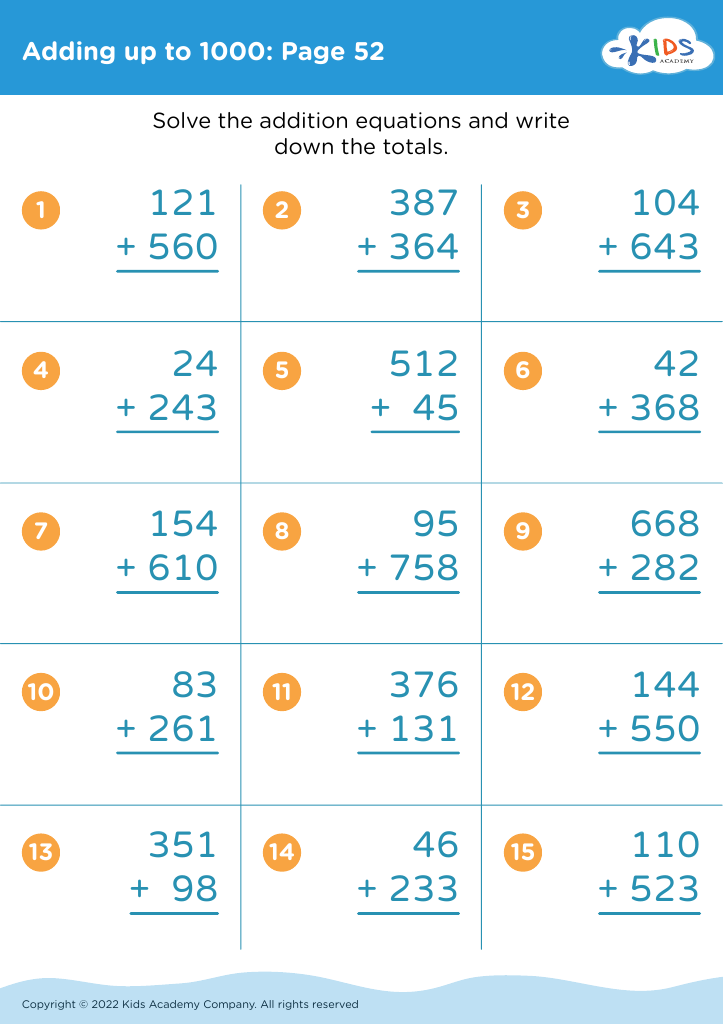
Discover our engaging "Fraction Simplification: Adding Up to 1000" miscellaneous worksheets, perfect for children ages 8-9! These worksheets are designed to strengthen students' understanding of fraction simplifying techniques while honing their addition skills up to 1000. Each activity is tailored to reinforce math concepts through fun and interactive exercises, ensuring a solid grasp of fractions. Teachers and parents can access a variety of worksheets that provide clear instructions, colorful visuals, and diverse problems to keep students motivated. Make learning math enjoyable and effective with our resources, helping young learners build a strong foundation for future success!


Fraction simplification is a crucial skill for children aged 8-9. Parents and teachers should prioritize this concept for several reasons. First, mastering fractions is foundational for more complex mathematical topics like ratios, proportions, and algebra. Simplifying fractions helps students understand the relationship between numbers, enhancing their overall number sense.
Moreover, simplification promotes problem-solving skills, enabling students to approach larger, more complex problems confidently. For instance, when adding fractions with a common denominator or finding equivalent fractions, simplified fractions make calculations easier and more accurate.
Additionally, these skills are not just academic; they foster critical thinking and analytical capabilities that extend beyond the classroom. As students learn to simplify fractions, they also cultivate perseverance and the ability to break down problems into manageable steps—a skill valuable in various disciplines.
Lastly, fluency in fractions can enhance students’ performance in standardized assessments, effectively preparing them for future challenges. By prioritizing fraction simplification, parents and teachers equip children with essential tools for academic success and lifetime problem-solving abilities. Investing time in this vital area of math helps children develop a solid foundation, setting them up for continued growth and confidence in their mathematical journey.